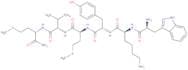
CAS 187986-11-4
:H-TRP-LYS-TYR-MET-VAL-MET-NH2
Description:
The chemical substance identified by the name "H-TRP-LYS-TYR-MET-VAL-MET-NH2" is a peptide composed of a sequence of amino acids: tryptophan (Trp), lysine (Lys), tyrosine (Tyr), methionine (Met), valine (Val), and another methionine, with an amine group at the C-terminus. Its CAS number, 187986-11-4, indicates that it is a specific synthetic or naturally occurring peptide. Peptides like this one typically exhibit characteristics such as solubility in water, depending on the amino acid composition and sequence, and can have biological activity, potentially influencing various physiological processes. The presence of aromatic amino acids like tryptophan and tyrosine may contribute to UV absorbance properties, while the basic lysine can affect the peptide's charge at physiological pH. Additionally, the sequence and structure can influence its stability, reactivity, and interaction with biological targets, making it of interest in fields such as biochemistry, pharmacology, and biotechnology.
Formula:C41H61N9O7S2
Synonyms:- Wkymvmamide
- Wkymvm-Nh2
- Trp-Lys-Tyr-Met-Val-Met-Nh2
Sort by
Purity (%)
0
100
|
0
|
50
|
90
|
95
|
100
Found 1 products.
H-Trp-Lys-Tyr-Met-Val-Met-NH2
CAS:<p>H-Trp-Lys-Tyr-Met-Val-Met-NH2 is a natural compound that belongs to the group of pharmacological agents. It has been shown to have a therapeutic effect on congestive heart failure, bowel disease and autoimmune diseases. This compound has also been shown to stimulate locomotor activity in mice by increasing dopamine levels in the brain. H-Trp-Lys-Tyr-Met-Val-Met NH2 has been found to inhibit the growth of HL60 cells in culture, which are a type of white blood cell that is involved in immune response. H-Trp-Lys Tyr Met Val Met NH2 also binds to receptors for formyl and sesquiterpenoid lactones, which are chemical compounds that are used as pharmacological agents for cancer therapy and treatment of inflammatory bowel disease.</p>Formula:C41H61N9O7S2Purity:Min. 95%Molecular weight:856.11 g/mol