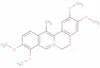
CAS 30045-16-0
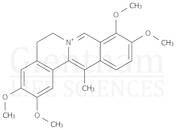
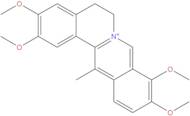
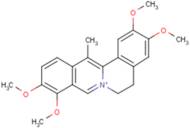
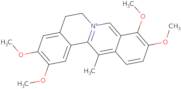
:Dehydrocorydaline
Description:
Dehydrocorydaline is an alkaloid derived from the plant Corydalis, which is known for its traditional medicinal uses. It is characterized by its complex structure, featuring a tetracyclic framework typical of many alkaloids. This compound exhibits a range of biological activities, including analgesic, anti-inflammatory, and neuroprotective effects, making it of interest in pharmacological research. Dehydrocorydaline interacts with various neurotransmitter systems, which may contribute to its therapeutic potential. It is typically found in the form of a white to off-white crystalline powder and is soluble in organic solvents. The compound's safety profile and pharmacokinetics are still under investigation, but it is generally considered to have a low toxicity in preliminary studies. As with many natural products, the extraction and purification processes can influence its yield and purity, which are critical for both research and potential therapeutic applications. Overall, dehydrocorydaline represents a promising area of study within natural product chemistry and pharmacology.
Formula:C22H24NO4
InChI:InChI=1S/C22H24NO4/c1-13-15-6-7-18(24-2)22(27-5)17(15)12-23-9-8-14-10-19(25-3)20(26-4)11-16(14)21(13)23/h6-7,10-12H,8-9H2,1-5H3/q+1
InChI key:InChIKey=RFKQJTRWODZPHF-UHFFFAOYSA-N
SMILES:CC1=C2C=3C(=CC(OC)=C(OC)C3)CC[N+]2=CC=4C1=CC=C(OC)C4OC
Synonyms:- 13-Methylpalmatine
- 2,3,9,10-Tetramethoxy-13-Methyl-5,6-Dihydroisoquino[3,2-A]Isoquinolinium
- 2,3,9,10-Tetramethoxy-13-Methyl-5,6-Dihydroisoquino[3,2-A]Isoquinolinium Chloride
- 2,3,9,10-Tetramethoxy-13-methyl-5,6-dihydroisoquinolino[2,1-b]isoquinolin-7-ium
- 5,6-Dihydro-2,3,9,10-tetramethoxy-13-methyldibenzo[a,g]quinolizinium
- 7,8,13,13a-Tetradehydro-2,3,9,10-tetramethoxy-13-methylberbinium
- Berbinium, 7,8,13,13a-tetradehydro-2,3,9,10-tetramethoxy-13-methyl-
- Brn 1556798
- Corydaline, dehydro-
- Dehydrocorydalin
- Dibenzo(a,g)quinolizinium, 5,6-dihydro-2,3,9,10-tetramethoxy-13-methyl- (9CI)
- Dibenzo[a,g]quinolizinium, 5,6-dihydro-2,3,9,10-tetramethoxy-13-methyl-
- See more synonyms
Sort by
Purity (%)
0
100
|
0
|
50
|
90
|
95
|
100
Found 8 products.
Dibenzo[a,g]quinolizinium,5,6-dihydro-2,3,9,10-tetramethoxy-13-methyl-
CAS:Formula:C22H24NO4Purity:99%Molecular weight:366.4303Dehydrocorydalin
CAS:Dehydrocorydalin has anti-inflammatory,antinociceptive,antiplatelet,and anti-tumor effects and can protect the cardiovascular system. Dehydrocorydaline stimulates p38 MAPK activation, which can enhance heterodimerization of MyoD and E proteins, thus resulting in MyoD activation and myoblast differentiation. Dehydrocorydaline inhibits MCF-7 cell proliferation by inducing apoptosis mediated by regulating Bax/Bcl-2, activating caspases as well as cleaving PARP.Formula:C22H24NO4Purity:95%~99%Molecular weight:366.436Dehydrocorydaline
CAS:2,3,9,10-Tetramethoxy-13-methyl-5,6-dihydroisoquinolino[3,2-a]isoquinolin-7-iumFormula:C22H24NO4Purity:99%Molecular weight:366.43Dehydrocorydaline
CAS:1.Formula:C22H24NO4Purity:99.84%Color and Shape:Yellow SolidMolecular weight:366.43Ref: TM-T5S2358
1mg49.00€2mg69.00€5mg105.00€1mL*10mM (DMSO)116.00€10mg137.00€25mg197.00€50mg295.00€100mg447.00€Dehydrocorydaline
CAS:Dehydrocorydaline is a naturally occurring alkaloid, which is derived from the roots of Corydalis species, specifically from plants in the Papaveraceae family. Its mode of action primarily involves the modulation of neurotransmitter systems, including dopaminergic and serotonergic pathways, which contributes to its analgesic properties. Additionally, dehydrocorydaline affects calcium channels and can inhibit smooth muscle contractions, highlighting its ability to exert an anti-inflammatory effect as well.Formula:C22H24NO4Purity:Min. 95%Color and Shape:PowderMolecular weight:366.43 g/molDehydrocorydaline Acetate
CAS:Controlled ProductStability Hygroscopic
Applications Dehydrocorydaline Acetate inhibits breast cancer cells proliferation, through induction of apoptosis.
References Xu, Z. et al.: Am. J. Chin. Med., 40, 177 (2012); Li, B. et al.: Int. J. Mol. Sci., 13, 13501 (2012);Formula:C22H24NO4•C2H3O2Color and Shape:NeatMolecular weight:425.47
![Dibenzo[a,g]quinolizinium,5,6-dihydro-2,3,9,10-tetramethoxy-13-methyl-](https://static.cymitquimica.com/products/IN/thumb/DA007JUL.jpg)