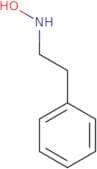
CAS 3217-93-4
:N-hydroxy-2-phenylethanamine
Description:
N-hydroxy-2-phenylethanamine, also known as phenylethanolamine, is an organic compound characterized by the presence of both an amino group and a hydroxyl group attached to a phenethyl backbone. Its molecular structure features a phenyl group (a benzene ring) connected to an ethylamine chain, with a hydroxyl group (–OH) attached to the nitrogen atom. This compound is typically a colorless to pale yellow liquid or solid, depending on its form and purity. It is soluble in water and organic solvents, making it versatile for various applications. N-hydroxy-2-phenylethanamine is often studied for its potential biological activities, including its role in pharmaceuticals and as a precursor in organic synthesis. The compound may exhibit antioxidant properties and has been investigated for its effects on neurotransmitter systems. However, safety and handling precautions are essential, as with many amines, due to potential toxicity and reactivity. Proper storage conditions and protective measures should be observed when working with this substance.
Formula:C8H11NO
InChI:InChI=1/C8H11NO/c10-9-7-6-8-4-2-1-3-5-8/h1-5,9-10H,6-7H2
SMILES:c1ccc(cc1)CCNO
Synonyms:- Benzeneethanamine, N-hydroxy-
Sort by
Purity (%)
0
100
|
0
|
50
|
90
|
95
|
100
Found 1 products.
N-(2-Phenylethyl)hydroxylamine
CAS:Controlled Product<p>N-(2-Phenylethyl)hydroxylamine (NPEHA) is an antidiabetic agent that is a member of the class of amides. It has been shown to inhibit the transcriptional regulation of metabolic rate and physiological activities. NPEHA binds to the dopamine receptor and may be useful in treating Parkinson’s disease. NPEHA also inhibits cancer cell growth by binding to the lps-stimulated raw264.7 cells, which are a type of mouse macrophage cell line. The hydrogen bond between the hydroxyl group and the nitrogen atom on NPEHA is critical for its activity as an antidiabetic agent.</p>Formula:C8H11NOPurity:Min. 95%Molecular weight:137.18 g/mol