Fluorogenic Substrates
In this category, you will find a comprehensive selection of fluorogenic substrates designed for enzymatic catalysis. These substrates are used with various types of enzymes and are capable of producing color and fluorescence upon reaction. Fluorogenic substrates are essential tools in biochemical and molecular biology research, enabling the detection and quantification of enzyme activity with high sensitivity and specificity. They are widely used in assays for studying enzyme kinetics, screening for enzyme inhibitors, and monitoring cellular processes. At CymitQuimica, we provide high-quality fluorogenic substrates to support your research, ensuring reliable and accurate results in your enzymatic assays.
Found 297 products of "Fluorogenic Substrates"
Sort by
Purity (%)
0
100
|
0
|
50
|
90
|
95
|
100
4-Methylumbelliferyl decanoate
CAS:<p>Fluorogenic substrate for carboxylesterases</p>Formula:C20H26O4Purity:Min. 98 Area-%Color and Shape:White PowderMolecular weight:330.42 g/mol4-Methylumbelliferyl a-L-idopyranosiduronic acid
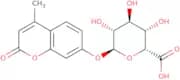
CAS:<p>4-Methylumbelliferyl a-L-idopyranosiduronic acid is an ester that is used as a marker for the identification of glycolipids. It is a fluorogenic substrate for alpha-L-iduronidase used as a marker for the diagnosis of autoimmune diseases, including diabetic neuropathy. 4-Methylumbelliferyl a-L-idopyranosiduronic acid has been shown to inhibit inflammation and cancer, although it is not currently approved for this use. The mechanism by which 4-methylumbelliferyl a-L-idopyranosiduronic acid inhibits inflammation may be due to its ability to block cation channels on the surface of cells, thereby preventing inflammatory mediators from entering cells.</p>Formula:C16H16O9Purity:Min. 97 Area-%Color and Shape:White Off-White PowderMolecular weight:352.29 g/molResorufin-7-O-phosphate
CAS:<p>Resorufin-7-O-phosphate is a fluorogenic substrate for alkaline phosphatase that exhibits a red color after cleavage that can be measured at ~ 585nm.</p>Formula:C12H6NO6P·2H4NPurity:Min. 95%Molecular weight:327.23 g/molRhodamine 110 chloride
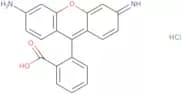
CAS:<p>Fluorescent dye substrate for flow cytometric measurements</p>Formula:C20H15O3N2ClPurity:Min. 95 Area-%Color and Shape:Red PowderMolecular weight:366.8 g/mol4-Methylumbelliferyl propionate
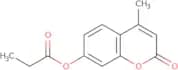
CAS:<p>4-Methylumbelliferyl propionate is a fluorogenic substrate for esterase. After enzymatic cleaveage, free 4-methylumbelliferone (also known as hymecromone) is released, exhibiting blue fluorescence upon excitation with UV light. The strongest fluorescence of 4-methylumbelliferone requires deprotonation of the hydroxyl group (thus requires alkaline pH), with a maximal fluorescence intensity obtained with excitation at 350 to 370 nm and emission at 440 to 470 nm. The use of 4-methylumbelliferyl propionateas a substrate for measuring the esterase activity is used for esterase deficiency screening assays.</p>Formula:C13H12O4Purity:Min. 95 Area-%Color and Shape:PowderMolecular weight:232.23 g/molResorufin N-acetyl-b-D-glucosamine
CAS:<p>Resorufin N-acetyl-b-D-glucosamine is fluorogenic substrate for N-acetyl-beta-D-glucosaminidase (NAG).</p>Formula:C20H20N2O8Purity:Min. 98 Area-%Color and Shape:Orange PowderMolecular weight:416.38 g/mol4-Methylumbelliferyl 6-thio-palmitate-b-D-glucopyranoside - Moscerdam™ biochemical purity
CAS:<p>4-Methylumbelliferyl 6-thio-palmitate-b-D-glucopyranoside (Mu-6S-Palm-β-Glc) is a fluorogenic substrate of palmitoyl-protein thioesterase 1 (PPT1), used in the diagnosis of infantile neuronal ceroid lipofuscinosis (INCL). INCL, also known as infantile CLN1 disease, is a rapidly progressing lysosomal storage disorder (LSD), caused by a deficiency of PPT1. Mu-6S-Palm-β-Glc is also used as the substrate in the PPT assay to investigate the retention of lysosomal enzyme activity of bi-functional IgG-PPT1 fusion protein in the delivery across blood-brain barrier.</p>Formula:C32H48O8SPurity:Min. 95%Color and Shape:White PowderMolecular weight:592.78 g/molL-Leucine 7-amido-4-methylcoumarin hydrochloride salt
CAS:<p>L-Leucine 7-amido-4-methylcoumarin hydrochloride salt is a synthetic peptide substrate used as a fluorogenic substrate for leucine aminopeptidase.</p>Formula:C16H21ClN2O3Purity:Min. 98 Area-%Color and Shape:White PowderMolecular weight:324.8 g/mol4-Methylumbelliferyl caprylate
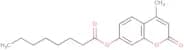
CAS:<p>Used for identification of Salmonella spp. by detection of caprylate esterase</p>Formula:C18H22O4Purity:Min. 95%Color and Shape:White PowderMolecular weight:302.36 g/molEthyl umbelliferone-3-carboxylate-α-D-glucopyranoside
<p>Ethyl umbelliferone-3-carboxylate-a-D-glucopyranoside is a fluorogenic substrate used for detecting alpha-glucosidase activity in enzymatic assays. When alpha-glucosidase cleaves , the glycosidic bond, umbelliferone-3-carboxylate is released, which exhibits strong fluorescence. This substrate is commonly utilized in glycobiology research, diagnostic tests, and high-throughput screening of enzyme inhibitors.</p>Formula:C18H20O10Purity:Min. 95%Color and Shape:Off-white to yellow solid.Molecular weight:396.35 g/mol4-Methylumbelliferyl elaidate
CAS:<p>4-Methylumbelliferone is a fluorescent probe that can be used to study the metabolism of fatty acids in plants. It is also used as a marker for radiation and significant cytotoxicity. 4-Methylumbelliferone binds to the DNA termini, specifically at the 5' phosphate group, and inhibits phosphatase activity. This process increases levels of p-nitrophenyl phosphate (a substrate), which produces protocatechuic acid (an intermediate). The disulfide bond is then broken by hydrogen peroxide, leading to an increase in fluorescence. The optimum pH for this process is 7.5.</p>Formula:C28H40O4Purity:Min. 95 Area-%Molecular weight:440.63 g/mol4-Methylumbelliferyl 2-acetamido-2-deoxy-a-D-glucopyranoside
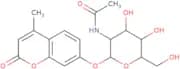
CAS:<p>4-Methylumbelliferyl 2-acetamido-2-deoxy-alpha-D-glucopyranoside is a fluorogenic substrate for alpha-N-acetylglucosaminidase. After enzymatic cleaveage, free 4-methylumbelliferone (also known as hymecromone) is released, exhibiting blue fluorescence upon excitation with UV light. The strongest fluorescence of 4-methylumbelliferone requires deprotonation of the hydroxyl group (thus requires alkaline pH), with a maximal fluorescence intensity obtained with excitation at 350 to 370 nm and emission at 440 to 470 nm. The use of 4-methylumbelliferyl 2-acetamido-2-deoxy-alpha-D-glucopyranosideas a substrate for measuring the alpha-N-acetylglucosaminidase activity is used for Sanfilippo syndrome B screening and mucopolysaccharidosis diagnosis.</p>Formula:C18H21NO8Purity:Min. 98 Area-%Color and Shape:PowderMolecular weight:379.36 g/mol4-Methylumbelliferyl-N-acetyl-β-D-glucosaminide-6-sulfate, sodium salt
CAS:<p>4-Methylumbelliferyl 2-acetamido-2-deoxy-beta-D-glucopyranoside-6-sulfate sodium salt is a high-quality fluorogenic substrate specifically designed for the detection and quantification of various enzymes, including beta-glucosidases and sulfatases. Upon hydrolysis by the target enzyme, this substrate releases the highly fluorescent 4-methylumbelliferone, allowing for real-time monitoring and accurate measurement of enzyme activities in biochemical assays, diagnostic tests, and research applications. 4-Methylumbelliferyl 2-acetamido-2-deoxy-beta-D-glucopyranoside-6-sulfate sodium salt has excellent solubility in water, ensuring a consistent and reliable performance in different experimental conditions. This versatile substrate is an essential tool for researchers and industry professionals who require a sensitive and reproducible detection method for enzymes of interest.</p>Formula:C18H20NNaO11SPurity:Min. 98.0 Area-%Molecular weight:481.41 g/molRef: 3D-M-5505
5mgTo inquire25mgTo inquire50mgTo inquire100mgTo inquire250mgTo inquire-Unit-ggTo inquireFluorescein diacetate
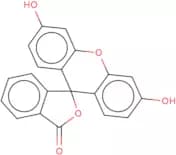
CAS:<p>Fluorogenic substrate targeting esterases , hGSTP1-1</p>Formula:C24H16O7Color and Shape:PowderMolecular weight:416.38 g/mol4-Methylumbelliferyl β-D-glucuronide
CAS:<p>Fluorogenic substrate for b-glucuronidase GUS</p>Formula:C16H16O9Purity:Min. 95%Molecular weight:352.29 g/mol4-Trifluoromethylumbelliferyl b-D-glucuronide potassium salt
CAS:<p>4-Trifluoromethylumbelliferyl b-D-glucuronide potassium salt is a fluorogenic substrate for beta-glucuronidase. Upon hydrolysis, the fluorogenic moiety (blueish) 4-trifluoromethylumbelliferone (also known as TFMU) is released. 4-Trifluoromethylumbelliferyl b-D-glucuronide potassium salt is commonly used in bacterial detection and for drug metabolism studies as well as lysosomal storage disorder screening.</p>Formula:C16H12F3O9KPurity:Min. 95 Area-%Color and Shape:White PowderMolecular weight:444.35 g/molAcetyl coenzyme A trilithium salt trihydrate
CAS:<p>Acetyl coenzyme A trilithium salt trihydrate (ATC) is a glutathione-dependent enzyme that catalyzes the acetylation of compounds with a thiol group. Acetyl coenzyme A trilithium salt trihydrate has been shown to acetylate recombinant human and hek293 cells as well as xenobiotic compounds such as acetaminophen, chlorzoxazone, and phenacetin. The rate of acetylation depends on the concentration of glutathione and the availability of the substrate. There is no evidence that ATC conjugates or transfers acetyllysine to other proteins. It is excreted in the urine after being expressed by recombinant human and hek293 cells.END></p>Formula:C23H35N7O17P3S·3Li·3H2OPurity:Min. 95%Color and Shape:White PowderMolecular weight:881.42 g/mol4-Methylumbelliferyl phosphate dilithium
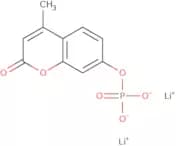
CAS:<p>4-Methylumbelliferyl phosphate dilithium is a fluorogenic substrate for alkaline phosphatase. After enzymatic cleaveage, free 4-methylumbelliferone (also known as hymecromone) is released, exhibiting blue fluorescence upon excitation with UV light. The strongest fluorescence of 4-methylumbelliferone requires deprotonation of the hydroxyl group (thus requires alkaline pH), with a maximal fluorescence intensity obtained with excitation at 350 to 370 nm and emission at 440 to 470 nm. The use of 4-methylumbelliferyl phosphate dilithiumas a substrate for measuring the alkaline phosphatase activity is used for bone metabolism disorder studies and hypophosphatasia diagnosis.</p>Formula:C10H7O6P•Li2Purity:Min. 95%Color and Shape:PowderMolecular weight:268.01 g/mol4-Methylumbelliferyl a-D-arabinopyranoside
<p>A fluorogenic MOSCERDAM® substrate targeting alpha-arabinofuranosidase</p>Purity:Min. 95%Molecular weight:308.28 g/molResorufin acetate
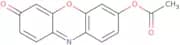
CAS:<p>Resorufin acetate is a fluorogenic substrate for esterase activity measurments in lipid metabolism studies. It is also used as a substrate for chymotrypsin, a digestive enzyme produced by the pancreas that aids in protein digestion in the small intestine.</p>Formula:C14H9NO4Purity:Min. 95%Color and Shape:PowderMolecular weight:255.23 g/mol