Amino Acid Derivatives
Amino acid derivatives are compounds that are structurally related to amino acids but have been chemically modified to introduce new functional groups or alter their properties. These derivatives are widely used in peptide synthesis, drug development, and biochemical research. At CymitQuimica, we offer a broad range of high-quality amino acid derivatives to support your research and industrial applications, ensuring precise and effective results in your experiments and synthesis projects.
Found 3955 products of "Amino Acid Derivatives"
Sort by
Purity (%)
0
100
|
0
|
50
|
90
|
95
|
100
Fmoc-b-Ala-Ala-Pro-OH
CAS:<p>Fmoc-b-Ala-Ala-Pro-OH is a reaction component that can be used in the synthesis of peptides and other compounds. It is a building block for the preparation of complex compounds, such as small molecules, polymers and natural products. Fmoc-b-Ala-Ala-Pro-OH has been shown to be useful in the synthesis of various types of reagents, including antibiotics and pharmaceuticals. This chemical has been reported as a useful scaffold for the preparation of high quality research chemicals. Fmoc-b-Ala-Ala-Pro is also an intermediate in the synthesis of speciality chemicals and fine chemicals.</p>Formula:C26H29N3O6Purity:Min. 95%Color and Shape:White PowderMolecular weight:479.53 g/molBz-Leu-Leu
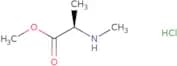
CAS:<p>Bz-Leu-Leu is a mutant of the peptidase carboxypeptidase. It has been shown to have carboxypeptidase activity in biochemistry and immunology experiments, but not in structural gene experiments. Bz-Leu-Leu is an auxotrophic strain that cannot grow on leucine as a nitrogen source, but can grow on yeast extract as a nitrogen source. Bz-Leu-Leu has a structural gene sequence that is similar to the sequence of the wild type enzyme, but it lacks some amino acids at the end of the protein.</p>Formula:C19H28N2O4Purity:Min. 95 Area-%Color and Shape:White Off-White PowderMolecular weight:348.44 g/molN-Me-D-Ala-OMe·HCl
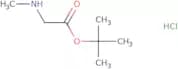
CAS:<p>Please enquire for more information about N-Me-D-Ala-OMe·HCl including the price, delivery time and more detailed product information at the technical inquiry form on this page</p>Formula:C5H11NO2·HClPurity:Min. 95%Molecular weight:153.61 g/molN-Me-Gly-OtBu·HCl (H-Sar-OtBu·HCl)
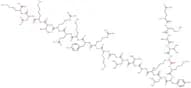
CAS:<p>Please enquire for more information about N-Me-Gly-OtBu·HCl (H-Sar-OtBu·HCl) including the price, delivery time and more detailed product information at the technical inquiry form on this page</p>Formula:C7H15NO2·HClPurity:Min. 95%Molecular weight:181.66 g/molPACAP-38 (16-38) (human, chicken, mouse, ovine, porcine, rat) trifluoroacetate salt
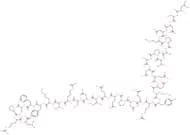
CAS:<p>Please enquire for more information about PACAP-38 (16-38) (human, chicken, mouse, ovine, porcine, rat) trifluoroacetate salt including the price, delivery time and more detailed product information at the technical inquiry form on this page</p>Formula:C123H215N39O28SPurity:Min. 95%Molecular weight:2,720.34 g/molH-Lys-Trp-Lys-OH TFA salt
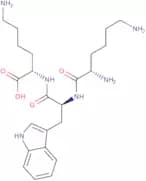
CAS:<p>H-Lys-Trp-Lys-OH TFA salt is a peptide that binds to DNA and enhances the repair of damaged DNA. It interacts with lysine residues on the DNA strand, which are known to be involved in DNA repair mechanisms. H-Lys-Trp-Lys-OH TFA salt also has some optical properties, as it can bind to tryptophan residues in the fluorescing region of damaged DNA. This peptide was originally designed for use as a fluorescent probe for damaged DNA in living cells, but has since been found to have therapeutic effects on damaged cells.</p>Formula:C23H36N6O4Purity:Min. 95%Molecular weight:460.57 g/molH-D-Asp-OtBu
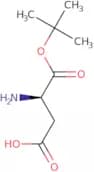
CAS:<p>Please enquire for more information about H-D-Asp-OtBu including the price, delivery time and more detailed product information at the technical inquiry form on this page</p>Formula:C8H15NO4Purity:Min. 95%Molecular weight:189.21 g/molBiotinyl-pT
CAS:<p>Please enquire for more information about Biotinyl-pT including the price, delivery time and more detailed product information at the technical inquiry form on this page</p>Formula:C190H301N59O50SPurity:Min. 95%Molecular weight:4,243.86 g/molBiotinyl-Amylin (human) trifluoroacetate salt
CAS:<p>Please enquire for more information about Biotinyl-Amylin (human) trifluoroacetate salt including the price, delivery time and more detailed product information at the technical inquiry form on this page</p>Formula:C175H275N53O57S3Purity:Min. 95%Molecular weight:4,129.58 g/molL-Threonine derivative-1
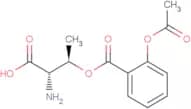
CAS:<p>L-Threonine derivative-1 is acetylsalicylic acid-L-threonine ester with potential analgesic activity.</p>Formula:C13H15NO6Purity:97.03% - 98.91%Color and Shape:SolidMolecular weight:281.26Hypocretin (70-98) (human)
CAS:<p>Please enquire for more information about Hypocretin (70-98) (human) including the price, delivery time and more detailed product information at the technical inquiry form on this page</p>Formula:C125H214N44O37SPurity:Min. 95%Molecular weight:2,957.38 g/molBoc-His(Trt)-OH
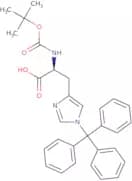
CAS:<p>Boc-His(Trt)-OH is a chemical compound that has been used in the laboratory to study uptake and binding of compounds. It is stable in complex with albumin, which has led to its use as a model system for studying hepatic steatosis. This chemical can be synthesized by solid-phase synthesis with trifluoroacetic acid and polypeptide synthesis. FT-IR spectroscopy has been used to characterize Boc-His(Trt)-OH, revealing its chemical diversity.</p>Formula:C30H31N3O4Purity:Min. 95%Color and Shape:PowderMolecular weight:497.58 g/molL-Alanine methyl ester HCl
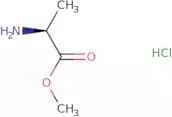
CAS:<p>L-Alanine methyl ester HCl is a compound that is used in wastewater treatment. It has been shown to inhibit the enzyme DPP-IV, which is associated with metabolic disorders. L-Alanine methyl ester HCl also has been shown to have antimicrobial activity against a number of bacteria, including methicillin resistant Staphylococcus aureus (MRSA). L-Alanine methyl ester HCl has been shown to have anti-inflammatory properties and can be used for the treatment of autoimmune diseases. This compound also has a significant effect on biological properties such as phase transition temperature and thermal expansion.</p>Formula:C4H10NO2ClPurity:Min. 95%Color and Shape:White PowderMolecular weight:139.58 g/molZ-Pro-bNA
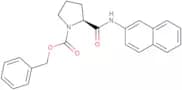
CAS:<p>Please enquire for more information about Z-Pro-bNA including the price, delivery time and more detailed product information at the technical inquiry form on this page</p>Formula:C23H22N2O3Purity:Min. 95%Molecular weight:374.43 g/molBoc-Tyr(tBu)-OH
CAS:<p>Boc-Tyr(tBu)-OH is a chemical compound that is part of the class of lactams. It has been shown to have antitumor activity in vitro and in vivo, but it has not yet been tested for its cytotoxicity. This compound is synthesized by solid-phase synthesis and contains a disulfide bond, which may contribute to its cytotoxicity. Boc-Tyr(tBu)-OH has also been shown to have high affinity for the alpha 2A adrenergic receptor subtype and other receptors with an isosteric carbonyl group.</p>Formula:C18H27NO5Purity:Min. 95%Color and Shape:PowderMolecular weight:337.41 g/molFmoc-N-methylglycine
CAS:<p>Fmoc-N-methylglycine is a modified form of the amino acid glycine, which has been modified to include a reactive group that can be used to link other molecules. This molecule has gram-negative bacterial activity and exhibits potent antibacterial activity against many gram-positive bacteria. Fmoc-N-methylglycine is also an antimicrobial peptide with binding constants in the nanomolar range. It is also an agent that binds to serotonin, which may explain its effects on mood and sleep. Fmoc-N-methylglycine can be synthesized using stepwise solid phase synthesis methods or by conjugation with other molecules.</p>Formula:C18H17NO4Purity:Min. 95%Molecular weight:311.33 g/molFmoc-Dap(Ac)-OH
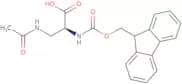
CAS:<p>Fmoc-Dap(Ac)-OH is a fine chemical that is used as a building block in the synthesis of complex compounds. It reacts with various nucleophiles to form an amide bond, and has been shown to be useful for both research and industrial applications. Fmoc-Dap(Ac)-OH can also be used as a reagent to synthesize peptides, which are biologically active compounds that form the basis of many drugs. This versatile intermediate is also used as a scaffold in the construction of more complex molecules. Fmoc-Dap(Ac)-OH has CAS No. 181952-29-4 and is classified as a speciality chemical by the International Union of Pure and Applied Chemistry (IUPAC).</p>Formula:C20H20N2O5Purity:Min. 95%Color and Shape:PowderMolecular weight:368.38 g/molBiotinyl-(Arg8)-Vasopressin trifluoroacetate salt
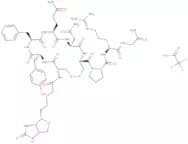
CAS:<p>Please enquire for more information about Biotinyl-(Arg8)-Vasopressin trifluoroacetate salt including the price, delivery time and more detailed product information at the technical inquiry form on this page</p>Formula:C56H79N17O14S3Purity:Min. 95%Molecular weight:1,310.53 g/molGlycine - EP
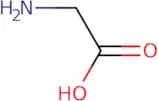
CAS:<p>Glycine is a buffering agent that can be used in electrophoresis for protein samples. It has an optimal pH range of 2.2-3.6 and a pKa of 2.35.</p>Formula:NH2CH2COOHPurity:Min. 95%Molecular weight:75.07 g/molBiotinyl-CRF (human, rat)
CAS:<p>Please enquire for more information about Biotinyl-CRF (human, rat) including the price, delivery time and more detailed product information at the technical inquiry form on this page</p>Formula:C218H358N62O65S3Purity:Min. 95%Molecular weight:4,983.75 g/molBiotinyl-(Glu1)-Orexin A (human, mouse, rat) trifluoroacetate salt
CAS:<p>Please enquire for more information about Biotinyl-(Glu1)-Orexin A (human, mouse, rat) trifluoroacetate salt including the price, delivery time and more detailed product information at the technical inquiry form on this page</p>Formula:C162H259N49O47S5Purity:Min. 95%Molecular weight:3,805.42 g/molH-Arg-Arg-Arg-Arg-Arg-Arg-Arg-Arg-Arg-OH trifluoroacetate salt
CAS:<p>Arg-Arg-Arg-Arg-Arg-Arg-Arg-Arg-Arg-OH is a peptide that belongs to the group of arginine containing peptides. This peptide has been shown to have minimal toxicity and high specificity against HIV. Arg-Arg-Arg-Arg-Arg-Arg-Arg-Arg-OH binds intracellular targets, such as protein kinases and ion channels, which inhibit cellular transformation. The Arg residues in this molecule are essential for its biological properties as they are involved in the binding to these intracellular targets. Arg molecules also have an important role in infectious diseases, as they can inhibit viral replication by interfering with the viral life cycle. In addition, Arg molecules may be useful for treating bowel disease because they can bind to calcium ions (Ca2+) and regulate their levels in cells.</p>Formula:C54H110N36O10Purity:Min. 95%Molecular weight:1,423.69 g/molFmoc-b-Ala-Phe-Pro-OH
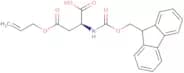
<p>Fmoc-b-Ala-Phe-Pro-OH is a chemical compound that is used as a reaction component, reagent, and useful scaffold. It reacts with various other chemicals to form complex compounds. This synthetic compound can be used as an intermediate in the synthesis of peptides, proteins, and other organic compounds. Fmoc-b-Ala-Phe-Pro-OH can also be used as a building block for the synthesis of speciality chemicals.</p>Formula:C32H33N3O6Purity:Min. 95%Color and Shape:PowderMolecular weight:555.62 g/molFmoc-L-aspartic acid β-allyl ester
CAS:<p>Fmoc-L-aspartic acid beta-allyl ester is a specific interaction between an amide and an enzyme target. It has been shown to have anti-inflammatory properties by inhibiting the activity of COX-2, which inhibits the production of prostaglandins. Fmoc-L-aspartic acid beta-allyl ester is a cyclic peptide with a lactam ring system that has been synthesized in a stepwise manner on a solid phase. This molecule interacts with cell line A549 and blocks the proliferation of cancer cells. Fmoc-L-aspartic acid beta-allyl ester also contains a disulfide bond that stabilizes its structure.</p>Formula:C22H21NO6Purity:Min. 95%Molecular weight:395.41 g/mol(Tyr0)-Urocortin (rat)
CAS:<p>Please enquire for more information about (Tyr0)-Urocortin (rat) including the price, delivery time and more detailed product information at the technical inquiry form on this page</p>Formula:C215H347N63O66Purity:Min. 95%Molecular weight:4,870.44 g/molN-Boc-glycine
CAS:<p>N-Boc-glycine is a chemical compound used in the synthesis of cyclic peptides. N-Boc-glycine is synthesized by the reaction of glycine with methanol and hydrochloric acid in the presence of an activated form of carbon monoxide. The pharmacokinetic properties of N-Boc-glycine are similar to those for human immunoglobulin, and it can be used as a reference compound for preparative high performance liquid chromatography (HPLC). It has been shown that the nitrogen atoms in N-Boc-glycine are chemically stable, which makes it suitable for asymmetric synthesis. N-Boc-glycine also has potent antagonist effects on biochemical properties such as calcium channel blockade, inhibition of platelet aggregation, and inhibition of neutrophil chemotaxis.</p>Formula:C7H13NO4Purity:Min. 95%Color and Shape:White PowderMolecular weight:175.18 g/molBiotinyl-α-CGRP (human) trifluoroacetate salt
CAS:<p>Please enquire for more information about Biotinyl-alpha-CGRP (human) trifluoroacetate salt including the price, delivery time and more detailed product information at the technical inquiry form on this page</p>Formula:C173H281N53O51S3Purity:Min. 95%Molecular weight:4,015.61 g/molBiotinyl-Neuropeptide Y (human, rat) trifluoroacetate salt
CAS:<p>Please enquire for more information about Biotinyl-Neuropeptide Y (human, rat) trifluoroacetate salt including the price, delivery time and more detailed product information at the technical inquiry form on this page</p>Formula:C199H299N57O59S2Purity:Min. 95%Molecular weight:4,497.98 g/molEndo-38a-Pro-Exenatide trifluoroacetate salt
CAS:<p>Please enquire for more information about Endo-38a-Pro-Exenatide trifluoroacetate salt including the price, delivery time and more detailed product information at the technical inquiry form on this page</p>Formula:C189H289N51O61SPurity:Min. 95%Molecular weight:4,283.69 g/molCalmodulin-Dependent Protein Kinase II (290-309)
CAS:<p>Calmodulin-dependent protein kinase II (CAMKII) is a calcium/calmodulin-dependent enzyme that plays an important role in the regulation of cardiac contractility. CAMKII is activated by the binding of beta-adrenergic and other hormones to their receptors on the plasma membrane, leading to a change in the membrane potential. CAMKII then phosphorylates myofibrils, which leads to an increase in cardiac contractility. In liver cells, CAMKII activation leads to an increase in contractility and perfusion through increased ethylene production.</p>Formula:C103H185N31O24SPurity:Min. 95%Molecular weight:2,273.83 g/molBiotinyl-Calcitonin (salmon I)
CAS:<p>Please enquire for more information about Biotinyl-Calcitonin (salmon I) including the price, delivery time and more detailed product information at the technical inquiry form on this page</p>Formula:C155H254N46O50S3Purity:Min. 95%Molecular weight:3,658.15 g/molH-D-Pro-NHEt·HCl
CAS:<p>Please enquire for more information about H-D-Pro-NHEt·HCl including the price, delivery time and more detailed product information at the technical inquiry form on this page</p>Formula:C7H14N2O·HClPurity:Min. 95%Molecular weight:178.66 g/molH-Ala-Ala-bNA
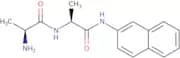
CAS:<p>Ala-Ala-bNA is a substrate for dipeptidyl aminopeptidase I (cathepsin C)</p>Formula:C16H19N3O2Purity:Min. 99 Area-%Color and Shape:White PowderMolecular weight:285.34 g/molFmoc-α-Me-Lys(Boc)-OH
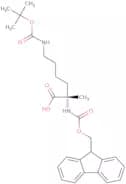
CAS:<p>Fmoc-a-Me-Lys(Boc)-OH is a versatile building block that can be used in the synthesis of complex compounds. It is a reagent and speciality chemical, which are substances used in research laboratories. Fmoc-a-Me-Lys(Boc)-OH has been used as an intermediate in the synthesis of drugs such as antihypertensive agents, anticonvulsants, and antibiotics. It has also been used as a reaction component in organic syntheses to produce peptides, polymers, and other compounds with biologically active properties.</p>Formula:C27H34N2O6Purity:Min. 95%Color and Shape:White PowderMolecular weight:482.57 g/molH-Lys(Boc)-OH
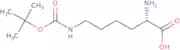
CAS:<p>H-Lys(Boc)-OH is an ε-amino-protected lysine that plays a pivotal role in solution phase peptide synthesis. Strategically protected at the ε-amino group, it allows controlled peptide assembly, and it serves as intermediate for synthesizing β-peptides. The bulky Boc (tert-butyloxycarbonyl) group shields its epsilon amine (NH2) group, acting as a protective measure to prevent unwanted side reactions.</p>Formula:C11H22N2O4Color and Shape:White PowderMolecular weight:246.3 g/molLeu-Leu-Leu-OH
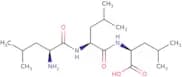
CAS:<p>Leu-Leu-Leu-OH is a pentapeptide that is used in cancer treatment to inhibit the growth of cancer cells. It prevents the production of proteins and, as a result, cell division. Leu-Leu-Leu-OH has been shown to be effective against tumor cells with an antibody that binds to the surface of cells. The monoclonal antibody is taken up by the cancer cells through receptor mediated endocytosis, which leads to inhibition of protein synthesis and cell death.</p>Formula:C18H35N3O4Purity:Min. 95%Color and Shape:White PowderMolecular weight:357.49 g/molH-Asp-NH2
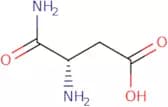
CAS:<p>H-Asp-NH2 is an isomeric mixture of l-phenylalanine and its methyl ester. It is used as a feed additive in animals to improve growth and feed conversion efficiency. The deamination of H-Asp-NH2 produces hydrogen peroxide, which has been shown to be lethal to enterobacteriaceae. This compound may also act as a microbial growth inhibitor by preventing the formation of peptides during synthesis.</p>Formula:C4H8N2O3Purity:Min. 95%Molecular weight:132.12 g/molFmoc-Ala-Ala-Pro-OH
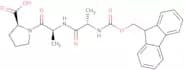
CAS:<p>Fmoc-Ala-Ala-Pro-OH is a building block that is used in organic synthesis as a reaction component or reagent. It can be used to synthesize a wide range of complex compounds with speciality chemical and fine chemical applications. Fmoc-Ala-Ala-Pro-OH is also a versatile building block that can be used to synthesize various useful scaffolds, such as the Fmoc amino acid sequence, which has been shown to bind heparin. This compound has high purity and can be used in research and development.</p>Formula:C26H29N3O6Purity:Min. 95%Color and Shape:PowderMolecular weight:479.53 g/molS-(p-Nitrobenzyl)glutathione
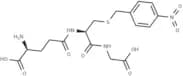
CAS:<p>S-(p-Nitrobenzyl)glutathione acts as a competitive inhibitor of glutathionase.</p>Formula:C17H22N4O8SColor and Shape:SolidMolecular weight:442.44S-Fcme
CAS:<p>S-Fcme activates multidrug resistance transporter by boosting ATPase activity and competing for drug binding.</p>Formula:C19H33NO2SColor and Shape:SolidMolecular weight:339.54S-Benzylglutathione
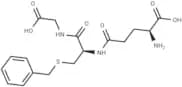
CAS:<p>S-Benzylglutathione acts as a competitive inhibitor of glutathionase and undergoes conversion by rat kidney microsomes into its cysteine derivatives.</p>Formula:C17H23N3O6SColor and Shape:SolidMolecular weight:397.453,3',5'-Triiodo-D-thyronine
CAS:<p>3,3',5'-Triiodo-D-thyronine is a thyroid hormone that is used in the treatment of hypothyroidism. It is administered by injection or by mouth. 3,3',5'-Triiodo-D-thyronine is an insoluble drug, which means it cannot be dissolved in water. This drug can be injected into the body or taken as a pill. 3,3',5'-Triiodo-D-thyronine has been shown to increase metabolic rate and may also inhibit the growth of certain types of tumors. 3,3',5'-Triiodo-D-thyronine has been used in diagnostic procedures such as iontophoresis and implanting devices to treat prostate cancer. This medication can also be used for cosmetic purposes such as skin rejuvenation and hair loss prevention. 3,3',5'-Triiodo-D-thyronine has two structural isomers: levothyroxine and</p>Formula:C15H12I3NO4Purity:Min. 95%Molecular weight:650.97 g/molL-Tryptophan methyl ester hydrochloride
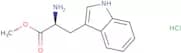
CAS:<p>L-Tryptophan methyl ester hydrochloride is an allylation product of L-tryptophan, which is a precursor to serotonin and melatonin. It is used in the synthesis of benzodiazepine receptor ligands and has serotonergic activity. L-Tryptophan methyl ester hydrochloride can be synthesized from L-tryptophan by amination reaction with methylamine and formaldehyde in the presence of a base. This chemical compound was also shown to have antitumour activity against MDA-MB231 breast cancer cells, which may be due to its ability to inhibit cell proliferation.</p>Formula:C12H15ClN2O2Purity:Min. 95%Color and Shape:PowderMolecular weight:254.71 g/molPheromone Biosynthesis Activating Neuropeptide (Helicoverpa assulta, Heliothis zea)
CAS:<p>Please enquire for more information about Pheromone Cymit Quimicaesis Activating Neuropeptide (Helicoverpa assulta, Heliothis zea) including the price, delivery time and more detailed product information at the technical inquiry form on this page</p>Formula:C167H259N47O57S2Purity:Min. 95%Molecular weight:3,901.26 g/molCys-Gly-3M3SH
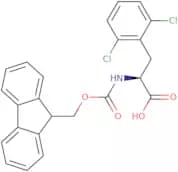
CAS:<p>Cys-Gly-3M3SH is a cationic antimicrobial peptide that has been shown to be effective against Staphylococcus aureus. Cys-Gly-3M3SH binds to the bacterial enzyme urease, which is responsible for converting urea into ammonia and carbon dioxide. The binding of this peptide prevents the hydrolysis of urea, leading to cell death by disruption of the proton motive force. Cys-Gly-3M3SH is also biotransformed by bacteria in humans and can be used as a probe for transport studies in vitro. It can also be used as a molecular probe for structural biology research, such as protein crystallization and electron microscopy studies.</p>Formula:C12H24N2O4SPurity:Min. 95%Molecular weight:292.39 g/molFmoc-2,6-dichloro-L-phenylalanine
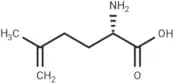
CAS:<p>Please enquire for more information about Fmoc-2,6-dichloro-L-phenylalanine including the price, delivery time and more detailed product information at the technical inquiry form on this page</p>Formula:C24H19Cl2NO4Purity:Min. 95%Molecular weight:456.32 g/mol2-Amino-5-methyl-5-hexenoic acid
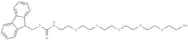
CAS:<p>2-Amino-5-methyl-5-hexenoic acid ((S)-2-Amino-5-methylhex-5-enoic acid) acts as a methionine analog, competing with methionine and thereby hindering cell growth. This compound inhibits protein synthesis in Salmonella typhimurium TA1535 and Escherichia coli K-12 without affecting the synthesis of DNA or RNA.</p>Formula:C7H13NO2Color and Shape:SolidMolecular weight:143.184Fmoc-NH-PEG6-alcohol
CAS:<p>Fmoc-NH-PEG6-alcohol, a cleavable ADC linker, is employed in the synthesis of antibody-drug conjugates (ADCs) [1].</p>Formula:C27H37NO8Color and Shape:SolidMolecular weight:503.58Phospho-L-arginine
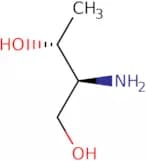
CAS:<p>Phospho-L-arginine is a derivative of arginine.</p>Formula:C6H15N4O5PMolecular weight:254.18D-allo-Threoninol
CAS:<p>D-allo-Threoninol is a conformational analogue of threonine. It has been shown to inhibit the growth of Escherichia coli, Bacillus subtilis, and Staphylococcus aureus in vitro. D-allo-Threoninol binds to the enzyme methionine adenosyltransferase (MAT) by forming hydrogen bonds with its amino acid side chains. This binding prevents the formation of the MAT-coenzyme A complex, inhibiting protein synthesis and cell division.</p>Formula:C4H11NO2Purity:Min. 95%Color and Shape:PowderMolecular weight:105.14 g/mol