Lipase
Lipases are enzymes that catalyze the hydrolysis of triglycerides into free fatty acids and glycerol, playing a crucial role in lipid digestion, absorption, and metabolism. Lipase inhibitors are of interest in the treatment of obesity, pancreatitis, and lipid-related metabolic disorders. At CymitQuimica, we provide a variety of lipase inhibitors to support your research in metabolism, obesity, and gastrointestinal health.
Found 96 products of "Lipase"
Sort by
Purity (%)
0
100
|
0
|
50
|
90
|
95
|
100
JZP-430
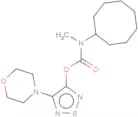
CAS:<p>JZP-430 is an effective, highly selective, irreversible inhibitor of α/β-hydrolase domain 6 (ABHD6) (IC50: 44 nM).</p>Formula:C16H26N4O3SPurity:99.78%Color and Shape:SolidMolecular weight:354.47DDAO
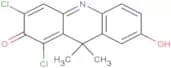
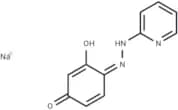
CAS:<p>DDAO: NIR red fluorescent probe, λem 656 nm, excitation 600-650 nm, detects various enzymes.</p>Formula:C15H11Cl2NO2Purity:>99.99%Color and Shape:SolidMolecular weight:308.16JW 642
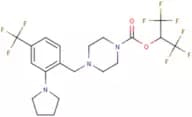
CAS:<p>JW 642 inhibits MAGL in mouse, rat, human brains (IC50: 7.6, 14, 3.7 nM).</p>Formula:C21H20F6N2O3Purity:99.28%Color and Shape:SolidMolecular weight:462.39Dilaurylglycerosulfate
CAS:<p>Dilauryl glycerol sulfate is an auxiliary emulsifier for lipase determination.</p>Formula:C27H56O6SPurity:98%Color and Shape:SolidMolecular weight:508.8Lipstatin
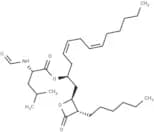
CAS:<p>Lipstatin is a potent inhibitor of the pancreas lipase. It is reported to be useful in the treatment and/or prevention of obesity and related diseases.</p>Formula:C29H49NO5Purity:98%Color and Shape:SolidMolecular weight:491.7LP-922056
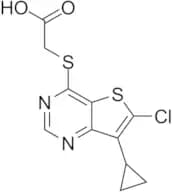
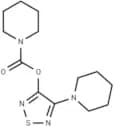
CAS:<p>LP-922056 is an inhibitor of Notum Pectinacetylesterase with EC50 values of 21 nM, 55 nM for human and mouse, respectively.</p>Formula:C11H9ClN2O2S2Purity:99.84%Color and Shape:SolidMolecular weight:300.78Lalistat 2
CAS:<p>Lalistat 2: selective lysosomal acid lipase inhibitor, IC50 152 nM, no effect on pancreatic/milk lipase <10 μM.</p>Formula:C13H20N4O2SPurity:99.84%Color and Shape:SolidMolecular weight:296.39Ciwujianoside C2
CAS:<p>Ciwujianoside C2 is a useful organic compound for research related to life sciences. The catalog number is T126337 and the CAS number is 114892-56-7.</p>Formula:C60H94O26Color and Shape:SolidMolecular weight:1231.39Ciwujianoside D2
CAS:<p>Ciwujianoside D2 is a useful organic compound for research related to life sciences. The catalog number is T126336 and the CAS number is 114892-57-8.</p>Formula:C54H84O22Color and Shape:SolidMolecular weight:1085.24Lipase, triacylglycerol
CAS:<p>Lipase, triacylglycerol (Alkaline lipase) is a specific enzyme catabolism of triacylglycerol to glycerol and fatty acids,transfer to various tissues.</p>Formula:C11H9N3NaO2Color and Shape:SolidMolecular weight:238.201RHC 80267
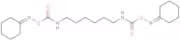
CAS:<p>RHC 80267 (U-57908) is a selective inhibitor of DAGL (IC50 : 4 μM in canine platelets)</p>Formula:C20H34N4O4Purity:99.54%Color and Shape:White SolidMolecular weight:394.51XEN445
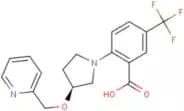
CAS:<p>XEN445, a potent and selective endothelial lipase(EL) inhibitor (IC50=0.237 uM), exhibitis good ADME and PK properties.</p>Formula:C18H17F3N2O3Purity:99.47% - 99.6%Color and Shape:SolidMolecular weight:366.33Ibrolipim
CAS:<p>Ibrolipim (NO-1886) attenuates high glucose-induced endothelial dysfunction in cultured human umbilical vein endothelial cells via PI3K/Akt pathway.</p>Formula:C19H20BrN2O4PPurity:98.04%Color and Shape:SolidMolecular weight:451.25HSL-IN-3
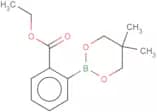
CAS:<p>HSL-IN-3 (HSL inhibitor 3) is a boronic acid derivative that is an inhibitor of hormone-sensitive lipase(HSL).</p>Formula:C14H19BO4Purity:99.402%Color and Shape:SolidMolecular weight:262.11Atglistatin
CAS:<p>Atglistatin: ATGL inhibitor, IC50 ~0.7 μM, inhibits lipolysis, non-toxic up to 50 μM.</p>Formula:C17H21N3OPurity:97.2% - 99.01%Color and Shape:SolidMolecular weight:283.37MAGL-IN-4
CAS:<p>MAGL-IN-4 (His121 ARG57) is one of the monoacylglycerol lipase (MAGL) inhibitors in central nervous system-related diseases.</p>Formula:C18H21ClN2O4Purity:99.79%Color and Shape:SolidMolecular weight:364.82MJN110
CAS:<p>MJN110 (Cravatt Reagent) is a potent and selective MAGL inhibitor. MJN110 Produces Opioid-Sparing Effects in a Mouse Neuropathic Pain Model.</p>Formula:C22H21Cl2N3O4Purity:99.406%Color and Shape:SolidMolecular weight:462.33Cetilistat
CAS:<p>Cetilistat (ATL-962) is a drug for obesity and type 2 diabetes, blocking pancreatic lipase. Developed by Alizyme.</p>Formula:C25H39NO3Purity:97.12% - 97.47%Color and Shape:Off-White CrystMolecular weight:401.58KML29
CAS:<p>KML29 is highly selective and effective monoacylglycerol lipase (MAGL) inhibitor.</p>Formula:C24H21F6NO7Purity:98.65%Color and Shape:SolidMolecular weight:549.42URB602
CAS:<p>URB602 is a specific monoacylglycerol lipase (MGL) inhibitor, which inhibits rat brain MGL (IC50: 28±4 μM) through a noncompetitive mechanism.</p>Formula:C19H21NO2Purity:99.64% - 99.9%Color and Shape:Off-White SolidMolecular weight:295.38WWL70
CAS:<p>WWL70 is a selective alpha/beta hydrolase domain 6 inhibitors (IC50: 70 nM).</p>Formula:C27H23N3O3Purity:98.38% - 98.53%Color and Shape:SolidMolecular weight:437.49JZL 184
CAS:<p>JZL 184 is a potent and selective inhibitor of MAGL with IC50 of 8 nM and 4 μM for inhibition of MAGL and FAAH in mouse brain membranes respectively.</p>Formula:C27H24N2O9Purity:97.56% - 99.31%Color and Shape:SolidMolecular weight:520.49ABX-1431
CAS:<p>ABX-1431 (Elcubragistat) is a selective and orally available CNS-penetrant monoacylglycerol lipase (MAGL/MGLL) inhibitor (IC50: 14 nM).</p>Formula:C20H22F9N3O2Purity:99.8% - 99.96%Color and Shape:SolidMolecular weight:507.39EUCODIS® Lipase 032, screening grade, recombinant, from microbial sources - EL032
<p>Lipase 32 recombinantly expressed in E. coli comes in a spray-dried formulation. It has its pH optimum at 7 and temp. optimum at 50-70°C. Lipases belong to the family of esterases and naturally act on triglycerides at lipid-water interfaces catalyzing hydrolytic reactions, esterifications and transesterification reactions in industrial and food applications. Lipase 32 was shown to hydrolyze p-Nitrophenyl esters of butyrate (100 % activity), octanoate (88 %), laurate (11 %), palmitate (0.3 %) and stearate (0.1 %).</p>Lipase 038
CAS:<p>Lipases belong to the family of esterases and naturally act on triglycerides at lipid-water interfaces. Lipases/esterases can be used as versatile tools in hydrolytic reactions, esterifications and transesterification reactions in industrial and food applications.</p>Lipase 064
CAS:<p>Lipases belong to the family of esterases and naturally act on triglycerides at lipid-water interfaces. Lipases/esterases can be used as versatile tools in hydrolytic reactions, esterifications and transesterification reactions in industrial and food applications.</p>Lipase 014
CAS:<p>Lipases belong to the family of esterases and naturally act on triglycerides at lipid-water interfaces. Lipases/esterases can be used as versatile tools in hydrolytic reactions, esterifications and transesterification reactions in industrial and food applications.</p>Lipase 030
CAS:<p>Lipases belong to the family of esterases and naturally act on triglycerides at lipid-water interfaces. Lipases/esterases can be used as versatile tools in hydrolytic reactions, esterifications and transesterification reactions in industrial and food applications.</p>Lipase 032
CAS:<p>Lipases belong to the family of esterases and naturally act on triglycerides at lipid-water interfaces. Lipases/esterases can be used as versatile tools in hydrolytic reactions, esterifications and transesterification reactions in industrial and food applications.</p>Lipase 068
CAS:<p>Lipases belong to the family of esterases and naturally act on triglycerides at lipid-water interfaces. Lipases/esterases can be used as versatile tools in hydrolytic reactions, esterifications and transesterification reactions in industrial and food applications.</p>Lipase 032
CAS:<p>Lipases belong to the family of esterases and naturally act on triglycerides at lipid-water interfaces. Lipases/esterases can be used as versatile tools in hydrolytic reactions, esterifications and transesterification reactions in industrial and food applications.</p>Lipase 065
CAS:<p>Lipases belong to the family of esterases and naturally act on triglycerides at lipid-water interfaces. Lipases/esterases can be used as versatile tools in hydrolytic reactions, esterifications and transesterification reactions in industrial and food applications.</p>Lipase 004
CAS:<p>Lipases belong to the family of esterases and naturally act on triglycerides at lipid-water interfaces. Lipases/esterases can be used as versatile tools in hydrolytic reactions, esterifications and transesterification reactions in industrial and food applications.</p>Lipase 016
CAS:<p>Lipases belong to the family of esterases and naturally act on triglycerides at lipid-water interfaces. Lipases/esterases can be used as versatile tools in hydrolytic reactions, esterifications and transesterification reactions in industrial and food applications.</p>Lipase 020
CAS:<p>Lipases belong to the family of esterases and naturally act on triglycerides at lipid-water interfaces. Lipases/esterases can be used as versatile tools in hydrolytic reactions, esterifications and transesterification reactions in industrial and food applications.</p>EUCODIS® Lipase 038, screening grade, recombinant, from microbial sources - EL038
<p>Lipase 38 recombinantly expressed in E. coli comes in a spray-dried formulation. It has its pH optimum at 6-8 and temp. optimum at >50°C. Lipases belong to the family of esterases and naturally act on triglycerides at lipid-water interfaces catalyzing hydrolytic reactions, esterifications and transesterification reactions in industrial and food applications. Lipase 38 was shown to hydrolyze p-Nitrophenyl esters of acetate (27 % activity compared to butyrate), butyrate (100 %), octanoate (9 %) and caprate (5 %).</p>Lipase 067
CAS:<p>Lipases belong to the family of esterases and naturally act on triglycerides at lipid-water interfaces. Lipases/esterases can be used as versatile tools in hydrolytic reactions, esterifications and transesterification reactions in industrial and food applications.</p>Lipase 056
CAS:<p>Lipases belong to the family of esterases and naturally act on triglycerides at lipid-water interfaces. Lipases/esterases can be used as versatile tools in hydrolytic reactions, esterifications and transesterification reactions in industrial and food applications.</p>Lipase 008
CAS:<p>Lipases belong to the family of esterases and naturally act on triglycerides at lipid-water interfaces. Lipases/esterases can be used as versatile tools in hydrolytic reactions, esterifications and transesterification reactions in industrial and food applications.</p>Lipase 009
CAS:<p>Lipases belong to the family of esterases and naturally act on triglycerides at lipid-water interfaces. Lipases/esterases can be used as versatile tools in hydrolytic reactions, esterifications and transesterification reactions in industrial and food applications.</p>EUCODIS® Lipase 015, screening grade, recombinant, from microbial sources - EL015
<p>Lipase 15 recombinantly expressed in E. coli comes in a spray-dried formulation. It has its pH optimum at 6-8 and temp. optimum at 25°C. Lipases belong to the family of esterases and naturally act on triglycerides at lipid-water interfaces catalyzing hydrolytic reactions, esterifications and transesterification reactions in industrial and food applications. Lipase 15 was shown to hydrolyze p-Nitrophenyl esters of butyrate (100 % activity), octanoate (13 %), laurate (1 %), palmitate (1 %), stearate (<1 %), arachidate (<1 %) and behenate (<1 %).</p>EUCODIS® Lipase 068, screening grade, recombinant, from microbial sources - EL068
<p>Lipase 68 recombinantly expressed in E. coli comes in a spray-dried formulation. It has its pH optimum at 7-9 and temp. optimum at 30°C. Lipases belong to the family of esterases and naturally act on triglycerides at lipid-water interfaces catalyzing hydrolytic reactions, esterifications and transesterification reactions in industrial and food applications. Lipase 68 was shown to hydrolyze p-Nitrophenyl esters of butyrate (100 % activity), octanoate (75 %), laurate (8 %), palmitate (1 %) and stearate (0.1 %).</p>EUCODIS® Lipase 064, screening grade, recombinant, from microbial sources - EL064
<p>Lipase 64 recombinantly expressed in E. coli comes in a spray-dried formulation. It has its pH optimum at 7 and temp. optimum at 40-50°C. Lipases belong to the family of esterases and naturally act on triglycerides at lipid-water interfaces catalyzing hydrolytic reactions, esterifications and transesterification reactions in industrial and food applications. Lipase 64 was shown to hydrolyze p-Nitrophenyl esters of butyrate (100 % activity), octanoate (0.5 %) and laurate (0.1 %).</p>EUCODIS® Lipase 017, screening grade, recombinant, from microbial sources - EL017
<p>Lipase 17 recombinantly expressed in E. coli comes in a spray-dried formulation. It has its pH optimum at 7-8. Lipases belong to the family of esterases and naturally act on triglycerides at lipid-water interfaces catalyzing hydrolytic reactions, esterifications and transesterification reactions in industrial and food applications. Lipase 17 was shown to hydrolyze p-Nitrophenyl esters of butyrate (2 % activity compared to octanoate), octanoate (100 %), laurate (20 %), palmitate (3 %), stearate (1 %), arachidate (1 %) and behenate (1 %).</p>Lipase
CAS:<p>Porcine pancreatic lipase is an enzyme that has been shown to have antioxidative properties. It is used as an additive in biodiesel production, where it prevents the formation of trans fatty acids and reduces the amount of free radicals. This enzyme has been shown to have lipase, protease, and amylase activities by using surface methodology. Porcine pancreatic lipase can be used for the treatment of autoimmune diseases such as multiple sclerosis and rheumatoid arthritis. This enzyme interacts with other enzymes such as lipases, proteases, and amylases to catalyze reactions on surfaces. It can be used for asymmetric synthesis by hydrogen bonding or by forming an intermediate complex with metal ions.</p>Purity:Min. 95%Color and Shape:SolidEUCODIS® Lipase 016, screening grade, recombinant, from microbial sources - EL016
<p>Lipase 16 recombinantly expressed in E. coli comes in a spray-dried formulation. It has its pH optimum at 7-8 and temp. optimum at >40°C. Lipases belong to the family of esterases and naturally act on triglycerides at lipid-water interfaces catalyzing hydrolytic reactions, esterifications and transesterification reactions in industrial and food applications. Lipase 16 was shown to hydrolyze p-Nitrophenyl esters of butyrate (58 % activity compared to octanoate), octanoate (100 %), laurate (40 %), palmitate (27 %), stearate (13 %), arachidate (2 %) and behenate (0.2 %).</p>EUCODIS® Lipase 001, screening grade, recombinant, from microbial sources - EL001
<p>Lipase 01 recombinantly expressed in E. coli comes in a spray-dried formulation. It has its pH optimum at 6-7 and temp. optimum at 25-45°C. Lipases belong to the family of esterases and naturally act on triglycerides at lipid-water interfaces catalyzing hydrolytic reactions, esterifications and transesterification reactions in industrial and food applications. Lipase 01 was shown to hydrolyze p-Nitrophenyl esters of butyrate (100 % activity), octanoate (57 %), laurate (13 %), palmitate (9 %), stearate (6 %), arachidate (2 %) and behenate (0.1 %).</p>EUCODIS® Lipase 031, screening grade, recombinant, from microbial sources - EL031
<p>Lipase 31 recombinantly expressed in E. coli comes in a spray-dried formulation. It has its pH optimum at 6-8 and temp. optimum at 40-80°C. Lipases belong to the family of esterases and naturally act on triglycerides at lipid-water interfaces catalyzing hydrolytic reactions, esterifications and transesterification reactions in industrial and food applications. Lipase 31 was shown to hydrolyze p-Nitrophenyl esters of acetate (100 % activity) and butyrate (23 %).</p>EUCODIS® Lipase 070, screening grade, recombinant, from microbial sources - EL070
<p>Lipase 70 recombinantly expressed in E. coli comes in a spray-dried formulation. It has its pH optimum at 6-8 and temp. optimum at 35-45°C. Lipases belong to the family of esterases and naturally act on triglycerides at lipid-water interfaces catalyzing hydrolytic reactions, esterifications and transesterification reactions in industrial and food applications. Lipase 70 was shown to hydrolyze p-Nitrophenyl esters of butyrate (100 % activity), octanoate (62 %), laurate (15 %), palmitate (4 %), stearate (3 %), arachidate (2 %) and behenate (0.2 %).</p>EUCODIS® Lipase 056, screening grade, recombinant, from microbial sources - EL056
<p>Lipase 56 recombinantly expressed in E. coli comes in a spray-dried formulation. It has its pH optimum at 8 and temp. optimum at 40-50°C. Lipases belong to the family of esterases and naturally act on triglycerides at lipid-water interfaces catalyzing hydrolytic reactions, esterifications and transesterification reactions in industrial and food applications. Lipase 56 was shown to hydrolyze p-Nitrophenyl esters of butyrate (79 % activity compared to octanoate), octanoate (100 %), laurate (51 %), palmitate (29 %), stearate (15 %), arachidate (0.2 %) and behenate (0.1 %).</p>