Organometallic Ligands
In this category, you will be able to find a large number of organometallic molecules used as ligands in biomolecules. These organometallic ligands can be used in organic chemistry and synthesis in the laboratory. They play a critical role in forming coordination complexes and catalyzing various chemical reactions. At CymitQuimica, we offer a diverse selection of high-quality organometallic ligands to support your research and industrial needs.
Subcategories of "Organometallic Ligands"
- Buchwald Ligands(22 products)
- DPEN(4 products)
- DPHEN(4 products)
- JOSIPHOS(4 products)
- Phosphine(497 products)
- Porphirines(75 products)
Found 2887 products of "Organometallic Ligands"
Sort by
Purity (%)
0
100
|
0
|
50
|
90
|
95
|
100
IRAK4-IN-1
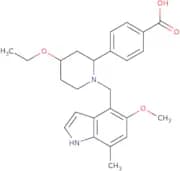
CAS:<p>IRAK4-IN-1 is a small molecule inhibitor, which is a synthetic compound designed to interfere with specific biological pathways. This product originates from extensive chemical synthesis and medicinal chemistry efforts, aimed at targeting key components of the immune signaling cascade. Its primary mode of action involves selective inhibition of interleukin-1 receptor-associated kinase 4 (IRAK4), a crucial kinase in the Toll-like receptor (TLR) and interleukin-1 receptor (IL-1R) pathway. By inhibiting IRAK4, IRAK4-IN-1 effectively downregulates downstream inflammatory signaling processes.</p>Formula:C19H23N5OPurity:Min. 95%Molecular weight:337.42 g/molIptacopan
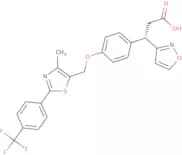
CAS:<p>Iptacopan is an oral, small-molecule therapeutic, which is a complement factor B inhibitor that targets the alternative pathway of the complement system. This pathway is a component of the immune system's innate response and, when dysregulated, can contribute to the pathogenesis of various complement-mediated diseases.</p>Formula:C25H30N2O4Purity:Min. 95%Molecular weight:422.5 g/molTrodusquemine
CAS:<p>Inhibitor of protein tyrosine phosphatase PTP1B</p>Formula:C37H72N4O5SPurity:Min. 95%Molecular weight:685.06 g/molVU0453379
CAS:<p>VU0453379 is a chemical compound that functions as a positive allosteric modulator (PAM) of the M4 muscarinic acetylcholine receptor. It is synthetically derived through medicinal chemistry processes designed to selectively enhance receptor signaling pathways. VU0453379 acts by binding to an allosteric site on the M4 receptor, distinct from the orthosteric site where endogenous neurotransmitters bind. This binding potentiates receptor sensitivity and activity in response to acetylcholine, thereby amplifying receptor-mediated signaling pathways.</p>Formula:C26H34N4O2Purity:Min. 95%Molecular weight:434.6 g/molUrolithin M6
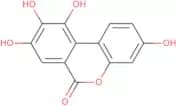
CAS:<p>Urolithin M6 is a metabolite, which is a bioactive compound derived from the metabolism of ellagitannins and ellagic acid found in certain dietary polyphenols. These polyphenols are abundant in fruits such as pomegranates, berries, and nuts. The transformation into urolithins, including Urolithin M6, is facilitated by the gut microbiota, which metabolizes these ellagitannins in the gastrointestinal tract.</p>Formula:C13H8O6Purity:Min. 95%Molecular weight:260.2 g/molAR-13324 mesylate
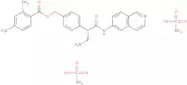
CAS:<p>AR-13324 mesylate is a pharmaceutical compound, which is a selective Rho kinase inhibitor derived from chemical synthesis with a specific mode of action targeting the modulation of aqueous humor outflow in the eye. Structurally, it is designed to inhibit the Rho-associated protein kinase (ROCK) pathway, which plays a crucial role in controlling various cellular functions including contraction, motility, proliferation, and apoptosis, specifically affecting the trabecular meshwork and uveoscleral pathway in ocular tissues.</p>Formula:C29H31N3O6SPurity:Min. 95%Molecular weight:549.64 g/molBIBF 1202
CAS:<p>BIBF 1202 is a potent inhibitor of phospholipase A2, prostaglandin synthase and cyclooxygenase-2. It inhibits the production of arachidonic acid from membrane phospholipids and is used in cancer research. BIBF 1202 has been shown to have anti-tumour activity in a number of animal models, including human liver cancer cells. This molecule has also been shown to inhibit the activation of nuclear factor kappa B (NF-κB), which is involved in carcinogenesis.</p>Formula:C30H31N5O4Purity:Min. 95%Molecular weight:525.6 g/molVX 702
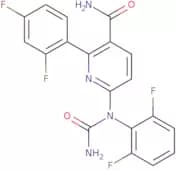
CAS:<p>p38 MAP kinase antagonist</p>Formula:C19H12F4N4O2Purity:Min. 95%Color and Shape:SolidMolecular weight:404.32 g/molDT2216
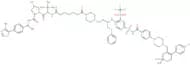
CAS:<p>DT2216 is a small-molecule anticancer compound, which is a product of rational drug design originating from advanced chemical synthesis techniques. The primary mode of action of DT2216 involves selectively targeting and disrupting BCL-XL interactions with pro-apoptotic proteins. By specifically degrading BCL-XL, DT2216 enhances the induction of apoptosis in cancer cells, thereby addressing the challenge of resistance associated with conventional therapies.</p>Formula:C77H96ClF3N10O10S4Purity:95%NmrMolecular weight:1,542.4 g/molAngiotensin I human acetate salt hydrate
CAS:<p>Angiotensin I human acetate salt hydrate is a synthetic peptide, which is a derivative of the human angiotensinogen protein. It is sourced through chemical synthesis methods that replicate the natural sequence of this protein's active fragment. The mode of action involves conversion by the enzyme angiotensin-converting enzyme (ACE) into angiotensin II, a potent vasoconstrictor, which plays a critical role in blood pressure regulation and fluid balance.</p>Formula:C62H89N17O14·xC2H4O2·yH2OPurity:Min. 95%Perfluorophenyl 19-(2,5-dioxo-2H-pyrrol-1(5H)-yl)-17-oxo-4,7,10,13-tetraoxa-16-azanonadecan-1-oate
CAS:<p>Perfluorophenyl 19-(2,5-dioxo-2H-pyrrol-1(5H)-yl)-17-oxo-4,7,10,13-tetraoxa-16-azanonadecan-1-oate is a synthetic compound, which is derived through a series of complex organic syntheses involving perfluorinated reagents. This compound is meticulously designed to incorporate both perfluorinated aromatic groups and a flexible, polyether-based linker. The mode of action for this compound primarily revolves around its unique chemical structure, which facilitates interactions at the molecular level that can be favorable for a variety of biochemical applications.</p>Formula:C24H27F5N2O9Purity:Min. 95%Molecular weight:582.5 g/molAM 4668
CAS:<p>AM 4668 is a biochemical compound, which is derived from synthetic origins with complex organic synthesis processes. Its primary mode of action involves targeted enzymatic inhibition, effectively interacting with specific enzyme active sites to modulate biochemical pathways.</p>Formula:C24H19F3O4SPurity:Min. 95%Molecular weight:488.48 g/molGW 3965 hydrochloride
CAS:<p>GW 3965 hydrochloride is a selective liver X receptor (LXR) agonist, which is a synthetic compound derived through pharmaceutical research aimed at modulating lipid metabolism. It functions by binding to and activating LXRs, which are nuclear receptors that regulate the expression of genes involved in cholesterol, fatty acid, and glucose homeostasis. Upon activation, these receptors influence the transcription of various target genes, leading to increased cholesterol efflux, decreased intestinal cholesterol absorption, and modulation of inflammatory responses.</p>Formula:C33H31ClF3NO3•HClPurity:Min. 95%Molecular weight:618.51 g/molMiransertib (ARQ 092) HCl
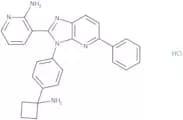
CAS:<p>Miransertib (ARQ 092) HCl is a selective inhibitor, which is a synthetic small molecule specifically targeting the AKT pathway. It is sourced through specialized chemical synthesis designed to interfere with key signaling pathways implicated in the proliferation and survival of cancer cells. The mode of action involves the inhibition of the serine/threonine kinase AKT, an integral part of the PI3K/AKT/mTOR signaling pathway that is frequently dysregulated in various cancers.</p>Formula:C27H25ClN6Purity:Min. 95%Molecular weight:468.98 g/molAZD4205
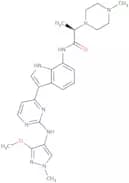
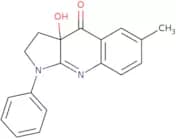
CAS:<p>AZD4205 is an investigational therapeutic agent, which is a small molecule inhibitor developed by AstraZeneca. It is designed to target specific signaling pathways involved in cancer cell proliferation and survival. The source of AZD4205 lies in the meticulous synthesis of a compound specifically engineered to interfere with aberrant molecular processes within cancer cells.</p>Formula:C25H31N9O2Purity:Min. 95%Molecular weight:489.57 g/mol(+/-)-Blebbistatin
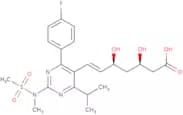
CAS:<p>Inactive enantiomer of the inhibitor of myosin II-ATPase</p>Formula:C18H16N2O2Purity:Min. 95%Molecular weight:292.33 g/molRosuvastatin
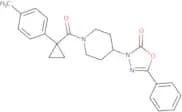
CAS:<p>Rosuvastatin is a synthetic lipid-lowering agent, which is a product of pharmaceutical manufacturing derived from extensive research in cardiovascular pharmacology. It functions as an HMG-CoA reductase inhibitor, effectively blocking the enzyme responsible for cholesterol biosynthesis in the liver. By inhibiting this enzyme, Rosuvastatin reduces the production of cholesterol, especially low-density lipoprotein (LDL) cholesterol, which is known to contribute to atherosclerosis.</p>Formula:C22H28FN3O6SPurity:Min. 95%Molecular weight:481.54 g/molML191
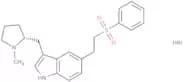
CAS:<p>Please enquire for more information about ML191 including the price, delivery time and more detailed product information at the technical inquiry form on this page</p>Formula:C24H25N3O3Purity:Min. 95%Molecular weight:403.47 g/molEletriptan hydrobromide
CAS:<p>Agonist of 5-HT1B/D serotonin receptors; anti-migraine medication</p>Formula:C22H26N2O2S•HBrPurity:Min. 95%Color and Shape:PowderMolecular weight:481.45 g/molMitoridine
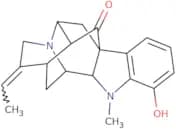
CAS:<p>Please enquire for more information about Mitoridine including the price, delivery time and more detailed product information at the technical inquiry form on this page</p>Formula:C20H22N2O2Purity:Min. 95%Molecular weight:322.4 g/mol