Organometallic Ligands
In this category, you will be able to find a large number of organometallic molecules used as ligands in biomolecules. These organometallic ligands can be used in organic chemistry and synthesis in the laboratory. They play a critical role in forming coordination complexes and catalyzing various chemical reactions. At CymitQuimica, we offer a diverse selection of high-quality organometallic ligands to support your research and industrial needs.
Subcategories of "Organometallic Ligands"
- Buchwald Ligands(22 products)
- DPEN(4 products)
- DPHEN(4 products)
- JOSIPHOS(4 products)
- Phosphine(497 products)
- Porphirines(75 products)
Found 2887 products of "Organometallic Ligands"
Sort by
Purity (%)
0
100
|
0
|
50
|
90
|
95
|
100
Pasireotide acetate
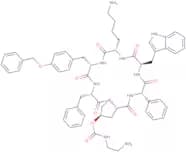
CAS:<p>Pasireotide acetate is a synthetic cyclic peptide and a somatostatin analogue, which is derived from the chemical synthesis based on the structure of native somatostatins. It operates by binding to somatostatin receptors with high affinity, primarily targeting the sst1, sst2, sst3, and sst5 receptor subtypes. This binding inhibits the secretion of adrenocorticotropic hormone (ACTH), which can modulate the excess production of cortisol in conditions such as Cushing’s disease.</p>Formula:C58H66N10O9•(C2H4O2)xPurity:Min. 95%Color and Shape:PowderMolecular weight:1,047.21 g/mol6-Thioguanine - Bio-X ™
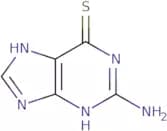
CAS:<p>6-Thioguanine is a purine analog used in the therapy for leukemia and for remission consolidation in patients with acute nonlymphocytic anemia. This drug also has antimetabolite action. It replaces guanine during DNA replication. This substitution disrupts the accurate pairing of DNA bases, leading to errors in DNA replication and hinders cell division.</p>Formula:C5H5N5SPurity:Min. 95%Color and Shape:PowderMolecular weight:167.19 g/molH 151
CAS:<p>A potent inhibitor of STING protein (stimulator of interferon genes), a protein that partakes in intracellular DNA sensing pathway. H 151 blocks palmitoylation of STING, which is required for the formation of multimeric complexes for recruiting downstream signalling molecules. Inhibition of STING by H 151 reduces pro-inflammatory cytokine synthesis.</p>Formula:C17H17N3OPurity:Min. 95%Color and Shape:SolidMolecular weight:279.34 g/molLafutidine
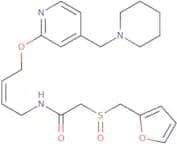
CAS:<p>Histamine (H2) receptor antagonist; treats ulcers and acid reflux</p>Formula:C22H29N3O4SPurity:Min. 95%Molecular weight:431.55 g/molSiponimod
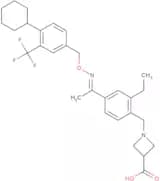
CAS:<p>Sphingosine-1-phosphate receptor modulator</p>Formula:C29H35F3N2O3Purity:Min. 95%Color and Shape:PowderMolecular weight:516.6 g/molKBU2046
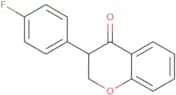
CAS:<p>KBU2046 is an antimicrobial peptide, which is derived from natural or synthetic peptide sequences with potential therapeutic properties. It exerts its effects by disrupting the structure and integrity of bacterial cell membranes through the formation of pores or micelles. This action alters membrane permeability, ultimately leading to cell lysis and death.</p>Formula:C15H11FO2Purity:Min. 98 Area-%Color and Shape:PowderMolecular weight:242.2 g/mol17:0-20:4 Pi (4,5) P2
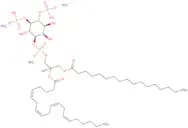
CAS:<p>17:0-20:4 Pi (4,5) P2 is a synthetic phosphoinositide, which is a chemically defined lipid derived from laboratory synthesis. It features a specific acyl chain composition with a heptadecanoic acid (17:0) at the sn-1 position and an arachidonic acid (20:4) at the sn-2 position. This phosphoinositide mimics naturally occurring phosphatidylinositol 4,5-bisphosphate (PI(4,5)P2), an essential component of cellular membranes.</p>Formula:C46H92N3O19P3Purity:Min. 95%Molecular weight:1,084.15 g/molMGCD 265
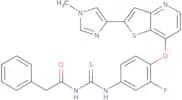
CAS:<p>Inhibits MET, VEGFR1-3, Tie and Ron tyrosine kinases; antineoplastic</p>Formula:C26H20FN5O2S2Purity:Min. 95%Molecular weight:517.60 g/molDomperidone, pharma grade
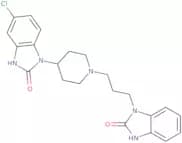
CAS:<p>Dopamine D2 receptor antagonist</p>Formula:C22H24ClN5O2Purity:Min. 95%Color and Shape:White PowderMolecular weight:425.91 g/molProstaglandin F2a tris salt
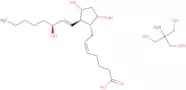
CAS:<p>Prostaglandin F2α receptor agonist</p>Formula:C20H34O5·C4H11NO3Purity:Min. 95%Color and Shape:White/Off-White SolidMolecular weight:475.62 g/molSRT1720 hydrochloride
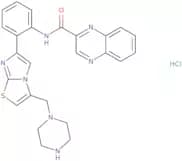
CAS:<p>SIRT1 activator</p>Formula:C25H23N7OS·xHClPurity:Min. 98 Area-%Color and Shape:PowderMolecular weight:469.56 g/molSHP099
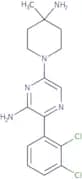
CAS:<p>SHP099 is an allosteric inhibitor of the SHP2 protein, which is derived from targeted small-molecule drug development. Its mode of action involves binding to SHP2 in a region distinct from the catalytic site, thereby stabilizing the protein in its auto-inhibited conformation and preventing activation. This disrupts downstream signaling pathways mediated by SHP2, a protein-tyrosine phosphatase essential in promoting oncogenic signaling through the RAS/MAPK pathway.</p>Formula:C16H19Cl2N5Purity:Min. 95%Color and Shape:PowderMolecular weight:352.26 g/molIcilin - Bio-X ™
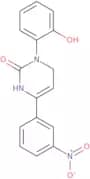
CAS:<p>Icilin is a transient receptor potential M8 (TRPM8) agonist drug that is used for the treatment of pruritis. This drug has shown to be effective in producing an extreme cold sensation in both human and animal models. It is used in research for studying TRP channels.</p>Formula:C16H13N3O4Purity:Min. 95%Color and Shape:PowderMolecular weight:311.29 g/molMPEP
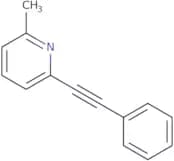
CAS:<p>mGluR5 antagonist</p>Formula:C14H11NPurity:Min. 95%Color and Shape:White/Off-White SolidMolecular weight:193.24 g/molXMU MP 2
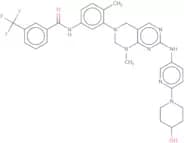
CAS:<p>BRK tyrosine kinase (PTK6) inhibitor; anti-proliferative in breast cancer cells</p>Formula:C32H33F3N8O2Purity:Min. 95%Color and Shape:PowderMolecular weight:618.65 g/molPrilocaine HCl - Bio-X ™
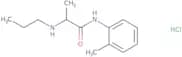
CAS:<p>Prilocaine is a drug used as a local anaesthetic in dental procedures. It has been shown to reduce the incidence of pain caused. This drug is also a sodium channel blocker that blocks the influx of sodium into cells.</p>Formula:C13H20N2O•HClPurity:Min. 95%Color and Shape:PowderMolecular weight:256.77 g/mol(R)-Fesoterodine fumarate
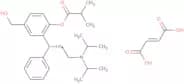
CAS:<p>Antagonist of muscarinic acetylcholine receptors</p>Formula:C30H41NO7Purity:Min. 95%AG 221
CAS:<p>Inhibitor of isocitrate dehydrogenase 2</p>Formula:C19H17F6N7OPurity:Min. 95%Color and Shape:PowderMolecular weight:473.38 g/molABTL-0812
CAS:<p>ABTL-0812 is an investigational anticancer compound, which is a synthetic small molecule with a novel mechanism of action. It is derived from the research efforts focused on targeting key metabolic pathways in cancer cells. The mode of action of ABTL-0812 involves the modulation of the Akt/mTOR pathway, leading to the induction of autophagy-mediated cell death, a process that is selectively cytotoxic to cancer cells.</p>Formula:C18H32O3Purity:Min. 95%Color and Shape:PowderMolecular weight:296.4 g/molSorafenib tosylate
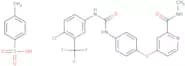
CAS:<p>Sorafenib is a drug that belongs to the class of multikinase inhibitors. It inhibits a number of kinases, including the Mcl-1 protein, which is involved in apoptosis along with blocking picolinic acid (PA), an endogenous metabolite involved in apoptosis signal transduction. Sorafenib also binds to epidermal growth factor receptor (EGFR) on the surface of cancer cells, inhibiting the production of proteins that are required for angiogenesis, thus blocking the formation of new blood vessels. Sorafenib may also inhibit P-glycoprotein (Pgp) activity. Overall, these cytotoxic effects give Sorafenib anti-tumor properties, inhibiting angiogenesis and cellular transformation, which are the two main processes of tumor growth and metastasis. Sorafenib tosylate has been shown to be effective against a range of solid tumors such as breast, prostate and lung cancers and is also used for the treatment of metastatic colorectal cancer and renal cell carcinoma. A combination therapy group found that sorafenib was more effective when used with interferon alfa-2b for the treatment of advanced renal cell carcinoma. Sorafenib also has the potential for drug interactions with other drugs that are metabolized by cytochrome P450 enzymes.</p>Formula:C21H16ClF3N4O3•C7H8O3SPurity:Min. 95%Color and Shape:Off-White PowderMolecular weight:637.03 g/mol