Organic Halides
In this category, you can find organic molecules containing one or more halogen atoms in their structure. These organic halides include brominated, iodinated, chlorinated, and cyclic halide compounds. Organic halides are widely used in organic synthesis, pharmaceuticals, agrochemicals, and materials science due to their reactivity and ability to undergo a variety of chemical transformations. At CymitQuimica, we offer a comprehensive selection of high-quality organic halides to support your research and industrial applications, ensuring reliable and effective performance in your synthetic and analytical projects.
Subcategories of "Organic Halides"
Found 20437 products of "Organic Halides"
Sort by
Purity (%)
0
100
|
0
|
50
|
90
|
95
|
100
5-Amino-N,N'-bis(2,3-dihydroxypropyl)-2,4,6-triiodo-1,3-benzenedicarboxamide
CAS:<p>5-Amino-N,N'-bis(2,3-dihydroxypropyl)-2,4,6-triiodo-1,3-benzenedicarboxamide is an experimental compound that is used in the industrial preparation of pharmaceuticals and agricultural chemicals. It has a molecular weight of 191.14 g/mol. The crystallization process involves the use of ethanol to create supersaturation and then cooling to induce crystallization. This compound can be synthesized by an iodination reaction with x-ray irradiation at low temperatures.</p>Formula:C14H18I3N3O6Purity:Min. 95%Color and Shape:White PowderMolecular weight:705.02 g/mol2-Aminofluorene
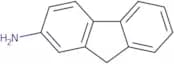
CAS:<p>2-Aminofluorene is a nucleoside phosphonate that is used in the study of DNA duplexes and as a possible anticancer drug. It has shown to be toxic to cells, such as HL-60 cells, by lysing them. This compound has also been shown to have an effect on polymerase chain reaction (PCR) by inhibiting the enzyme activity of DNA polymerase, which led to the cell lysis. 2-Aminofluorene binds to DNA at the minor groove of the double helix and prevents the formation of hydrogen bonds between complementary bases, causing steric hindrance that leads to cell death. 2-Aminofluorene shows conformational properties that are similar to acyclic nucleosides, such as cytidine and adenosine.</p>Formula:C13H11NColor and Shape:White PowderMolecular weight:181.23 g/molD-erythro-Chloramphenicol
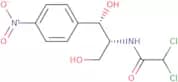
CAS:<p>D-erythro-Chloramphenicol is a chloramphenicol antibiotic that has been shown to inhibit the uptake of nucleic acids by bacteria. It binds to the ribosomal RNA in the bacterial cell and prevents protein synthesis, causing bacterial death. D-erythro-Chloramphenicol is also able to inhibit the uptake of glycine, which is an important amino acid for bacteria. D-erythro-Chloramphenicol has been shown to be active against many different types of bacteria, including those that are resistant to other antibiotics such as penicillin.</p>Formula:C11H12Cl2N2O5Purity:Min. 95%Molecular weight:323.13 g/mol5-Hydroxy propafenone hydrochloride
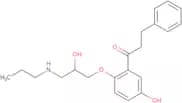
CAS:<p>5-Hydroxy propafenone hydrochloride is a drug transporter that has been shown to inhibit the activity of the human organic anion transporting polypeptide (OATP) 1B1 and 1B3. It has been shown to have clinical response in patients with atrial fibrillation. 5-Hydroxy propafenone hydrochloride is eliminated by both renal and hepatic routes, with a terminal half-life of about 10 hours. The compound is also extensively metabolized in humans and its pharmacokinetic properties are well characterized. In vitro studies have demonstrated that this compound has no significant interactions with other drugs used in medical practice. 5-Hydroxy propafenone hydrochloride can be detected in human serum and urine using LC-MS/MS methods. It can also be detected in yeast cells using immunoblotting techniques, which may be utilized for analytical purposes.</p>Formula:C21H28ClNO4Purity:Min. 95%Color and Shape:PowderMolecular weight:393.9 g/molcis-4-Chloro-3-nitrocinnamic acid
<p>Cis-4-Chloro-3-nitrocinnamic acid is an aromatic organic compound with potential utility in biochemical research and synthesis. This compound is typically derived from synthetic chemical processes involving chlorination and nitration reactions on cinnamic acid derivatives. Its molecular structure, characterized by both chloro and nitro functional groups, allows it to interact in unique ways with various biochemical pathways and molecular frameworks.</p>Formula:C9H6ClNO4Purity:Min. 95%Color and Shape:White PowderMolecular weight:227.6 g/mol6-Bromo-naphthalen-2-ylamine
CAS:<p>6-Bromo-naphthalen-2-ylamine is a chromophore that has been used for the development of novel imaging techniques. This compound has been shown to have synaptic properties and can be used in the study of neurodegenerative diseases. It has also been shown to be an anticancer drug, with staining properties that are useful for the identification of motoneurons. 6-Bromo-naphthalen-2-ylamine is also useful as a fluorescent probe for studies of mechanisms of reaction yield and optical properties.</p>Formula:C10H8BrNPurity:Min. 98%Color and Shape:PowderMolecular weight:222.08 g/molD-Valine ethyl ester hydrochloride
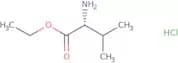
CAS:<p>D-Valine ethyl ester hydrochloride is a reagent that is used in the synthesis of complex compounds. It can be used as an intermediate for fine chemicals and research chemicals, or as a building block for versatile building blocks. D-Valine ethyl ester hydrochloride can also be used in reactions to form other compounds, such as pharmaceuticals.</p>Formula:C7H15NO2·HClPurity:Min. 95%Color and Shape:PowderMolecular weight:181.66 g/molTribromonitromethane
CAS:<p>Tribromonitromethane is a fatty acid that is used in analytical chemistry as a standard for calibrating the linear range of analytical methods. It is also used in specific treatments for cancer, such as treatment of carcinomas. Tribromonitromethane has been shown to have carcinogenic potential and may be harmful to humans when ingested or inhaled. The chemical structure of tribromonitromethane consists of a series of three bromine atoms attached to one carbon atom with two hydroxyl groups at either end. This chemical can be oxidized to form tribromo nitro methane, which is more reactive than tribromonitromethane. Tribromonitromethane has no known biological function and does not occur naturally in the environment. It is also known to be potent inducers of transfer reactions, which are reactions where electrons are transferred from one molecule to another. These reactions are important for the synthesis and degradation of various molecules, including amino</p>Formula:CBr3NO2Purity:Min. 95%Color and Shape:Clear LiquidMolecular weight:297.73 g/molDoxepin hydrochloride
CAS:Controlled Product<p>Histamine receptor H1 antagonist; tricyclic antidepressant</p>Formula:C19H22ClNOPurity:Min. 95%Color and Shape:PowderMolecular weight:315.84 g/mol2-[Methyl[(tridecafluorohexyl)sulphonyl]amino]ethyl acrylate
CAS:<p>Please enquire for more information about 2-[Methyl[(tridecafluorohexyl)sulphonyl]amino]ethyl acrylate including the price, delivery time and more detailed product information at the technical inquiry form on this page</p>Formula:C12H10F13NO4SPurity:80%MinColor and Shape:PowderMolecular weight:511.26 g/mol2,3,4,5,6-Pentafluorostyrene
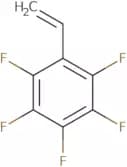
CAS:<p>2,3,4,5,6-Pentafluorostyrene is a perfluorinated compound that has been used as a model system to study the fluorine effect on chemical stability and transport properties. The addition of fluorine to an organic molecule increases its chemical stability and makes it more difficult for other molecules to react with it. 2,3,4,5,6-Pentafluorostyrene has shown high values in terms of transport properties and can be used as a polymer in applications such as coatings and membranes. Copolymers made from this compound have also been shown to exhibit good mechanical strength and chemical stability.</p>Formula:C8H3F5Purity:Min. 95%Color and Shape:Clear LiquidMolecular weight:194.1 g/mol4-Chlorobenzyl diphenyl carbinol
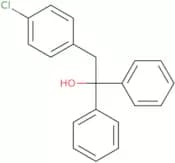
CAS:<p>4-Chlorobenzyl diphenyl carbinol is an organic compound that is used as a reagent, intermediate, and building block in the synthesis of other compounds. The product is a white, crystalline solid and has a molecular weight of 243.3 g/mol. It can be used as a scaffold for the synthesis of new chemical compounds or as a building block to create speciality chemicals. 4-Chlorobenzyl diphenyl carbinol has been shown to react with a variety of functional groups and can be used in both research and industrial contexts.</p>Formula:C20H17ClOPurity:Min. 95%Color and Shape:PowderMolecular weight:308.8 g/mol9-[Bromo(phenyl)methylene]-9H-fluorene
CAS:<p>9-[Bromo(phenyl)methylene]-9H-fluorene is a fine chemical and research chemical that can be used as a building block in the synthesis of complex compounds. It has been shown to be potentially useful as an intermediate in the synthesis of important chemical substances, such as pharmaceuticals, pesticides, herbicides, and more. 9-[Bromo(phenyl)methylene]-9H-fluorene has also been studied for its potential use as a scaffold for peptide and protein drug development. As it is a versatile building block with many applications in organic synthesis, it is a high quality reagent with speciality chemical properties.</p>Formula:C20H13BrPurity:Min. 95%Color and Shape:PowderMolecular weight:333.22 g/mol6-Fluoroserotonin
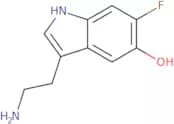
CAS:Controlled Product<p>The 6-Fluoroserotonin is a selective serotonin uptake inhibitor that has been used to study the serotonin transporter. It has been shown to inhibit the uptake of 5-hydroxyindoleacetic acid and 5-hydroxytryptamine, which is mediated by the serotonin transporter. The 6-Fluoroserotonin is also able to bind to clomipramine and zimelidine with high affinity. Analysis of the chromatographic profile of this compound revealed two peaks, one at 3.2 minutes and another at 4.7 minutes, corresponding to the two diastereoisomers of 6-fluoroserotonin.</p>Formula:C10H11FN2OPurity:Min. 95%Molecular weight:194.21 g/molChlormethiazole
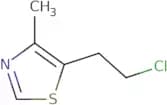
CAS:Controlled Product<p>Sedative and hypnotic; used in treatment of acute alcohol withdrawal</p>Formula:C6H8ClNSPurity:Min. 95%Color and Shape:Colorless PowderMolecular weight:161.65 g/mol2-Bromo-N-[2-[7-Chloro-5-(2-Fluorophenyl)-2-Oxo-3H-1,4-Benzodiazepin-1-Yl]Ethyl]Acetamide
CAS:Controlled Product<p>2-Bromo-N-[2-[7-Chloro-5-(2-fluorophenyl)-2-oxo-3H-1,4-benzodiazepin-1-yl]ethyl]acetamide is a benzodiazepine derivative that binds to the benzodiazepine receptor and is also a calcium antagonist. It has been used in clinical studies as a chronic treatment for cancer and as an anticonvulsant. 2BBA acts on benzodiazepine receptors to inhibit the release of gamma aminobutyric acid (GABA) by binding to GABA A receptors. This prevents the binding of GABA with these receptors and leads to sedation and muscle relaxation. Flunitrazepam, which is chemically similar to 2BBA, is also used as a sedative and hypnotic drug. 2BBA has affinity constants that are between 50 nM and 100 μM for benzodiazepine binding sites, while its</p>Formula:C19H16BrClFN3O2Purity:Min. 95%Molecular weight:452.7 g/molTertiapin-Q trifluoroacetate salt
CAS:<p>A peptide found in honey bee venom; Potassium channel inhibitor</p>Formula:C106H175N35O24S4Purity:Min. 95%Molecular weight:2,452.01 g/mol2,5-Difluoro-4-hydroxybenzaldehyde
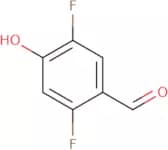
CAS:<p>2,5-Difluoro-4-hydroxybenzaldehyde is a chemical compound that belongs to the class of pyrazoles. It has been shown to inhibit the activity of multinuclear enzymes, such as tautomerase and hydrolases. This inhibition is due to the conformational changes in these enzymes induced by 2,5-difluoro-4-hydroxybenzaldehyde. 2,5-Difluoro-4-hydroxybenzaldehyde also displays biological activity against various types of cancer cells. This can be attributed to its ability to inhibit protein synthesis through inhibition of RNA transcription and translation.</p>Formula:C7H4F2O2Purity:Min. 95%Color and Shape:SolidMolecular weight:158.1 g/mol2-Iminothiolane hydrochloride
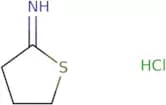
CAS:<p>2-Iminothiolane hydrochloride is an amine that reacts with free thiol groups in proteins. It can be used to generate models of protein structures, as well as to study the effects of disulfide bonds on protein stability and function. 2-Iminothiolane hydrochloride has been shown to inhibit HIV infection by blocking the uptake of all-trans retinoic acid into cells. This drug also has minimal toxicity and can be used for cancer therapy. The drug was shown to have minimal toxicity in vitro, but it has not yet been tested in vivo.</p>Formula:C4H8ClNSPurity:Min. 95%Color and Shape:White Off-White PowderMolecular weight:137.63 g/mol(R)-3-Fluoropyrrolidine hydrochloride
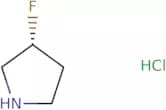
CAS:<p>(R)-3-Fluoropyrrolidine hydrochloride is a proline analog that is orally bioavailable and selective for dipeptidyl peptidase. It shows good pharmacokinetic properties and has been shown to be a potent inhibitor of both cyclohexylglycine and amides, two enzymes involved in the metabolism of proline. The drug has also been shown to be an excellent substrate for dipeptidyl peptidase, an enzyme involved in the degradation of dipeptides. (R)-3-Fluoropyrrolidine hydrochloride has not yet been tested as an inhibitor of peptidases other than dipeptidyl peptidase. (R)-3-Fluoropyrrolidine hydrochloride is currently undergoing Phase II clinical trials.</p>Formula:C4H9ClFNPurity:Min. 98%Molecular weight:125.57 g/mol





![2-[Methyl[(tridecafluorohexyl)sulphonyl]amino]ethyl acrylate](/_next/image/?url=https%3A%2Fstatic.cymitquimica.com%2Fproducts%2F3D%2Fthumb-webp%2FFM96258.webp&w=3840&q=75)
![9-[Bromo(phenyl)methylene]-9H-fluorene](/_next/image/?url=https%3A%2Fstatic.cymitquimica.com%2Fproducts%2F3D%2Fthumb-webp%2FFB135155.webp&w=3840&q=75)
![2-Bromo-N-[2-[7-Chloro-5-(2-Fluorophenyl)-2-Oxo-3H-1,4-Benzodiazepin-1-Yl]Ethyl]Acetamide](/_next/image/?url=https%3A%2Fstatic.cymitquimica.com%2Fproducts%2F3D%2Fthumb-webp%2FFB101616.webp&w=3840&q=75)