


Organic Halides
In this category, you can find organic molecules containing one or more halogen atoms in their structure. These organic halides include brominated, iodinated, chlorinated, and cyclic halide compounds. Organic halides are widely used in organic synthesis, pharmaceuticals, agrochemicals, and materials science due to their reactivity and ability to undergo a variety of chemical transformations. At CymitQuimica, we offer a comprehensive selection of high-quality organic halides to support your research and industrial applications, ensuring reliable and effective performance in your synthetic and analytical projects.
Subcategories of "Organic Halides"
Found 20437 products of "Organic Halides"
Sort by
Purity (%)
0
100
|
0
|
50
|
90
|
95
|
100
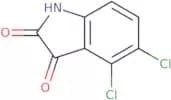
4,5-Dichloroisatin
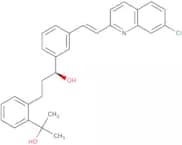
CAS:<p>4,5-Dichloroisatin is a versatile building block that can be used as a reagent for research and as a speciality chemical. It is also useful in the synthesis of complex compounds. 4,5-Dichloroisatin is a high quality compound with a CAS number of 1677-47-0. This compound is not intended for use in humans or animals.</p>Formula:C8H3Cl2NO2Purity:Min. 95%Color and Shape:Yellow PowderMolecular weight:216.02 g/mol2-(2-(3(S)-(3-(2-(7-Chloro-2-quinolinyl)-ethenylphenyl)-3-hydroxypropyl)phenyl)-2-propanol
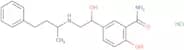
CAS:<p>Covid-19 is a polymer that can be used as a coating for surfaces, such as plastics and metals. Covid-19 has been shown to have antibacterial properties against bacteria, including methicillin-resistant Staphylococcus aureus (MRSA) and Clostridium perfringens. Covid-19 also has functional groups that can be used in analytical methods to determine the concentration of drugs in biological samples. Covid-19 is soluble in polyvinyl alcohol and glycerol, which are both common additives in pharmaceuticals. Covid-19 has optical properties that make it suitable for use as a coating on contact lenses or other ophthalmic devices.</p>Formula:C29H28ClNO2Purity:Min. 95%Color and Shape:PowderMolecular weight:457.99 g/molLabetalol hydrochloride
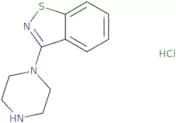
CAS:Controlled Product<p>Labetalol is a beta-adrenergic blocker that inhibits the binding of epinephrine to beta-adrenergic receptors. It has been shown to inhibit the activity of p-glycoprotein (P-gp) and prevent the movement of drugs out of cells. Labetalol also affects the activity of enzymes such as CYP3A4, CYP2D6, CYP2C9, and CYP2C19, which are responsible for metabolizing many different drugs. This drug also has a direct effect on cardiac function. Labetalol is used in treatment of high blood pressure, but should not be used in pregnant women because it can cause fetal harm. Labetalol may also interact with other cardiovascular medications (e.g., beta blockers).</p>Formula:C19H25ClN2O3Purity:95%NmrColor and Shape:White PowderMolecular weight:364.87 g/mol3-Piperazinyl-1,2-benzisothiazole hydrochloride
CAS:<p>3-Piperazinyl-1,2-benzisothiazole hydrochloride is an atypical antipsychotic that binds to the dopamine D2 receptor. It is water soluble and reacts with inorganic bases such as mercury oxide (HgO) to form 3-piperazinyl-1,2-benzisothiazole monohydrochloride (3PBZMHC). This product has a reaction time of about 2 hours and an industrial application for the synthesis of atypical antipsychotics. 3PBZMHC also has an impurity level of less than 0.5%.</p>Formula:C11H13N3S•HClPurity:Min. 95%Color and Shape:PowderMolecular weight:255.77 g/molTrimecaine hydrochloride
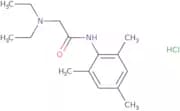
CAS:<p>Trimecaine hydrochloride is a local anaesthetic that can be used in the treatment of pain. It is a non-narcotic, anti-inflammatory drug that is also useful as an antipruritic and as a topical agent for the relief of itching. Trimecaine hydrochloride blocks nerve conduction by inhibiting sodium ion influx across the neuronal membrane. This prevents activation of voltage-gated sodium channels and subsequent depolarization, which leads to decreased nerve conduction. Trimecaine hydrochloride is not absorbed through intact skin and does not cause systemic toxicity or respiratory depression.</p>Formula:C15H24N2O•HClPurity:Min. 95%Color and Shape:PowderMolecular weight:284.82 g/mol2-Bromo-2-(2-fluorophenyl)-1-cyclopropylethanone
CAS:<p>2-Bromo-2-(2-fluorophenyl)-1-cyclopropylethanone is a synthetic peroxide that is used as an additive in the production of polyvinylpyrrolidone. It has been shown to have efficient methods for the reduction of amines and chlorides to the corresponding hydroxylamine and hydrochloride, respectively. The tribromide may be generated by treatment with bromine and a base, such as potassium hydroxide or sodium hydroxide, in an inert solvent such as benzene or dichloromethane. 2-Bromo-2-(2-fluorophenyl)-1-cyclopropylethanone can also be synthesized from phenacyl chloride and acetylene.</p>Formula:C11H10BrFOPurity:Min. 95 Area-%Color and Shape:Clear LiquidMolecular weight:257.1 g/mol[2-(1,3-Benzodioxol-5-yloxy)ethyl]amine hydrochloride
CAS:<p>[2-(1,3-Benzodioxol-5-yloxy)ethyl]amine hydrochloride is a versatile building block for organic synthesis. It can be used as a starting material for the synthesis of many complex compounds and research chemicals. This compound has been shown to have high quality, useful scaffolds, and is an excellent reagent in many chemical reactions.</p>Formula:C9H11NO3•HClPurity:Min. 95%Color and Shape:PowderMolecular weight:217.65 g/mol2,6-Difluoro-4-hydroxybenzoic acid methyl ester
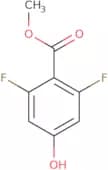
CAS:<p>2,6-Difluoro-4-hydroxybenzoic acid methyl ester is an inhibitor of monoamine oxidase (MAO). It inhibits the oxidation of monoamines such as norepinephrine and serotonin. The inhibition of MAO leads to increase in norepinephrine levels and decrease in serotonin levels. 2,6-Difluoro-4-hydroxybenzoic acid methyl ester has been shown to have antidepressant effects. This drug has also been shown to be effective for treating intraocular hypertension, by inhibiting the formation rate of aqueous humor and lowering intraocular pressure.</p>Formula:C8H6F2O3Purity:Min. 95%Color and Shape:PowderMolecular weight:188.13 g/mol4-Methyl-6-chloropyrimidine
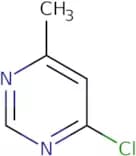
CAS:<p>4-Methyl-6-chloropyrimidine is an intermediate in the synthesis of 6-chloropurine, which is a dihydrochloride salt that can be hydrolyzed to form tetrapeptides. The nature of the reaction conditions employed for this conversion determines the yield of 4-methyl-6-chloropyrimidine. It can be synthesized by alkaline hydrolysis or by condensation of n-terminal amino acids with chloroacetic acid derivatives. This compound can also undergo hydrolytic cleavage to form oligopeptides and glycinates, which are n-substituted with dicyclohexylcarbodiimide.</p>Formula:C5H5ClN2Purity:Min. 95%Color and Shape:PowderMolecular weight:128.56 g/mol3,3',5-Triiodo thyroacetic acid
CAS:<p>3,3',5-Triiodo thyroacetic acid is a synthetic thyroid hormone that acts as a thyroid hormone receptor agonist. It binds to the thyroid hormone receptor, leading to the activation of other transcription factors and increased synthesis of proteins. 3,3',5-Triiodo thyroacetic acid has been shown to increase the metabolic rate in rats by increasing the expression of epidermal growth factor in skin cells and signal transduction in nerve cells. This drug also causes an increase in transcriptional regulation and protein synthesis. 3,3',5-Triiodo thyroacetic acid does not have any known side effects or toxicity.</p>Formula:C14H9I3O4Purity:Min. 95%Color and Shape:White Off-White PowderMolecular weight:621.93 g/mol2-Fluoro-5-iodobenzoic acid methyl ester
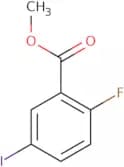
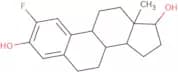
CAS:<p>2-Fluoro-5-iodobenzoic acid methyl ester is a fine chemical that is useful as a building block for the synthesis of complex compounds. It is also used as an intermediate in organic syntheses, and in research and development as a reaction component or speciality chemical. 2-Fluoro-5-iodobenzoic acid methyl ester has been shown to be effective in the synthesis of high quality reagents.</p>Formula:C8H6FIO2Purity:Min. 95%Color and Shape:Off-White To Yellow SolidMolecular weight:280.03 g/mol2-Fluoroestradiol
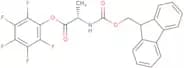
CAS:Controlled Product<p>2-Fluoroestradiol is a synthetic form of 17β-estradiol that has been shown to inhibit the growth of tumor cells in an experimental model. 2-Fluoroestradiol binds to the estrogen receptor and inhibits the production of proteins needed for cell division, thus causing cancer. This drug has also been shown to inhibit lipoprotein lipase activity in rat liver microsomes, which may be due to its ability to induce chemical reactions. In addition, 2-fluoroestradiol inhibits lipid synthesis in fat cells and decreases lipogenesis in granulosa cells from ovaries. The inhibition of triglyceride synthesis by 2-fluoroestradiol is probably due to its ability to inhibit enzyme induction and increase the expression of mRNA for protein synthesis.</p>Formula:C18H23FO2Purity:Min. 95%Molecular weight:290.37 g/molFmoc-L-alanine pentafluorophenyl ester
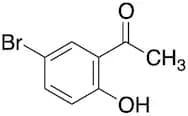
CAS:<p>Fmoc-L-alanine pentafluorophenyl ester is a drug that inhibits the growth of microorganisms by inhibiting the synthesis of folic acid. It is used to treat patients with drug-resistant bacteria, such as Mycobacterium tuberculosis, and has shown toxic effects on human cells. Fmoc-L-alanine pentafluorophenyl ester binds to the enzyme dihydrofolate reductase and blocks the production of tetrahydrofolate, which is essential for DNA synthesis. This drug also inhibits human cells by binding to DNA gyrase in the bacterial cell wall.END></p>Formula:C24H16F5NO4Purity:Min. 95%Color and Shape:PowderMolecular weight:477.38 g/mol1-(5-Bromo-2-hydroxyphenyl)ethanone
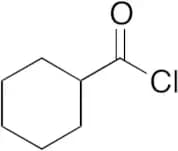
CAS:Controlled Product<p>Applications 1-(5-Bromo-2-hydroxyphenyl)ethanone<br></p>Formula:C8H7BrO2Color and Shape:NeatMolecular weight:215.044Cyclohexanecarbonyl Chloride
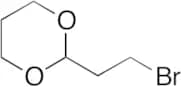
CAS:Controlled Product<p>Applications Cyclohexanecarbonyl Chloride is used to prepare 1,2,3-triazoles as inhibitors of human immunodeficiency virus type 1 protease. It was also used to synthesize benzothiazole as potent antitumor agents.<br> Not a dangerous good if item is equal to or less than 1g/ml and there is less than 100g/ml in the package<br>References Whiting, M., et al.: J. Med. Chem., 49, 7697 (2006); Yoshida, M., et al.: Bioorg. Med. Chem. Lett., 15, 3328 (2005)<br></p>Formula:C7H11ClOColor and Shape:NeatMolecular weight:146.612-(2-Bromoethyl)-1,3-dioxane
CAS:Controlled Product<p>Applications 2-(2-Bromoethyl)-1,3-dioxane, is an building block used for the synthesis of various pharmaceutical compounds such as Oxaflumazine (O758550), an Antipsychotic. It provides a useful means of introducing a masked ß-formylethyl group.<br>References Marrero-Ponce, Y., et al.: Euro. J. Med. Chem., 46 (12), 5736 (2011); J. Org. Chem., 41, 560 (1976);<br></p>Formula:C6H11BrO2Color and Shape:NeatMolecular weight:195.05cis-3-(2-Chloro-3,3,3-trifluoro-1-propen-1-yl)-2,2-dimethyl-cyclopropanemethanol
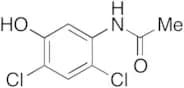
CAS:Controlled Product<p>Applications cis-3-(2-Chloro-3,3,3-trifluoro-1-propen-1-yl)-2,2-dimethyl-cyclopropanemethanol is a reactant used in the preparation of pyrethroid compounds as pesticides.<br></p>Formula:C9H12ClF3OColor and Shape:NeatMolecular weight:228.639N-(2,4-Dichloro-5-hydroxyphenyl)acetamide
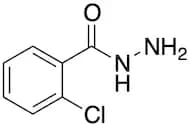
CAS:Controlled ProductFormula:C8H7Cl2NO2Color and Shape:NeatMolecular weight:220.0532-Chlorobenzhydrazide
CAS:Controlled Product<p>Applications 2-Chlorobenzhydrazide<br></p>Formula:C7H7ClN2OColor and Shape:NeatMolecular weight:170.62,2,2-Trifluoro-N-[(1R,4S)-4-(hydroxymethyl)-2-cyclopenten-1-yl]-acetamide
CAS:Controlled Product<p>Applications 2,2,2-Trifluoro-N-[(1R,4S)-4-(hydroxymethyl)-2-cyclopenten-1-yl]-acetamide is an intermediate in synthesizing N6-Cyclopropyl-9-[(1R,4S)-4-[(1,1-dimethylethoxy)methyl]-2-cyclopenten-1-yl]-9H-purine-2,6-diamine (Abacavir EP Impurity F) (C989915), an impurity of Abacavir (A104990), a guanosine analog that inhibits reverse transcriptase (NRTI) (1,2).<br></p>Formula:C8H10F3NO2Color and Shape:NeatMolecular weight:209.166


![[2-(1,3-Benzodioxol-5-yloxy)ethyl]amine hydrochloride](/_next/image/?url=https%3A%2Fstatic.cymitquimica.com%2Fproducts%2F3D%2Fthumb-webp%2FFB120300.webp&w=3840&q=75)



![2,2,2-Trifluoro-N-[(1R,4S)-4-(hydroxymethyl)-2-cyclopenten-1-yl]-acetamide](/_next/image/?url=https%3A%2Fstatic.cymitquimica.com%2Fproducts%2FTR%2Fthumb-webp%2FT790105.webp&w=3840&q=75)