Biochemicals and Reagents
Biochemicals and reagents are fundamental substances for research and development in fields such as biotechnology, molecular biology, pharmacology, and medicine. These products are essential for a variety of applications, including compound synthesis, biological sample analysis, metabolic process research, and drug production. At CymitQuimica, we offer a wide selection of high-quality, high-purity biochemicals and reagents suitable for various scientific and industrial needs. Our catalog includes enzymes, antibodies, nucleic acids, amino acids, and many other products, all designed to support researchers and professionals in their research and development projects, ensuring reliable and reproducible results.
Subcategories of "Biochemicals and Reagents"
- Biomolecules(99,115 products)
- By Biological Target(99,074 products)
- By Pharmacological Effects(6,785 products)
- Cryopreservatives(21 products)
- Desinfectants and Related Compounds(28 products)
- Hormones(346 products)
- Plant Biology(6,693 products)
- Secondary Metabolites(14,219 products)
Found 130577 products of "Biochemicals and Reagents"
Sort by
Purity (%)
0
100
|
0
|
50
|
90
|
95
|
100
NUMB antibody
<p>The NUMB antibody is a powerful tool in the field of life sciences. It belongs to the class of monoclonal antibodies and is specifically designed to neutralize the effects of tumor necrosis factor-alpha (TNF-α). This antibody has been extensively studied and proven to be effective in various research applications.</p>TEX264 antibody
<p>TEX264 antibody was raised using the middle region of TEX264 corresponding to a region with amino acids GWDDGDTRSEHSYSESGASGSSFEELDLEGEGPLGESRLDPGTEPLGTTK</p>Purity:Min. 95%GSTM2 Blocking Peptide
<p>A synthetic peptide for use as a blocking control in assays to test for specificity of GSTM2 antibody, catalog no. 70R-2848</p>Purity:Min. 95%NDST3 antibody
<p>NDST3 antibody was raised using a synthetic peptide corresponding to a region with amino acids PGTDWTVFQINHSAYQPVIFAKVKTPENLSPSISKGAFYATIIHDLGLHD</p>Purity:Min. 95%BSG antibody
<p>The BSG antibody is a highly potent and specialized cytotoxic monoclonal antibody that has neutralizing properties. It is commonly used in immunoassays and other life science applications. This antibody specifically targets the glycoprotein known as BSG, which plays a crucial role in various cellular processes.</p>p90RSK antibody
<p>The p90RSK antibody is a polyclonal antibody used in the field of Life Sciences. It specifically targets actin, a protein involved in various cellular processes. The antibody has been proven effective in detecting activated p90RSK in human serum samples. This antibody is also utilized as a tool to study multidrug resistance and the development of pegylated inhibitors. Additionally, it has shown promising results in the detection of alpha-fetoprotein, an important biomarker for certain cancers. The p90RSK antibody can be used in combination with other antibodies to create nanocomposites for various applications such as glycation studies and visualization of actin filaments and collagen. Its high specificity and sensitivity make it an invaluable tool for researchers in the field.</p>SPON2 antibody
<p>SPON2 antibody was raised using the middle region of SPON2 corresponding to a region with amino acids GTDSGFTFSSPNFATIPQDTVTEITSSSPSHPANSFYYPRLKALPPIARV</p>Purity:Min. 95%Gentamicin-BSA
<p>Gentamicin-BSA is a unique monoclonal antibody that has been conjugated with bovine serum albumin (BSA). This conjugate is designed to specifically target and bind to epidermal growth factor (EGF) receptors on the surface of cells. By binding to these receptors, Gentamicin-BSA can inhibit the activity of farnesyl transferase, an enzyme involved in cell growth and division.</p>Purity:Min. 95%EDNRB antibody
<p>EDNRB antibody was raised in sheep using C-terminal peptide KANDHGYDNFRSSNN of rat ET(B) Receptor corresponding to amino acids 424 to 437 conjugated to KLH as the immunogen.</p>Purity:Min. 95%LOX antibody
<p>The LOX antibody is a monoclonal antibody that specifically targets pancreatic glucagon. It works by binding to insulin and preventing it from interacting with its receptor, thereby reducing the levels of insulin in the body. This antibody has been activated and modified to form a colloidal solution, making it highly effective in targeting and neutralizing insulin.</p>SOX7 antibody
<p>SOX7 antibody was raised in rabbit using the middle region of SOX7 as the immunogen</p>Purity:Min. 95%Goat anti Human IgG + IgA + IgM (Alk Phos)
<p>This antibody reacts with heavy chains on human IgA + IgG + IgM and light chains on all human immunoglobulins.</p>Purity:Min. 95%CLTB antibody
<p>CLTB antibody was raised in rabbit using the C terminal of CLTB as the immunogen</p>Purity:Min. 95%ENPEP antibody
<p>The ENPEP antibody is a highly specialized monoclonal antibody used in Life Sciences. It specifically targets the cysteine-rich protein and has been shown to inhibit the activity of tumor necrosis factor-alpha (TNF-α). This antibody is commonly used in research and diagnostic applications, particularly in the field of immunology. It can be used to detect and quantify ENPEP expression levels in human serum samples, providing valuable insights into various physiological processes.</p>H-KVLEYVIKV-OH
<p>MAGE-A1 protein:<br>MAGE-A1 (278-286) is an epitope of Melanoma Antigen Gene A1 expressed by tumors of different histological types such as on the surface of breast carcinoma cell and is a Cancer/Testis Antigens (CTA). MAGE-A1 is a tumor antigen expressed in 40% of melanoma and contains epitope for binding HLA-A*02:01 molecules and that are recognized by cytotoxic T cells.<br>Applications of MAGE-A1 (278-286):<br>MAGE-A1 (278-286) is used to stimulate specific cytotoxic T cells in PBMCs and to analyze by ELISPOT peptide epitope specificity and cytokine production like IFN-γ. Immunogenicity of MAGE-A1 (278-286) raised the possibility of developing anticancer immunotherapies or vaccinations. MAGE-A1 is also expressed in lung adenocarcinoma and studies suggest that MAGE-A1 may serve to develop Chimeric Antigen Receptor (CAR) T cell therapy using lentiviral vector and show an encouraging tumor-inhibitory efficacy.</p>RBM42 antibody
<p>RBM42 antibody was raised using the C terminal of RBM42 corresponding to a region with amino acids DPSDYVRAMREMNGKYVGSRPIKLRKSMWKDRNLDVVRKKQKEKKKLGLR</p>PI16 antibody
<p>PI16 antibody was raised using the middle region of PI16 corresponding to a region with amino acids SKSLPNFPNTSATANATGGRALALQSSLPGAEGPDKPSVVSGLNSGPGHV</p>Purity:Min. 95%Chicken anti Goat IgG (H + L) (FITC)
<p>This antibody reacts with heavy chains on Goat IgG and light chains on all Goat immunoglobulins.</p>Purity:Min. 95%Filamin A antibody
<p>The Filamin A antibody is a highly specialized product in the field of Life Sciences. It is used for various applications, including electrochemical impedance spectroscopy and molecular docking. This antibody enables ultrasensitive detection of specific molecules by binding to them and facilitating their measurement through electrochemical impedance. It can be used in research settings, as well as in clinical diagnostics.</p>Purity:Min. 95%PEX26 antibody
<p>PEX26 antibody was raised using the middle region of PEX26 corresponding to a region with amino acids ELVVGSAAFGEERRLDVLQAIHTARQQQKQEHSGSEEAQKPNLEGSVSHK</p>PUM2 antibody
<p>PUM2 antibody was raised using a synthetic peptide corresponding to a region with amino acids MNHDFQALALESRGMGELLPTKKFWEPDDSTKDGQKGIFLGDDEWRETAW</p>STUB1 antibody
<p>STUB1 antibody was raised using the N terminal of STUB1 corresponding to a region with amino acids MKGKEEKEGGARLGAGGGSPEKSPSAQELKEQGNRLFVGRKYPEAAACYG</p>GLP1R Antibody
<p>The GLP1R Antibody is a powerful tool in the field of life sciences. It belongs to the class of anti-neoplastic agents and has been extensively used in research studies. This antibody specifically targets the glucagon-like peptide 1 receptor (GLP1R) and plays a crucial role in various cellular processes.</p>Purity:Min. 95%INSR antibody
<p>INSR antibody was raised using the middle region of INSR corresponding to a region with amino acids ENNVVHLMWQEPKEPNGLIVLYEVSYRRYGDEELHLCVSRKHFALERGCR</p>Purity:Min. 95%SMAD1 antibody
<p>The SMAD1 antibody is a highly specialized product used in the field of Life Sciences. It is an antibody that specifically targets and detects the protein SMAD1, which plays a crucial role in endothelial growth and development. This antibody is widely used in research laboratories for various applications, including immunoblotting, immunoprecipitation, and immunofluorescence.</p>MCM5 antibody
<p>MCM5 antibody was raised using the N terminal of MCM5 corresponding to a region with amino acids MSGFDDPGIFYSDSFGGDAQADEGQARKSQLQRRFKEFLRQYRVGTDRTG</p>NUP93 antibody
<p>NUP93 antibody was raised in mouse using recombinant Human Nucleoporin 93Kda (Nup93)</p>HLAG antibody
<p>HLAG antibody is a monoclonal antibody that specifically targets the leukocyte antigen (HLA-G). HLA-G is a protein expressed on the surface of cells that plays a role in immune regulation. This antibody can be used for research purposes to study HLA-G expression and function. It has been shown to inhibit syncytia formation, which is the fusion of cells, and also has inhibitory effects on nuclear β-catenin, a protein involved in cell signaling. Additionally, this antibody has been used as a tool to detect HLA-G expression in various tissues, including liver microsomes and immobilized p. pastoris cells. Its specificity and high affinity make it an ideal choice for researchers studying HLA-G and its role in immune responses.</p>Granzyme H antibody
<p>Granzyme H antibody was raised using a synthetic peptide corresponding to a region with amino acids MQPFLLLLAFLLTPGAGTEEIIGGHEAKPHSRPYMAFVQFLQEKSRKRCG</p>Cytokeratin 13 antibody
<p>Cytokeratin 13 antibody was raised using the N terminal of KRT13 corresponding to a region with amino acids TMQNLNDRLASYLEKVRALEEANADLEVKIRDWHLKQSPASPERDYSPYY</p>CRNKL1 antibody
<p>CRNKL1 antibody was raised in mouse using recombinant Human Crn, Crooked Neck-Like 1 (Drosophila) (Crnkl1)</p>PCT monoclonal antibody
<p>The PCT monoclonal antibody is a highly specialized product in the field of Life Sciences. It is a hybridoma cell-derived monoclonal antibody that offers ultrasensitive detection capabilities. This antibody exhibits high reactivity and specificity, making it ideal for various bioassays and research applications.</p>Troponin I antibody (Skeletal Muscle)
<p>Troponin I antibody (skeletal Muscle) was raised in mouse using human skTnI as the immunogen.</p>Tylosin antibody
<p>The Tylosin antibody is a highly specialized antibody that targets and neutralizes the epidermal growth factor (EGF) in low-molecular-weight cytotoxic substances. This antibody is available as both polyclonal and monoclonal antibodies, offering a wide range of options for research and diagnostic purposes. The Tylosin antibody has been extensively tested and proven to effectively neutralize the EGF-like growth factor, inhibiting its activity and preventing unwanted cellular responses.</p>Purity:Min. 95%Cytokeratin 4 antibody
<p>Cytokeratin 4 antibody was raised in mouse using human esophagus as the immunogen.</p>NKAIN1 antibody
<p>NKAIN1 antibody was raised using the middle region of NKAIN1 corresponding to a region with amino acids TPVLNSRLALEDHHVISVTGCLLDYPYIEALSSALQIFLALFGFVFACYV</p>Purity:Min. 95%ACTA1 antibody
<p>The ACTA1 antibody is a powerful tool in antiestrogen therapy and Life Sciences research. This monoclonal antibody specifically targets and binds to the ACTA1 protein, which plays a crucial role in muscle contraction. By blocking the activity of ACTA1, this antibody can help researchers gain a better understanding of its function and potentially develop new treatments for various conditions.</p>STAT1 antibody
<p>The STAT1 antibody is a globulin that specifically targets and binds to the STAT1 protein. This protein plays a crucial role in various cellular processes, including cell growth, differentiation, and immune response. The STAT1 antibody can be used for both research and diagnostic purposes.</p>HMGB4 antibody
<p>HMGB4 antibody was raised in rabbit using the C terminal of HMGB4 as the immunogen</p>Purity:Min. 95%AKT2 antibody
<p>The AKT2 antibody is a monoclonal antibody that specifically targets and binds to AKT2, a protein involved in various cellular processes. This antibody has been extensively studied and shown to have high affinity for AKT2, making it an effective tool for research in the field of Life Sciences. It can be used in experiments to detect and quantify AKT2 levels in different samples, such as human serum or cell lysates. The AKT2 antibody has also been used in studies investigating the role of AKT2 in signaling pathways related to collagen synthesis, alpha-fetoprotein expression, and actin filament organization. Additionally, this antibody has been utilized as a neutralizing agent for colony-stimulating factors like TGF-beta and M-CSF, inhibiting their activity and providing valuable insights into their functions. With its specificity and versatility, the AKT2 antibody is an essential tool for researchers studying various aspects of cellular biology and molecular signaling pathways.</p>Avenaciolid
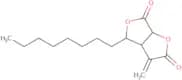
CAS:<p>Avenaciolid is a pyrrolidine dicarboxylic acid that inhibits the activity of the glutamate transporter in vitro. It has been shown to have inhibitory effects on insulin resistance, which may be due to its effect on the production of free radicals. Avenaciolid also has a diagnostic use in diagnosing liver cancer, as well as an aminotransferase activity that can be used to measure liver damage. This compound has been shown to inhibit group P2 enzymes and mitochondrial enzyme activities, and is thought to induce apoptosis by inducing oxidative stress.</p>Formula:C15H22O4Purity:Min. 95%Molecular weight:266.33 g/molRPSA Blocking Peptide
<p>A synthetic peptide for use as a blocking control in assays to test for specificity of RPSA antibody, catalog no. 70R-6040</p>Purity:Min. 95%Epor antibody
<p>Epor antibody was raised in rabbit using the N terminal of Epor as the immunogen</p>Purity:Min. 95%IL18BP antibody
<p>IL18BP antibody was raised in rabbit using residues 44-55 [STKDPCPSQPPVC] of the 40 kDa human IL-18BP as the immunogen.</p>Purity:Min. 95%WHSC1 antibody
<p>WHSC1 antibody was raised in rabbit using the N terminal of WHSC1 as the immunogen</p>Purity:Min. 95%TIGD3 antibody
<p>TIGD3 antibody was raised using the middle region of TIGD3 corresponding to a region with amino acids FVDLEGEEPRSGVCKEEIGTEDEKGDREGAFEPLPTKADALRALGTLRRW</p>BECN1 antibody
<p>The BECN1 antibody is a highly active agent that belongs to the class of monoclonal antibodies used in Life Sciences. It specifically targets and binds to BECN1, a protein involved in autophagy regulation. This antibody has been shown to have a high affinity for BECN1, making it an effective tool for studying autophagy processes in various cell types.</p>INA antibody
<p>The INA antibody is a highly specialized monoclonal antibody used in Life Sciences research. It is specifically designed to detect and target nuclear β-catenin, an important protein involved in cellular processes such as cell adhesion and gene expression. The antibody can be used in various applications, including flow assays and particle reactions, to study the activation of β-catenin in different cell types.</p>Purity:Min. 95%TRIM59 antibody
<p>TRIM59 antibody was raised using the N terminal of TRIM59 corresponding to a region with amino acids RIPLKCPNCRSITEIAPTGIESLPVNFALRAIIEKYQQEDHPDIVTCPEH</p>Purity:Min. 95%MTNR1B antibody
<p>MTNR1B antibody was raised in rabbit using a synthetic peptide conjugated to KLH as the immunogen.</p>Purity:Min. 95%FBP1 protein (His tag)
<p>1-338 amino acids: MGSSHHHHHH SSGLVPRGSH MADQAPFDTD VNTLTRFVME EGRKARGTGE LTQLLNSLCT AVKAISSAVR KAGIAHLYGI AGSTNVTGDQ VKKLDVLSND LVMNMLKSSF ATCVLVSEED KHAIIVEPEK RGKYVVCFDP LDGSSNIDCL VSVGTIFGIY RKKSTDEPSE KDALQPGRNL VAAGYALYGS ATMLVLAMDC GVNCFMLDPA IGEFILVDKD VKIKKKGKIY SLNEGYARDF DPAVTEYIQR KKFPPDNSAP YGARYVGSMV ADVHRTLVYG GIFLYPANKK SPNGKLRLLY ECNPMAYVME KAGGMATTGK EAVLDVIPTD IHQRAPVILG SPDDVLEFLK VYEKHSAQ</p>Purity:Min. 95%RKIP antibody
<p>The RKIP antibody is a polyclonal antibody that targets the growth factor and chemokine receptors. It specifically binds to the activated tyrosine kinase receptor and protein kinase, inhibiting their activity. This antibody has been shown to have a genotoxic effect on cancer cells, leading to cell death. Additionally, it has been found to inhibit the expression of alpha-fetoprotein, which is associated with liver cancer. The RKIP antibody can be used in various research applications in the field of Life Sciences, including studies involving human serum and autoantibodies. It is available as both a polyclonal and monoclonal antibody for different research needs.</p>ALLC antibody
<p>ALLC antibody was raised using the N terminal of ALLC corresponding to a region with amino acids VIRGFDVDVSYFTGDYAPRVSIQAANLEEDKLPEIPERGTRTGAAATPEE</p>GALNT4 antibody
<p>GALNT4 antibody was raised using a synthetic peptide corresponding to a region with amino acids ANLSLFGCHGQGGNQFFEYTSNKEIRFNSVTELCAEVPEQKNYVGMQNCP</p>Purity:Min. 95%IL1 α antibody
<p>IL1 alpha antibody was raised using the N terminal of IL1A corresponding to a region with amino acids VSYGPLHEGCMDQSVSLSISETSKTSKLTFKESMVVVATNGKVLKKRRLS</p>Purity:Min. 95%CFI antibody
<p>The CFI antibody is a highly specialized polyclonal antibody used in the field of Life Sciences. It is specifically designed to target and bind to Colony-Stimulating Factors (CSFs) in human serum. CSFs are proteins that play a crucial role in the regulation of white blood cell production and immune system function.</p>WRAP53 antibody
<p>The WRAP53 antibody is a highly specialized glycosylated antibody used in the field of life sciences. It is designed to target and bind to specific acidic glycopeptides, making it an effective tool for research and diagnostic purposes. This antibody is available in both polyclonal and monoclonal forms, allowing researchers to choose the option that best suits their needs.</p>CD105 antibody
<p>The CD105 antibody is a monoclonal antibody that is widely used in Life Sciences research. It specifically targets the CD105 protein, also known as endoglin, which is involved in various cellular processes such as angiogenesis and cell growth. The CD105 antibody has been extensively studied and shown to be effective in detecting and quantifying CD105 expression in different tissues and cell types.</p>