Biochemicals and Reagents
Biochemicals and reagents are fundamental substances for research and development in fields such as biotechnology, molecular biology, pharmacology, and medicine. These products are essential for a variety of applications, including compound synthesis, biological sample analysis, metabolic process research, and drug production. At CymitQuimica, we offer a wide selection of high-quality, high-purity biochemicals and reagents suitable for various scientific and industrial needs. Our catalog includes enzymes, antibodies, nucleic acids, amino acids, and many other products, all designed to support researchers and professionals in their research and development projects, ensuring reliable and reproducible results.
Subcategories of "Biochemicals and Reagents"
- Biomolecules(99,115 products)
- By Biological Target(99,074 products)
- By Pharmacological Effects(6,785 products)
- Cryopreservatives(21 products)
- Desinfectants and Related Compounds(28 products)
- Hormones(346 products)
- Plant Biology(6,693 products)
- Secondary Metabolites(14,219 products)
Found 130577 products of "Biochemicals and Reagents"
Sort by
Purity (%)
0
100
|
0
|
50
|
90
|
95
|
100
N-Formyl-L-leucine [S-(E)]-1-(2-Nonenyl)dodecyl Ester
CAS:Controlled Product<p>Applications A degradation product of Orlistat (O686500).<br>References Stalder, H. et al.: Helv. Chim. Acta, 73, 1022 (1990);<br></p>Formula:C28H53NO3Color and Shape:NeatMolecular weight:451.73(3β,5β)-3-Hydroxycholan-24-oic acid
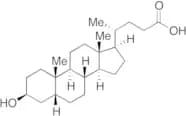
CAS:<p>Applications (3β,5β)-3-Hydroxycholan-24-oic acid has been used for the study of the activation of β1 subunit-containing BK channels with respect to the structure of monohydroxylated bile acids.<br>References Bukiya, A.N., ey al.: J. Lipid. Res., 49, 2441-2451 (2008)<br></p>Formula:C24H40O3Color and Shape:NeatMolecular weight:376.572-Thiouridine
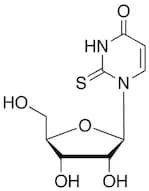
CAS:Controlled Product<p>Applications Modified nucleotide, essential for normal cell growth in some bacterial species. This compound is also able to chelate several metal ions.<br>References Ikeuchi, Y., et al.: Mol. Cell, 21, 97 (2006), Odani, A., et al.: J. Inorg. Biochem., 101, 727 (2007), Wohlgamuth-Benedum, J., et al.: J. Biol. Chem., 284, 23947 (2009),<br></p>Formula:C9H12N2O5SColor and Shape:NeatMolecular weight:260.271-Palmitoyl-sn-glycero-3-phosphocholine
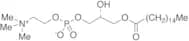
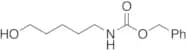
CAS:<p>Applications A lipid biomarker for stable and unstable heart disease.<br>References Gaziano, J., et al.: Circulation, 96, 2520 (1997), Thomas, A., et al.: Anal. Chem., 82, 6687 (2010),<br></p>Formula:C24H50NO7PColor and Shape:White PowderMolecular weight:495.63Benzyl (5-Hydroxypentyl)carbamate
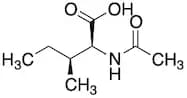
CAS:Controlled ProductFormula:C13H19NO3Color and Shape:NeatMolecular weight:237.29N-Acetylisoleucine
CAS:Controlled Product<p>Applications N-ACETYLISOLEUCINE (cas# 3077-46-1) is a useful research chemical.<br></p>Formula:C8H15NO3Color and Shape:NeatMolecular weight:173.2Adefovir-d4
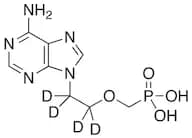
CAS:Controlled Product<p>Stability Hygroscopic<br>Applications Labelled Adefovir, which is used as an antiviral.<br>References Cundy, K.C., et al.: Antimicrob. Ag. Chemother., 39, 2401 (1995), Naesens, L. et al.: Antiviral Chem. Chemother., 8, 1 (1997), Kahn, J., et al.: J. Am. Med. Assoc., 282, 2305 (1999),<br></p>Formula:C8H8D4N5O4PColor and Shape:White SolidMolecular weight:277.21Aceclidine Hydrochloride
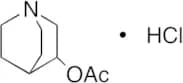
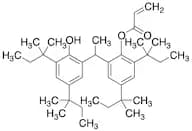
CAS:Controlled ProductFormula:C9H15NO2·HClColor and Shape:NeatMolecular weight:205.68Antioxidant GS
CAS:<p>Applications Antioxidant GS is a rubber compound, used in preparation of polyester.<br>References Qiu, Z., et al.: Famg. Zhuan. Shenq., (2020); Takagi, K., et al.: PCT Int. Appl., (2020);<br></p>Formula:C37H56O3Color and Shape:NeatMolecular weight:548.8397,8-Diaminopelargonic Acid Dihydrochloride
CAS:Controlled Product<p>Stability Hygroscopic<br>Applications Dethiobiotin synthetase carbonylation carbamate.<br></p>Formula:C9H20N2O2·2HClColor and Shape:NeatMolecular weight:261.19Pig ADST(Androstenone) ELISA Kit
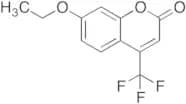
<p>This assay employs the competitive inhibition enzyme immunoassay technique. The microtiter plate provided in this kit has been pre-coated with Pig ADST. Standards or samples are added to the appropriate microtiter plate wells then with a biotin-conjugated antibody specific to Pig ADST. Next, Avidin conjugated to Horseradish Peroxidase (HRP) is added to each microplate well and incubated. After TMB substrate solution is added. The enzyme-substrate reaction is terminated by the addition of sulphuric acid solution and the color change is measured spectrophotometrically at a wavelength of 450nm ± 10nm. The concentration of Pig ADST in the samples is then determined by comparing the OD of the samples to the standard curve.</p>Color and Shape:Colourless Transparentliquid7-Ethoxy-4-(trifluoromethyl)coumarin
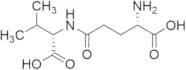
CAS:Controlled Product<p>Applications 7-Ethoxy-4-(trifluoromethyl)coumarin is a fluorogenic substrate used for determining cytochrome P450 activity.<br>References DeLuca, J.G., et al. Biochem. Pharmacol. 37, 1731, (1988)<br></p>Formula:C12H9F3O3Color and Shape:Light RedMolecular weight:258.19L-γ-Glutamyl-L-valine
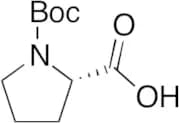
CAS:<p>Applications H-Glu(Val-OH)-OH (CAS# 2746-34-1) is a useful research chemical compound.<br></p>Formula:C10H18N2O5Color and Shape:NeatMolecular weight:246.26N-Boc-L-proline
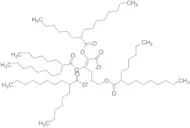
CAS:Controlled Product<p>Applications N-Boc-L-proline is a useful synthetic intermediate. It is used to synthesize Daclatasvir (D101500) which nhibits the HCV protein NS5A. Daclatasvir (D101500) can be used as a drug candidate for the treatment of hepatitis C (HCV).<br>References Gao, M., et al.: Nature, 465(7294), 96 (2010); Bell, T. W., Chem. Med. Chem., 5(10), 1663 (2010);<br></p>Formula:C10H17NO4Color and Shape:NeatMolecular weight:215.25Ascorbyl Tetraisopalmitate
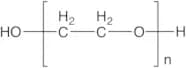
CAS:Controlled ProductFormula:C70H128O10Color and Shape:NeatMolecular weight:1129.76Poly(ethylene Glycol) ~600
CAS:Controlled Product<p>Applications Poly(ethylene Glycol) molecules of an average molecular mass of 600. Poly(ethylene Glycol) is used in various applications from industrial chemistry to biological chemistry. Recent research has shown PEG maintains the ability to aid the spinal cord injury recovery process, helping the nerve impulse conduction process in animals. In rats, it has been shown to aid in the repair of severed sciatic axons, helping with nerve damage recovery. It is industrially produced as a lubricating substance for various surfaces to reduce friction. PEG is also used in the preparation of vesicle transport systems in with application towards diagnostic procedures or drug delivery methods.<br>References Borgens, R. et al.: J. Neurosci. Res., 66, 1179 (2001); Stavisky, R. et al.: Neurosci. Lett., 376, 98 (2005); Nalam, P. et al.: Tribiol. Lett., 37, 541 (2010); Steinmetz, N. et al.: J. Am. Chem. Soc., 131, 17093 (2009); Li, X. et al.: J. Am. Chem. Soc., 133, 11147 (2011); Li, L. et al.: Int. J. Pharm., 447, 192 (2013);<br></p>Formula:H2O(C2H4O)nColor and Shape:Colourless To Off-WhiteMolecular weight:62.075-Heptylresorcinol
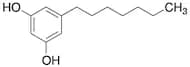
CAS:Controlled ProductFormula:C13H20O2Color and Shape:Off-WhiteMolecular weight:208.302,5-Anhydro-D-mannitol
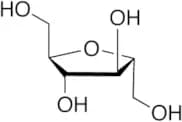
CAS:Controlled Product<p>Applications A carbohydrate metabolism regulator that has been shown to inhibit gluconeogenesis from lactate plus pyruvate and from substrates that enter the gluconeogenic pathway as triose phosphate.<br>References Joet, T., et al.: Biochem. J., 381, 905 (2004), Girardin, E., et al.: J. Biol. Chem., 280, 38059 (2005), Nghiem, N., et al.: App. Biochem. Biotechnol., 141, 335 (2007),<br></p>Formula:C6H12O5Color and Shape:NeatMolecular weight:164.16(Z)-10-Tritriacontene
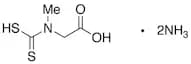
CAS:Controlled ProductFormula:C33H66Color and Shape:NeatMolecular weight:462.877N-(Dithiocarboxy)sarcosine Diammonium Salt
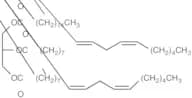
CAS:Controlled ProductFormula:C4H7NO2S2·2H3NColor and Shape:NeatMolecular weight:199.291,2-Dilinoleoyl-3-palmitoyl-rac-glycerol
CAS:Controlled Product<p>Stability Light Sensitive<br>Applications 1,2-Dilinoleoyl-3-palmitoyl-rac-glycerol is a triacylglycerol found in sesame oil.<br>References Lee, D., et al.: Analytica Chimica Acta, 429, 321 (2001); Jahaniaval, F., et al.: J. AM. Oil Chem. Soc., 77,847 (2000)<br></p>Formula:C55H98O6Color and Shape:NeatMolecular weight:855.36AMPA-15N (>90%)
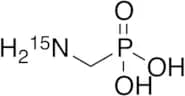
CAS:Controlled Product<p>Applications AMPA-15N is a useful labelled compound for determining the force constant and other properties of (Aminomethyl)phosphonic Acid in its stable form.<br>References Garrigou-Lagrange, C., et al.: C. R. Acad. Sci., 280, 969 (1975)<br></p>Formula:CH615NO3PPurity:>90%Color and Shape:NeatMolecular weight:112.033,6,9,16,19,22-Hexaoxabicyclo[22.3.1]octacosa-1(28),24,26-triene-2,10,15,23-tetrone
CAS:Controlled ProductFormula:C22H28O10Color and Shape:NeatMolecular weight:452.452N,N-Bis(2-hydroxyethyl)-N-methyl-2-[(1-oxohexadecyl)oxy]ethanaminium Chloride
CAS:Controlled ProductFormula:C23H48NO4·ClColor and Shape:White To Off-WhiteMolecular weight:438.092-[2-[2-[2-[6-(Biotinylaminohexanoyl]aminoethoxy]ethoxy]ethoxy]-4-[3-(trifluoromethyl)-3H-diazirin-3-yl]benzoic Acid
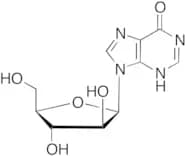
CAS:<p>Stability Light and Moisture Sensitive<br>Applications A cross-linking, biotin-labelled compound.<br>References Hatanaka, Y. et al: Bioorg. Med. Chem., 2, 1367 (1994); Hatanaka, Y. et al: J. Org. Chem., 59, 383 (1994); Hatanaka, Y. et al: Bioorg. Med. Chem. 2, 1367 (1994)<br></p>Formula:C31H43F3N6O8SColor and Shape:NeatMolecular weight:716.7687Arainosine
CAS:Controlled Product<p>Applications Arainosine is used in the preparation of 5'-O-D-valyl adenine 9-β-D-arabinofuranoside, a potential prodrug for improving the oral bioavailability of the antiviral agent Vidarabine (V305030).<br>References Shen, W., et al.: Nucleos. Nucleot. Nucl., 28, 43 (2009)<br></p>Formula:C10H12N4O5Color and Shape:White To Off-WhiteMolecular weight:268.23Disodium 3-Hydroxy-4-[(4-methyl-2-sulfonatophenyl)diazenyl]-2-naphthoate
CAS:Controlled Product<p>Applications Disodium 3-Hydroxy-4-[(4-methyl-2-sulfonatophenyl)diazenyl]-2-naphthoate is used to prepare solid cosmetic powder.<br>References Zeng, S., et al.: Fr. Demande (2020), FR 3095123 A1<br></p>Formula:C18H12N2O6S·2NaColor and Shape:NeatMolecular weight:430.342Adenosine 5'-Triphosphate Disodium Salt
CAS:<p>Stability Hygroscopic, Temperature Sensitive<br>Applications A metabolite of Adenosine (A280400), a multifunctional nucleoside triphosphate used in cells as a coenzyme of intracellular energy transfer. It transports chemical energy within cells for metabolism.<br>References Knowles, J., et al.: Annu. Rev. Biochem., 49, 877 (1980),<br></p>Formula:C10H14N5O13P3·2NaColor and Shape:NeatMolecular weight:569.16Pyrimido[1,2-a]purin-10(1H)-one
CAS:Controlled Product<p>Applications M1G is a secondary DNA damage product arising from primary reactive oxygen species (ROS) damage to membrane lipids or deoxyribose. It is a guanine adduct formed by reaction of malondialdehyde with DNA.<br>References Ham, A., et al.: Chem. Res. Toxicol., 13, 1243 (2000), Sharma, R., et al.: Clin. Cancer Res., 7, 1452 (2001), Jeong, Y., et al.: Chem. Res. Toxicol., 18, 51 (2005),<br></p>Formula:C8H5N5OColor and Shape:NeatMolecular weight:187.16Pig DPD(deoxypyridinoline) ELISA Kit
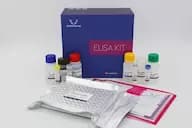
<p>The test principle applied in this kit is Sandwich enzyme immunoassay. The microtiter plate provided in this kit has been pre-coated with an antibody specific to Pig DPD. Standards or samples are added to the appropriate microtiter plate wells then with a biotin-conjugated antibody specific to Pig DPD. Next, Avidin conjugated to Horseradish Peroxidase (HRP) is added to each microplate well and incubated. After TMB substrate solution is added, only those wells that contain Pig DPD, biotin-conjugated antibody and enzyme-conjugated Avidin will exhibit a change in color. The enzyme-substrate reaction is terminated by the addition of sulphuric acid solution and the color change is measured spectrophotometrically at a wavelength of 450nm ± 10nm. The concentration of Pig DPD in the samples is then determined by comparing the OD of the samples to the standard curve.</p>Color and Shape:Colourless TransparentliquidLeuco Gentian Violet-d6 (Major)
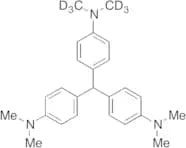
CAS:Controlled Product<p>Applications Leuco Gentian Violet-d6 (Major), is a labelled metabolite of Gentian Violet in seafood products.<br> Not a dangerous good if item is equal to or less than 1g/ml and there is less than 100g/ml in the package<br>References Rushing, L., et al.: J. Chromatogr., 700, 223 (1997), Ohtsu, H., et al.: J. Med. Chem., 45, 5037 (2002), Yin, D., et al.: Mol. Pharmacol., 63, 211 (2003),<br></p>Formula:C252H6H25N3Color and Shape:NeatMolecular weight:379.57L-Cysteinylglycine
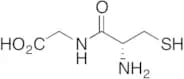
CAS:<p>Stability Air Sensitive<br>Applications L-Cysteinylglycine, is a biologically important compound since it is formed during the γ-glutamyl cycle. It is a cysteinyl peptide, that can be used in the studies of many peptides and important proteins.<br>References Marvin D., et al.: New J. Org. Synth., 12, 185 (1980); Sheehan, J. C., et al.: New Synth. Cysteinyl Peptide, 1159 (1958);<br></p>Formula:C5H10N2O3SColor and Shape:NeatMolecular weight:178.214-Methylumbelliferyl Oleate
CAS:Controlled Product<p>Applications Fatty acyl esters of 4-methylumbelliferone for use as fluorogenic substrates to continuously follow the hydrolytic activity of carboxylesterases, such as acid and alkaline lipases.<br>References Jacks, T.J., et al.: Anal. Biochem., 21, 279 (1967),<br></p>Formula:C28H40O4Color and Shape:NeatMolecular weight:440.615-Aminoimidazole-4-carboxamide-1-β-D-Ribofuranosyl 5’-Monophosphate
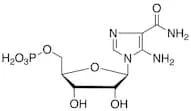
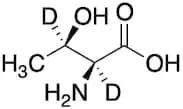
CAS:Controlled ProductFormula:C9H15N4O8PColor and Shape:NeatMolecular weight:338.21L-Threonine-2,3-d2
CAS:Controlled Product<p>Applications L-Threonine-2,3-d2 (CAS# 1202936-45-5) is a useful isotopically labeled research compound.<br></p>Formula:C4D2H7NO3Color and Shape:NeatMolecular weight:121.13Uvinul A Plus-d4
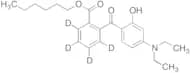
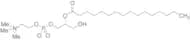
CAS:Controlled Product<p>Applications Uvinul A Plus-d4 is the labelled compound of Uvinul A Plus(U850300) which is a component of cosmetic emulsion with UV protection.<br>References Chang, M., et al.: J. Food Drug Anal., 9, 199 (2001), Simeoni, S., et al.: J. Pharm. Biomed. Anal., 38, 250 (2005), Vielhaber, G., et al.: Photochem. Photobiol. Sci., 5, 275 (2006), Lee, S., et al.: J. Cosmet. Sci., 59, 469 (2008),<br></p>Formula:C24D4H27NO4Color and Shape:NeatMolecular weight:401.53192-Palmitoyl-sn-glycero-3-phosphocholine
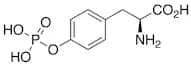
CAS:Controlled Product<p>Applications Food preservative, having the ability to form complexes with starch, retarding its retrodegradation during storage.<br>References Yu, S., et al.: J. Agric. Food Chem., 54, 4482 (2006),<br></p>Formula:C24H50NO7PColor and Shape:NeatMolecular weight:495.64O-Phospho-L-tyrosine
CAS:<p>Applications Useful in the study of tyrosine-phosphorylation, which has been linked with the malignant transformation of cells by some RNA tumour viruses.<br>References Sefton, B.M., et al.: Cell, 20, 807 (1980), Erikson, R., et al.: Perspect. Virol., 11, 93 (1981), Lee, E-S, et al.: J. Org. Chem., 59, 2086 (1994)<br></p>Formula:C9H12NO6PColor and Shape:NeatMolecular weight:261.17L-Homocysteine Thiolactone Hydrochloride
CAS:Controlled Product<p>Applications L-Homocysteine Thiolactone Hydrochloride is used to prepare substituted homocysteine analogs as inhibitors of peptidylglycine α-amidating monooxygenase. It is also used to synthesize (mercaptoacyl)alanylprolines as metalloprotease inhibitors.<br>References Erion, M., et al.: J. Med. Chem., 37, 4430 (1994); Slusarchyk, W., et al.: Bioorg. Med. Chem. Lett., 5, 753 (1995)<br></p>Formula:C4H8ClNOSColor and Shape:NeatMolecular weight:153.63Benzidine
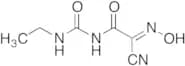
CAS:Controlled Product<p>Applications Potentially mutagenic compound. Dyes and metabolites, Environmental Testing.<br> Not a dangerous good if item is equal to or less than 1g/ml and there is less than 100g/ml in the package<br>References Dairou, J., et al.: Toxicol. App. Pharmacol., 236, 366 (2009), Toropov, A., et al.: Chem. Biol. Drug Design, 73, 482 (2009),<br></p>Formula:C12H12N2Purity:95%Color and Shape:Tan Or Dark Grey To BlackMolecular weight:184.24E-1-(2-Cyano-2-Hydroxyiminoacetyl)-3-Ethylurea
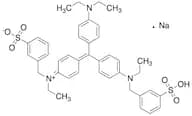
CAS:<p>Stability Moisture Sensitive<br>Applications E-1-(2-Cyano-2-hydroxyiminoacetyl)-3-ethylurea is an oxime containing compound that can be used as a reactant in the synthesis of Cymoxanil (C988995), which is a fungicide applied as seed treatment or as foliar application to the plants to control late blight.<br>References Greci, L., et al.: J. Chem. Res., Synop., 1, 655 (2003); Dhingani, J. C., et al.: J. Pure. App. Microbiol., 6, 1683 (2012); Bakirici, G.T., et al.: Food. Chem., 135, 1901 (2012);<br></p>Formula:C6H8N4O3Color and Shape:NeatMolecular weight:184.15Acid violet 17 (Technical Grade)
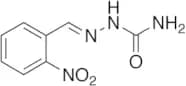
CAS:Controlled Product<p>Applications Acid violet 17 is an anionic dye used in adsorption studies and to dye proteins in electrophoresis applications. Dyes and metabolites, Environmental Testing<br></p>Formula:C41H44N3O6S2·NaColor and Shape:NeatMolecular weight:761.922-Nitrobenzaldehyde Semicarbazone
CAS:Controlled ProductFormula:C8H8N4O3Color and Shape:NeatMolecular weight:208.17Citrate-dextrose Solution (ACD)
CAS:Controlled Product<p>Applications Citrate-dextrose solution (ACD) is a solution useful for anticoagulation of whole blood.<br></p>Formula:C17H23NO4Color and Shape:Neat5'-Cholesteryl-TEG Phosphoramidite
CAS:Controlled Product<p>Applications 5’-Cholesteryl-TEG Phosphoramidite is used in the synthesis of immunostimulatory oligonucleotides for in vivo cell modification for immunotherapy.<br>References Liu, H. et al.: Angew. Chem. Int. Ed., 50, 7052 (2011);<br></p>Formula:C46H82N3O7PColor and Shape:NeatMolecular weight:820.13O6-(2-Hydroxypropyl)-2’-deoxyguanosine
CAS:Controlled Product<p>Stability Very Hygroscopic<br>Applications O6-(2-Hydroxypropyl)-2’-deoxyguanosine is a mutagenic O6-alkylguanine adduct that induces mismatch repair-mediated toxicity.<br>References Mazon, G. et al.: Proc. Nat. Acad. Sci. USA, 107, S18050 (2010);<br></p>Formula:C13H19N5O5Color and Shape:NeatMolecular weight:325.32
![N-Formyl-L-leucine [S-(E)]-1-(2-Nonenyl)dodecyl Ester](/_next/image/?url=https%3A%2Fstatic.cymitquimica.com%2Fproducts%2FTR%2Fthumb-webp%2FF700575.webp&w=3840&q=75)




![3,6,9,16,19,22-Hexaoxabicyclo[22.3.1]octacosa-1(28),24,26-triene-2,10,15,23-tetrone](/_next/image/?url=https%3A%2Fstatic.cymitquimica.com%2Fproducts%2FTR%2Fthumb-webp%2FH373765.webp&w=3840&q=75)
![N,N-Bis(2-hydroxyethyl)-N-methyl-2-[(1-oxohexadecyl)oxy]ethanaminium Chloride](/_next/image/?url=https%3A%2Fstatic.cymitquimica.com%2Fproducts%2FTR%2Fthumb-webp%2FH466730.webp&w=3840&q=75)
![2-[2-[2-[2-[6-(Biotinylaminohexanoyl]aminoethoxy]ethoxy]ethoxy]-4-[3-(trifluoromethyl)-3H-diazirin…](/_next/image/?url=https%3A%2Fstatic.cymitquimica.com%2Fproducts%2FTR%2Fthumb-webp%2FB394857.webp&w=3840&q=75)

![Disodium 3-Hydroxy-4-[(4-methyl-2-sulfonatophenyl)diazenyl]-2-naphthoate](/_next/image/?url=https%3A%2Fstatic.cymitquimica.com%2Fproducts%2FTR%2Fthumb-webp%2FD495003.webp&w=3840&q=75)

![Pyrimido[1,2-a]purin-10(1H)-one](/_next/image/?url=https%3A%2Fstatic.cymitquimica.com%2Fproducts%2FTR%2Fthumb-webp%2FP997400.webp&w=3840&q=75)