Biochemicals and Reagents
Biochemicals and reagents are fundamental substances for research and development in fields such as biotechnology, molecular biology, pharmacology, and medicine. These products are essential for a variety of applications, including compound synthesis, biological sample analysis, metabolic process research, and drug production. At CymitQuimica, we offer a wide selection of high-quality, high-purity biochemicals and reagents suitable for various scientific and industrial needs. Our catalog includes enzymes, antibodies, nucleic acids, amino acids, and many other products, all designed to support researchers and professionals in their research and development projects, ensuring reliable and reproducible results.
Subcategories of "Biochemicals and Reagents"
- Biomolecules(99,085 products)
- By Biological Target(99,070 products)
- By Pharmacological Effects(6,784 products)
- Cryopreservatives(21 products)
- Desinfectants and Related Compounds(28 products)
- Hormones(346 products)
- Plant Biology(6,693 products)
- Secondary Metabolites(14,217 products)
Found 130575 products of "Biochemicals and Reagents"
Sort by
Purity (%)
0
100
|
0
|
50
|
90
|
95
|
100
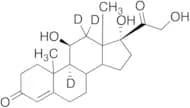
Cortisol-9,12,12-d3
CAS:Controlled Product<p>Applications Isotope labelled Cortisol (H714615) a topical corticosteroid, more specifically a glucocorticoid, produced by the zona fasciculata of the adrenal gland . Cortisol is released in response to stress and a low level of blood glucocorticoids. Its primary functions are to increase blood sugar through gluconeogenesis; suppress the immune system; and aid in fat, protein and carbohydrate metabolism.<br>References Vigore, L., et al.: Cancer Biol Ther.. 15. :699 (2014); Puurunen, J. et al.: J. Clin. Endocrinol. Metab., 94, 1973 (2009);<br></p>Formula:C21D3H27O5Color and Shape:NeatMolecular weight:365.48N-Acetyl-S-(2-cyanoethyl)-L-cysteine Ammonium Salt
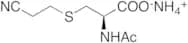
CAS:<p>Stability Hygroscopic<br>Applications N-Acetyl-S-(2-cyanoethyl)-L-cysteine Ammonium Salt is a metabolite of Acrylonitrile (AN) and acrylamide (AM); and are commonly used in the synthesis of plastics and polymers.<br>References van Bladeren, P., et al.: Drug Metab. Dispos., 9, 246 (1981), Guengerich, F., et al.: Chem. Res. Toxicol., 4, 168 (1991),<br></p>Formula:C8H11N2O3S·H4NColor and Shape:SolidMolecular weight:233.2917α-Estradiol
CAS:Controlled Product<p>Impurity Estradiol 17?-Hydroxy Impurity; Estradiol EP Impurity B; Ethinylestradiol EP Impurity L<br>Applications Estradiol (known as α-Estradiol or 17 α-Estradiol) is a biologically active estrogen in human breast cancer cells in tissue culture. 17-Εstradiol and its selective receptor, ER-X, are not part of a classical hormone/receptor endocrine system but of a system with important autocrine/paracrine functions in the developing and adult brain(1,2). 17-Estradiol may have enormous implications for hormone replacement strategies at the menopause and in the treatment of such neurodegenerative disorders as Alzheimer’s disease and ischemic stroke(3).This compound is a contaminant of emerging concern (CECs). Drinking water contaminant candidate list 3 (CCL 3) compound as per United States Environmental Protection Agency (EPA). Environmental contaminants; Food contaminants.<br>References 1. Lievertz, R. et al.: J. Obstet. Gynecol. 1987 May;156(5):1289-932. Kuhnz, W. et al.: Arzneimittelforschung. 1993 Sep;43(9):966-73.3. Toran-Allerand, C. et al.: Endocrinology. 2005 Sep;146(9):3843-50.<br></p>Formula:C18H24O2Color and Shape:WhiteMolecular weight:272.38[N-(2-Maleimidoethyl]ethylenediamine-N,N,N’,N’-tetraacetic Acid, Monoamide, Technical Grade
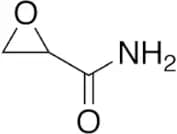
CAS:Controlled Product<p>Applications A heterobifunctional crosslinking reagent. Approximately 80% pure, contains EDTA.<br></p>Formula:C16H22N4O9Color and Shape:Light Yellow To BrownMolecular weight:414.37Glycidamide
CAS:<p>Stability Moisture Sensitive<br>Applications An epoxide metabolite of acrylamide. It is neurotoxic and carcinogenic.<br>References Costa, L.G., et al.: Toxicology, 98, 151 (1995)<br></p>Formula:C3H5NO2Color and Shape:Light Yellow Solid With A Low Melting PointMolecular weight:87.086-Fluoro DL-DOPA Hydrobromide Salt
CAS:<p>Applications A fluorinated DOPA analog.<br>References Leete, E., et al.: Phytochemistry, 10, 2687 (1971), Garnett, E., et al.: Nature, 305, 137 (1983),<br></p>Formula:C9H10FNO4·BrHColor and Shape:NeatMolecular weight:296.09Dehydroabietal
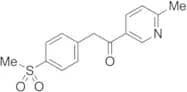
CAS:Controlled Product<p>Applications Dehydroabietal is an essential oil and found in the composition of seed extractives from various Abies and Picea species.<br> Not a dangerous good if item is equal to or less than 1g/ml and there is less than 100g/ml in the package<br>References Falsca, A., et al.: Biochem. Syst. Ecol., 69, 166-175 (2016); Wajs-Bonikowska, A., et al.: Chem. Biodivers., 13, 1194-1201 (2016)<br></p>Formula:C20H28OColor and Shape:NeatMolecular weight:284.442-(4-Methanesulfonyl-phenyl)-1-(6-methyl-pyridin-3-yl)-ethanone
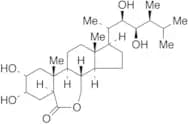
CAS:<p>Applications This compound is an impurity in the synthesis of Etoricoxib (E934100), a specific inhibitor of COX-2 .<br>References McGeer, P.L., et al.: Exp. Gerontol., 37, 925 (2002), Chenevard, R., et al.: Circulation, 107, 405 (2003)<br></p>Formula:C15H15NO3SColor and Shape:BeigeMolecular weight:289.35Brassinolide >90%
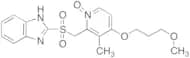
CAS:<p>Applications Plant hormone; natural steroid containing a seven-membered B-ring lactone, that promotes both cell elongation and cell devision. Over ten brossinosteroids have been isolated and characterized from sources such as pollen, seedling, leaf. Used as plant growth regulator.<br>References Grove, M.D., et al.: Nature, 281, 216 (1979), Schlagnhaufer, C., et al.: Physiol. Plant., 60, 347 (1984), Wada, K., et al.: Agric. Biol. Chem., 48, 719 (1984),<br></p>Formula:C28H48O6Purity:>90%Color and Shape:White To Off-WhiteMolecular weight:480.68Rabeprazole Sulfone N-Oxide
CAS:Controlled Product<p>Impurity Rabeprazole EP Impurity I<br>Applications Rabeprazole Sulfone N-Oxide (Rabeprazole EP Impurity I) is a potential impurity of Rabeprazole (R070500) sodium.<br>References Fujisaki, H., et al.: Biochem. Pharmacol., 42, 321 (1991), Morri, M., et al.: J. Biol. Chem., 268, 21553 (1993)<br></p>Formula:C18H21N3O5SColor and Shape:NeatMolecular weight:391.44Phenyl(9H-purin-6-yl)amine
CAS:Controlled Product<p>Applications Phenyl(9H-purin-6-yl)amine (cas# 1210-66-8) is a compound useful in organic synthesis.<br></p>Formula:C11H9N5Color and Shape:NeatMolecular weight:211.22(E,E)-Farnesol 11,11,11,12,12,12-d6
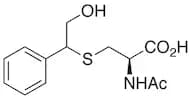
CAS:Controlled ProductFormula:C15H20D6OColor and Shape:NeatMolecular weight:228.4N-Acetyl-S-(2-hydroxy-1-phenylethyl)-L-cysteine + N-Acetyl-S-(2-hydroxy-2-phenylethyl)-L-cysteine (Mixture)
CAS:Controlled Product<p>Stability Hygroscopic<br>Applications A mixture of 2 metabolites of Styrene. The 2 regioisomers are in a roughly 3: 1ratio<br>References Ryan, A., et al.: Drug Metab. Dispos., 5, 363 (1977), Delbressine, L., et al.: Xenobiotica, 11, 589 (1981), Truchon, G., et al.: J. Anal. Toxicol., 14, 227 (1990),<br></p>Formula:C13H17NO4SColor and Shape:Off White SolidMolecular weight:283.34Oleuropein
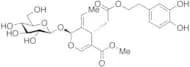
CAS:<p>Applications Oleuropein is a tyrosol ester derivative of elenolic acid and phenolic glycoside found in olive oil. Oleuropein shows antioxidant, anti-ischemic and hypolipidemic activity. Oleuropein has also been used as an immunomodulator .<br>References Speroni, E. et al.: Phytother. Res., 12, S98 (1998); Andreadou, I. et al.: J. Nutrit., 136, 2213 (2006):;Giamarellos-Bourboulis, E.J. et al.: Shock, 26, 410 (2006);<br></p>Formula:C12H17O7Purity:>95%Color and Shape:NeatMolecular weight:540.511-Palmitoyl-2-oleoyl-sn-glycero-3-phospho-(1'-rac-glycerol) Sodium Salt
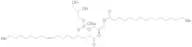
CAS:<p>Applications 1-Palmitoyl-2-oleoyl-sn-glycero-3-phospho-(1'-rac-glycerol) Sodium Salt is useful for various surfactant applications.<br>References Mansour, H., et al.: J. Pharm. Sci., et al.: 96, 377 (2006); Dudia, A., et al.: Nano Lett., 8, 1105 (2008)<br></p>Formula:C40H76NaO10PColor and Shape:WhiteMolecular weight:770.99Glycolithocholic Acid Sodium Salt
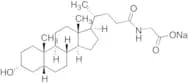
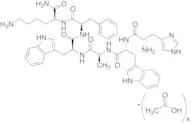
CAS:<p>Applications Glycolithocholic Acid Sodium Salt is a bile salt and may induce calcium uptake in human erythrocytes.<br>References Oelberg, D.G., et al.: Hepatology, 7 245-52 (1987);<br></p>Formula:C26H42NNaO4Color and Shape:NeatMolecular weight:455.61L-Histidyl-D-tryptophyl-L-alanyl-L-tryptophyl-D-phenylalanyl-L-lysinamide Acetate Salt
CAS:Controlled ProductFormula:C46H56N12O6·x(C2H4O2)Color and Shape:NeatMolecular weight:873.01 + x(60.05)Arginine Vasopressin Diacetate
CAS:<p>Applications An endogenous antidiuretic hormone in most mammalian species. It is released into the blood from nerve terminals in the posterior pituitary and median eminence. It is a neurotransmitter in the central nervous system and also implicated in a variety of physiological processes such as regulating water balance by antidiuretic action. It is a peptidic V1a receptor agonist that produces vasoconstriction via V1aR-mediated vascular smooth muscle cell contraction and is being used to increase blood pressure in septic shock, a form of vasodilatory hypotension.<br>References Perucca, J. et al.: J. AM. Soc. Nephrol., 19, 1721 (2008); Toba, K. et al.: Prog. Brain Res., 119, 337 (1998); Berrada, K. et al.: J. Biol. Chem., 275, 27229 (2000);<br></p>Formula:C50H73N15O16S2Color and Shape:NeatMolecular weight:1204.349-cis-Retinol Acetate
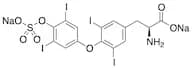
CAS:Controlled ProductFormula:C22H32O2Purity:>85%Color and Shape:NeatMolecular weight:328.49Thyroxine 4’-O-Sulfate Disodium Salt
<p>Applications Thyroxine 4’-O-Sulfate Disodium Salt, is a metabolite and sulfoconjugated derivative of Thyroxine (T425600).<br></p>Formula:C15H9I4NNa2O7SColor and Shape:NeatMolecular weight:900.9(-)-Maackiain
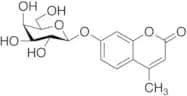
CAS:Controlled Product<p>Applications (-)-Maackiain (CAS# 2035-15-6) is a useful research chemical compound.<br></p>Formula:C16H12O5Color and Shape:White To Off-WhiteMolecular weight:284.264-Methylumbelliferyl β-D-Galactopyranoside
CAS:Controlled Product<p>Applications Substrate for fluorometric assay of ß-D-galactosidase<br></p>Formula:C16H18O8Color and Shape:NeatMolecular weight:338.31UDP-3-O-[R-3-Hydroxymyristoyl]-N-[R-3-hydroxymyristoyl] Glucosamine Tris Salt
CAS:Controlled Product<p>Applications UDP-3-O-[R-3-Hydroxymyristoyl]-N-[R-3-hydroxymyristoyl] Glucosamine Tris Salt is the salt version of [2(R),3(R)]-P'-[2-Deoxy-3-O-(3-hydroxy-1-oxotetradecyl)-2-[(3-hydroxy-1-oxotetradecyl)amino]-α-D-glucopyranosyl] Ester Uridine 5'-(trihydrogen diphosphate) (CAS 90293-60-0) which can be used in biological study for reconstruction of metabolic network in bovine mammary gland tissue. Potent drug or API metabolite.<br>References Wang, C., et al.: Mol. Biol. Rep., 39, 7311-7318 (2012);<br></p>Formula:C43H77N3O20P2·C4H11NO3Color and Shape:NeatMolecular weight:1139.16Nitrotetrazolium Blue Chloride (Technical Grade)
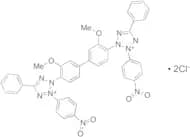
CAS:Controlled Product<p>Applications Nitrotetrazolium Blue Chloride is a Tetrazolium dye used in colorimetric assays. Dyes and metabolites.<br>References Berridge, Michael V., et al.: Biotechnol. Annu. Rev., 11, 127 (2005)<br></p>Formula:C40H30N10O6•2(Cl)Color and Shape:NeatMolecular weight:746.7323545(24S)-Campestanol
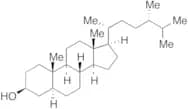
CAS:Controlled Product<p>Applications A phytosterol content in plant food which showed hypocholesterolemic and hypotriglyceridemic effects in hypercholesterolemic overweight volunteers. Used in the treatment of metabolic disorders.<br>References Kasamo, K., et al.: Plant Physiol., 93, 1049 (1990), Davey, M., et al.: J. Sci. Food Agric., 80, 825 (2000), Nomura, T., et al.: J. Biol. Chem., 280, 17873 (2005), Matos, L., et al.: Food Chem., 102, 406 (2007),<br></p>Formula:C28H50OColor and Shape:NeatMolecular weight:402.70Tartrazine
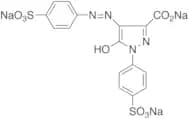
CAS:<p>Applications As a dye for wool and silks; as colorant in food, drugs, and cosmetics. In biochemistry as an adsorption-elution indicator for chloride estimations. Tartrazine (otherwise known as E number E102, C.I. 19140, or FD&C Yellow 5) is a synthetic lemon yellow azo dye used as a food coloring. Tartrazine appears to cause the most allergic and intolerance reactions of all the azo dyes, particularly among asthmatics and those with an aspirin intolerance. Dyes and metabolites, Environmental Testing.A recent report has shown that Tartrazine may be useful in 3D bio-printing of organ-like architectures.<br>References Rowe, K.S., et al.: J. Pedriatics, 125, 691 (1994), Tanaka, T., et al.: Food Chem. Toxicol., 44, 179 (2006); Chem. and Eng News Page 4 May 6, 2019<br></p>Formula:C16H9N4O9S2·3NaColor and Shape:YellowMolecular weight:534.367-Hydroxyquinoline
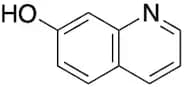
CAS:<p>Applications 7-Hydroxyquinoline (cas# 580-20-1) is a useful research chemical.<br></p>Formula:C9H7NOColor and Shape:NeatMolecular weight:145.158Oxythiamine Hydrochloride
CAS:Controlled Product<p>Stability Hygroscopic<br>Applications Oxythiamine HCl (cas# 136-16-3) is a useful research chemical.<br></p>Formula:C12H15N3O2S·HClColor and Shape:NeatMolecular weight:301.79Linoleoyl Carnitine
CAS:Controlled Product<p>Stability Hygroscopic, Temperature Sensitive<br>Applications A carnitine ester of unsaturated fatty acid. Used in the studies of fibroblasts in long-chain 3-hydroxyacyl-CoA dehydrogenase deficiency and fatty acid oxidation disorders.<br>References Gross R.W., et al.: J. Biol. Chem., 258, 5221 (1983),<br></p>Formula:C25H45NO4Color and Shape:NeatMolecular weight:423.63Sunset Yellow FCF
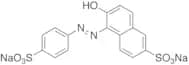
CAS:<p>Stability Light Sensitive<br>Applications Provisionally listed for use in food, drugs and cosmetics. Sunset Yellow is useful in fermented foods which must be heat treated. It may be found in orange sodas, orange jelly, marzipan, Swiss rolls, apricot jam, citrus marmalade, lemon curd, sweets, hot chocolate mix and packet soups, trifle mix, breadcrumbs, snack chips, shelf fresh noodles, cheese sauce mixes. Sunset Yellow is a sulfonated version of Sudan I, a possible carcinogen. Sunset Yellow itself may be responsible for causing an allergic reaction in people with an aspirin intolerance, resulting in various symptoms, including gastric upset, diarrhea, vomiting, nettle rash (urticaria), swelling of the skin (angioedema) and migraines. Dyes and metabolites, Environmental Testing<br>References Radomski, J.L., et al.: J. Pharmacol. Exp. Ther., 136, 259 (1962), Gaunt, I.F., et al.: Food Cosmet. Toxicol., 5, 747 (1967),<br></p>Formula:C16H10N2O7S2·2NaColor and Shape:NeatMolecular weight:452.37Adenosine 5'-Monophosphate Disodium Salt
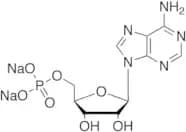
CAS:<p>Stability Hygroscopic<br>Applications Adenosine monophosphate is useful for skin rejuvenation in dermatology and aesthetic dermatology.<br>References Watanabe, M., et al.: Arch. Dermatol., 127, 1689 (1991), Engelke, M., et al.: Br. J. Dermatol., 137, 219 (1997),<br></p>Formula:C10H12N5O7P·2NaColor and Shape:NeatMolecular weight:391.18D-Homocystine
CAS:Controlled Product<p>Applications D-Homocysteine is the stereoisomer of L-Homocystine, increased levels lead to hyperhomocysteinemia; a cardiovascular risk factor in prediction of coronary heart disease as well as being associated with congenital birth defects, pregnancy complications and cancer.<br>References Geisel, J. et al.: Clin. Chem. Lab. Med., 41, 1513 (2003); Geisel, J. et al.: Clin. Chem. Lab. Med., 41, 1513 (2003);<br></p>Formula:C8H16N2O4S2Color and Shape:WhiteMolecular weight:268.355,6-Dihydro Thymine
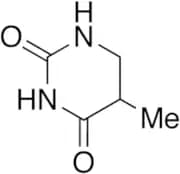
CAS:Controlled Product<p>Applications 5,6-Dihydrothymine is a derivative of Thymine, a nucleobase in the nucleic acid of DNA . 5,6-Dihydrothymine is a radiolysis product of DNA.<br>References Hubbard, K. et al.: Biochemistry, 28, 4382 (1989); Cadet, J. et al.: Int. J. Rad. Biol. Rel. Stud. Phys. Chem. Med., 39, 119 (1981);<br></p>Formula:C5H8N2O2Color and Shape:NeatMolecular weight:128.13Olmesartan Lactone Impurity
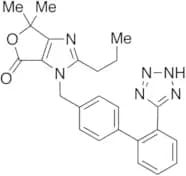
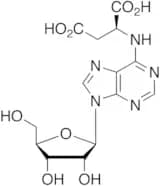
CAS:<p>Impurity Olmesartan EP Impurity B/ Olmesartan Medoximil USP Related Compound A<br>Applications Olmesartan Lactone Impurity (Olmesartan EP Impurity B) is a cyclic ester impurity of Olmesartan (O550000).<br></p>Formula:C24H24N6O2Color and Shape:WhiteMolecular weight:428.49N6-Succinyl Adenosine
CAS:<p>Applications Succinyladenosine (S-Ado) is a biochemical marker of adenylosuccinase deficiency - the genetic defect of purine de novo synthesis. S-Ado has been previously reported as normally undetectable in cerebrospinal fluid (CSF) of children not suffering from this defect.<br>References Wevers, R., et al.: Clin. Chem., 41, 744 (1995), Nassogne, M., et al.: Brain Dev., 22, 383 (2000), Jurecka, A., et al.: Mol. Genet., 94, 435 (2008),<br></p>Formula:C14H17N5O8Color and Shape:White To Light YellowMolecular weight:383.31N-Ethyl-N’-(3-dimethylaminopropyl)carbodimide Hydrochloride
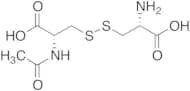
CAS:<p>Applications An enzyme inhibitor.<br></p>Formula:C8H18ClN3Color and Shape:White To Off-WhiteMolecular weight:191.70N-Acetyl-L-cystine
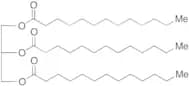
CAS:Controlled Product<p>Applications N-Acetyl-L-cystine is an antioxidant, used in the treatment of influenza A virus pandemic (1). N-Acetyl-L-cystine promotes fertilization by reducing disulfide bonds in zona pellucida of mouse (2).Releases N-Acetyl-L-cysteine, which is an antidote for paracetamol poisoning.<br>References (1) Zhang, R., et al.: (2014) Int. Immunopharmacol. 22: 1-8 (2) Takeo, T., et al.: Biol Reprod. (2015) 92: 1-7<br></p>Formula:C8H14N2O5S2Color and Shape:NeatMolecular weight:282.34Glyceryl Tritridecanoate
CAS:Controlled Product<p>Applications Glyceryl Tritridecanoate is used in cosmetics that stimulates the growth of hair and skin.<br>References Adachi, K., et al.: Eur. Pat. Appl. (1985), EP 129778 A2 19850102.; Jpn. Kokai Tokkyo Koho (1984), JP 59027809 A 19840214.<br></p>Formula:C42H80O6Color and Shape:NeatMolecular weight:681.085b-Cholanic Acid-3a,6b-diol
CAS:Controlled Product<p>Applications 5β-Cholanic Acid-3α, 6β-Diol is a cholesterol derivative; Plasma lipophilic biomarkers in rats. Also, it is one of two major metabolites from the hydroxylation of hepatic lithocholic acid catalyzed by Cyp3a/Cyp3a11 enzymes in mice.<br>References Mayengbam, S., et al.: Eur. J. Nutr., 55, 1213-1223 (2016); Hrycay, E., et al.: Mol. Cell. Biochem., 389, 119-132 (2014)<br></p>Formula:C24H40O4Color and Shape:White To Off-WhiteMolecular weight:392.58Dehydro Androsterone
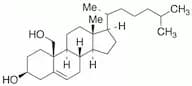
CAS:Controlled Product<p>Applications Dehydro Androsterone is an Androsterone (A637535) analogue.<br>References Amann, R., et al.: Life Sci., 49, 849 (1991), Bevan, S., et al.: Br. J. Pharmacol., 107, 544 (1992), Baulieu, E., et al.: J. Clin. Endocrinol. Metab., 81, 3147 (1996),<br></p>Formula:C19H28O2Color and Shape:Off-WhiteMolecular weight:288.4219-Hydroxy Cholesterol
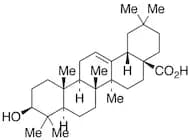
CAS:<p>Applications A metabolite of Cholesterol. Cholesterol oxidation product having cytotoxicity effects.<br>References Higley, N., et al.: Food Chem. Toxicol., 22, 983 (1984), Emanuel, H., et al.: J. Food Sci., 56, 843 (1991), Kilsdonk, E., et al.: J. Lipid Res., 36, 505 (1995), Cantwell, H., et al.: Cell Biol. Toxicol., 14, 401 (1998),<br></p>Formula:C27H46O2Color and Shape:NeatMolecular weight:402.65Oleanolic Acid
CAS:<p>Applications A triterpenoid known for its anti-inflammatory properties, is commonly present in several medicinal plants. Inhibits secretory phospholipase A2.<br>References Andrikopoulos, N., et al.: J. Med. Food, 5, 1 (2002), Lanteri, S., et al.: Food Chem., 76, 501 (2002), Rodriguez-Rodriguez, R., et al.: Br. J. Pharmacol., 155, 535 (2008), Sotiroudis, T., et al.: Eur. J. Nutr, 47, 69 (2008),<br></p>Formula:C30H48O3Color and Shape:White To Off-WhiteMolecular weight:456.70Isodeoxycholic Acid
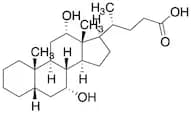
CAS:Controlled Product<p>Applications Isodeoxycholic Acid is used for comprehensive bile acid profiling in hereditary intrahepatic cholestasis.<br>References Liu, T., et al.: Liver Int. 38, 1676 (2018)<br></p>Formula:C24H40O4Color and Shape:White To Off-WhiteMolecular weight:392.58Oxindole-3-acetyl-N-aspartic Acid
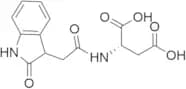
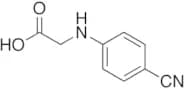
CAS:Controlled ProductFormula:C14H14N2O6Color and Shape:NeatMolecular weight:306.271N-(4-Cyanophenyl)-glycine
CAS:Controlled Product<p>Applications N-(4-Cyanophenyl)-glycine (cas# 42288-26-6) is a compound useful in organic synthesis.<br></p>Formula:C9H8N2O2Color and Shape:NeatMolecular weight:176.17Veratrole
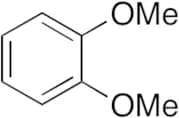
CAS:<p>Applications Veratrole is common reagent in organic synthesis such as the synthesis of arizonins B1 and C1. Also used in the synthesis of pharmacophores of salmeterol and roflumilast as dual β2-adrenoreceptor agonists-PDE4 inhibitors.<br>References Fernandes, R. et al.: Tetrahedron: Asymm., 24, 1548 (2013); Liu, A. et al.: Bioorg. Med. Chem. Lett., 23, 1548 (2013);<br></p>Formula:C8H10O2Color and Shape:NeatMolecular weight:138.16




![[N-(2-Maleimidoethyl]ethylenediamine-N,N,N’,N’-tetraacetic Acid, Monoamide, Technical Grade](/_next/image/?url=https%3A%2Fstatic.cymitquimica.com%2Fproducts%2FTR%2Fthumb-webp%2FM138480.webp&w=3840&q=75)







![UDP-3-O-[R-3-Hydroxymyristoyl]-N-[R-3-hydroxymyristoyl] Glucosamine Tris Salt](/_next/image/?url=https%3A%2Fstatic.cymitquimica.com%2Fproducts%2FTR%2Fthumb-webp%2FU250535.webp&w=3840&q=75)