Biochemicals and Reagents
Biochemicals and reagents are fundamental substances for research and development in fields such as biotechnology, molecular biology, pharmacology, and medicine. These products are essential for a variety of applications, including compound synthesis, biological sample analysis, metabolic process research, and drug production. At CymitQuimica, we offer a wide selection of high-quality, high-purity biochemicals and reagents suitable for various scientific and industrial needs. Our catalog includes enzymes, antibodies, nucleic acids, amino acids, and many other products, all designed to support researchers and professionals in their research and development projects, ensuring reliable and reproducible results.
Subcategories of "Biochemicals and Reagents"
- Biomolecules(99,085 products)
- By Biological Target(99,070 products)
- By Pharmacological Effects(6,784 products)
- Cryopreservatives(21 products)
- Desinfectants and Related Compounds(28 products)
- Hormones(346 products)
- Plant Biology(6,693 products)
- Secondary Metabolites(14,217 products)
Found 130575 products of "Biochemicals and Reagents"
Sort by
Purity (%)
0
100
|
0
|
50
|
90
|
95
|
100
Betahistine Mesylate
CAS:Controlled Product<p>Stability Hygroscopic<br>Applications Betahistine Methanesulfonate (cas# 54856-23-4) is a useful research chemical.<br></p>Formula:C8H12N2·2CH4O3SColor and Shape:White To Off-WhiteMolecular weight:328.41Xanthine
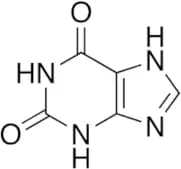
CAS:<p>Applications Found in animal organs, yeast, patatoes, coffee beans, tea. This drug can be used to relax and widen certain breathing passages of the lungs. It is also found that a large number of derivatives have adenoside receptor antagonist properties.<br>References Mueller, C. et. al: Handbook Exp. Pharmacol. 200,151(2011)<br></p>Formula:C5H4N4O2Color and Shape:White SolidMolecular weight:152.11N-Heptanoylglycine
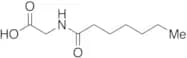
CAS:<p>Applications An acylglycine present in urniary excretion that can be analyzed and be used as diagnostic tool for metabolic disorders, complementary to organic acids and acylcarnitine profiles.<br>References Bonafe, L. et al.: Mol. Genetics Metab., 69, 302 (2000);<br></p>Formula:C9H17NO3Color and Shape:WhiteMolecular weight:187.24N-(Aminoethyl)-5-naphthylamine-1-sulfonic Acid
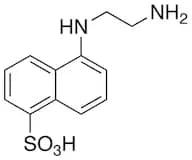
CAS:Controlled Product<p>Applications A fluorescent reagent with a terminal amine for derivatization. 1,5-EDANS has similar spectral properties to the naphthalenesulfonic acids. Fluorescence: max. Abs. 335nm; max. Em. 493nm; e x 10-3: 5.9<br>References Warfield, R., et al.: Org. Biomol. Chem., 4, 3626 (2006), Elston, C., et al.: Anal. Biochem., 368, 87 (2007),<br></p>Formula:C12H14N2O3SColor and Shape:NeatMolecular weight:266.32γ-Polyglutamic Acid Sodium Salt (Technical Grade)
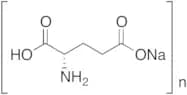
CAS:Controlled Product<p>Stability Hygroscopic<br>Applications gamma-Polyglutamic acid - sodium salt (cas# 25513-46-6) is a useful research chemical.<br></p>Formula:(C5H8NNaO4)nColor and Shape:NeatMolecular weight:NA20(S)-Ginsenoside Rh2
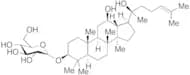
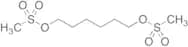
CAS:Controlled Product<p>Applications 20(S)-Ginsenoside Rh2 is a bioactive metabolite of the ginsenoside component of Panax ginseng that has been shown to exhibit antibacterial effects in vitro.<br>References Zhang, J. et al.: Eur. J. Pharm., 740, 277 (2014);<br></p>Formula:C36H62O8Color and Shape:NeatMolecular weight:622.871,6-Bis(mesyloxy)hexane
CAS:Controlled ProductFormula:C8H18O6S2Color and Shape:White To Off-WhiteMolecular weight:274.35Dipropylene Glycol Diacrylate (~80%)
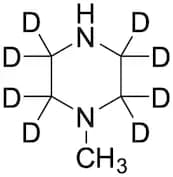
CAS:<p>Applications Dipropylene Glycol Diacrylate 57472-68-1 (cas# 57472-68-1) is a useful research chemical.<br></p>Formula:C12H18O5Purity:~80%Color and Shape:NeatMolecular weight:242.271-Methylpiperazine-2,2,3,3,5,5,6,6-d8
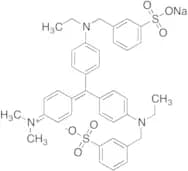
CAS:Controlled Product<p>Applications 1-Methylpiperazine-2,2,3,3,5,5,6,6-d8 is the labeled version of 1-Methylpiperazine (Imatinib EP Impurity G)(M326495) is used in the preparation of 2-(4-Methyl-1-piperazinylmethyl)acrylophenone(MPMAP), an antimicrotubular drug. It is a COVID19-related research product.Is used in preparation of Imidazopyridine compounds for the treatment of inflammatory disorders.<br>References Mallevais, M.L. et al.: Biochimie, 66, 477 (1984); Van der Plas, Steven E., et al.: PCT Int. Appl., (2019);<br></p>Formula:C52H8H4N2Color and Shape:NeatMolecular weight:108.212Benzyl Violet (Technical Grade)
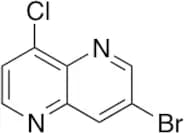
CAS:<p>Applications Benzyl Violet C.I. 42640 (cas# 1694-09-3) is a useful research chemical. Dyes and metabolites, Environmental Testing.<br></p>Formula:C39H40N3O6S2·NaColor and Shape:Dark BrownMolecular weight:733.873-Bromo-8-chloro-1,5-naphthyridine
CAS:Controlled ProductFormula:C8H4BrClN2Color and Shape:NeatMolecular weight:243.4881,1'-(1,5-Pentanediyl)bis[1-butylpyrrolidinium] Difluoride
CAS:Controlled Product<p>Applications 1,1'-(1,5-Pentanediyl)bis[1-butylpyrrolidinium] Difluoride is the ionic form of 1,1'-(1,5-Pentanediyl)bis[1-butylpyrrolidinium] [CAS#: 805990-74-3 ] which is used for anion detection by electrospray ionization mass spectrometry with dicationic liquids salts.<br>References Armstrong, Daniel W., et al.: PCT Int. Appl., (2009);<br></p>Formula:C21H44F2N2Color and Shape:NeatMolecular weight:343.586(+)-cis-Abienol
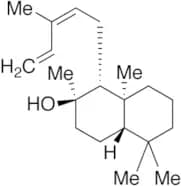
CAS:Controlled Product<p>Applications (+)-cis-Abienol is used in the synthesis of diols as well as in products requiring flavors or fragrances.<br>References Zerbe, P. et al.: J. Bio. Chem., 287, 12121 (2012); Barrero, A.F. et al.: Tetrahedron, 54, 5635 (1998);<br></p>Formula:C20H34OColor and Shape:NeatMolecular weight:290.48Suberyl Glycine
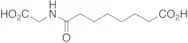
CAS:Controlled Product<p>Applications Suberylglycine is one of the acylglycines, an important class of metabolites that have been used in the diagnosis of several inborn errors of metabolism (IEM).<br>References Costa, C., et al.: J. Pharmaceut. Biomed. Anal., 21, 1215 (2000), Garcia-Villoria, J., et al.: Clin. Biochem., 42, 2 (2009), Scalbert, A., et al.: Metabolomics, 5, 435 (2009),<br></p>Formula:C10H17NO5Color and Shape:Light Yellow To BrownMolecular weight:231.25(3β)-7-Dehydro Cholesterol-d7
CAS:Controlled Product<p>Stability Light Sensitive<br>Applications A labelled vitamin precursor.<br></p>Formula:C272H7H37OColor and Shape:NeatMolecular weight:391.68Potassium p-Nitrophenyl Sulphate
CAS:<p>Applications Potassium p-Nitrophenyl Sulphate (cas# 6217-68-1) is a compound useful in organic synthesis.<br></p>Formula:C6H4NO6S·KColor and Shape:NeatMolecular weight:257.26N-Succinimidyl p-Formylbenzoate
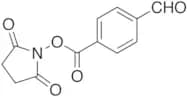
CAS:Controlled Product<p>Applications A amino reactive heterobifunctional crosslinking reagent.<br>References Kraehenbuhl, J.P., et al.: J. Exptl. Med., 139, 208 (1974), Tijssen, P., Kurstak, E.: Viral Immunodiagnosis, P 125, Acad. Press (1974), Galardy, R.E., et al.: J. Med. Chem., 21, 1279 (1978)<br></p>Formula:C12H9NO5Color and Shape:NeatMolecular weight:247.202-Isobutyl-5,5-dimethyl-1,3-dioxane
CAS:Controlled ProductFormula:C10H20O2Color and Shape:NeatMolecular weight:172.265Carboxymethylcellulose Sodium
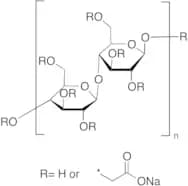
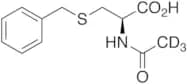
CAS:Controlled Product<p>Applications Carboxymethylcellulose Sodium (cas# 9004-32-4) is a useful research chemical.<br></p>Formula:C15H23NO2•HClColor and Shape:Off-WhiteN-(Acetyl-d3)-S-benzyl-L-cysteine
CAS:Controlled Product<p>Applications A labelled metabolite of Toluene.<br>References Gargas, M., et al.: Toxicol. Appl. Pharmacol., 98, 87 (1989), Commandeur, J., et al.: Pharmacol. Rev., 47(2), 271 (1995), Campo, P., et al.: Neurotoxicol. Teratol., 21, 427 (1999), Lohse, C., et al.: J. Agr. Food Chem., 48, 5913 (2000),<br></p>Formula:C122H3H12NO3SColor and Shape:White To Off-WhiteMolecular weight:256.344-Amino-nicotinonitrile
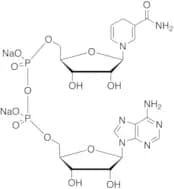
CAS:Controlled Product<p>Applications 4-Amino-nicotinonitrile<br></p>Formula:C6H5N3Color and Shape:NeatMolecular weight:119.124b-NADH Disodium Salt
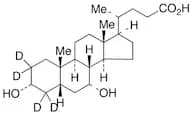
CAS:<p>Stability Hygroscopic<br>Applications One of the biologically active forms of nicotinic acid. Serves as a coenzyme of hydrogenases and dehydrogenases. NAD usually acts as a hydrogen acceptor, forming NADH which then serves as a hydrogen donor in the respiratory chain. Present in living cells primarily in the reduced form (NADPH) and is involved in synthetic reactions. Occurs in 2 forms, α-NAD and β-NAD, distinguished by the configuration of the ribosyl nicotinamide linkage. Only the β-anomer is bioactive.<br>References Bartlett, G.R., et al.: J. Biol. Chem., 234, 449 (1959), Dixon, M., et al.: Science, 132, 1548 (1960), Heyes, D., et al.: Biochemistry, 43, 8265 (2004), Dietzek, B., et al.: Chem. Phys. Chem., 7, 1727 (2006),<br></p>Formula:C21H27N7O14P2·2NaColor and Shape:NeatMolecular weight:709.40Chenodeoxycholic Acid-d4
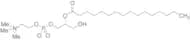
CAS:Controlled Product<p>Applications Labelled Chenodiol (Chenodeoxycholic acid). A major bile acid in many vertebrates, occurring as the N-glycine and/or N-taurine conjugate. With other bile acids, forms mixed micelles with lecithin in bile which solubilize cholesterol and thus facilitates its excretion. Fcilitates fat absorption in the small intestine by micellar solubilization of fatty acids and monoglycerides. Anticholelithogenic. Epimeric with Ursodiol.<br>References Danzinger, et al.: N. Engl. J. Med., 286, 1 (1972), Iser, J.H., et al.: Drugs, 21, 90 (1981), Tint, G.S., et al.: Gastroenterology, 91, 1007 (1986),<br></p>Formula:C24D4H36O4Color and Shape:White To Off-WhiteMolecular weight:396.602-Palmitoyl-sn-glycero-3-phosphocholine
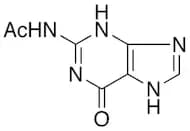
CAS:Controlled Product<p>Applications Food preservative, having the ability to form complexes with starch, retarding its retrodegradation during storage.<br>References Yu, S., et al.: J. Agric. Food Chem., 54, 4482 (2006),<br></p>Formula:C24H50NO7PColor and Shape:NeatMolecular weight:495.64N2-Acetylguanine
CAS:Controlled Product<p>Applications Protected guanine<br>References Tretyakova, N., et al.: Chem. Res. Toxicol., 20, 284 (2007), Rana, S., et al.: Bioorg. Med. Chem. Lett., 19, 670 (2009),<br></p>Formula:C7H7N5O2Color and Shape:NeatMolecular weight:193.162-Hydroxyhexanedioic Acid Disodium Salt
CAS:<p>Stability Very Hygroscopic<br>Applications Accumulation and excretion of 2-Hydroxyhexanedioic Acid (with 2-ketoadipic and 2-aminoadipic) in urine can be caused by 2-ketoadipic acidemia, probably without adverse phenotypic effects , due to deficiency of 2-ketoadipic dehydrogenase.<br>References Svendsen, J., et al.: J. Chromatogr., 337, 9 (1985); Przyrembel, H., et al.: Clin. Chim. Acta 58, 257 (1975).<br></p>Formula:C6H8Na2O5Color and Shape:NeatMolecular weight:206.15-Aminolevulinic Acid Methyl Ester Hydrochloride
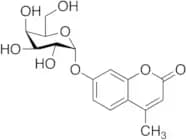
CAS:Controlled Product<p>Applications 5-Aminolevulinic Acid Methyl Ester Hydrochloride, is the methyl ester of Aminolevulinic Acid (ALA) (A611780), which has been shown to have higher lipophilicity, and to be highly efficient at inducing protoporphyrin IX (PpIX) production in cell culture.<br>References Morrow, D. I. J., et al.: J. Pharmac. Sci., 99, 3486 (2010); Peng, Q., et al.: Cancer, 79, 2282 (1997);<br></p>Formula:C6H11NO3·HClColor and Shape:NeatMolecular weight:181.624-Methylumbelliferyl α-D-Galactopyranoside
CAS:Controlled Product<p>Applications A fluorogenic substrate in the assay of α-galactosidase.<br></p>Formula:C16H18O8Color and Shape:White To Light BeigeMolecular weight:338.30917α-Dydrogesterone
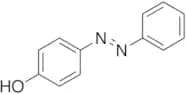
CAS:Controlled Product<p>Applications 17α-Dydrogesterone is an isomer of Dydrogesterone (D826000), a synthetic progestin largely used in hormone therapy, on the central nervous system by studying two markers of the neuroendocrine function: the neurosteroid allopregnanolone and the opioid .beta.-endorphin. Progestogen.<br>References Bernardi, F., et al.: Eur. J. Endocrinol., 138, 316 (1998); Rupprecht, R., et al.: Steroids, 64, 83 (1999); Uzunova, V., et al.: Brain Res., 976, 1 (2003); Pluchino, N., et al.: J. Steroid Biochem. Mol. Biol., 102, 205 (2006)<br></p>Formula:C21H28O2Color and Shape:NeatMolecular weight:312.4464-Phenylazophenol
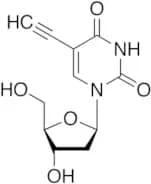
CAS:Controlled Product<p>Applications 4-Phenylazophenol is a diaryl-azo derivative with potential use as potential antifungal agents. 4-Phenylazophenol is an azo dye with toxic effects as well as a being a soil contaminant. Dyes and metabolites.<br>References Xu, H. et al.: Bioorg. Med. Chem., 20, 4193 (2010); Spadaro, J.T. et al.: Appl. Environ. Microbiol., 58, 2397 (1992);<br></p>Formula:C12H10N2OColor and Shape:NeatMolecular weight:198.225-Ethynyl-2’-deoxyuridine
CAS:Controlled Product<p>Applications 5-Ethynyl-2’-deoxyuridine is an extensively used nucleoside analog used as a probe for DNA synthesis. 5-Ethynyl-2’-deoxyuridine is known as an toxic anti-metabolite, which potentially causes DNA instabiliy, necrosis and cell-cycle arrest, therefore it is often used for short-term DNA synthesis in tissue culture and living organisms where prolonged cell survival is not required.<br>References Neef, A.B., et al.: P. Natl. Acad. Sci.., 108, 20404 (2011); Gristwood, T., et al.: Nucleic. Acids. Rsch., 40, 5487 (2012);<br></p>Formula:C11H12N2O5Color and Shape:NeatMolecular weight:252.22(R)-3-Hydroxy Myristic Acid Methyl Ester
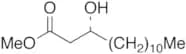
CAS:Controlled ProductFormula:C15H30O3Color and Shape:NeatMolecular weight:258.40(7Z)-7-Hexadecenoic Acid (Solution in Ethanol)
CAS:Controlled Product<p>Applications (7Z)-7-Hexadecenoic acid is a fatty acid that may be useful for determining the specific genus of a bacterial population present in a variety of natural environments.<br>References Kneif, C., et al.: Environ Microbiol., 5, 1155-67 (2003)<br></p>Formula:C16H30O2Color and Shape:ColourlessMolecular weight:254.41Polybutenes
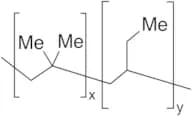
CAS:Controlled Product<p>Applications Polybutenes is a hydrophobic material that is derivatized to make anti-rust additives and detergents..<br></p>Formula:C4H8xC4H8yColor and Shape:ColourlessMolecular weight:~920L-Thioproline
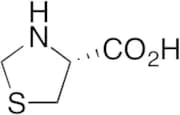
CAS:<p>Applications L-Thioproline is used to create a monolayer on gold electrodes for the determination Copper(II). L-Thioproline has shown to be an effect inhibitor of proline absorption in Saccharomyces chevalieri.<br> Not a dangerous good if item is equal to or less than 1g/ml and there is less than 100g/ml in the package<br>References Cui, X., et. al.: Sci. China Chem., 53, 257 (2010); Magana-Schwenchke, N., Schwencke, J.: BBA-Biomembranes, 173, 313 (1969)<br></p>Formula:C4H7NO2SColor and Shape:NeatMolecular weight:133.17N-Acetyl-DL-aspartic Acid
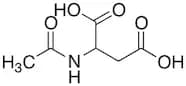
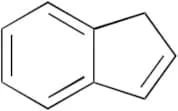
CAS:Controlled Product<p>Applications N-Acetyl-DL-aspartic acid (cas# 2545-40-6) is a useful research chemical.<br></p>Formula:C6H9NO5Color and Shape:NeatMolecular weight:175.139Indene
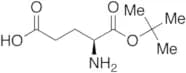
CAS:Controlled Product<p>Applications Indene is an organic building block that has been used in the synthesis of isatins as selective inhibitors of carboxylesterases.<br> Not a dangerous good if item is equal to or less than 1g/ml and there is less than 100g/ml in the package<br>References Hyatt, J.L., et. al.: J. Med. Chem., 50, 1876 (2007)<br></p>Formula:C9H8Color and Shape:YellowMolecular weight:116.16L-Glutamic Acid α-tert-Butyl Ester
CAS:<p>Applications L-Glutamic Acid α-tert-Butyl Ester is an ester of L-Glutamic Acid used in the synthesis of enantiopure isotopomers of amino acids.<br>References Chauvel, E., et al.: J. Med. Chem., 37, 2950 (1994),<br></p>Formula:C9H17NO4Color and Shape:NeatMolecular weight:203.244-[(5,6,7,8-Tetrahydro-3,5,5,8,8-pentamethyl-2-naphthalenyl)carbonyl]benzoic Acid
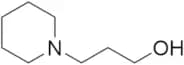
CAS:Controlled Product<p>Applications 4-[(5,6,7,8-Tetrahydro-3,5,5,8,8-pentamethyl-2-naphthalenyl)carbonyl]benzoic Acid is used in the preparation of pentamethylnaphthylmethylbenzoates as a selective retinoid X receptor ligands that induce apoptosis in leukemia cells.<br>References Boehm, M.F., et al.: J. Med. Chem., 38, 3146-55 (1995); Furmie, J.K., et al.: ChemMedChem, 7, 1551-66 (2012)<br></p>Formula:C23H26O3Color and Shape:NeatMolecular weight:350.451-Piperidinepropanol
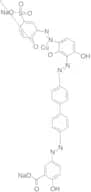
CAS:Controlled ProductFormula:C8H17NOColor and Shape:NeatMolecular weight:143.227Direct Brown 95 (Technical Grade)
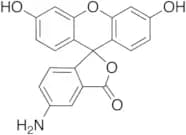
CAS:Controlled Product<p>Applications Direct Brown 95, Techincal Grade is an azo dye used in PET/cotton blended fabrics as well as other textiles. Environmental reproductive toxin.Environmental toxin on US EPA Toxic Release Inventory list (TRI) list. Dyes and metabolites, Environmental Testing<br>References Pielesz, A., et al.: J. Mol. Struct., 511, 337 (1999); Galloway, S., et al.: Env. Mol. Mutagen., 10, 1 (1987)<br></p>Formula:C31H18CuN6O9S·2NaColor and Shape:Dark Purple To BlackMolecular weight:760.10Fluoresceinamine, Isomer 1
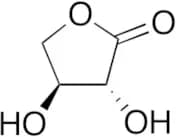
CAS:Controlled Product<p>Stability Light and Moisture Sensitive<br>Applications Fluorescent labeling reagent for proteins. Used in the fluorescent antibody technique for rapid identification of pathogens. Dyes and metabolites.<br>References Riggs, H.J.L., et al.: Amer. J. Pathol., 34, 1081 (1958), Mann, K.G. and Fish, W.W., Methods in Enz., 26, 28 (1972),<br></p>Formula:C20H13NO5Color and Shape:NeatMolecular weight:347.32L-Threonolactone
CAS:Controlled Product<p>Applications L-Threonolactone is formed in the autoxidation of L-Ascorbic acid (A786990), a compound that is essential for numerous enzymatic reactions in the body and is also responsible for scavenging free radicals to prevent oxidative damage to cells.<br>References Miyake, N., et al.: Biosci. Biotech. Bioch., 61, 2069 (1997); Kvernberg, P. & Pedersen, B.: Acta Chem. Scand., 48, 646 (1994); Tsukaguchi, H., et al.: Nature, 399, 70 (1999)<br></p>Formula:C4H6O4Color and Shape:NeatMolecular weight:118.088Teneligliptin Hydrobromide (2:5)
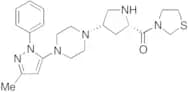
CAS:Controlled Product<p>Applications Teneligliptin Hydrobromide (2:5) is a dipeptidyl peptidase-4 (DPP-4) inhibitor that is used to treat type 2 diabetes. It is eliminated via excretion, and has a half-life of 24.2 hours in the human body.<br>References Goda, M. & Kadowaki, T.: Drugs Today, 49, 615 (2013); Kishimoto, M.: Diabetes Metab. Syndr. Obes., 6, 187 (2012)<br></p>Formula:C22H32·5Br2·5N6OSColor and Shape:NeatMolecular weight:628.86N-Acetyl-L-cysteine-d3
CAS:Controlled Product<p>Stability Hygroscopic<br>Applications A labelled metabolite of Methyl isocyanate.<br>References Slatter, J. G., et al.: Chem. Res. Toxicol., 4, 157 (1991),<br></p>Formula:C52H3H6NO3SColor and Shape:Off-WhiteMolecular weight:166.21JTV 519 Fumarate
CAS:<p>Applications JTV 519 Fumarate is a useful intermediate.<br> Not a dangerous good if item is equal to or less than 1g/ml and there is less than 100g/ml in the package<br></p>Formula:C25H32N2O2•(C4H4O4)Color and Shape:NeatMolecular weight:424.6011607DL-Cystine-2,2',3,3,3',3'-d6
CAS:Controlled Product<p>Applications DL-Cystine-2,2',3,3,3',3'-d6 (CAS# 352431-53-9) is a useful isotopically labeled research compound.<br></p>Formula:C6D6H6N2O4S2Color and Shape:NeatMolecular weight:246.34Azo Rubine (Technical Grade)
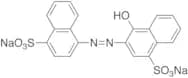
CAS:<p>Applications Azo Rubine is an synthetic red food dye and is used for the purposes where food is heat-treated after fermentation. Dyes and metabolites, Environmental Testing<br>References Abu, S., et al.: Sensor. Lett., 10, 894 (2012); Harp, B. P., et al.: Food. Add. Contamin., Chem. Anal. Control. Expo. Risk. Assess., 29, 886 (2012); Zohoori, S., et al.: Asian. J. Chem., 24. 1541 (2012);<br></p>Formula:C20H12N2O7S2·2NaColor and Shape:RedMolecular weight:502.43Solvent Red 25 (Technical Grade)
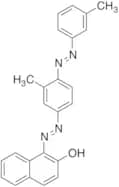
CAS:Controlled Product<p>Applications Solvent Red 25 (cas# 3176-79-2) is a useful research chemical. Dyes and metabolites, Environmental Testing.<br></p>Formula:C24H20N4OColor and Shape:Dark RedMolecular weight:380.44



![1,1'-(1,5-Pentanediyl)bis[1-butylpyrrolidinium] Difluoride](/_next/image/?url=https%3A%2Fstatic.cymitquimica.com%2Fproducts%2FTR%2Fthumb-webp%2FP124510.webp&w=3840&q=75)









![4-[(5,6,7,8-Tetrahydro-3,5,5,8,8-pentamethyl-2-naphthalenyl)carbonyl]benzoic Acid](/_next/image/?url=https%3A%2Fstatic.cymitquimica.com%2Fproducts%2FTR%2Fthumb-webp%2FT294945.webp&w=3840&q=75)