Biochemicals and Reagents
Biochemicals and reagents are fundamental substances for research and development in fields such as biotechnology, molecular biology, pharmacology, and medicine. These products are essential for a variety of applications, including compound synthesis, biological sample analysis, metabolic process research, and drug production. At CymitQuimica, we offer a wide selection of high-quality, high-purity biochemicals and reagents suitable for various scientific and industrial needs. Our catalog includes enzymes, antibodies, nucleic acids, amino acids, and many other products, all designed to support researchers and professionals in their research and development projects, ensuring reliable and reproducible results.
Subcategories of "Biochemicals and Reagents"
- Biomolecules(99,115 products)
- By Biological Target(99,074 products)
- By Pharmacological Effects(6,785 products)
- Cryopreservatives(21 products)
- Desinfectants and Related Compounds(28 products)
- Hormones(346 products)
- Plant Biology(6,693 products)
- Secondary Metabolites(14,219 products)
Found 130577 products of "Biochemicals and Reagents"
Sort by
Purity (%)
0
100
|
0
|
50
|
90
|
95
|
100
(R)-Coniine Hydrochloride (~25% S-isomer)
CAS:Controlled Product<p>Applications (R)-2-propylpiperidine hydrochloride (cas# 15991-59-0) is a useful research chemical.<br> Not a dangerous good if item is equal to or less than 1g/ml and there is less than 100g/ml in the package<br></p>Formula:C8H17N·HClColor and Shape:NeatMolecular weight:163.69O-Phospho-L-tyrosine
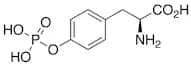
CAS:<p>Applications Useful in the study of tyrosine-phosphorylation, which has been linked with the malignant transformation of cells by some RNA tumour viruses.<br>References Sefton, B.M., et al.: Cell, 20, 807 (1980), Erikson, R., et al.: Perspect. Virol., 11, 93 (1981), Lee, E-S, et al.: J. Org. Chem., 59, 2086 (1994)<br></p>Formula:C9H12NO6PColor and Shape:NeatMolecular weight:261.17DL-Pipecolic Acid
CAS:<p>Applications Pipecolic acid is involved in synaptic transmission in the central nervous system.<br>References Nomura Y., et al.: Neurochem. Res., 6, 391 (1981),<br></p>Formula:C6H11NO2Color and Shape:White To Off-WhiteMolecular weight:129.16Coelenterazine 400a
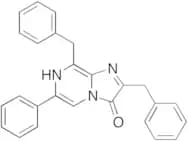
CAS:Controlled Product<p>Applications Coelenterazine 400 a is a chromophore that produces the chemiluminescence displayed by the Aequorin protein in the presence of Ca2+.<br>References Kurose, K., et al. 1989. Proc. Natl. Acad. Sci. U.S.A. 86: 80-84; Shimomura, O. 1995. Biochem. J. 306: 537-543<br></p>Formula:C26H21N3OColor and Shape:NeatMolecular weight:391.464Piperacilloic Acid
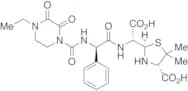
CAS:Controlled Product<p>Impurity Piperacillin EP Impurity B<br>Stability Hygroscopic, Temperature Sensitive<br>Applications Piperacilloic Acid (Piperacillin EP Impurity B) is a degradation product of Piperacillin (P479950), a new β-lactam antibiotic.<br>References Waxman, D.J., et al.: J. Biol. Chem., 255, 3964 (1980), Waley, S.G., et al.: Biochem. J., et al.: 205, 631 (1982),<br></p>Formula:C23H29N5O8SPurity:>80%Color and Shape:White To Light YellowMolecular weight:535.57(+)-Biotin (+)-Sulfoxide
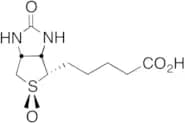
CAS:Controlled Product<p>Stability Hygroscopic<br>Applications (-)-Biotin Sulfoxide, is a metabolite of Biotin (B389040), which is a growth factor present in minute amounts in every living cell, and plays an indispensable role in numerous naturally occurring carboxylation reactions.<br>References du Vigneaud, et al.: J. Biol. Chem., 146, 475 (1942), Traub, et al.: Nature, 178, 649 (1956), Siegel, H., et al.: Experienta, 37, 789 (1981), Vesely, D.L., Science, 216, 1329 (1982), Hugues, M., et al.: Biochemistry, 31, 12 (1992),<br></p>Formula:C10H16N2O4SColor and Shape:NeatMolecular weight:260.31Pentostatin
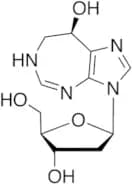
CAS:Controlled Product<p>Applications An adenosine deaminase inhibitor used as an anti-cancer therapeutic drug. Shown to be effective in the treatment of hairy cell leukemia as well as having use in the treatment of other types of cancer such as chronic lymphocytic leukemia.<br> Not a dangerous good if item is equal to or less than 1g/ml and there is less than 100g/ml in the package<br>References Rogler-Brown, T. et al.: Biochem. Pharmacol., 28, 201 (1979); Johnston, J.B. et al.: J. Natl. Canvcer Inst., 80, 765 (1988); Fortune, A.F. et al.: Leuk. and Lymph., 51, 839 (2010); Robak, T. et al.: Drugs, 69, 2415 (2009);<br></p>Formula:C11H16N4O4Color and Shape:White To Off-WhiteMolecular weight:268.27Dexamethasone Phosphate
CAS:<p>Applications A pro-drug of Dexamethasone (D298800), an anti-inflammatory glucocorticoid. It was found that liposomal DXM-P inhibited both chronic inflammation and joint destruction, whereas free DXM-P failed to prevent joint destruction.<br>References Kodelja, V., et al.: J. Immunol., 160, 1411 (1998), Metselaar, J., et al.: Arthritis Rheum., 48, 2059 (2003), Buttgereit, F., et al.: Arthritis Rheum., 50, 3408 (2004), Martinez, F., et al.: Front Biosci., 13, 453 (2008),<br></p>Formula:C22H30FO8PColor and Shape:White To Light BrownMolecular weight:472.443’-Methoxy-4’-nitroflavone
CAS:Controlled Product<p>Applications 3’-Methoxy-4’-nitroflavone is a aryl hydrocarbon receptor antagonist that enhances Cyp1a1 transcription by a dioxin responsive element-dependent mechanism. 3’-Methoxy-4’-nitroflavone differentially altered aryl hydrocarbon also showed receptor activity in mouse and human hepatoma cell.<br>References Zhou, J., Gasiewicz, T.: Arch. Biochem. Biophys., 416, 68 (2003); Smith, K., et al.: J. Pharm. Exp. Ther., 338, 318 (2011);<br></p>Formula:C16H11NO5Color and Shape:NeatMolecular weight:297.26Benzamidine
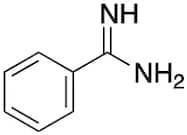
CAS:Controlled Product<p>Applications BENZAMIDINE (cas# 618-39-3) is a useful research chemical.<br></p>Formula:C7H8N2Color and Shape:NeatMolecular weight:120.15L-(+)-2-Phenylglycine
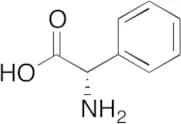
CAS:<p>Applications L-(+)-2-Phenylglycine is a derivative of Glycine (G615990), the smallest of all the amino acids, and is also used to treat schizophrenia, stroke, and benign prostatic hyperplasia. L-(+)-2-Phenylglycine is also used as an N-linked side chain of an SMTP (Stachybotrys microspora tripenyl phenols) congener, which was potent in enhancing plasminogen activation in S. microspora.<br>References Gusev, E., et al.: Cerebrovasc. Dis., 10, 49 (2000); Koide, H., et al.: J. Antibiot., 65, 91 (2012); Rosse, R., et al.: Clin. Neuropharmacol., 12, 416 (1989); Tuszynski, G., et al.: Lab. Invest., 70, 228 (1994)<br></p>Formula:C8H9NO2Color and Shape:Off White Crystalline PowderMolecular weight:151.16264-Nitrophenyl 2-(Acetamido)-2-deoxy-3-O-β-D-galactopyranosyl-α-D-galactopyranoside
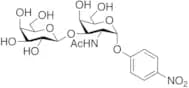
CAS:Controlled Product<p>Applications Acetylgalactosaminidase sequence substrate Clostridium Bifidobacterium. A fluorescent substrate for α2,3-(O)-Sialyltransferase<br>References Medina, M. et al.: Cancer Res. 59,1061-1070, (1999)<br></p>Formula:C20H28N2O13Color and Shape:NeatMolecular weight:504.44Lewis A Trisaccharide
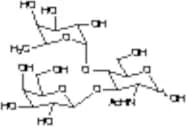
CAS:Controlled Product<p>Applications Lewis A Trisaccharide is a component of multiplex glycan bead arrays which play a role in various cellular functions.<br>References Dabelsteen, E., et al.: Cancer Research, 48, 181 (1988), Lasky, L.A.: Science, 258, 964 (1992), Mulligan, M.S., et al.: Nature, 364, 149 (1993), Mulligan, M.S., et al.: J. Exp. Med., 178, 623 (1993), Travis, J.: Science, 260, 906 (1993); Purohit, S. et al.: Nat. Comm., 9, 1 (2018);<br></p>Formula:C20H35NO15Color and Shape:NeatMolecular weight:529.49Fmoc-n-me-lys(boc)-oh
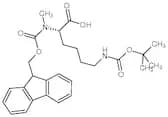
CAS:Controlled Product<p>Applications Fmoc-n-me-lys(boc)-oh<br></p>Formula:C27H34N2O6Color and Shape:NeatMolecular weight:482.569TopFluor Cholesterol
CAS:Controlled ProductFormula:C36H51BF2N2OColor and Shape:NeatMolecular weight:576.614-Hydroxybutanesulfonate Sodium Salt (Technical Grade)
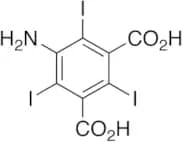
CAS:Controlled Product<p>Applications Impurity of β-cyclodextrin (C987830), a cyclic oligosaccharide produced from starch via enzymatic conversion.<br>References Johnson, M.D., et al.: J. Pharma. Sci., 83, 1142 (1994); Jain, A.C., et al.: Int. J. Pharma., 212, 177 (2001);<br></p>Formula:C4H9O4S·NaColor and Shape:NeatMolecular weight:176.175-Amino-2,4,6-triiodoisophthalic Acid
CAS:Controlled Product<p>Impurity Iohexol EP Impurity K<br>Applications 5-Amino-2,4,6-triiodoisophthalic Acid (Iohexol EP Impurity K) is an intermediate for nonionic iodinated X-ray contrast agents.<br></p>Formula:C8H4I3NO4Color and Shape:NeatMolecular weight:558.84Anthrone (~90%)
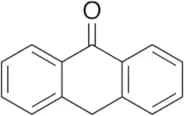
CAS:<p>Applications Anthrone is a tricyclic aromatic ketone and related compound of anthracene. Anthrone is used as a reagent in the colorometric determination of carbohydrates. Dyes and metabolites.<br>References Trevelyan, W.E. et al.: Nature, 170, 626 (1952);<br></p>Formula:C14H10OPurity:~90%Color and Shape:Light YellowMolecular weight:194.23Uridine 5'-Monophosphate
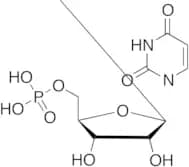
CAS:Controlled ProductFormula:C9H13N2O9PColor and Shape:NeatMolecular weight:324.181Rhodamine 110
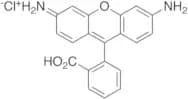
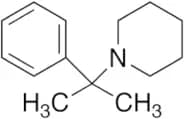
CAS:Controlled Product<p>Stability Hygroscopic, Light Sensitive<br>Applications Rhodamine 110 is a fluorescent dye used as AP- and exopeptidase substrates for flow cytometric measurements. Dyes and metabolites.<br>References Ganesh S., et al.: Cytometry, 20, 334 (1995),<br></p>Formula:C20H14N2O3·ClHColor and Shape:NeatMolecular weight:366.802-Phenyl-2-(1-piperidinyl)propane
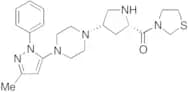
CAS:Controlled ProductFormula:C14H21NColor and Shape:Colourless To Light YellowMolecular weight:203.32Teneligliptin Hydrobromide (2:5)
CAS:Controlled Product<p>Applications Teneligliptin Hydrobromide (2:5) is a dipeptidyl peptidase-4 (DPP-4) inhibitor that is used to treat type 2 diabetes. It is eliminated via excretion, and has a half-life of 24.2 hours in the human body.<br>References Goda, M. & Kadowaki, T.: Drugs Today, 49, 615 (2013); Kishimoto, M.: Diabetes Metab. Syndr. Obes., 6, 187 (2012)<br></p>Formula:C22H32·5Br2·5N6OSColor and Shape:NeatMolecular weight:628.868-Aminopyrene-1,3,6-trisulfonic Acid Trisodium Salt
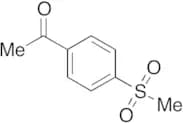
CAS:Controlled Product<p>Stability Very Hygroscopic<br>Applications Fluorescent label for glycoproteins and saccharides.Dyes and metabolites.<br>References Wang, D., et al.: Langmuir, 17, 1262 (2001), Cappuccio, F., et al.: J. Fluoresc., 14, 521 (2004), Cordes, D., et al.: Org. Biomol. Chem., 3, 1708 (2005),<br></p>Formula:C16H8NO9S3·3NaColor and Shape:NeatMolecular weight:523.404-(Methylsulfonyl)acetophenone
CAS:Controlled Product<p>Applications 4-(Methylsulfonyl)acetophenone is an impurity of Etoricoxib (E934100), which is a specific inhibitor of COX-2.<br>References McGeer, P.L., et al.: Exp. Gerontol., 37, 925 (2002), Chenevard, R., et al.: Circulation, 107, 405 (2003)<br></p>Formula:C9H10O3SColor and Shape:WhiteMolecular weight:198.243-Hydroxy-7,12-diketocholanoic Acid
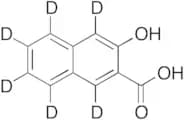
CAS:Controlled Product<p>Applications 3-Hydroxy-7,12-diketocholanoic Acid is a bile acid salt as biosurfactants.<br>References Posa, M., et al.: Steroids, 86, 16-25 (2014)<br></p>Formula:C24H36O5Color and Shape:NeatMolecular weight:404.543-Hydroxy-2-naphthoic acid
CAS:Controlled Product<p>Applications 3-Hydroxy-2-naphthoic acid<br></p>Formula:C11H8O3Color and Shape:NeatMolecular weight:188.18Suberyl Glycine
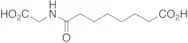
CAS:Controlled Product<p>Applications Suberylglycine is one of the acylglycines, an important class of metabolites that have been used in the diagnosis of several inborn errors of metabolism (IEM).<br>References Costa, C., et al.: J. Pharmaceut. Biomed. Anal., 21, 1215 (2000), Garcia-Villoria, J., et al.: Clin. Biochem., 42, 2 (2009), Scalbert, A., et al.: Metabolomics, 5, 435 (2009),<br></p>Formula:C10H17NO5Color and Shape:Light Yellow To BrownMolecular weight:231.25(-)-8-Prenylnaringenin
CAS:<p>Applications (-)-8-Prenylnaringin is a prenylflavonoid, a class on non-steroidal phytoestrogen that mimicks and/or modulating endogenous estrogens via estrogen receptor binding.<br>References Miyamoto, M. et al.: Planta Med., 64, 516 (1998); Kim, H.J. et al.: Arch. Pharm. Res., 31, 1241 (2008); Zierau, O. et al.: Mol. Cell. Endocrinol., 294, 92 (2008);<br></p>Formula:C20H20O5Color and Shape:NeatMolecular weight:340.37Cocamidopropyl Betaine (~30% aqueous solution)
CAS:<p>Applications Cocamidopropyl Betaine is a medium strength surfactant.<br></p>Formula:C19H38N2O3Color and Shape:ColourlessMolecular weight:342.5220α-Dihydrocortisol
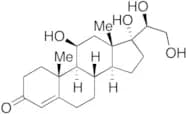
CAS:Controlled Product<p>Applications 20α-Dihydrocortisol is a metabolite of Cortisol (H714615) which is a topical corticosteroid (1), more specifically a glucocorticoid, produced by the zona fasciculata of the adrenal gland (2). Cortisol is released in response to stress and a low level of blood glucocorticoids. Its primary functions are to increase blood sugar through gluconeogenesis (3); suppress the immune system; and aid in fat, protein and carbohydrate metabolism.<br>References Clark, D. et al.: Steroids 7, 352 (2006)<br></p>Formula:C21H32O5Color and Shape:NeatMolecular weight:364.4761-Linoleoyl-3-palmitoyl-rac-glycerol
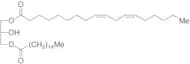
CAS:<p>Applications Fatty acid ester with glycerol from banana fruit residues as source of valuable phytosterols.<br>References Banskota, A., ET AL.: Biol. Pharm. Bull., 23, 456 (2000), Luo, H., ET AL.: J. Nat. Prod., 68, 94 (2005), Oliveira, L., et al.: J. Agric. Food Chem., 54, 2598 (2006), Oliveira, L., et al.: Ind. Crops Prod., 26, 163 (2007),<br></p>Formula:C37H68O5Color and Shape:NeatMolecular weight:592.932-Palmitoyl-sn-glycero-3-phosphocholine
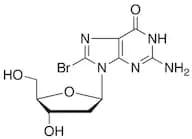
CAS:Controlled Product<p>Applications Food preservative, having the ability to form complexes with starch, retarding its retrodegradation during storage.<br>References Yu, S., et al.: J. Agric. Food Chem., 54, 4482 (2006),<br></p>Formula:C24H50NO7PColor and Shape:NeatMolecular weight:495.648-Bromo-2’-deoxyguanosine
CAS:Controlled Product<p>Applications 8-Bromo-2’-deoxyguanosine (cas# 13389-03-2) is a compound useful in organic synthesis.<br>References Chatgilialoglu, C., et al.: Chem. Res. Toxicol., 20, 1820 (2007),<br></p>Formula:C10H12BrN5O4Color and Shape:NeatMolecular weight:346.142'-Deoxy-N-methyladenosine
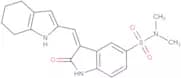
CAS:Controlled Product<p>Applications 2'-Deoxy-N-methyladenosine plays role in catalytic activity and may promote proper folding of A730 loop.<br>References Lafontaine, D. A., et al.: J. Mol. Biol., 323, 23-34 (2002)<br></p>Formula:C11H15N5O3Color and Shape:NeatMolecular weight:265.27SU 6656
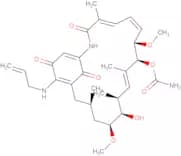
CAS:<p>M02518 - SU 6656</p>Formula:C19H21N3O3SPurity:>97%Color and Shape:Solid, PowderMolecular weight:371.4617-AAG
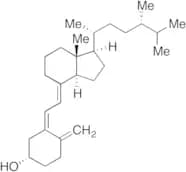
CAS:<p>M01354 - 17-AAG</p>Formula:C31H43N3O8Purity:98+%Color and Shape:SolidMolecular weight:585.698Vitamin D4
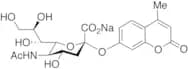
CAS:<p>Stability Hygroscopic, Temperature Sensitive<br>Applications Vitamin D4 is the active analogue of Vitamin D.<br> Not a dangerous good if item is equal to or less than 1g/ml and there is less than 100g/ml in the package<br>References Holick, M., et al.: J. Biochemistry, 10, 2799 (1971), Haddad, J., et al.: J. Bone Miner. Res., 4, 243 (1989), Palmieri, G., et al.: J. Clin. Endocrin. Metab., 82, 3516 (1997),<br></p>Formula:C28H46OColor and Shape:NeatMolecular weight:398.662'-(4-Methylumbelliferyl)-α-D-N-acetylneuraminic Acid, Sodium Salt
CAS:Controlled ProductFormula:C21H24NO11·NaColor and Shape:NeatMolecular weight:489.413-Methoxyestra-2,5(10)-diene-17β-ol
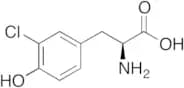
CAS:Controlled ProductFormula:C19H28O2Color and Shape:NeatMolecular weight:288.4243-Chloro-L-tyrosine
CAS:Controlled Product<p>Stability Hygroscopic<br>Applications 3-Chloro-L-tyrosine was used in the enzymatic synthesis of halogen derivatives of aromatic amino acids labeled with hydrogen isotope. 3-Chloro-L-tyrosine exhibited stronger antioxidant properties in Hb-induced oxidative stress as was evident by higher efficiency of reduction of ferryl species.<br>References Winnicka, E., et al.: J. Chem. Eng., 8, 54 (2014); Lu, N., et al.: Toxicol. In Vitro, 28, 847 (2014);<br></p>Formula:C9H10NO3ClColor and Shape:NeatMolecular weight:215.635,6,7,8,9-Dehydro-10-desmethyl Finasteride
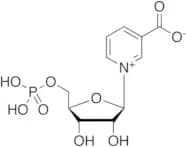
CAS:Controlled Product<p>Applications An impurity of Finasteride (F342000).<br></p>Formula:C22H28N2O2Color and Shape:NeatMolecular weight:352.47β-Nicotinic Acid Mononucleotide
CAS:Controlled Product<p>Stability Hygroscopic<br>Applications A nucleotide of nicotinic acid which is produced from quinolinic acid by quinolinate phosphoribosyltransferase via transfer of a phosphoribose group. It is an intermediate of nicotinic acid adenine dinucleotide (NaAD) which is then converted to NAD via amidation and in turn converted to NADPH.<br>References Petrelli, R. et al.: Curr. Med. Chem., 18, 1973 (2011); Shibata, K. et al.: J. Chrom. B Biomed. Sci. Appl., 749, 281 (2000); Evans, C. et al.: BMC Chem. Biol., 10, 2 (2010);<br></p>Formula:C11H14NO9PColor and Shape:NeatMolecular weight:335.2H-β-Ala-pNA HBr
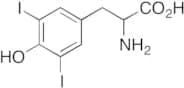
CAS:Controlled ProductFormula:C9H11N3O3·HBrColor and Shape:NeatMolecular weight:290.1143,5-Diiodo-DL-tyrosine
CAS:Controlled Product<p>Applications 3,5-Diiodo-DL-tyrosine is used for diagnosis of hypothyroidism caused by DEHAL1 gene defects.<br>References Encinas, S., et al.: Chem. Res. Toxicol., 11, 946 (1998), Daneshvar, A., et al.: Chemosphere, 80, 301 (2010), Eriksson, J., et al.: Photochem. Photobiol., 86, 528 (2010),<br></p>Formula:C9H9I2NO3Color and Shape:NeatMolecular weight:432.983-Hydroxytetradecanoic Acid
CAS:Controlled Product<p>Applications 3-Hydroxytetradecanoic Acid is used in the preparation of liposomes coated with N-acylated molecular-weight. Also used in the synthesis of pseudomycin side-chain analogs. Also used in the study of Lipid A, a major constituent of the lipopolysaccharides, which are responsible for the toxicity of gram negative bacteria.<br>References Naberezhnykh, G. et al.: Chem. Nat. Comp., 46, 852 (2011); Chen, S. et al.: Bioorg. Med. Chem. Lett., 10, 2107 (2000); Carillo, S. et al.: Marine Drugs., 11, 184 (2013);<br></p>Formula:C14H28O3Color and Shape:NeatMolecular weight:244.37Stearoyl L-a-Lysolecithin
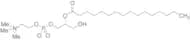
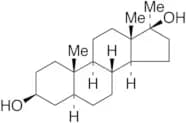
CAS:<p>Stability Hygroscopic, moisture sensitive<br>Applications Stearoyl L-α-Lysolecithin is an bioactive lysophosphatidylcholine derived compound found to be released by bronchial epithelial cells. Stearoyl L-α-Lysolecithin have also been utilized in the development of liposomes and michelles by drug transdermal delivery devices.<br>References Zhuge, Y., et al.: Allergy Asthma Immunol Res., 6, 66 (2014)<br></p>Formula:C26H54NO7PColor and Shape:NeatMolecular weight:523.6817-Methyl-5α-androstane-3β,17β-diol
CAS:Controlled Product<p>Applications A metabolite of 17α-Methyltestosterone (M326400).<br>References Dumasia, M., et al.: Xenobiotica, 11, 323 (1981), Tang, P., et al.: Anal. Biochem., 182, 289 (1989),<br></p>Formula:C20H34O2Color and Shape:NeatMolecular weight:306.483