Heterocycles with Nitrogen (N)
In this category, you will find a wide variety of nitrogen-containing heterocycles. Heterocycles are carbon chains that form a cycle in which at least one position is occupied by a heteroatom, in this case, nitrogen. These compounds are integral in the synthesis of pharmaceuticals, agrochemicals, and dyes, offering unique reactivity and stability. At CymitQuimica, we provide a comprehensive selection of high-quality nitrogen-containing heterocycles to support your research and industrial applications
Subcategories of "Heterocycles with Nitrogen (N)"
- Azepane(434 products)
- Benzotriazoles(436 products)
- Diazepanes(331 products)
- Imidazoles(4,006 products)
- Imidazolines(385 products)
- Isoxazole(1,077 products)
- Piperazines(3,735 products)
- Piperidines(8,394 products)
- Pyrazines(1,297 products)
- Pyrazole(5,919 products)
- Pyrazolidine(21 products)
- Pyrazoline(142 products)
- Pyridazine(856 products)
- Pyridines(21,910 products)
- Pyrimidine(6,038 products)
- Pyrroles(2,440 products)
- Pyrrolidines(5,814 products)
- Pyrroline(48 products)
- Pyrrolo[1,2-b]pyridazine(10 products)
- Tetrazole(510 products)
- Triazines(462 products)
- Triazoles(1,679 products)
Show 14 more subcategories
Found 17855 products of "Heterocycles with Nitrogen (N)"
Sort by
Purity (%)
0
100
|
0
|
50
|
90
|
95
|
100
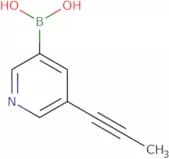
(5-(Prop-1-yn-1-yl)pyridin-3-yl)boronic acid
CAS:<p>(5-(Prop-1-yn-1-yl)pyridin-3-yl)boronic acid is a versatile building block that has been used in the synthesis of complex compounds, reagents, and speciality chemicals. It can also be used in reactions as a reaction component or scaffold. This chemical is soluble in most organic solvents and can be used as a high quality intermediate for synthesis of pharmaceuticals or research chemicals. It has been shown to have a CAS number of 917471-30-8.</p>Formula:C8H8BNO2Purity:Min. 95%Color and Shape:PowderMolecular weight:160.97 g/mol4-Nitropyridine-2-carboxylic acid
CAS:<p>4-Nitropyridine-2-carboxylic acid (4NPCA) is a nitro compound that can form both an n-oxide and a deuterium isotope effect. 4NPCA has been shown to react with picolinic acid, forming a stable chelate ligand that is stabilized by the electron withdrawal of the nitro group. 4NPCA also reacts with acetonitrile to form isotopomers, which are molecules that differ only in the number of atoms of hydrogen or deuterium present. The formation of these isotopomers occurs through an intramolecular hydrogen transfer from the hydroxyl group on one molecule to the nitro group on another.</p>Formula:C6H4N2O4Purity:Min. 95%Color and Shape:Pale yellow solid.Molecular weight:168.11 g/mol6-Fluoropyridine-2-carbonyl chloride
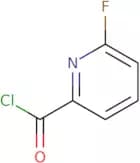
CAS:<p>6-Fluoropyridine-2-carbonyl chloride (6FC) is a versatile building block that is used in the synthesis of complex compounds. It is also a reagent for organic chemistry, research chemicals, and speciality chemicals. 6FC has been shown to be useful as a building block for the preparation of high quality and useful intermediates. The compound reacts with nucleophiles in good yields to produce amines, nitriles, alcohols, and carboxylic acids. 6FC can also be used as a reaction component in organic reactions. It has been shown to be an excellent scaffold for the synthesis of bioactive molecules such as amino acid derivatives and natural products.</p>Formula:C6H3ClFNOPurity:Min. 95%Color and Shape:White PowderMolecular weight:159.55 g/mol2-Methylthio-4,6-dihydroxypyrimidine
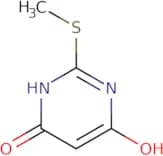
CAS:<p>2-Methylthio-4,6-dihydroxypyrimidine is an organic compound that has a hypsochromic and bathochromic effect. This ligand belongs to the group of neutral compounds and is found in its intramolecular hydrogen form. It also reacts with hydrochloric acid to form tautomers. 2-Methylthio-4,6-dihydroxypyrimidine can exist in two tautomeric forms: the chloride and oxalyl forms. The vibrational frequencies of these tautomers are different. 2-Methylthio-4,6-dihydroxypyrimidine is an intermediate in the synthesis of other chemical compounds such as chloropropionates, methanesulfonic acid, and piperazine.</p>Formula:C5H6N2O2SPurity:Min. 95%Color and Shape:PowderMolecular weight:158.18 g/mol4-Aminopyrazolo[3,4-d]pyrimidine
CAS:<p>4-Aminopyrazolo[3,4-d]pyrimidine is a potent adenosine nucleotide analog that also lowers LDL cholesterol in the blood. It is used as a model system to study the uptake of nucleotides by Leishmania. 4-Aminopyrazolo[3,4-d]pyrimidine has been shown to be active against Leishmania parasites in vivo and at physiological levels. This drug has high resistance to leishmaniasis and can be used as an analog for ATP. 4-Aminopyrazolo[3,4-d]pyrimidine binds to the receptor activity on liver cells and stimulates epidermal growth factor production. It also interacts with the nucleotide levels in cells by acting as an analog for ATP.</p>Formula:C5H5N5Purity:Min. 95%Color and Shape:Red PowderMolecular weight:135.13 g/mol5-Chloro-8-iodoimidazo[1,2-a]pyridine HBr
CAS:<p>5-Chloro-8-iodoimidazo[1,2-a]pyridine HBr is a fine chemical that can be used as a versatile building block in the synthesis of complex compounds. This chemical is also useful as a reagent or speciality chemical for research purposes. This product has been shown to have high quality and is an efficient reaction component for organic synthesis. 5-Chloro-8-iodoimidazo[1,2-a]pyridine HBr has CAS No. 1031289-77-6 and is a useful scaffold for the preparation of other compounds.</p>Formula:C7H4ClIN2·HBrPurity:Min. 95%Color and Shape:Pale yellow solid.Molecular weight:359.39 g/mol1-(3-Chlorophenyl)piperazine HCl
CAS:Controlled Product<p>1-(3-Chlorophenyl)piperazine HCl is a drug that belongs to the group of pharmacological agents. It is used as an antidepressant and antipsychotic, and has been shown to decrease serotonin levels in the brain. 1-(3-Chlorophenyl)piperazine HCl is a potent 5-HT2C receptor agonist that inhibits ovarian activity in vitro. The compound has also been shown to be effective against trazodone and 5-HT2 receptors in vitro.</p>Formula:C10H14Cl2N2Purity:Min. 95 Area-%Color and Shape:White PowderMolecular weight:233.14 g/mol2,4-Pyridinedicarboxylic acid diethyl ester
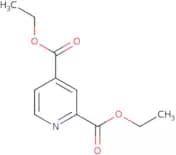
CAS:<p>2,4-Pyridinedicarboxylic acid diethyl ester is an aliphatic hydrocarbon that has been shown to be a potent active oxygen scavenger. It has also been shown to inhibit the uptake of fatty acids and organic anions by tubule cells in the liver, as well as to reduce collagen breakdown in the endoplasmic reticulum. This compound is converted into pyridinedicarboxylic acid, which inhibits hepcidin production and thus increases iron absorption. 2,4-Pyridinedicarboxylic acid diethyl ester also has a biochemical profile that is similar to that of a lipophilic fatty acid ester.</p>Formula:C11H13NO4Purity:Min. 95%Color and Shape:Colorless PowderMolecular weight:223.23 g/mol(S)-3-(4-Boc-piperazin-1-yl)-2-(Fmoc-amino)propionic acid
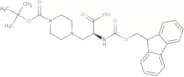
CAS:<p>(S)-3-(4-Boc-piperazin-1-yl)-2-(Fmoc-amino)propionic acid is a high quality reagent which has been synthesized in our lab. It is used as a reaction component and can be used as a speciality chemical, versatile building block, or useful intermediate. This compound has been shown to have complex properties and can be used as a fine chemical.</p>Formula:C27H33N3O6Purity:Min. 95%Color and Shape:White PowderMolecular weight:495.57 g/mol7-Azaindole-3-carboxaldehyde
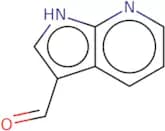
CAS:<p>7-Azaindole-3-carboxaldehyde is a molecule that belongs to the class of indoles. It has been shown to have cytotoxic activity in vitro against cancer cells and isomers have been identified. 7-Azaindole-3-carboxaldehyde has been investigated for its ability to bind to CB2 receptors, which are located on the surface of immune cells, and may be used as a lead compound for the development of novel anti-cancer drugs. 7-Azaindole-3-carboxaldehyde also binds to chloride ions, which may be important in understanding how it interacts with other compounds or proteins.</p>Formula:C8H6N2OPurity:Min. 95%Color and Shape:PowderMolecular weight:146.15 g/mol2,3,3-Trimethyl-3H-benzo[e]indole
CAS:<p>2,3,3-Trimethyl-3H-benzo[e]indole is a reactive molecule that has been shown to be an effective treatment for cervical cancer. It can be used in conjunction with monoclonal antibodies that have been designed to target the acidic protonation sites on the surface of cervical cancer cells. This active form binds to the site and emits fluorescence when illuminated with a laser, which can then be detected by a confocal microscope. This technique can also be used for the diagnosis of other cancers. 2,3,3-Trimethyl-3H-benzo[e]indole is not toxic to human serum as it does not react with this type of tissue.</p>Formula:C15H15NPurity:Min. 98 Area-%Color and Shape:PowderMolecular weight:209.29 g/mol3-Hydroxy-1-methylpyridin-4(1H)-one
CAS:<p>3-Hydroxypyridin-4(1H)-one is a compound that belongs to the group of organic compounds called pyridines. It is a colorless, crystalline solid with a melting point of 210 °C. 3-Hydroxypyridin-4(1H)-one is soluble in ether and chloroform. 3-Hydroxypyridin-4(1H)-one forms complexes with metal ions such as copper, zinc, and nickel. The stability constants for these complexes are in the order of Cu > Zn > Ni. Potentiometric titration experiments show that the ligands are stronger bases than water and therefore react more strongly with copper ions than hydroxide ions.</p>Formula:C6H7NO2Purity:Min. 95%Color and Shape:PowderMolecular weight:125.13 g/mol3-Amino-5-bromo-2-chloropyridine
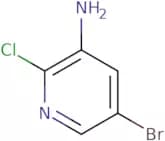
CAS:<p>3-Amino-5-bromo-2-chloropyridine is a synthetic compound that has been shown to be an inhibitor of phosphoinositide 3 kinase delta (PI3Kδ). It is also a potent inhibitor of the proliferation of human cancer cells in vitro and in vivo. The PI3Kδ is activated by insulin and other growth factors, which leads to the activation of downstream pathways. These pathways trigger cell growth and proliferation. 3-Amino-5-bromo-2-chloropyridine may have potential as a novel anticancer drug due to its ability to inhibit PI3Kδ activity and prevent the progression of cancer.</p>Formula:C5H4BrClN2Purity:Min. 95%Color and Shape:Yellow PowderMolecular weight:207.46 g/mol3-Amino-2-bromopyridine
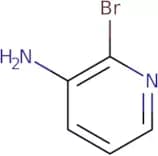
CAS:<p>3-Amino-2-bromopyridine is a synthetic compound that has been found to be a potential antitumor agent. It undergoes a palladium-catalyzed coupling reaction with 3-phenylpropene, forming an amide. The reaction yield is dependent on the temperature of the reaction, which must be low enough for the desired product to form. 3-Amino-2-bromopyridine has been shown to possess pharmacokinetic properties and can be transported by amide, hydroxyl, and carboxyl groups. This compound also undergoes acid formation reactions at elevated temperatures.</p>Formula:C5H5BrN2Purity:Min. 95%Color and Shape:White PowderMolecular weight:173.01 g/mol2-Iodopyridine
CAS:<p>2-Iodopyridine is an organic compound with the chemical formula C5H5N. It is a white crystalline solid that is soluble in water, alcohol, and ether. The molecule contains a methyl group and two iodine atoms. 2-Iodopyridine has several industrial uses. It acts as a precursor to various pharmaceuticals and agrochemicals. The compound also exhibits insulin resistance properties, which may be related to its ability to bind to the insulin receptor and inhibit insulin signaling. 2-Iodopyridine can also be used for treating cancer because it binds to the DNA of cancer cells, preventing replication and leading to cell death.</p>Formula:C5H4INPurity:Min. 95%Color and Shape:PowderMolecular weight:205 g/molPiperazine-2-carboxylic acid
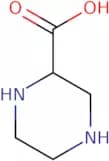
CAS:<p>Piperazine-2-carboxylic acid is an amide that is a precursor to glutamate, ethylene diamine, and piperazine. It has been shown to be an enantiomer of piperazine. Piperazine-2-carboxylic acid is used in the production of various pharmaceuticals, including anticonvulsants and antiparasitic drugs. It is also used as a biochemical reagent for kinetic studies and as an orally administered drug for the treatment of inorganic acidosis.</p>Formula:C5H10N2O2Purity:Min. 95%Color and Shape:White PowderMolecular weight:130.15 g/mol4-Chloro-3-pyridinesulfonamide
CAS:<p>4-Chloro-3-pyridinesulfonamide is an antibacterial sulfonamide that inhibits the enzyme carbonic anhydrase. It has been shown to inhibit the growth of cancer cells in vitro and in vivo. The anticancer effect may be due to its ability to block the growth of cancer cells by interfering with DNA synthesis and inducing apoptosis, which causes cell death. 4-Chloro-3-pyridinesulfonamide also inhibits tuberculosis and tuberculostatic activity may be due to its inhibition of mycobacterium tuberculosis ribosomes. 4-Chloro-3-pyridinesulfonamide binds to the active site of bacterial anhydrase as well as human carbonic anhydrase II, blocking the conversion of CO2 into bicarbonate ions, which leads to a decrease in pH. This drug also binds to DNA and RNA, inhibiting DNA synthesis and RNA synthesis respectively, leading to cell</p>Formula:C5H5ClN2O2SPurity:Min. 95%Color and Shape:SolidMolecular weight:192.62 g/mol4,4'-Dipyridyl Disulfide
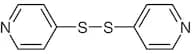
CAS:Formula:C10H8N2S2Purity:>97.0%(GC)(T)Color and Shape:White to Light yellow to Light red powder to crystalMolecular weight:220.317-Bromo-2-chlorothieno[3,2-d]pyrimidine
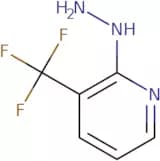
CAS:<p>7-Bromo-2-chlorothieno[3,2-d]pyrimidine is a high quality, reagent grade compound that is used as an intermediate in the synthesis of other complex compounds. It is also a useful scaffold for the synthesis of speciality chemicals and research chemicals. This compound can be used as a versatile building block for the synthesis of many different compounds.</p>Formula:C6H2BrClN2SPurity:Min. 95%Color and Shape:Off-White To Yellow SolidMolecular weight:249.52 g/mol(3-Trifluoromethylpyrid-2-yl)hydrazine
CAS:<p>Building block for preparation of heteroaryltriazole derivatives</p>Formula:C6H6F3N3Purity:Min. 95%Color and Shape:PowderMolecular weight:177.13 g/mol


![4-Aminopyrazolo[3,4-d]pyrimidine](/_next/image/?url=https%3A%2Fstatic.cymitquimica.com%2Fproducts%2F3D%2Fthumb-webp%2FFA33756.webp&w=3840&q=75)
![5-Chloro-8-iodoimidazo[1,2-a]pyridine HBr](/_next/image/?url=https%3A%2Fstatic.cymitquimica.com%2Fproducts%2F3D%2Fthumb-webp%2FFC07295.webp&w=3840&q=75)

![2,3,3-Trimethyl-3H-benzo[e]indole](/_next/image/?url=https%3A%2Fstatic.cymitquimica.com%2Fproducts%2F3D%2Fthumb-webp%2FFT29018.webp&w=3840&q=75)




![7-Bromo-2-chlorothieno[3,2-d]pyrimidine](/_next/image/?url=https%3A%2Fstatic.cymitquimica.com%2Fproducts%2F3D%2Fthumb-webp%2FFB156457.webp&w=3840&q=75)