


Heterocycles with Nitrogen (N)
In this category, you will find a wide variety of nitrogen-containing heterocycles. Heterocycles are carbon chains that form a cycle in which at least one position is occupied by a heteroatom, in this case, nitrogen. These compounds are integral in the synthesis of pharmaceuticals, agrochemicals, and dyes, offering unique reactivity and stability. At CymitQuimica, we provide a comprehensive selection of high-quality nitrogen-containing heterocycles to support your research and industrial applications
Subcategories of "Heterocycles with Nitrogen (N)"
- Azepane(434 products)
- Benzotriazoles(436 products)
- Diazepanes(331 products)
- Imidazoles(4,006 products)
- Imidazolines(385 products)
- Isoxazole(1,077 products)
- Piperazines(3,735 products)
- Piperidines(8,397 products)
- Pyrazines(1,299 products)
- Pyrazole(5,919 products)
- Pyrazolidine(21 products)
- Pyrazoline(142 products)
- Pyridazine(856 products)
- Pyridines(21,911 products)
- Pyrimidine(6,038 products)
- Pyrroles(2,440 products)
- Pyrrolidines(5,814 products)
- Pyrroline(48 products)
- Pyrrolo[1,2-b]pyridazine(10 products)
- Tetrazole(510 products)
- Triazines(462 products)
- Triazoles(1,679 products)
Show 14 more subcategories
Found 17855 products of "Heterocycles with Nitrogen (N)"
Sort by
Purity (%)
0
100
|
0
|
50
|
90
|
95
|
100
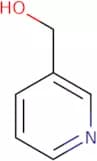
3-Pyridinemethanol
CAS:<p>3-Pyridinemethanol is a chemical compound that is soluble in water. It has a molecular weight of 92.07 grams per mole, and the chemical formula CH3CH2NH. 3-Pyridinemethanol is used as a reagent for the synthesis of organic compounds, such as chlorides, esters, amides, nitriles, and thioamides. 3-Pyridinemethanol reacts with chloride to form an intermediate which reacts with water to produce hydrochloric acid and ammonium chloride. This reaction also produces heat, which can be used to generate energy or power other reactions. br> br> A nanotube was synthesized from 3-pyridinemethanol by using a template made from nickel atoms arranged in a hexagonal pattern on the surface of an indium tin oxide (ITO) glass substrate. The nanotubes are about 5 nm in diameter and can be up</p>Formula:C6H7NOPurity:Min. 95%Molecular weight:109.13 g/mol2,4,6-Trichloropyrimidine
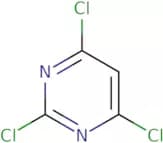
CAS:<p>2,4,6-Trichloropyrimidine is an antimicrobial agent that belongs to the chemical class of pyrimidine compounds. It inhibits bacterial growth by cross-linking with amino acids and nucleic acids in the cell wall, thereby inhibiting protein synthesis. 2,4,6-Trichloropyrimidine is also a cross-linking agent for polymers such as polyurethane and vinyl chloride. This compound has been shown to be effective against P. aeruginosa and other bacteria that are resistant to antibiotics. 2,4,6-Trichloropyrimidine reacts with water vapor or oxygen nucleophiles to form hydrogen chloride and amine groups. These reactions can be used for identification of this compound in the laboratory.</p>Formula:C4HCl3N2Purity:Min. 95%Color and Shape:PowderMolecular weight:183.42 g/mol2-Amino-5-methylpyridine
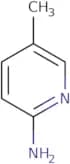
CAS:<p>2-Amino-5-methylpyridine is a chemical compound that belongs to the group of methyl ketones. It has a nitrogen atom and an oxygen atom in its structure, which allows it to form hydrogen bonds with other molecules. 2-Amino-5-methylpyridine can be obtained by reacting hydrochloric acid and xanthone in the presence of a base. The compound is highly reactive and has been shown to have antiinflammatory properties. This can be attributed to its ability to inhibit prostaglandin synthesis. 2-Amino-5-methylpyridine also has fluorescence properties that are sensitive to pH changes and can be used as a probe for metal ions.<br>2-Amino-5-methylpyridine is an organic compound that contains a methyl group, two nitrogen atoms, and one oxygen atom in its chemical structure. This molecule can form hydrogen bonds with other molecules due to its nitrogen atoms and oxygen atom,</p>Formula:C6H8N2Purity:Min. 95%Color and Shape:PowderMolecular weight:108.14 g/molEthyl 3-(pyridin-2-ylamino)propanoate
CAS:<p>Ethyl 3-(pyridin-2-ylamino)propanoate is a thrombin inhibitor that can be used for the treatment of cancer. Ethyl 3-(pyridin-2-ylamino)propanoate is a reactive, profile compound with electrons and hydrogen bonds. It has been shown to have anticancer activity in vitro and in vivo, inhibiting tumor cell growth by inhibiting DNA synthesis. This molecule also has anti-inflammatory properties, which may be due to its ability to inhibit platelet aggregation.</p>Formula:C10H14N2O2Purity:Min. 95 Area-%Color and Shape:PowderMolecular weight:194.23 g/molGSK3008348 monohydrochloride
CAS:<p>Please enquire for more information about GSK3008348 monohydrochloride including the price, delivery time and more detailed product information at the technical inquiry form on this page</p>Formula:C29H37N5O2•HClPurity:Min. 95%Molecular weight:524.1 g/mol(2-Bromopyridin-4-yl)methanamine
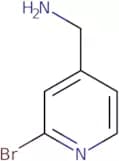
CAS:<p>Please enquire for more information about (2-Bromopyridin-4-yl)methanamine including the price, delivery time and more detailed product information at the technical inquiry form on this page</p>Purity:Min. 95%3-(Chloromethyl)-5-methylpyridine hydrochloride
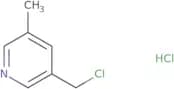
CAS:<p>3-(Chloromethyl)-5-methylpyridine hydrochloride (3CMPH) is a chemical compound that is synthesized from chlorine and methylpyridine. 3CMPH can be produced by the reaction of chlorination with toluene or hydrogen chloride. The synthesis of 3CMPH is done in two steps: first, reacting toluene with chlorine gas at high temperature and pressure in the presence of sulfuric acid, followed by the addition of sulfuric acid to the resulting product. In the second step, hydrogen chloride reacts with methylpyridine in an alkaline solution, yielding 3-(chloromethyl)-5-methylpyridine hydrochloride as a white solid. 3CMPH has been shown to have antihistamine effects and can be used for treating allergies. It can also be used as a skin protectant against uv light and rupatadine.</p>Formula:C7H8ClN·HClPurity:Min. 95%Molecular weight:178.06 g/mol6,7-Dichloro-1-cyclopropyl-1,4-dihydro-4-oxo-3-quinolinecarboxylic acid
CAS:<p>Please enquire for more information about 6,7-Dichloro-1-cyclopropyl-1,4-dihydro-4-oxo-3-quinolinecarboxylic acid including the price, delivery time and more detailed product information at the technical inquiry form on this page</p>Formula:C13H9Cl2NO3Purity:Min. 95%Molecular weight:298.12 g/molPyridoxal-5-phosphate monohydrate
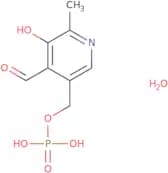
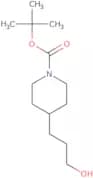
CAS:<p>Bioavailable form of vitamin B6; coenzyme; food supplement</p>Formula:C8H10NO6P·H2OPurity:Min. 98.5 Area-%Color and Shape:Off-White Slightly Yellow PowderMolecular weight:265.16 g/molTert-butyl 4-(3-hydroxypropyl)tetrahydro-1(2H)-pyridinecarboxylate
CAS:<p>Please enquire for more information about Tert-butyl 4-(3-hydroxypropyl)tetrahydro-1(2H)-pyridinecarboxylate including the price, delivery time and more detailed product information at the technical inquiry form on this page</p>Formula:C13H25NO3Purity:Min. 95%Molecular weight:243.34 g/mol6-Bromo-4-hydroxypyrazolo[1,5-a]pyridine-3-carbonitrile
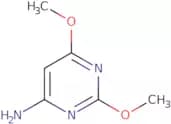
CAS:<p>Please enquire for more information about 6-Bromo-4-hydroxypyrazolo[1,5-a]pyridine-3-carbonitrile including the price, delivery time and more detailed product information at the technical inquiry form on this page</p>Formula:C8H4BrN3OPurity:Min. 95%Molecular weight:238.04 g/mol4-Amino-2,6-dimethoxypyrimidine
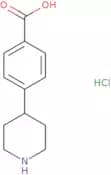
CAS:<p>4-Amino-2,6-dimethoxypyrimidine is an organic compound that has been shown to be a methylating agent. It reacts with the hydrogen chloride present in seawater to form methyl chloride and hydrochloric acid. 4-Amino-2,6-dimethoxypyrimidine also interacts with hydrogen bonds and forms hydrogen bonds with other molecules. The molecular modeling study revealed that this compound is soluble in mineral acids such as sulfuric acid and hydrochloric acid. The solubility data also showed that 4-amino-2,6-dimethoxypyrimidine is soluble in water but not in chlorinated water. This drug has shown significant antifungal activity against Cryptococcus neoformans and Gram-negative organisms such as Escherichia coli, Salmonella typhi, Pseudomonas aeruginosa, Klebsiella pneumoniae, Proteus mirabilis, Enterobacter</p>Formula:C6H9N3O2Purity:Min. 95%Molecular weight:155.15 g/mol4-(Piperidin-4-yl)benzoic acid hydrochloride
CAS:<p>Please enquire for more information about 4-(Piperidin-4-yl)benzoic acid hydrochloride including the price, delivery time and more detailed product information at the technical inquiry form on this page</p>Formula:C12H16ClNO2Purity:Min. 95%Molecular weight:241.71 g/mol5,6,7,7a-Tetrahydrothieno[3,2-c]pyridinone hydrochloride
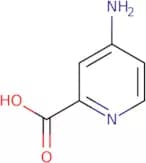
CAS:<p>5,6,7,7a-Tetrahydrothieno[3,2-c]pyridinone hydrochloride is a ketone with the chemical formula of C5H5NO2. It has been synthesized by acetylation of 5,6-dihydro-1,4-thieno[3,2-c]pyridinone in solvents and alkali. The reaction product has a melting point of 116–118 degrees Celsius. 5,6,7,7a-Tetrahydrothieno[3,2-c]pyridinone hydrochloride is used as a target compound for synthesis of prasugrel. Prasugrel is an antiplatelet drug that works by inhibiting the enzyme ADP P2Y 12 . This inhibition prevents activation of platelets and reduces platelet aggregation. The reactants toluene and chlorine were used in</p>Formula:C7H10ClNOSPurity:Min. 97 Area-%Color and Shape:PowderMolecular weight:191.68 g/mol4-Aminopicolinic acid
CAS:<p>4-Aminopicolinic acid is a synthetic amine that has been shown to activate plant science. 4-Aminopicolinic acid is a cyclic peptide with two subunits, one of which is 4-amino-3-pyridinecarboxylic acid. This compound has been synthesized from picolinic acid, an agriculturally important compound that is found in plant and animal tissues. The synthesis of 4-aminopicolinic acid involves the reaction of picolinic acid with nitrous oxide, followed by hydrolysis and oxidation to form the desired product. Hplc analyses have confirmed the presence of picolinic acid in extracts from various plants containing this compound.</p>Formula:C6H6N2O2Purity:Min. 95%Color and Shape:White To Beige Or Pink To Light Brown SolidMolecular weight:138.12 g/moltert-Butyl6-[(1e)-2-[4-(4-fluorophenyl)-6-(1-methylethyl)-2-[methyl(methylsulfonyl)amino]-5-pyrimidinyl]ethenyl]-2,2-dimethyl-1,3-di oxane-4-acetate
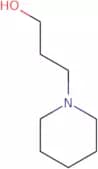
CAS:<p>Please enquire for more information about tert-Butyl6-[(1e)-2-[4-(4-fluorophenyl)-6-(1-methylethyl)-2-[methyl(methylsulfonyl)amino]-5-pyrimidinyl]ethenyl]-2,2-dimethyl-1,3-di oxane-4-acetate including the price, delivery time and more detailed product information at the technical inquiry form on this page</p>Formula:C29H40FN3O6SPurity:Min. 95%Molecular weight:577.71 g/mol3-Piperidin-1-ylpropan-1-ol
CAS:<p>3-Piperidin-1-ylpropan-1-ol is a substance that is structurally related to biperiden and has affinity for the H3 receptor. It has been shown to have a high affinity for the H3 receptor, which is found in high concentration in the rat brain. 3-Piperidin-1-ylpropan-1-ol has been shown to have antagonistic activity against neuropathic pain in rats, by inhibiting the release of norepinephrine from nerve endings. This substance also has antihistaminic properties, which may be due to its ability to inhibit histamine release. 3-Piperidin-1-ylpropan-1-ol is an enantiomer of piperidine, with a slightly higher affinity for the H3 receptor than its mirror image. The racemic mixture isomeric form (i.e., both enantiomers) inhibits the H3 receptor with an equal potency,</p>Formula:C8H17NOPurity:Min. 95%Color and Shape:Colorless Clear LiquidMolecular weight:143.23 g/mol11-(1-Piperazinyl)-dibenzo[b,f][1,4]thiazepine dihydrochloride
CAS:<p>11-(1-Piperazinyl)-dibenzo[b,f][1,4]thiazepine dihydrochloride is a long-acting drug that has been synthesized as an analog of diazepam. The compound is characterized by high diffraction, interaction and evaporation constants and low molecular weight. It is soluble in water and methanol. 11-(1-Piperazinyl)-dibenzo[b,f][1,4]thiazepine dihydrochloride has been shown to have a constant pharmacokinetic profile and high chemical stability in vivo.</p>Formula:C17H17N3S·2HClPurity:Min. 98 Area-%Color and Shape:White Off-White PowderMolecular weight:368.32 g/molOctahydro-2,6-naphthyridin-1(2H)-one acetate
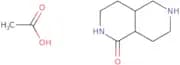
CAS:Controlled Product<p>Please enquire for more information about Octahydro-2,6-naphthyridin-1(2H)-one acetate including the price, delivery time and more detailed product information at the technical inquiry form on this page</p>Formula:C8H14N2O•C2H4O2Purity:Min. 95%Molecular weight:214.26 g/mol8-Chloroimidazo[1,2-a]pyrazine
CAS:<p>Please enquire for more information about 8-Chloroimidazo[1,2-a]pyrazine including the price, delivery time and more detailed product information at the technical inquiry form on this page</p>Formula:C6H4ClN3Purity:Min. 95%Molecular weight:153.57 g/mol


![6-Bromo-4-hydroxypyrazolo[1,5-a]pyridine-3-carbonitrile](/_next/image/?url=https%3A%2Fstatic.cymitquimica.com%2Fproducts%2F3D%2Fthumb-webp%2FFB182798.webp&w=3840&q=75)
![5,6,7,7a-Tetrahydrothieno[3,2-c]pyridinone hydrochloride](/_next/image/?url=https%3A%2Fstatic.cymitquimica.com%2Fproducts%2F3D%2Fthumb-webp%2FFT28146.webp&w=3840&q=75)
![tert-Butyl6-[(1e)-2-[4-(4-fluorophenyl)-6-(1-methylethyl)-2-[methyl(methylsulfonyl)amino]-5-pyrimi…](/_next/image/?url=https%3A%2Fstatic.cymitquimica.com%2Fproducts%2F3D%2Fthumb-webp%2FFB148489.webp&w=3840&q=75)
![11-(1-Piperazinyl)-dibenzo[b,f][1,4]thiazepine dihydrochloride](/_next/image/?url=https%3A%2Fstatic.cymitquimica.com%2Fproducts%2F3D%2Fthumb-webp%2FFP32447.webp&w=3840&q=75)
![8-Chloroimidazo[1,2-a]pyrazine](/_next/image/?url=https%3A%2Fstatic.cymitquimica.com%2Fproducts%2F3D%2Fthumb-webp%2FFC125475.webp&w=3840&q=75)