Heterocycles with Nitrogen (N)
In this category, you will find a wide variety of nitrogen-containing heterocycles. Heterocycles are carbon chains that form a cycle in which at least one position is occupied by a heteroatom, in this case, nitrogen. These compounds are integral in the synthesis of pharmaceuticals, agrochemicals, and dyes, offering unique reactivity and stability. At CymitQuimica, we provide a comprehensive selection of high-quality nitrogen-containing heterocycles to support your research and industrial applications
Subcategories of "Heterocycles with Nitrogen (N)"
- Azepane(434 products)
- Benzotriazoles(436 products)
- Diazepanes(331 products)
- Imidazoles(4,006 products)
- Imidazolines(385 products)
- Isoxazole(1,077 products)
- Piperazines(3,735 products)
- Piperidines(8,397 products)
- Pyrazines(1,299 products)
- Pyrazole(5,919 products)
- Pyrazolidine(21 products)
- Pyrazoline(142 products)
- Pyridazine(856 products)
- Pyridines(21,911 products)
- Pyrimidine(6,038 products)
- Pyrroles(2,440 products)
- Pyrrolidines(5,814 products)
- Pyrroline(48 products)
- Pyrrolo[1,2-b]pyridazine(10 products)
- Tetrazole(510 products)
- Triazines(462 products)
- Triazoles(1,679 products)
Show 14 more subcategories
Found 17855 products of "Heterocycles with Nitrogen (N)"
Sort by
Purity (%)
0
100
|
0
|
50
|
90
|
95
|
100
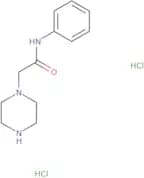
Piperazinoacetic acid anilide dihydrochloride
CAS:<p>Piperazinoacetic acid anilide dihydrochloride is a high quality, reagent compound which can be used as a useful intermediate or a speciality chemical. Piperazinoacetic acid anilide dihydrochloride is a complex compound that has been shown to have a number of useful properties, such as being an effective building block for the synthesis of other compounds. It can also be used as a reaction component in the preparation of fine chemicals and research chemicals. This product is also versatile, allowing it to be built into different scaffolds to create new compounds.</p>Formula:C12H17N3O•(HCl)2Purity:Min. 95%Molecular weight:292.2 g/mol2-Chloro-5-iodopyridine
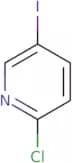
CAS:<p>2-Chloro-5-iodopyridine is a synthetic compound that binds to nicotinic acetylcholine receptors, and is an agonist of these receptors. It has been shown to bind selectively to the alpha4beta2 subtype of these receptors. 2-Chloro-5-iodopyridine binds to the receptor by means of hydrogen bonding and chelation, which results in the activation of the receptor. This process leads to increased levels of catecholamines and other neurotransmitters, which causes changes in the heart rate and blood pressure. 2-Chloro-5-iodopyridine is a halogenated organic molecule that can be synthesized from sodium trifluoroacetate in two steps: first with chlorination followed by iodination. The synthesis can be carried out using copper (II) chloride as a catalyst or copper (I) iodide as an oxidant, followed by reduction with sodium borohydride.</p>Formula:C5H3ClINPurity:Min. 95%Color and Shape:White PowderMolecular weight:239.44 g/molEthyl 2,4-dichloropyrimidine-5-carboxylate
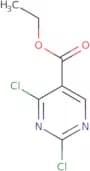
CAS:<p>Please enquire for more information about Ethyl 2,4-dichloropyrimidine-5-carboxylate including the price, delivery time and more detailed product information at the technical inquiry form on this page</p>Formula:C7H6Cl2N2O2Purity:Min. 95%Molecular weight:221.04 g/mol2-Chloro-4-iodopyridine
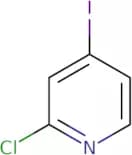
CAS:<p>2-Chloro-4-iodopyridine is an antibacterial agent that inhibits bacterial growth by interfering with the synthesis of folic acid. It has been shown to be effective against Escherichia coli, Staphylococcus aureus, and Pseudomonas aeruginosa. 2-Chloro-4-iodopyridine is a ligand that binds to metal ions such as copper and silver. The transfer of electrons from the metal ion to the ligand facilitates the cross-coupling reaction in organic synthesis. Cross-coupling reactions are also used in devices such as solar cells and hydrogen fuel cells.<br>2-Chloro-4-iodopyridine can also be used for photophysical experiments with single crystal x-ray diffraction studies.</p>Formula:C5H3ClINPurity:Min. 95%Color and Shape:White PowderMolecular weight:239.44 g/mol6-Bromo-4-hydroxypyrazolo[1,5-a]pyridine-3-carbonitrile
CAS:<p>Please enquire for more information about 6-Bromo-4-hydroxypyrazolo[1,5-a]pyridine-3-carbonitrile including the price, delivery time and more detailed product information at the technical inquiry form on this page</p>Formula:C8H4BrN3OPurity:Min. 95%Molecular weight:238.04 g/mol2-(4-Methyl-2-phenyl-1-piperazinyl)-3-pyridinemethanol
CAS:<p>2-(4-Methyl-2-phenyl-1-piperazinyl)-3-pyridinemethanol is an impurity in hexane that is generated during the reaction of pyridine with acetonitrile. The impurity is removed by crystallizing it from methanol. 2-(4-Methyl-2-phenyl-1-piperazinyl)-3-pyridinemethanol has a high efficiency, and can be used to synthesize hexamethyldisiloxane. This product can be used as a metal catalyst for reactions involving alkali metals or metal halides. It can also be used as an alcohol solvent, but not hydrogenated.</p>Formula:C17H21N3OPurity:Min. 95%Color and Shape:White to off white powderMolecular weight:283.37 g/mol2,4,5,6-Tetraaminopyrimidine sulphate
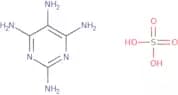
CAS:<p>2,4,5,6-Tetraaminopyrimidine sulphate is a chemical compound that is used for the treatment of leukemic mice. It has shown to have anti-inflammatory and anti-cancer properties. This drug binds to the enzyme p-hydroxybenzoic acid that is involved in the synthesis of collagen and elastin. It also suppresses the production of inflammatory cytokines such as TNF-α and IL-1β. 2,4,5,6-Tetraaminopyrimidine sulphate has been used in clinical trials for the treatment of autoimmune diseases and inflammatory diseases such as psoriasis. The drug is currently being researched for use in cancer treatments due to its ability to inhibit cell division and induce apoptosis. 2,4,5,6-Tetraaminopyrimidine sulphate has also been shown to be effective when applied topically on skin as a cosmetic agent or when administered orally as a supplement for</p>Formula:C4H10N6O4SPurity:Min. 95%Color and Shape:Slightly Yellow PowderMolecular weight:238.23 g/molPyridine hydrochloride
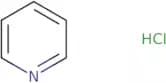
CAS:<p>Pyridine hydrochloride is a white crystalline solid. It has high values for affinity to the CB2 receptor and can be used for the treatment of metabolic disorders, such as diabetes. Pyridine hydrochloride can be synthesized in two ways: by hydrogenation of pyridine with hydrochloric acid or by reacting pyridine with hydrogen fluoride. This compound also has an effect on locomotor activity and increases glutamate levels in the brain, which may contribute to its therapeutic effects. Pyridine hydrochloride is also used as a fluorescent derivative in analytical methods that measure nucleotide levels, such as the phosphorimager technique.</p>Formula:C5H5N·HClPurity:Min. 95%Color and Shape:White To Yellow To Light Brown SolidMolecular weight:115.56 g/mol2-Phenylpyridine
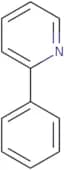
CAS:<p>2-Phenylpyridine is a heterocyclic organic compound that has been shown to have x-ray crystal structures. It has redox potentials, nitrogen atoms, and a fatty acid group attached. 2-Phenylpyridine has been shown to have nmr spectra that are characteristic of a transfer reaction mechanism. The steric interactions and the biphenyl groups have been shown to have ancillary effects on the reaction mechanism. 2-Phenylpyridine is also known to coordinate in a geometric shape called octahedral, which is most likely due to hydrogen bonding and photophysical properties. The analytical chemistry of this molecule consists of determining its melting point, boiling point, and density. 2-phenylpyridine</p>Formula:C11H9NPurity:Min. 95%Molecular weight:155.2 g/mol2-Bromo-6-methylpyridine-3-carboxaldehyde
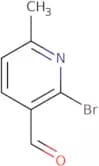
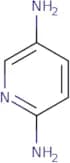
CAS:<p>2-Bromo-6-methylpyridine-3-carboxaldehyde (BMPCA) is a pharmacological agent that belongs to the group of antagonists. It has been shown to be a potent antagonist at the NMDA receptor and may be used for treating neuropathic pain. BMPCA also has been shown to have competitive inhibition at the naphthyridine receptor, which may allow it to act as an antagonist or an agonist depending on its binding site. The regioisomeric analogs of BMPCA are 2-(2,5-dichloropyridyl)-6-methylpyridine-3-carboxaldehyde and 2-(2,5-dimethylpyridyl)-6-methylpyridine-3-carboxaldehyde. These analogs have been shown to inhibit the growth of tumor cells in vitro and in vivo.</p>Formula:C7H6BrNOPurity:Min. 95%Molecular weight:200.03 g/mol2,5-Diaminopyridine
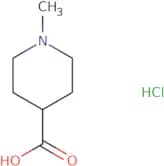
CAS:<p>2,5-Diaminopyridine is an organic compound that is expressed in the human body. It has been shown to inhibit the growth of cells in culture by binding to their DNA and preventing the production of hydrogen bonds. 2,5-Diaminopyridine has also been used clinically to treat inflammatory diseases such as rheumatoid arthritis. The hydrogen bond formation and inhibition of cell growth occurs at a low concentration of 2,5-Diaminopyridine. This drug may have potential as a therapeutic agent for cancer treatment because it inhibits the transcription factor CXCR4.</p>Formula:C5H7N3Purity:Min. 98.0 Area-%Color and Shape:Yellow To Purple To Brown SolidMolecular weight:109.13 g/mol1-Methylpiperidine-4-carboxylic acid hydrochloride
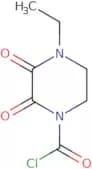
CAS:<p>1-Methylpiperidine-4-carboxylic acid hydrochloride is a betaine. Betaines are intermediates in the biosynthesis of phosphocholine, which is an important component of all cell membranes. 1-Methylpiperidine-4-carboxylic acid hydrochloride has been analyzed and quantified in fruits and plants such as beets, bananas, oranges, and tomatoes. It can be found in the roots of plants and has been shown to inhibit abiotic stress. This compound is also present in the human body as a result of its ingestion from food sources. 1-Methylpiperidine-4-carboxylic acid hydrochloride inhibits proline synthesis by competing with glycine for the enzyme choline acetyltransferase. It also inhibits synthesis of pipecolic acid (a precursor for histamine) by competing with glycine for the enzyme choline acetyltransferase.</p>Formula:C7H14NO2ClPurity:Min. 95%Molecular weight:179.64 g/molc4-Ethyl-2,3-dioxo-piperazine carbonyl chloride
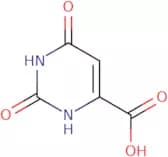
CAS:<p>c4-Ethyl-2,3-dioxo-piperazine carbonyl chloride is a chloroformate that is used in the synthesis of carbamates. It is used in the production of triphosgene, which is an intermediate for the production of herbicides and pesticides. The impurities found in this substance are n-hexane, flow rate, chloride, chloroformate and solvents. This product can be synthesized by reacting c4-ethyl-2,3-dioxopiperazine with carbon tetrachloride. The reaction time required to produce this product is 2 hours at a temperature between 100°C and 150°C. The optimum pH range for the reaction is 8 - 10.</p>Formula:C7H9ClN2O3Purity:Min. 95%Color and Shape:PowderMolecular weight:204.61 g/molOrotic acid anhydrous
CAS:<p>Orotic acid anhydrous is a hydrogen bonding interaction that can be found in biological systems. It plays a role in the physiological effects of orotic acid, which is a metabolite of uridine and an intermediate in the synthesis of pyrimidine nucleotides. Orotic acid has antimicrobial properties and has been shown to inhibit enzyme activities involved in energy metabolism, such as polymerase chain reaction (PCR) and adenosine triphosphate (ATP) synthase. Orotic acid also inhibits the growth of bacteria, fungi, and parasites. Orotic acid anhydrous is used for treating myocardial infarcts or brain functions. The untreated group was given no treatment at all.</p>Formula:C5H4N2O4Purity:Min. 98 Area-%Color and Shape:White PowderMolecular weight:156.1 g/mol3-Piperidin-1-ylpropan-1-ol
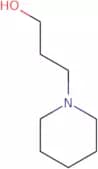
CAS:<p>3-Piperidin-1-ylpropan-1-ol is a substance that is structurally related to biperiden and has affinity for the H3 receptor. It has been shown to have a high affinity for the H3 receptor, which is found in high concentration in the rat brain. 3-Piperidin-1-ylpropan-1-ol has been shown to have antagonistic activity against neuropathic pain in rats, by inhibiting the release of norepinephrine from nerve endings. This substance also has antihistaminic properties, which may be due to its ability to inhibit histamine release. 3-Piperidin-1-ylpropan-1-ol is an enantiomer of piperidine, with a slightly higher affinity for the H3 receptor than its mirror image. The racemic mixture isomeric form (i.e., both enantiomers) inhibits the H3 receptor with an equal potency,</p>Formula:C8H17NOPurity:Min. 95%Color and Shape:Colorless Clear LiquidMolecular weight:143.23 g/mol8-Chloro-3,7-dihydro-1H-purine-2,6-dione
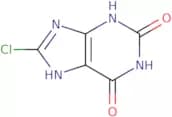
CAS:<p>8-Chloro-3,7-dihydro-1H-purine-2,6-dione is a reactive molecule that binds to the active site of bacterial cyclic nucleotide phosphodiesterases and inhibits their activity. This inhibition prevents the breakdown of cAMP and cGMP, which are important second messengers in eukaryotic cells. 8-Chloro-3,7-dihydro-1H-purine-2,6-dione is also a potent inhibitor of protein synthesis and has been used in research studies on wheat leaves.</p>Formula:C5H3N4O2ClPurity:Min. 95%Color and Shape:PowderMolecular weight:186.56 g/mol4-Amino-2-mercaptopyrimidine-5-carboxylic acid methyl ester
CAS:<p>Please enquire for more information about 4-Amino-2-mercaptopyrimidine-5-carboxylic acid methyl ester including the price, delivery time and more detailed product information at the technical inquiry form on this page</p>Formula:C6H7N3O2SPurity:Min. 95%Molecular weight:185.21 g/molN-[5-[5-(2-Methyl-1-oxoisoindolin-5-yl)thien-2-yl]pyridin-3-yl]-2-nitrobenzenesulfonamide
CAS:<p>Please enquire for more information about N-[5-[5-(2-Methyl-1-oxoisoindolin-5-yl)thien-2-yl]pyridin-3-yl]-2-nitrobenzenesulfonamide including the price, delivery time and more detailed product information at the technical inquiry form on this page</p>Formula:C24H18N4O5S2Purity:Min. 95%Color and Shape:PowderMolecular weight:506.56 g/molIsopropyl 2-amino-4-hydroxy-5,8-dihydropyrido[3,4-d]pyrimidine-7(6H)-carboxylate
CAS:<p>Please enquire for more information about Isopropyl 2-amino-4-hydroxy-5,8-dihydropyrido[3,4-d]pyrimidine-7(6H)-carboxylate including the price, delivery time and more detailed product information at the technical inquiry form on this page</p>Formula:C11H16N4O3Purity:Min. 95%Molecular weight:252.27 g/mol6-Amino-1,2-dihydro-2-thioxo-5-pyrimidinecarboxylic acid sodium
CAS:<p>Please enquire for more information about 6-Amino-1,2-dihydro-2-thioxo-5-pyrimidinecarboxylic acid sodium including the price, delivery time and more detailed product information at the technical inquiry form on this page</p>Formula:C5H5N3O2S•NaPurity:Min. 95%Molecular weight:194.17 g/mol

![6-Bromo-4-hydroxypyrazolo[1,5-a]pyridine-3-carbonitrile](/_next/image/?url=https%3A%2Fstatic.cymitquimica.com%2Fproducts%2F3D%2Fthumb-webp%2FFB182798.webp&w=3840&q=75)


![N-[5-[5-(2-Methyl-1-oxoisoindolin-5-yl)thien-2-yl]pyridin-3-yl]-2-nitrobenzenesulfonamide](/_next/image/?url=https%3A%2Fstatic.cymitquimica.com%2Fproducts%2F3D%2Fthumb-webp%2FFM167955.webp&w=3840&q=75)
![Isopropyl 2-amino-4-hydroxy-5,8-dihydropyrido[3,4-d]pyrimidine-7(6H)-carboxylate](/_next/image/?url=https%3A%2Fstatic.cymitquimica.com%2Fproducts%2F3D%2Fthumb-webp%2FFI135088.webp&w=3840&q=75)