Building Blocks
This section contains fundamental products for the synthesis of organic and biological compounds. Building blocks are the essential starting materials used to construct complex molecules through various chemical reactions. They play a critical role in drug discovery, material science, and chemical research. At CymitQuimica, we offer a diverse range of high-quality building blocks to support your innovative research and industrial projects, ensuring you have the essential components for successful synthesis.
Subcategories of "Building Blocks"
- Boronic Acids & Boronic Acid Derivatives(5,756 products)
- Chiral Building Blocks(1,242 products)
- Hydrocarbon Building Blocks(6,093 products)
- Organic Building Blocks(60,534 products)
Found 195534 products of "Building Blocks"
Sort by
Purity (%)
0
100
|
0
|
50
|
90
|
95
|
100
2-(Cyclobutylmethoxy)ethan-1-ol
CAS:<p>Versatile small molecule scaffold</p>Formula:C7H14O2Purity:Min. 95%Molecular weight:130.18 g/mol2-(Cyclopropylmethoxy)ethyl methanesulfonate
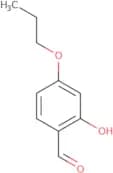
CAS:<p>Versatile small molecule scaffold</p>Formula:C7H14O4SPurity:Min. 95%Molecular weight:194.25 g/mol2-Hydroxy-4-propoxybenzaldehyde
CAS:<p>Versatile small molecule scaffold</p>Formula:C10H12O3Purity:Min. 95%Molecular weight:180.2 g/mol6-methylpyridine-2-carboxamide
CAS:<p>6-Methylpyridine-2-carboxamide is a nitrogenous compound that contains a metal ion. It has an amide group and a carboxylate group, which are both protonated at physiological pH. The compound is soluble in water and alcohols. 6-Methylpyridine-2-carboxamide can be used as an amplifier in the measurement of magnetic resonance imaging (MRI) spectra and nuclear magnetic resonance (NMR) spectra. It has been shown to have transistor properties, which may be due to its ability to transfer an electron from one side of the molecule to the other. 6-Methylpyridine-2-carboxamide also has a high melting point, which makes it suitable for use in high temperature environments such as in the production of semiconductors.</p>Formula:C7H8N2OPurity:Min. 95%Molecular weight:136.15 g/mol2-{[(Pyridin-2-ylmethyl)amino]methyl}phenol
CAS:<p>2-{[(Pyridin-2-ylmethyl)amino]methyl}phenol is a ligand that crystallizes in the monoclinic space group P21/c. The compound crystallizes with two molecules per asymmetric unit, and contains one water molecule per molecule. It has been shown to have cyclic voltammetry, which includes cyclic voltammetry and linear sweep voltammetry. 2-{[(Pyridin-2-ylmethyl)amino]methyl}phenol binds to the perchlorate ion and oxygen atoms coordinate to the nitrogen atoms of the ligand.</p>Formula:C13H14N2OPurity:Min. 95%Molecular weight:214.26 g/molEthyl (2S)-2-hydroxy-3-methylbutanoate
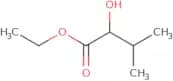
CAS:<p>Versatile small molecule scaffold</p>Formula:C7H14O3Purity:Min. 95%Molecular weight:146.18 g/mol(3S)-3-Hydroxy-4-methylpentanoic acid
CAS:<p>Versatile small molecule scaffold</p>Formula:C6H12O3Purity:Min. 95%Molecular weight:132.16 g/mol1-[3-(Methylthio)phenyl]-5-oxopyrrolidine-3-carboxylic acid
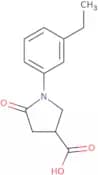
CAS:<p>Versatile small molecule scaffold</p>Formula:C12H13NO3SPurity:Min. 95%Molecular weight:251.3 g/mol1-(3-Ethylphenyl)-5-oxopyrrolidine-3-carboxylic acid
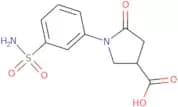
CAS:<p>Versatile small molecule scaffold</p>Formula:C13H15NO3Purity:Min. 95%Molecular weight:233.26 g/mol5-Oxo-1-(3-sulfamoylphenyl)pyrrolidine-3-carboxylic acid
CAS:<p>Versatile small molecule scaffold</p>Formula:C11H12N2O5SPurity:Min. 95%Molecular weight:284.29 g/mol1-(4-Fluoro-3-methylphenyl)-5-oxopyrrolidine-3-carboxylic acid
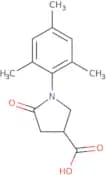
CAS:<p>Versatile small molecule scaffold</p>Formula:C12H12FNO3Purity:Min. 95%Molecular weight:237.23 g/mol5-Oxo-1-(2,4,6-trimethyl-phenyl)-pyrrolidine-3-carboxylic acid
CAS:<p>Versatile small molecule scaffold</p>Formula:C14H17NO3Purity:Min. 95%Molecular weight:247.3 g/mol2,2,6-Trimethyl-2,3-dihydro-4H-chromen-4-one
CAS:<p>Versatile small molecule scaffold</p>Formula:C12H14O2Purity:Min. 95%Molecular weight:190.24 g/molN,N'-Diethyl(dodecylsulfanyl)methanimidamide hydrobromide
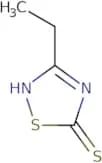
CAS:<p>Versatile small molecule scaffold</p>Formula:C17H37BrN2SPurity:Min. 95%Molecular weight:381.5 g/mol3-Ethyl-1,2,4-thiadiazole-5-thiol
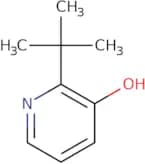
CAS:<p>Versatile small molecule scaffold</p>Formula:C4H6N2S2Purity:Min. 95%Molecular weight:146.2 g/mol2-tert-butylpyridin-3-ol
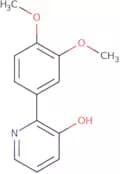
CAS:<p>Versatile small molecule scaffold</p>Formula:C9H13NOPurity:Min. 95%Molecular weight:151.2 g/mol2-(3,4-Dimethoxyphenyl)pyridin-3-ol
CAS:<p>Versatile small molecule scaffold</p>Formula:C13H13NO3Purity:Min. 95%Molecular weight:231.25 g/mol3-(2-Hydroxyethyl)imidazolidine-2,4-dione
CAS:<p>Versatile small molecule scaffold</p>Formula:C5H8N2O3Purity:Min. 95%Molecular weight:144.13 g/molMethyl 2-(2-hydroxyphenyl)-2-methoxyacetate
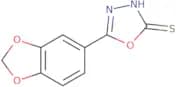
CAS:<p>Versatile small molecule scaffold</p>Formula:C10H12O4Purity:Min. 95%Molecular weight:196.2 g/mol5-(1,3-Dioxaindan-5-yl)-1,3,4-oxadiazole-2-thiol
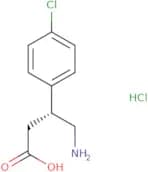
CAS:<p>Versatile small molecule scaffold</p>Formula:C9H6N2O3SPurity:Min. 95%Molecular weight:222.22 g/molR(+)-Baclofen.Hydrochloride
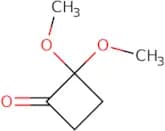
CAS:Controlled Product<p>R(+)-Baclofen.Hydrochloride is a GABA analogue that stimulates the GABA-benzodiazepine receptor complex and produces antinociception. It has been shown to be effective against diabetic neuropathy in rats, with no observed side effects. R(+)-Baclofen.Hydrochloride is used for the treatment of trigeminal neuralgia, butyric acid induced hyperalgesia and chronic constriction injury in rats. The main mechanism of action of R(+)-Baclofen.Hydrochloride is its ability to activate the benzodiazepine receptor by binding to it, which leads to mitochondrial membrane potential depolarization and an increase in the release of gamma-aminobutyric acid (GABA) from neurons.</p>Formula:C10H13Cl2NO2Purity:Min. 95%Molecular weight:250.12 g/mol2,2-Dimethoxycyclobutan-1-one
CAS:<p>Versatile small molecule scaffold</p>Formula:C6H10O3Purity:Min. 95%Molecular weight:130.14 g/mol4-amino-5H,6H,7H-cyclopenta[b]pyridin-2-ol
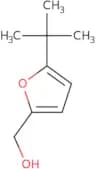
CAS:<p>Versatile small molecule scaffold</p>Formula:C8H10N2OPurity:Min. 95%Molecular weight:150.17 g/mol(5-(tert-Butyl)furan-2-yl)methanol
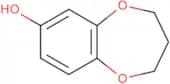
CAS:<p>Versatile small molecule scaffold</p>Formula:C9H14O2Purity:Min. 95%Molecular weight:154.21 g/mol3,4-Dihydro-2H-1,5-benzodioxepin-7-ol
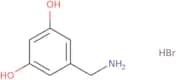
CAS:<p>Versatile small molecule scaffold</p>Formula:C9H10O3Purity:Min. 95%Molecular weight:166.17 g/mol5-(Aminomethyl)benzene-1,3-diol hydrobromide
CAS:<p>Versatile small molecule scaffold</p>Formula:C7H10BrNO2Purity:Min. 95%Molecular weight:220.06 g/mol6-Amino-1H-pyrazolo[3,4-b]pyridine
CAS:<p>6-Amino-1H-pyrazolo[3,4-b]pyridine is a cholesterol inhibitor that belongs to the pyridine derivative class. It has been shown to decrease the level of total cholesterol and low density lipoprotein (LDL) cholesterol in rats with atherosclerosis. This drug inhibits protein synthesis by binding to the active site of HMG-CoA reductase and preventing it from forming an enzyme-substrate complex with cholesteryl ester. 6-Amino-1H-pyrazolo[3,4-b]pyridine is an enantiomeric mixture of two stereoisomers, R and S. The R isomer has been shown to be more potent than the S isomer in inhibiting HMG CoA reductase activity.</p>Formula:C6H6N4Purity:Min. 95%Molecular weight:134.14 g/mol6-chloro-1-methyl-1h-pyrazolo[3,4-b]pyridine
CAS:<p>Versatile small molecule scaffold</p>Formula:C7H6ClN3Purity:Min. 95%Molecular weight:167.6 g/mol6-Chloro-2,4-dimethyl-2H-pyrazolo[3,4-b]pyridine
CAS:<p>Versatile small molecule scaffold</p>Formula:C8H8ClN3Purity:Min. 95%Molecular weight:181.62 g/mol3,5-Dibromoimidazo[1,2-a]pyrazine
CAS:<p>Versatile small molecule scaffold</p>Formula:C6H3Br2N3Purity:Min. 95%Molecular weight:276.92 g/mol5-bromo-[1,2,4]triazolo[4,3-a]pyrazine
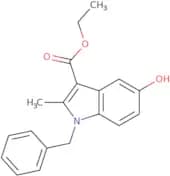
CAS:<p>Versatile small molecule scaffold</p>Formula:C5H3BrN4Purity:Min. 95%Molecular weight:199.01 g/molEthyl 1-benzyl-5-hydroxy-2-methyl-1H-indole-3-carboxylate
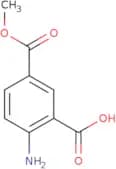
CAS:Controlled Product<p>Versatile small molecule scaffold</p>Formula:C19H19NO3Purity:Min. 95%Molecular weight:309.4 g/mol2-Amino-5-methoxycarbonylbenzoic acid
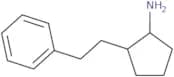
CAS:<p>Versatile small molecule scaffold</p>Formula:C9H9NO4Purity:Min. 95%Molecular weight:195.17 g/mol2-(2-Phenylethyl)cyclopentan-1-amine
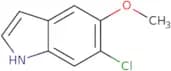
CAS:<p>Versatile small molecule scaffold</p>Formula:C13H19NPurity:Min. 95%Molecular weight:189.3 g/mol6-chloro-5-methoxy-1H-indole
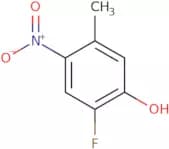
CAS:<p>6-chloro-5-methoxy-1H-indole is an aromatic compound that can be synthesized by the amination of acetyl chloride. This reaction is followed by a borohydride reduction of the imine, and then an acetylation of the resulting alcohol. The synthesis method involves two steps: first, a borohydride reduction of the imine using sodium borohydride; and second, an acetylation with chloral. The final product is purified by distillation and elemental analysis to determine yields.</p>Formula:C9H8NOClPurity:Min. 95%Molecular weight:181.61 g/mol2-Fluoro-5-methyl-4-nitrophenol
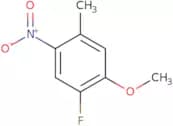
CAS:<p>Versatile small molecule scaffold</p>Formula:C7H6FNO3Purity:Min. 95%Molecular weight:171.13 g/mol1-Fluoro-2-methoxy-4-methyl-5-nitrobenzene
CAS:<p>Versatile small molecule scaffold</p>Formula:C8H8FNO3Purity:Min. 95%Molecular weight:185.15 g/mol2-(bromomethyl)-6-chloropyridine
CAS:<p>2-(bromomethyl)-6-chloropyridine is a ligand that binds to metal atoms. It forms a complex with the metal atom by coordinating with two or more bromine atoms and one or two hydrogens. 2-(Bromomethyl)-6-chloropyridine has been shown to interact with pyridine, x-ray diffraction studies, crystal x-ray diffraction, and ligands in crystal x-ray diffraction studies. The conformation of this compound can be deformed by substituting the methyl group on the chloro group for other moieties. These interactions have been shown using X-Ray diffraction studies and crystal x-ray diffraction studies.</p>Formula:C6H5BrClNPurity:Min. 95%Molecular weight:206.47 g/mol[(6-Chloropyridin-2-yl)methyl]dimethylamine
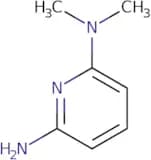
CAS:<p>Versatile small molecule scaffold</p>Formula:C8H11ClN2Purity:Min. 95%Molecular weight:170.64 g/molN2,N2-Dimethylpyridine-2,6-diamine
CAS:<p>Versatile small molecule scaffold</p>Formula:C7H11N3Purity:Min. 95%Molecular weight:137.18 g/mol1-Oxa-7-azaspiro[4.5]decane
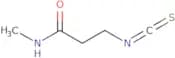
CAS:<p>Oxa-7-azaspiro[4.5]decane is a compound that is structurally related to the neurotransmitter substance P and has been shown to be a potent, selective antagonist of neurokinin (NK) receptors. Oxa-7-azaspiro[4.5]decane inhibits the release of dopamine from rat brain synaptosomes and depresses synapses in the rat hippocampus, an effect that can be reversed by administration of an NK receptor antagonist. This drug also has anti-cancer activity against chemotherapy-induced depression in rats and has been shown to inhibit proliferation in rat hepatocytes. The oxygen atom on the molecule is responsible for its oxidative properties, which are due to its ability to form reactive oxygen species such as superoxide and hydroxyl radicals when it reacts with water or hydrogen peroxide. These reactive oxygen species are able to damage DNA, RNA, enzymes, or other molecules by oxidation.</p>Formula:C8H15NOPurity:Min. 95%Molecular weight:141.21 g/mol3-Isothiocyanato-N-methylpropanamide
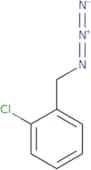
CAS:<p>Versatile small molecule scaffold</p>Formula:C5H8N2OSPurity:Min. 95%Molecular weight:144.2 g/mol1-(Azidomethyl)-2-chlorobenzene
CAS:<p>Versatile small molecule scaffold</p>Formula:C7H6ClN3Purity:Min. 95%Molecular weight:167.59 g/mol[2-Bromo-1-(propan-2-yloxy)ethyl]benzene
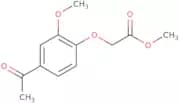
CAS:<p>Versatile small molecule scaffold</p>Formula:C11H15BrOPurity:Min. 95%Molecular weight:243.14 g/molMethyl 2-(4-acetyl-2-methoxyphenoxy)acetate
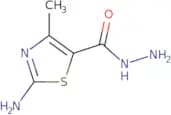
CAS:<p>Versatile small molecule scaffold</p>Formula:C12H14O5Purity:Min. 95%Molecular weight:238.24 g/mol2-Imino-4-methyl-2,3-dihydro-1,3-thiazole-5-carbohydrazide
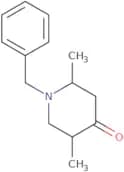
CAS:<p>Versatile small molecule scaffold</p>Formula:C5H8N4OSPurity:Min. 95%Molecular weight:172.21 g/mol1-Benzyl-2,5-dimethylpiperidin-4-one
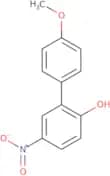
CAS:<p>Versatile small molecule scaffold</p>Formula:C14H19NOPurity:Min. 95%Molecular weight:217.31 g/mol2-(4-Methoxyphenyl)-4-nitrophenol
CAS:<p>Versatile small molecule scaffold</p>Formula:C13H11NO4Purity:Min. 95%Molecular weight:245.23 g/mol2-(7,7-Dimethylbicyclo[2.2.1]heptan-1-yl)acetic acid
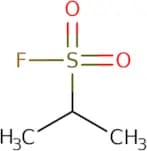
CAS:<p>Versatile small molecule scaffold</p>Formula:C11H18O2Purity:Min. 95%Molecular weight:182.26 g/molPropane-2-sulfonyl fluoride
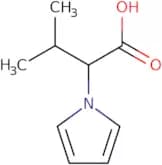
CAS:<p>Propane-2-sulfonyl fluoride is a fluorinating agent that has been used to study the structure of nucleic acids. It is also used in the preparation of sulfones and sulfuryls. In Alzheimer's disease, Propane-2-sulfonyl fluoride has been shown to crosslink the amyloid beta peptide and inhibit the formation of fibrils. The effective dose is determined by its therapeutic value as a treatment for Alzheimer's disease.</p>Formula:C3H7FO2SPurity:Min. 95%Molecular weight:126.15 g/mol(2S)-3-Methyl-2-(1H-pyrrol-1-yl)butanoic acid
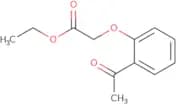
CAS:<p>Versatile small molecule scaffold</p>Formula:C9H13NO2Purity:Min. 95%Molecular weight:167.2 g/molEthyl 2-(2-acetylphenoxy)acetate
CAS:<p>Versatile small molecule scaffold</p>Formula:C12H14O4Purity:Min. 95%Molecular weight:222.24 g/mol3-(4-Methoxyphenoxy)propanenitrile
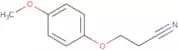
CAS:<p>Versatile small molecule scaffold</p>Formula:C10H11NO2Purity:Min. 95%Molecular weight:177.2 g/mol(5-Methylthiophen-2-yl)methanol
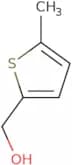
CAS:<p>5-Methylthiophen-2-yl)methanol is a furan that contains a sulfo group. It is an electrophilic compound with mechanisms and exchangers that are still being studied. 5-Methylthiophen-2-yl)methanol reacts with thiophene to form the sulfone, which is then converted to the methylene by alkylation. The reaction of 5-methylthiophen-2-yl)methanol with pyrrole leads to the formation of the heterocycle, which can be oxidized to form the corresponding carboxylic acid. This compound also has been shown to react with formalin and acidic conditions, as well as being able to be oxidized into formaldehyde.</p>Formula:C6H8OSPurity:Min. 95%Molecular weight:128.19 g/mol3-(Pyridin-3-yl)cyclohex-2-en-1-one
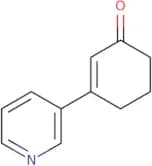
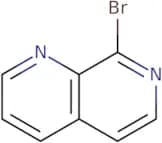
CAS:<p>Versatile small molecule scaffold</p>Formula:C11H11NOPurity:Min. 95%Molecular weight:173.21 g/mol8-Bromo-1,7-naphthyridine
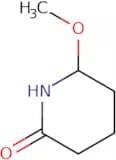
CAS:<p>Versatile small molecule scaffold</p>Formula:C8H5BrN2Purity:Min. 95%Molecular weight:209.04 g/mol6-Methoxypiperidin-2-one
CAS:<p>Versatile small molecule scaffold</p>Formula:C6H11NO2Purity:Min. 95%Molecular weight:129.16 g/mol2-{7,7-Dimethylbicyclo[2.2.1]heptan-1-yl}ethan-1-amine hydrochloride
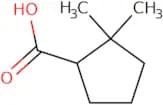
CAS:<p>Versatile small molecule scaffold</p>Formula:C11H22ClNPurity:Min. 95%Molecular weight:203.75 g/mol2,2-Dimethylcyclopentane-1-carboxylic acid
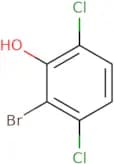
CAS:<p>Versatile small molecule scaffold</p>Formula:C8H14O2Purity:Min. 95%Molecular weight:142.2 g/mol2-Bromo-3,6-dichlorophenol
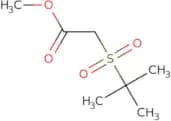
CAS:<p>Versatile small molecule scaffold</p>Formula:C6H3BrCl2OPurity:Min. 95%Molecular weight:241.89 g/molMethyl 2-(2-methylpropane-2-sulfonyl)acetate
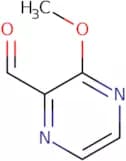
CAS:<p>Versatile small molecule scaffold</p>Formula:C7H14O4SPurity:Min. 95%Molecular weight:194.25 g/mol3-Methoxypyrazine-2-carbaldehyde
CAS:<p>3-Methoxypyrazine-2-carbaldehyde (3MP) is a synthetic, biomimetic molecule that can be produced through a biomimetic synthesis. It has been shown to be an effective inhibitor of the enzyme schischkiniin. 3MP also has bidirectional reactivity and can act as both a nucleophile and electrophile. 3MP thermally reacts with dicarbaldehydes to form the natural product pyrazinyl and it can also react with amides to form amidations. 3MP has been shown to have antimicrobial properties against Staphylococcus aureus, Bacillus subtilis, Streptococcus pneumoniae, and Pseudomonas aeruginosa. The sequence of this molecule is shown below:</p>Formula:C6H6N2O2Purity:Min. 95%Molecular weight:138.12 g/mol1-Methyl-4-[4-(trifluoromethyl)-1H-imidazol-2-yl]-1H-pyrazole
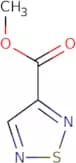
CAS:<p>Versatile small molecule scaffold</p>Formula:C8H7F3N4Purity:Min. 95%Molecular weight:216.16 g/molMethyl 1,2,5-thiadiazole-3-carboxylate
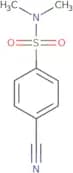
CAS:<p>Versatile small molecule scaffold</p>Formula:C4H4N2O2SPurity:Min. 95%Molecular weight:144.15 g/mol4-Cyano-N,N-dimethylbenzene-1-sulfonamide
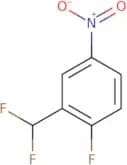
CAS:<p>Versatile small molecule scaffold</p>Formula:C9H10N2O2SPurity:Min. 95%Molecular weight:210.26 g/mol2-(Difluoromethyl)-1-fluoro-4-nitrobenzene
CAS:<p>Versatile small molecule scaffold</p>Formula:C7H4F3NO2Purity:Min. 95%Molecular weight:191.11 g/mol4-(Prop-2-en-1-yloxy)butanal
CAS:<p>Versatile small molecule scaffold</p>Formula:C7H12O2Purity:Min. 95%Molecular weight:128.2 g/mol2-Aza-bicyclo[2.2.1]hept-5-ene hydrochloride
CAS:<p>Versatile small molecule scaffold</p>Formula:C6H10ClNPurity:Min. 95%Molecular weight:131.6 g/mol2-({4-[(2-Hydroxyethyl)amino]phenyl}amino)ethan-1-ol
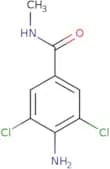
CAS:<p>Versatile small molecule scaffold</p>Formula:C10H16N2O2Purity:Min. 95%Molecular weight:196.25 g/mol4-Amino-3,5-dichloro-N-methylbenzamide
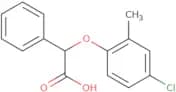
CAS:<p>Versatile small molecule scaffold</p>Formula:C8H8Cl2N2OPurity:Min. 95%Molecular weight:219.06 g/mol2-(4-Chloro-2-methylphenoxy)-2-phenylacetic acid
CAS:<p>Versatile small molecule scaffold</p>Formula:C15H13ClO3Purity:Min. 95%Molecular weight:276.71 g/mol(2S)-2-({Thieno[2,3-d]pyrimidin-4-yl}amino)propanoic acid
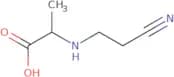
CAS:<p>Versatile small molecule scaffold</p>Formula:C9H9N3O2SPurity:Min. 95%Molecular weight:223.25 g/mol2-(2-Cyano-ethylamino)-propionic acid
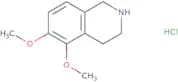
CAS:<p>Versatile small molecule scaffold</p>Formula:C6H10N2O2Purity:Min. 95%Molecular weight:142.16 g/mol5,6-Dimethoxy-1,2,3,4-tetrahydroisoquinoline hydrochloride
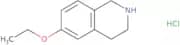
CAS:<p>Versatile small molecule scaffold</p>Formula:C11H16ClNO2Purity:Min. 95%Molecular weight:229.7 g/mol6-Ethoxy-1,2,3,4-tetrahydroisoquinoline hydrochloride
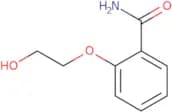
CAS:<p>Versatile small molecule scaffold</p>Formula:C11H16ClNOPurity:Min. 95%Molecular weight:213.7 g/mol2-(2-Hydroxyethoxy)benzamide
CAS:<p>2-(2-Hydroxyethoxy)benzamide is a dopamine receptor agonist that inhibits 5-HT3 receptors in vitro. It is an orally active drug that has been shown to have a good safety profile in humans. 2-(2-Hydroxyethoxy)benzamide has also been shown to be a 5-HT4 receptor antagonist, which may account for the lack of serotonin syndrome in animal studies. This drug can cause intestinal contractions and nausea, and may also cause symptoms such as headache, dizziness, and insomnia. Levosulpiride is a selective 5-HT4 receptor agonist that may be more effective than 2-(2-Hydroxyethoxy)benzamide at alleviating the gastrointestinal side effects of this drug.</p>Formula:C9H11NO3Purity:Min. 95%Molecular weight:181.19 g/molEthyl 4-oxo-2-sulfanylidene-1,3-thiazolidine-5-carboxylate
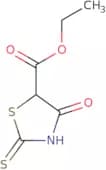
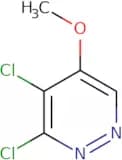
CAS:<p>Versatile small molecule scaffold</p>Formula:C6H7NO3S2Purity:Min. 95%Molecular weight:205.3 g/mol3,4-Dichloro-5-methoxypyridazine
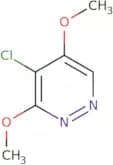
CAS:<p>Versatile small molecule scaffold</p>Formula:C5H4Cl2N2OPurity:Min. 95%Molecular weight:179.01 g/mol4-Chloro-3,5-dimethoxypyridazine
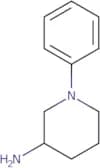
CAS:<p>4-Chloro-3,5-dimethoxypyridazine is a tautomeric compound that has been synthesized and characterized. The form of the molecule depends on the pH. At low pH, it exists in the form of an ion with a negative charge. When neutralized, it exists as a protonated molecule and at high pH, it exists as an ion with a positive charge. 4-Chloro-3,5-dimethoxypyridazine has been used to synthesise analogues with improved properties.</p>Formula:C6H7ClN2O2Purity:Min. 95%Molecular weight:174.58 g/mol1-Phenylpiperidin-3-amine
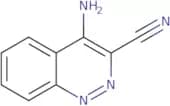
CAS:<p>Versatile small molecule scaffold</p>Formula:C11H16N2Purity:Min. 95%Molecular weight:176.26 g/mol4-Aminocinnoline-3-carbonitrile
CAS:<p>Versatile small molecule scaffold</p>Formula:C9H6N4Purity:Min. 95%Molecular weight:170.17 g/mol[2-(3,4-Dimethoxy-phenyl)-ethyl]-phenethyl-amine
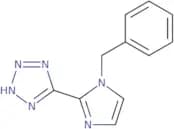
CAS:<p>Versatile small molecule scaffold</p>Formula:C18H23NO2Purity:Min. 95%Molecular weight:285.4 g/mol5-(1-Benzyl-1H-imidazol-2-yl)-1H-1,2,3,4-tetrazole
CAS:<p>5-(1-Benzyl-1H-imidazol-2-yl)-1H-1,2,3,4-tetrazole is a diagnostic agent that can be used for iontophoresis. It is insoluble in water and therefore cannot be administered by injection. 5-(1-Benzyl-1H-imidazol-2-yl)-1H-1,2,3,4-tetrazole is reconstituted with an antisolvent or diluent before use as an iontophoretic drug. It is hydrophobic and binds to the skin surface during iontophoresis, allowing for the passage of ions through the skin.</p>Formula:C11H10N6Purity:Min. 95%Molecular weight:226.24 g/mol2-(1-Methyl-1H-benzoimidazol-2-yl)-ethylamine dihydrochloride
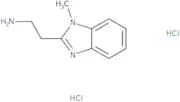
CAS:Controlled Product<p>Versatile small molecule scaffold</p>Formula:C10H15Cl2N3Purity:Min. 95%Molecular weight:248.15 g/mol3-(1,1-Dioxido-2-isothiazolidinyl)benzoic Acid
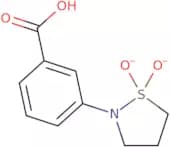
CAS:<p>Versatile small molecule scaffold</p>Formula:C10H11NO4SPurity:Min. 95%Molecular weight:241.26 g/mol5-(Bromomethyl)-3-phenyl-1,2,4-thiadiazole
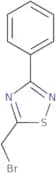
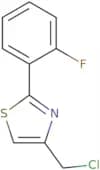
CAS:<p>Versatile small molecule scaffold</p>Formula:C9H7BrN2SPurity:Min. 95%Molecular weight:255.14 g/mol4-(Chloromethyl)-2-(2-fluorophenyl)-1,3-thiazole
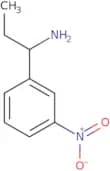
CAS:<p>Versatile small molecule scaffold</p>Formula:C10H7ClFNSPurity:Min. 95%Molecular weight:227.69 g/mol1-(3-Nitrophenyl)propan-1-amine
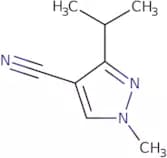
CAS:<p>Versatile small molecule scaffold</p>Formula:C9H12N2O2Purity:Min. 95%Molecular weight:180.2 g/mol1-Methyl-3-(propan-2-yl)-1H-pyrazole-4-carbonitrile
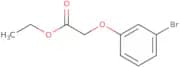
CAS:<p>1-Methyl-3-(propan-2-yl)-1H-pyrazole-4-carbonitrile (1MP) is a synthetic molecule that belongs to the class of linear, generalizes and heterocyclic compounds. It has biological activity and is six-membered in structure. 1MP has been shown to have nucleophilic properties, which may be due to its noncyclic nature.</p>Formula:C8H11N3Purity:Min. 95%Molecular weight:149.19 g/molEthyl 2-(3-bromophenoxy)acetate
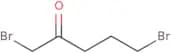
CAS:<p>Versatile small molecule scaffold</p>Formula:C10H11BrO3Purity:Min. 95%Molecular weight:259.1 g/mol1,5-Dibromopentan-2-one
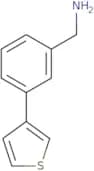
CAS:<p>Versatile small molecule scaffold</p>Formula:C5H8Br2OPurity:Min. 95%Molecular weight:243.92 g/mol(3-Thien-3-ylphenyl)methylamine
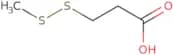
CAS:<p>Versatile small molecule scaffold</p>Formula:C11H11NSPurity:Min. 95%Molecular weight:189.28 g/mol3-(2-Methyldisulfanyl)propanoic acid
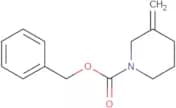
CAS:<p>Versatile small molecule scaffold</p>Formula:C4H8O2S2Purity:Min. 95%Molecular weight:152.2 g/molbenzyl 3-methylenepiperidine-1-carboxylate
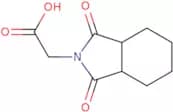
CAS:<p>Versatile small molecule scaffold</p>Formula:C14H17NO2Purity:Min. 95%Molecular weight:231.3 g/mol2-(1,3-Dioxo-octahydro-1H-isoindol-2-yl)acetic acid
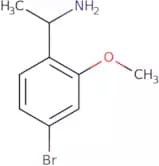
CAS:<p>Versatile small molecule scaffold</p>Formula:C10H13NO4Purity:Min. 95%Molecular weight:211.21 g/mol1-(4-bromo-2-methoxyphenyl)ethan-1-amine
CAS:<p>Versatile small molecule scaffold</p>Formula:C9H12BrNOPurity:Min. 95%Molecular weight:230.1 g/mol7-Methyl-[1,2,4]triazolo[1,5-a]pyridin-5-ol
CAS:<p>Versatile small molecule scaffold</p>Formula:C7H7N3OPurity:Min. 95%Molecular weight:149.15 g/mol2-Chloromethyl-5-cyclopropyl-1,3,4-thiadiazole
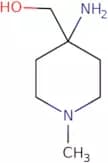
CAS:<p>Versatile small molecule scaffold</p>Formula:C6H7ClN2SPurity:Min. 95%Molecular weight:174.65 g/mol(4-Amino-1-methyl-piperidin-4-yl)-methanol
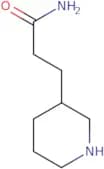
CAS:<p>Versatile small molecule scaffold</p>Formula:C7H16N2OPurity:Min. 95%Molecular weight:144.21 g/mol3-(Piperidin-3-yl)propanamide
CAS:<p>Versatile small molecule scaffold</p>Formula:C8H16N2OPurity:Min. 95%Molecular weight:156.23 g/mol



![2-{[(Pyridin-2-ylmethyl)amino]methyl}phenol](/_next/image/?url=https%3A%2Fstatic.cymitquimica.com%2Fproducts%2F3D%2Fthumb-webp%2FNCA67168.webp&w=3840&q=75)

![1-[3-(Methylthio)phenyl]-5-oxopyrrolidine-3-carboxylic acid](/_next/image/?url=https%3A%2Fstatic.cymitquimica.com%2Fproducts%2F3D%2Fthumb-webp%2FNCA67452.webp&w=3840&q=75)





![4-amino-5H,6H,7H-cyclopenta[b]pyridin-2-ol](/_next/image/?url=https%3A%2Fstatic.cymitquimica.com%2Fproducts%2F3D%2Fthumb-webp%2FNCA70454.webp&w=3840&q=75)
![6-Amino-1H-pyrazolo[3,4-b]pyridine](/_next/image/?url=https%3A%2Fstatic.cymitquimica.com%2Fproducts%2F3D%2Fthumb-webp%2FNCA72549.webp&w=3840&q=75)
![6-chloro-1-methyl-1h-pyrazolo[3,4-b]pyridine](/_next/image/?url=https%3A%2Fstatic.cymitquimica.com%2Fproducts%2F3D%2Fthumb-webp%2FNCA72552.webp&w=3840&q=75)
![6-Chloro-2,4-dimethyl-2H-pyrazolo[3,4-b]pyridine](/_next/image/?url=https%3A%2Fstatic.cymitquimica.com%2Fproducts%2F3D%2Fthumb-webp%2FNCA72554.webp&w=3840&q=75)
![3,5-Dibromoimidazo[1,2-a]pyrazine](/_next/image/?url=https%3A%2Fstatic.cymitquimica.com%2Fproducts%2F3D%2Fthumb-webp%2FNCA74421.webp&w=3840&q=75)
![5-bromo-[1,2,4]triazolo[4,3-a]pyrazine](/_next/image/?url=https%3A%2Fstatic.cymitquimica.com%2Fproducts%2F3D%2Fthumb-webp%2FNCA74429.webp&w=3840&q=75)
![[(6-Chloropyridin-2-yl)methyl]dimethylamine](/_next/image/?url=https%3A%2Fstatic.cymitquimica.com%2Fproducts%2F3D%2Fthumb-webp%2FNCA76380.webp&w=3840&q=75)
![1-Oxa-7-azaspiro[4.5]decane](/_next/image/?url=https%3A%2Fstatic.cymitquimica.com%2Fproducts%2F3D%2Fthumb-webp%2FNCA76656.webp&w=3840&q=75)
![[2-Bromo-1-(propan-2-yloxy)ethyl]benzene](/_next/image/?url=https%3A%2Fstatic.cymitquimica.com%2Fproducts%2F3D%2Fthumb-webp%2FNCA78556.webp&w=3840&q=75)
![2-(7,7-Dimethylbicyclo[2.2.1]heptan-1-yl)acetic acid](/_next/image/?url=https%3A%2Fstatic.cymitquimica.com%2Fproducts%2F3D%2Fthumb-webp%2FNCA80563.webp&w=3840&q=75)
![2-{7,7-Dimethylbicyclo[2.2.1]heptan-1-yl}ethan-1-amine hydrochloride](/_next/image/?url=https%3A%2Fstatic.cymitquimica.com%2Fproducts%2F3D%2Fthumb-webp%2FNCA85463.webp&w=3840&q=75)
![1-Methyl-4-[4-(trifluoromethyl)-1H-imidazol-2-yl]-1H-pyrazole](/_next/image/?url=https%3A%2Fstatic.cymitquimica.com%2Fproducts%2F3D%2Fthumb-webp%2FNCA87498.webp&w=3840&q=75)

![2-Aza-bicyclo[2.2.1]hept-5-ene hydrochloride](/_next/image/?url=https%3A%2Fstatic.cymitquimica.com%2Fproducts%2F3D%2Fthumb-webp%2FNCA88216.webp&w=3840&q=75)
![2-({4-[(2-Hydroxyethyl)amino]phenyl}amino)ethan-1-ol](/_next/image/?url=https%3A%2Fstatic.cymitquimica.com%2Fproducts%2F3D%2Fthumb-webp%2FNCA88674.webp&w=3840&q=75)
![(2S)-2-({Thieno[2,3-d]pyrimidin-4-yl}amino)propanoic acid](/_next/image/?url=https%3A%2Fstatic.cymitquimica.com%2Fproducts%2F3D%2Fthumb-webp%2FNCA89563.webp&w=3840&q=75)
![[2-(3,4-Dimethoxy-phenyl)-ethyl]-phenethyl-amine](/_next/image/?url=https%3A%2Fstatic.cymitquimica.com%2Fproducts%2F3D%2Fthumb-webp%2FNCA92547.webp&w=3840&q=75)
![7-Methyl-[1,2,4]triazolo[1,5-a]pyridin-5-ol](/_next/image/?url=https%3A%2Fstatic.cymitquimica.com%2Fproducts%2F3D%2Fthumb-webp%2FNFA28210.webp&w=3840&q=75)