Building Blocks
This section contains fundamental products for the synthesis of organic and biological compounds. Building blocks are the essential starting materials used to construct complex molecules through various chemical reactions. They play a critical role in drug discovery, material science, and chemical research. At CymitQuimica, we offer a diverse range of high-quality building blocks to support your innovative research and industrial projects, ensuring you have the essential components for successful synthesis.
Subcategories of "Building Blocks"
- Boronic Acids & Boronic Acid Derivatives(5,756 products)
- Chiral Building Blocks(1,242 products)
- Hydrocarbon Building Blocks(6,093 products)
- Organic Building Blocks(60,519 products)
Found 195533 products of "Building Blocks"
Sort by
Purity (%)
0
100
|
0
|
50
|
90
|
95
|
100
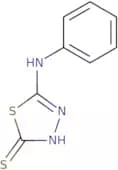
5-(Phenylamino)-1,3,4-thiadiazole-2-thiol
CAS:<p>Versatile small molecule scaffold</p>Formula:C8H7N3S2Purity:Min. 95%Molecular weight:209.3 g/molN,N'-Dibenzylpropanediamide
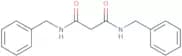
CAS:<p>Versatile small molecule scaffold</p>Formula:C17H18N2O2Purity:Min. 95%Molecular weight:282.34 g/molN,N'-Dicyclohexylpropanediamide
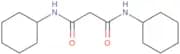
CAS:<p>Versatile small molecule scaffold</p>Formula:C15H26N2O2Purity:Min. 95%Molecular weight:266.38 g/mol1,3-Bis(morpholin-4-yl)propane-1,3-dione
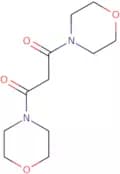
CAS:<p>Versatile small molecule scaffold</p>Formula:C11H18N2O4Purity:Min. 95%Molecular weight:242.27 g/molAcetic acid, 2-cyano-, 2-methoxyethyl ester
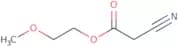
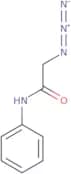
CAS:<p>2-Cyano-2-methoxyethyl acetic acid is a reactive organic solvent that has a boiling point of 152°C. It is soluble in water and has an acidic pH. This compound is used as a monomer, and is also used as an alkylating agent for the synthesis of polymers. 2-Cyano-2-methoxyethyl acetic acid can be copolymerized with other compounds to create a variety of products with different properties. The reaction time depends on the type of product being synthesized, but it typically takes up to 48 hours to complete the reaction. 2-Cyano-2-methoxyethyl acetic acid can react with c1–6 alkyl groups, which may affect its solubility. This compound has a high degree of configurability, which may allow it to be used in more chemical reactions than other organic solvents.</p>Formula:C6H9NO3Purity:Min. 95%Molecular weight:143.14 g/mol2-Azido-N-phenylacetamide
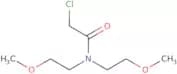
CAS:<p>2-Azido-N-phenylacetamide is an anticancer drug that inhibits cancer cell growth. It is a noncompetitive inhibitor of tyrosine kinases, which are enzymes that control the cellular division cycle. The inhibition of tyrosine kinases prevents the activation of phosphatidylinositol 3-kinase (PI3K). This leads to a decrease in the production of proteins such as Bcl-2 and Bcl-xL, which are responsible for the survival and proliferation of cancer cells. 2-Azido-N-phenylacetamide has been shown to be active against human lung cancer cells in vitro and has also been used to treat bacterial infections. The molecular electrostatic potentials of this compound indicate that it may be an effective antibacterial agent due to its carbonyl group.</p>Formula:C8H8N4OPurity:Min. 95%Molecular weight:176.18 g/mol2-Chloro-N,N-bis(2-methoxyethyl)acetamide
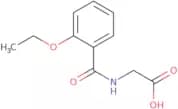
CAS:<p>Versatile small molecule scaffold</p>Formula:C8H16ClNO3Purity:Min. 95%Molecular weight:209.67 g/mol(2-Ethoxy-benzoylamino)-acetic acid
CAS:<p>Versatile small molecule scaffold</p>Formula:C11H13NO4Purity:Min. 95%Molecular weight:223.22 g/mol2-Chloro-N-[3-(propan-2-yloxy)propyl]acetamide
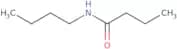
CAS:<p>Versatile small molecule scaffold</p>Formula:C8H16ClNO2Purity:Min. 95%Molecular weight:193.67 g/molN-Butylbutanamide
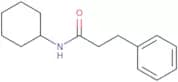
CAS:<p>N-Butylbutanamide is a colorless, volatile liquid that has a distinctive odor. It is used as an intermediate in the production of other chemicals and a solvent for coatings and adhesives. N-Butylbutanamide has been shown to react with amines and amides with high concentrations of primary alcohols to form diazirine. Diazirine can be detected by UV spectroscopy at 254 nm and by mass spectrometry. N-Butylbutanamide can be analyzed using on-line liquid chromatography or GCMS.</p>Formula:C8H17NOPurity:Min. 95%Molecular weight:143.23 g/molN-Cyclohexyl-3-phenylpropanamide
CAS:<p>Versatile small molecule scaffold</p>Formula:C15H21NOPurity:Min. 95%Molecular weight:231.33 g/molrac-(4aR,7aR)-Octahydro-1H-cyclopenta[C]pyridine
CAS:<p>Versatile small molecule scaffold</p>Formula:C8H15NPurity:Min. 95%Molecular weight:125.2 g/mol2-(2-Chlorophenyl)acetamide
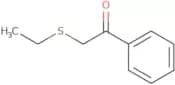
CAS:<p>2-(2-Chlorophenyl)acetamide is a trisubstituted acetamide that has been shown to bind to the benzodiazepine receptor. This binding prevents the binding of GABA to the receptor and inhibits the ion channel, which leads to increased cell membrane permeability and cell death. 2-(2-Chlorophenyl)acetamide also binds to the anhydrase II isoform, which causes inhibition of carbonic anhydrase activity. This in turn leads to increased levels of carbon dioxide in some tissues, such as those found in the eye, leading to irritation and pain. The compound has also been shown to inhibit mitogen-activated protein kinase (MAPK), which is a protein involved in cellular signalling pathways that regulate growth and differentiation. It does this by preventing phosphorylation of MAPK at tyrosine residues.</p>Formula:C8H8ClNOPurity:Min. 95%Molecular weight:169.61 g/mol2-(Ethylsulfanyl)-1-phenylethan-1-one
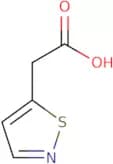
CAS:<p>Versatile small molecule scaffold</p>Formula:C10H12OSPurity:Min. 95%Molecular weight:180.27 g/mol2-(1,2-Thiazol-5-yl)acetic acid
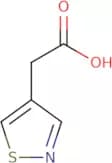
CAS:<p>Versatile small molecule scaffold</p>Formula:C5H5NO2SPurity:Min. 95%Molecular weight:143.17 g/mol2-(1,2-Thiazol-4-yl)acetic acid
CAS:<p>Versatile small molecule scaffold</p>Formula:C5H5NO2SPurity:Min. 95%Molecular weight:143.17 g/mol2,3,3-Trichloroprop-2-en-1-amine hydrochloride
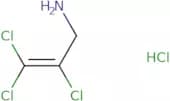
CAS:<p>Versatile small molecule scaffold</p>Formula:C3H5Cl4NPurity:Min. 95%Molecular weight:196.9 g/molIsophorone Oxide
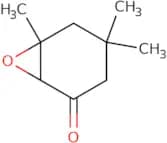
CAS:<p>Isophorone Oxide is a molecule that contains a carbonyl group. It is unreactive and does not form hydrogen bonds or react with hydroxy groups. Isophorone oxide has two reactive groups, the hydroxyl group and amido group, which are responsible for its chemical properties. The electron reduction of the carbonyl group can be achieved by using deionized water as a reducing agent. In solution form, Isophorone Oxide is colorless to light yellow liquid with a molecular weight of 144.16 g/mol.</p>Formula:C9H14O2Purity:Min. 95%Molecular weight:154.21 g/mol2-Oxo-2-{4,7,7-trimethyl-3-oxobicyclo[2.2.1]heptan-2-yl}acetic acid
CAS:<p>Versatile small molecule scaffold</p>Formula:C12H16O4Purity:Min. 95%Molecular weight:224.25 g/mol({1,7,7-Trimethylbicyclo[2.2.1]heptan-2-ylidene}amino)urea
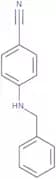
CAS:<p>Versatile small molecule scaffold</p>Formula:C11H19N3OPurity:Min. 95%Molecular weight:209.29 g/mol4-(Benzylamino)benzonitrile
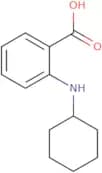
CAS:<p>Versatile small molecule scaffold</p>Formula:C14H12N2Purity:Min. 95%Molecular weight:208.26 g/mol2-(Cyclohexylamino)benzoic acid
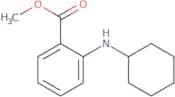
CAS:<p>2-(Cyclohexylamino)benzoic acid is a chemical compound that reacts with aryl halides to form cyclic amines. The reaction proceeds by the formation of an intermediate, which is then hydrolyzed and decarboxylated to form the product. This reaction can be used for the synthesis of amines from either aromatic or aliphatic aryl chlorides. This process is often used in screening experiments because it has been shown to be selective for aryl halides and yields high yields. The addition of cross-coupling reactions can also yield high yields and produce desired products with good chemo- and regioselectivity. 2-(Cyclohexylamino)benzoic acid is also useful for the synthesis of hyperpolarized molecules for imaging studies, as well as in ultrafast experiments where transfer rates are important.</p>Formula:C13H17NO2Purity:Min. 95%Molecular weight:219.28 g/molMethyl 2-(cyclohexylamino)benzoate
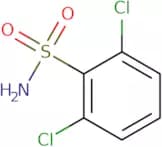
CAS:<p>Versatile small molecule scaffold</p>Formula:C14H19NO2Purity:Min. 95%Molecular weight:233.31 g/mol2,6-Dichlorobenzenesulfonamide
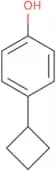
CAS:<p>Versatile small molecule scaffold</p>Formula:C6H5Cl2NO2SPurity:Min. 95%Molecular weight:226.08 g/mol4-Cyclobutylphenol
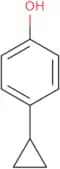
CAS:<p>Versatile small molecule scaffold</p>Formula:C10H12OPurity:Min. 95%Molecular weight:148.2 g/mol4-Cyclopropylphenol
CAS:<p>4-Cyclopropylphenol is an antimicrobial agent that belongs to the group of phenols. It has been shown to have mutagenic properties and is used in chemical studies. 4-Cyclopropylphenol is activated by reaction with a benzene molecule, which binds to the functional groups on the phenol, forming a covalent bond. This activation process requires an input of energy in order to break the benzene ring and form the reactive species. The elimination of 4-cyclopropylfhenol from solution also requires energy input as it leaves as a gas. The mutagenic properties of 4-cyclopropylfhenol are due to its ability for interaction with DNA, which is based on thermodynamic and kinetic theory.</p>Formula:C9H10OPurity:Min. 95%Molecular weight:134.18 g/mol1-Chlorohex-5-en-2-ol
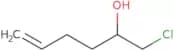
CAS:<p>Versatile small molecule scaffold</p>Formula:C6H11ClOPurity:Min. 95%Molecular weight:134.6 g/mol3-Chloro-5-nitroisoquinoline
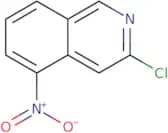
CAS:<p>3-Chloro-5-nitroisoquinoline is a heterocyclic compound that belongs to the isoquinoline class. It can be synthesized by reacting 3,4,5-trichlorobenzaldehyde with ammonia and sodium nitrite in an aqueous solution. The synthesis of this compound has been shown to produce two isomers, thiazolo and thiazole. Spectroscopic data for this compound have been obtained in the solid state and in solution. The spectra show strong absorptions at about 250 nm and at about 590 nm. The heterocyclic ring has a nitrogen atom as one of its members, which is responsible for the absorption at around 250 nm. The absorption at 590 nm is due to the presence of an aromatic ring system.</p>Formula:C9H5ClN2O2Purity:Min. 95%Molecular weight:208.6 g/mol2,3-Dihydroxypropane-1-sulfonic acid
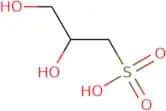
CAS:<p>2,3-Dihydroxypropane-1-sulfonic acid is a hydrophilic monomer that is used to produce polyesters. It has an allyl group that reacts with triphosgene to form a conjugate acid. This acid reacts with the hydroxyl groups on the polyester to create ester bonds. 2,3-Dihydroxypropane-1-sulfonic acid is copolymerized with other hydrophilic monomers such as ethylene glycol to produce a water resistant coating for metal surfaces or plastics. 2,3-Dihydroxypropane-1-sulfonic acid also has emulsifying properties and can be used in conjunction with sodium salts to create emulsions in paints and coatings. The hydrogen elimination reaction of 2,3-dihydroxypropane-1-sulfonic acid produces cyclic sulfamic acid and its derivative, which are used as radiation</p>Formula:C3H8O5SPurity:Min. 95%Molecular weight:156.16 g/molEthyl 3-propylhex-2-enoate
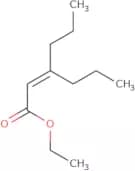
CAS:<p>Ethyl 3-propylhex-2-enoate is an allylic alcohol that is used as a building block in organic synthesis. It is obtained by the Wittig reaction of allyl bromide with a terminal alkyne. The wittig reaction first produces the allylic acetal, which then reacts with dimethyl acetal to produce ethyl 3-propylhex-2-enoate. Ethyl 3-propylhex-2-enoate may be used in the production of carbonyl compounds, carbonyl, and acetals.</p>Formula:C11H20O2Purity:Min. 95%Molecular weight:184.27 g/mol6-Sulfanylpyridine-3-sulfonamide
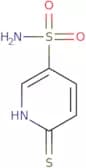
CAS:<p>Versatile small molecule scaffold</p>Formula:C5H6N2O2S2Purity:Min. 95%Molecular weight:190.2 g/mol8-(Tosylamino)quinoline
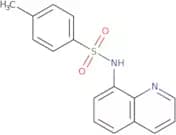
CAS:<p>8-(Tosylamino)quinoline is a quinoline derivative that inhibits the production of tumor necrosis factor-α (TNF-α) and other inflammatory mediators. 8-(Tosylamino)quinoline has been shown to inhibit the proliferation of muscle cells, which may be due to its anti-inflammatory properties. This drug also suppresses genes that are involved in cell growth and signaling, such as suppressor genes. 8-(Tosylamino)quinoline binds copper ions, which prevents the formation of reactive oxygen species and blocks the activation of nuclear factor kappa beta (NFκB), which regulates immune responses. It also inhibits autophagy, a process by which cells destroy their own intracellular contents during periods of starvation or stress.</p>Formula:C16H14N2O2SPurity:Min. 95%Molecular weight:298.36 g/mol3,3-Dimethylbutane-1-sulfonyl chloride
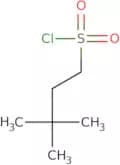
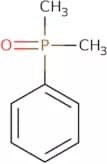
CAS:<p>Versatile small molecule scaffold</p>Formula:C6H13ClO2SPurity:Min. 95%Molecular weight:184.69 g/mol(Dimethylphosphoryl)benzene
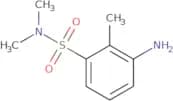
CAS:<p>Dimethylphosphorylbenzene is an inorganic compound that is a phosphine, a class of organometallic compounds. It has been shown to have a catalytic effect on the reaction between acyl halides and carbon disulphide. Dimethylphosphorylbenzene has also been studied for its use as a polymerization initiator in lithography. Its light-emitting properties are due to the presence of a hydroxyl group and its ability to undergo photochemical reactions following exposure to light.</p>Formula:C8H11OPPurity:Min. 95%Molecular weight:154.15 g/mol3-Amino-N,N,2-trimethylbenzene-1-sulfonamide
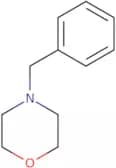
CAS:<p>Versatile small molecule scaffold</p>Formula:C9H14N2O2SPurity:Min. 95%Molecular weight:214.29 g/mol4-Benzylmorpholine
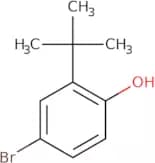
CAS:<p>4-Benzylmorpholine is a solvent that is used in organic chemistry as a reactant and as a chemical intermediate. It has been shown to inhibit the activity of cytochrome P450 enzymes in human liver microsomes, which are enzymes that metabolize xenobiotics. 4-Benzylmorpholine binds to the heme moiety of these enzymes, preventing them from carrying out their function. This inhibition of p-450 enzymes leads to an increase in the levels of reactive oxygen species and lipid peroxidation, which may be responsible for its toxicity. The binding site for 4-benzylmorpholine on p-450 enzymes has been identified using kinetic analysis and NMR spectroscopy as a hydrogen bond between the amine group and the hydroxyl group at C3 on the ring.</p>Formula:C11H15NOPurity:Min. 95%Molecular weight:177.25 g/mol4-Bromo-2-tert-butylphenol
CAS:<p>4-Bromo-2-tert-butylphenol is a fungicide that has been shown to have fungistatic activity against Aspergillus and other fungi. It has been shown to be effective for the elimination of fungal growth on plant material, such as fruit and vegetables. 4-Bromo-2-tert-butylphenol inhibits the growth of fungi by altering the pH levels in the environment, which results in a decrease in fungal growth. Fungi are killed by methylation when they come into contact with this chemical. This compound is also volatile and can be used as an organic solvent or formamide.</p>Formula:C10H13BrOPurity:Min. 95%Molecular weight:229.12 g/mol[1,3]Oxazolo[5,4-d]pyrimidin-7-amine
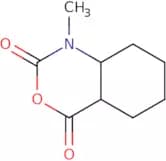
CAS:<p>Versatile small molecule scaffold</p>Formula:C5H4N4OPurity:Min. 95%Molecular weight:136.11 g/molN-Methylisatoic anhydride
CAS:<p>N-Methylisatoic anhydride is a versatile compound used in various industries. It is commonly employed in the production of polymers, cellulose derivatives, and detergents. This compound acts as a cationic hydrogenated pyrazole chloride, making it highly soluble in water and easily solubilized in various solvents. N-Methylisatoic anhydride is also utilized as an inhibitor for the synthesis of uridine monophosphate and cytidine monophosphate. Additionally, it finds applications as an electrode material due to its excellent conductivity properties. With its wide range of uses, N-Methylisatoic anhydride is a valuable compound for multiple industries.</p>Formula:C9H7NO3Purity:Min. 95%Molecular weight:177.16 g/molN-Hydroxy-2-(naphthalen-1-yl)acetamide
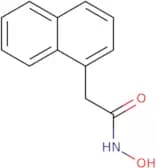
CAS:<p>Versatile small molecule scaffold</p>Formula:C12H11NO2Purity:Min. 95%Molecular weight:201.22 g/mol1-[2-(Dimethylamino)phenyl]ethan-1-one
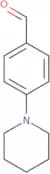
CAS:<p>Versatile small molecule scaffold</p>Formula:C10H13NOPurity:Min. 95%Molecular weight:163.22 g/mol4-Piperidinobenzenecarbaldehyde
CAS:<p>4-Piperidinobenzenecarbaldehyde is an organic compound that is the hydrogen-bonding interactions. It has been shown to have antimicrobial activities against Gram-positive and Gram-negative bacteria by binding to DNA gyrase and inhibiting its activity. 4-Piperidinobenzenecarbaldehyde also interacts with quinoline derivatives, which are used in pharmacology as inhibitors of bacterial DNA gyrase. The inhibition of this enzyme has been shown to cause a decrease in the synthesis of rRNA, leading to cell death. 4-Piperidinobenzenecarbaldehyde has also been observed to inhibit the fluorescence properties of chloramphenicol, an antibiotic used for the treatment of bacterial infections. The molecule's ability to bind with chloride ions may be responsible for its inhibitory effect on this antibiotic's activity.</p>Formula:C12H15NOPurity:Min. 95%Molecular weight:189.26 g/molN'-(Prop-2-enoyl)benzohydrazide
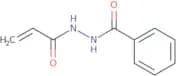
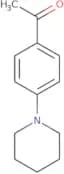
CAS:<p>Versatile small molecule scaffold</p>Formula:C10H10N2O2Purity:Min. 95%Molecular weight:190.2 g/mol4²-Piperidinoacetophenone
CAS:<p>4²-Piperidinoacetophenone is a nucleophilic compound. It has been shown to have a high chloride ion affinity and the ability to form intramolecular hydrogen bonds. 4²-Piperidinoacetophenone undergoes nucleophilic substitutions with amines, which can be enhanced by the presence of acidic conditions. This chemical also inhibits the formation of trifluoroacetic acid from acetic anhydride, which is a chemical used in organic synthesis. The inhibition of this reaction prevents unwanted side reactions from occurring. 4²-Piperidinoacetophenone is also used as an intermediate in the synthesis of chalcones, which are compounds that have been shown to have antimicrobial properties.</p>Formula:C13H17NOPurity:Min. 95%Molecular weight:203.28 g/mol1-[4-(4-Hydroxypiperidin-1-yl)phenyl]ethan-1-one
CAS:<p>Versatile small molecule scaffold</p>Formula:C13H17NO2Purity:Min. 95%Molecular weight:219.28 g/mol5,6-Dihydro[1,1'-biphenyl]-3(4H)-one
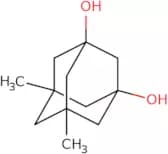
CAS:<p>5,6-Dihydro[1,1'-biphenyl]-3(4H)-one is a chemical compound that has been synthesized by irradiation of cyclobutane with borohydride reduction. This reaction produces the desired product in high yield and in a regioselective manner. The chalcones are crosslinked and the styrene is reduced to give divinylbenzene. 5,6-Dihydro[1,1'-biphenyl]-3(4H)-one has been shown to have high potential as an intermediate for organic synthesis. It has been used in the synthesis of a variety of functionalized chalcones and alcohols. This product can be used as a solvent for reactions involving solvents such as chloroform or ether.</p>Formula:C12H12OPurity:Min. 95%Molecular weight:172.22 g/mol5,7-Dimethyladamantane-1,3-diol
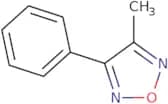
CAS:<p>5,7-Dimethyladamantane-1,3-diol is a diester that can be used as a surfactant in cosmetics and pharmaceuticals. It is a trimethylolpropane ester of the aliphatic diester neopentyl glycol. This compound has physicochemical properties such as solubility in both water and alcohol, high boiling point, low volatility, high viscosity and flashpoint. 5,7-Dimethyladamantane-1,3-diol also has a molecular formula of C10H26O4 and molecular weight of 256.24 g/mol.</p>Formula:C12H20O2Purity:Min. 95%Molecular weight:196.29 g/mol3-Methyl-4-phenyl-1,2,5-oxadiazole
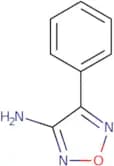
CAS:<p>3-Methyl-4-phenyl-1,2,5-oxadiazole is a nitrophenyl derivative that has been shown to have antimicrobial activity. It was used in antimicrobial screening and found to inhibit the growth of various bacteria. 3-Methyl-4-phenyl-1,2,5-oxadiazole inhibits bacterial growth by inhibiting the production of furoxan (a product of bacterial metabolism) through an unknown mechanism. Furoxan is a potent inhibitor of respiratory electron transport and prevents oxidative phosphorylation. 3-Methyl-4-phenyl 1,2,5 oxadiazole also inhibits the synthesis of cellular proteins and nucleic acids.</p>Formula:C9H8N2OPurity:Min. 95%Molecular weight:160.17 g/mol4-Phenyl-1,2,5-oxadiazol-3-amine
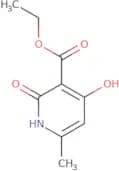
CAS:<p>4-Phenyl-1,2,5-oxadiazol-3-amine is an analog of histamine that acts as a competitive antagonist at the H2 receptor. This compound has been shown to elicit histamine release in guinea pig tissues and to act as a competitive antagonist at the H2 receptor. It also blocks histamine binding to other receptors and has been shown to have antihistaminic properties. 4-Phenyl-1,2,5-oxadiazol-3-amine binds in a similar fashion as cimetidine and ranitidine with high affinity for the H2 receptor and lower affinity for the H1 receptor. This drug has also been shown to inhibit guinea pig ileum contractions and rat vas deferens contractions induced by histamine. The molecular weight of this compound is 169.4 g/mol and its chemical formula is C9H7N3O3. The structural formula is:</p>Formula:C8H7N3OPurity:Min. 95%Molecular weight:161.16 g/molEthyl 2,4-dihydroxy-6-methylnicotinate
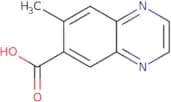
CAS:<p>Versatile small molecule scaffold</p>Formula:C9H11NO4Purity:Min. 95%Molecular weight:197.19 g/mol7-Methylquinoxaline-6-carboxylic acid
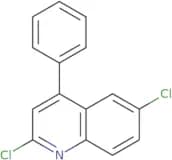
CAS:<p>7-Methylquinoxaline-6-carboxylic acid is a benzylic amino acid receptor antagonist. It binds to the excitatory amino acid receptors, which are proteins that bind to excitatory amino acids such as glutamate and aspartate. This binding prevents the excitatory amino acids from activating the receptor and initiating a series of reactions that lead to the release of neurotransmitters from the presynaptic neuron. 7-Methylquinoxaline-6-carboxylic acid has been shown to inhibit microbial growth, including bacteria, fungi, and yeast. It also inhibits rat brain activity in vitro at micromolar concentrations.</p>Formula:C10H8N2O2Purity:Min. 95%Molecular weight:188.18 g/mol2,6-Dichloro-4-phenylquinoline
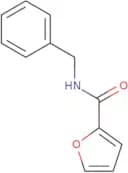
CAS:<p>Versatile small molecule scaffold</p>Formula:C15H9Cl2NPurity:Min. 95%Molecular weight:274.1 g/molN-Benzylfuran-2-carboxylic acid amide
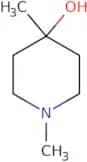
CAS:<p>N-Benzylfuran-2-carboxylic acid amide is an experimental drug that has been shown to have activity against tuberculosis. It is a benzylamide with a carbene ligand and a dehydrogenative reaction mechanism. N-Benzylfuran-2-carboxylic acid amide has also been shown to be effective in the synthesis of furan, carboxylic acids, sulfones, and galacturonic acids. The mechanism of action for this drug is not yet clear, but it may involve catalysis or binding to bacterial DNA.</p>Formula:C12H11NO2Purity:Min. 95%Molecular weight:201.22 g/mol1,4-Dimethylpiperidin-4-ol
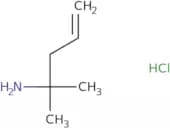
CAS:<p>1,4-Dimethylpiperidin-4-ol is an antiepileptic drug that belongs to the group of hydantoins. It is a potent and selective blocker of voltage-gated Na+ channels. This activity correlates with maximal inhibition at low concentrations, while minimal effects are seen at higher concentrations. 1,4-Dimethylpiperidin-4-ol has been shown to have antiepileptic and anesthetic properties in animal models. In addition, this drug has neurotoxic effects in animals.</p>Formula:C7H15NOPurity:Min. 95%Molecular weight:129.2 g/mol2-Methylpent-4-en-2-amine hydrochloride
CAS:<p>Versatile small molecule scaffold</p>Formula:C6H14ClNPurity:Min. 95%Molecular weight:135.63 g/molN-[(4-Nitrophenyl)methyl]aniline
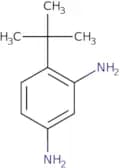
CAS:<p>The N-[(4-Nitrophenyl)methyl]aniline is a chemical compound. It is an organic molecule that has a nitro group attached to the aniline group. This product is used as a catalyst in organic synthesis, specifically for the reduction of nitroarenes. The N-[(4-Nitrophenyl)methyl]aniline has been shown to be effective in the reduction of divinylbenzene and polystyrene. This catalyst can be used in many different reactions, such as crosslinking of borohydride ethers and kinetic measurements. The kinetics of this catalyst are dependent on the concentration of substrate, which can be controlled by varying the amount of sodium borohydride used.</p>Formula:C13H12N2O2Purity:Min. 95%Molecular weight:228.25 g/mol4-tert-Butylbenzene-1,3-diamine
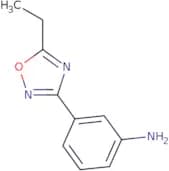
CAS:<p>Versatile small molecule scaffold</p>Formula:C10H16N2Purity:Min. 95%Molecular weight:164.25 g/mol3-(5-Ethyl-1,2,4-oxadiazol-3-yl)aniline
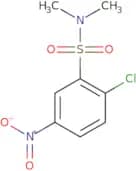
CAS:<p>Versatile small molecule scaffold</p>Formula:C10H11N3OPurity:Min. 95%Molecular weight:189.21 g/mol2-Chloro-N,N-dimethyl-5-nitrobenzene-1-sulfonamide
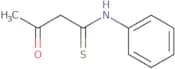
CAS:<p>Versatile small molecule scaffold</p>Formula:C8H9ClN2O4SPurity:Min. 95%Molecular weight:264.69 g/mol3-Oxo-N-phenylbutanethioamide
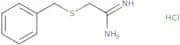
CAS:<p>3-Oxo-N-phenylbutanethioamide is a bidentate ligand that binds to metals. It has been shown to be an effective alkylsulfonyl and activated donor in biomolecular reactions with alkoxycarbonyl groups. 3-Oxo-N-phenylbutanethioamide can exist as two different isomers, cis and trans. The cis isomer was found to be more reactive than the trans isomer in x-ray diffraction data. This ligand also has a strong affinity for chlorine, which makes it useful for oxidant reactions as well as cycloacylation with nitro groups. 3-Oxo-N-phenylbutanethioamide displays a variety of functionalities, such as its ability to act as a ligand and an oxidant, making it an attractive molecule for research purposes.</p>Formula:C10H11NOSPurity:Min. 95%Molecular weight:193.27 g/mol2-(Benzylsulfanyl)ethanimidamide hydrochloride
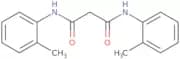
CAS:<p>Versatile small molecule scaffold</p>Formula:C9H13ClN2SPurity:Min. 95%Molecular weight:216.73 g/molN,N'-Bis(2-methylphenyl)propanediamide
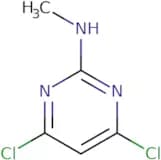
CAS:<p>Versatile small molecule scaffold</p>Formula:C17H18N2O2Purity:Min. 95%Molecular weight:282.34 g/mol4,6-Dichloro-N-methylpyrimidin-2-amine
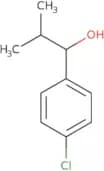
CAS:<p>4,6-Dichloro-N-methylpyrimidin-2-amine is an analog of pyrimidine that has been used in the synthesis of a number of drugs. The compound was first synthesized by condensation of 2,4,6-trichloropyrimidine with formaldehyde and sodium hydroxide. 4,6-Dichloro-N-methylpyrimidin-2-amine can be converted to the corresponding hydrochloride salt by treatment with hydrochloric acid. The compound reacts with methanol to produce methylamine. It also undergoes acid hydrolysis to produce methyl chloride and formaldehyde.</p>Formula:C5H5Cl2N3Purity:Min. 95%Molecular weight:178.02 g/mol1-(4-Chlorophenyl)-2-methylpropan-1-ol
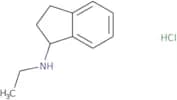
CAS:<p>Versatile small molecule scaffold</p>Formula:C10H13ClOPurity:Min. 95%Molecular weight:184.66 g/molN-Ethyl-2,3-dihydro-1H-inden-1-amine hydrochloride
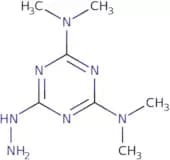
CAS:Controlled Product<p>Versatile small molecule scaffold</p>Formula:C11H16ClNPurity:Min. 95%Molecular weight:197.7 g/mol6-Hydrazinyl-N2,N2,N4,N4-tetramethyl-1,3,5-triazine-2,4-diamine
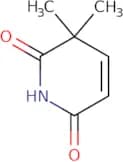
CAS:<p>Hexamethylmelamine is an analog of 6-hydrazinyl-N2,N2,N4,N4-tetramethyl-1,3,5-triazine-2,4-diamine. Hexamethylmelamine is a precursor to the antitumor drug hexamethylmelamine mustard. Hexamethylmelamine mustard is a cytotoxic alkylating agent that reacts with DNA and RNA in the cell nucleus. The reaction between hexamethylmelamine and DNA leads to the crosslinking of DNA strands and inhibits transcription. In this way it prevents the synthesis of new proteins which are required for cell division. It has been used as a chemotherapeutic agent for leukemia and reticulum cell sarcoma but its use has been discontinued due to the toxicity associated with its use.</p>Formula:C7H15N7Purity:Min. 95%Molecular weight:197.24 g/mol3,3-Dimethyl-1,2,3,6-tetrahydropyridine-2,6-dione
CAS:<p>Versatile small molecule scaffold</p>Formula:C7H9NO2Purity:Min. 95%Molecular weight:139.15 g/mol5,6,7,8-Tetrahydro-1H-cyclohepta[C]furan-1,3(4H)-dione
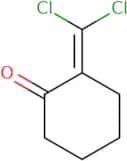
CAS:<p>Versatile small molecule scaffold</p>Formula:C9H10O3Purity:Min. 95%Molecular weight:166.17 g/mol2-(Dichloromethylene)cyclohexanone
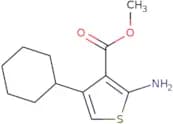
CAS:<p>Versatile small molecule scaffold</p>Formula:C7H8Cl2OPurity:Min. 95%Molecular weight:179.04 g/molMethyl 2-amino-4-cyclohexylthiophene-3-carboxylate
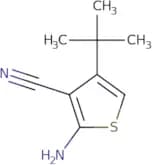
CAS:<p>Versatile small molecule scaffold</p>Formula:C12H17NO2SPurity:Min. 95%Molecular weight:239.34 g/mol2-Amino-4-tert-butylthiophene-3-carbonitrile
CAS:<p>Versatile small molecule scaffold</p>Formula:C9H12N2SPurity:Min. 95%Molecular weight:180.27 g/mol1-Boc-3-cyclopropylmethyl-piperidin-4-one
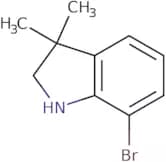
CAS:<p>Versatile small molecule scaffold</p>Formula:C14H23NO3Purity:Min. 95%Molecular weight:253.34 g/mol7-bromo-3,3-dimethyl-2,3-dihydro-1H-indole
CAS:<p>Versatile small molecule scaffold</p>Formula:C10H12BrNPurity:Min. 95%Molecular weight:226.1 g/mol1-[2-Chloro-5-(trifluoromethyl)phenyl]cyclopropane-1-carboxylic acid
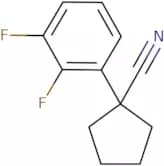
CAS:<p>Versatile small molecule scaffold</p>Formula:C11H8ClF3O2Purity:Min. 95%Molecular weight:264.63 g/mol1-(2,3-Difluorophenyl)cyclopentane-1-carbonitrile
CAS:<p>Versatile small molecule scaffold</p>Formula:C12H11F2NPurity:Min. 95%Molecular weight:207.22 g/mol2-Bromo-6-methyl-[1,2,4]triazolo[1,5-a]pyridine
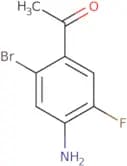
CAS:<p>Versatile small molecule scaffold</p>Formula:C7H6BrN3Purity:Min. 95%Molecular weight:212.05 g/mol1-(4-Amino-2-bromo-5-fluorophenyl)ethanone
CAS:<p>Versatile small molecule scaffold</p>Formula:C8H7BrFNOPurity:Min. 95%Molecular weight:232.05 g/molMethyl 4-(aminomethyl)-3-bromobenzoate
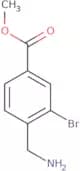
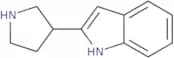
CAS:<p>Versatile small molecule scaffold</p>Formula:C9H10BrNO2Purity:Min. 95%Molecular weight:244.08 g/mol2-(Pyrrolidin-3-yl)-1H-indole
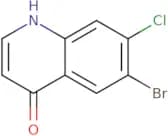
CAS:<p>Versatile small molecule scaffold</p>Formula:C12H14N2Purity:Min. 95%Molecular weight:186.25 g/mol6-Bromo-7-chloroquinolin-4-ol
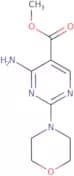
CAS:<p>Versatile small molecule scaffold</p>Formula:C9H5BrClNOPurity:Min. 95%Molecular weight:258.5 g/molMethyl 4-amino-2-(morpholin-4-yl)pyrimidine-5-carboxylate
CAS:<p>Versatile small molecule scaffold</p>Formula:C10H14N4O3Purity:Min. 95%Molecular weight:238.24 g/mol1-[4-(Trifluoromethyl)phenyl]pyrazole-4-carboxylic acid
CAS:<p>Versatile small molecule scaffold</p>Formula:C11H7N2O2F3Purity:Min. 95%Molecular weight:256.18 g/mol3-Bromo-2-fluoro-5-methylbenzonitrile
CAS:<p>3-Bromo-2-fluoro-5-methylbenzonitrile is a chemical compound that is used as an agent for detecting natural gas in the air. 3-Bromo-2-fluoro-5-methylbenzonitrile may be used to measure the concentration of natural gas in the atmosphere. This chemical can be found as a component of rainforest emissions and is also present in fossil fuels such as coal, oil, and natural gas. 3-Bromo-2-fluoro-5-methylbenzonitrile has been shown to be bifunctional, with one function being a donor and another being an acceptor. This means that it can produce energy by accepting electrons from other molecules or donating electrons to other molecules. 3BRFMBA has been shown to have high efficiencies in regression analysis of data collected from caenorhabditis elegans and caenorhabditis worms.</p>Formula:C8H5BrFNPurity:Min. 95%Molecular weight:214.03 g/mol1-[3-(Trifluoromethoxy)phenyl]cyclopropane-1-carboxylic acid
CAS:<p>Versatile small molecule scaffold</p>Formula:C11H9F3O3Purity:Min. 95%Molecular weight:246.18 g/mol7-Bromobenzo[d]isoxazole
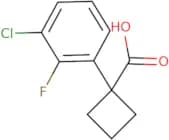
CAS:<p>Versatile small molecule scaffold</p>Formula:C7H4BrNOPurity:Min. 95%Molecular weight:198.02 g/mol1-(3-Chloro-2-fluorophenyl)cyclobutane-1-carboxylic acid
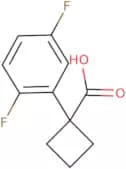
CAS:<p>Versatile small molecule scaffold</p>Formula:C11H10ClFO2Purity:Min. 95%Molecular weight:228.65 g/mol1-(2,5-Difluorophenyl)cyclobutane-1-carboxylic acid
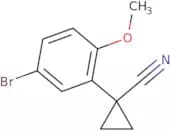
CAS:<p>Versatile small molecule scaffold</p>Formula:C11H10F2O2Purity:Min. 95%Molecular weight:212.19 g/mol1-(5-Bromo-2-methoxyphenyl)cyclopropane-1-carbonitrile
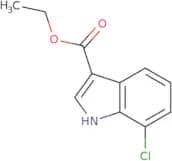
CAS:<p>Versatile small molecule scaffold</p>Formula:C11H10BrNOPurity:Min. 95%Molecular weight:252.11 g/molEthyl 7-chloro-1H-indole-3-carboxylate
CAS:Controlled Product<p>Versatile small molecule scaffold</p>Formula:C11H10ClNO2Purity:Min. 95%Molecular weight:223.65 g/mol4-{[(tert-Butoxy)carbonyl]amino}-4-methylpent-2-ynoic acid
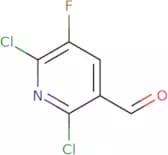
CAS:<p>Versatile small molecule scaffold</p>Formula:C11H17NO4Purity:Min. 95%Molecular weight:227.3 g/mol2,6-Dichloro-5-fluoro-3-pyridinecarboxaldehyde
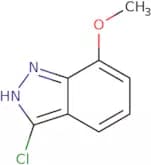
CAS:<p>Versatile small molecule scaffold</p>Formula:C6H2Cl2FNOPurity:Min. 95%Molecular weight:193.99 g/mol3-Chloro-7-methoxy-1H-indazole
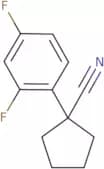
CAS:<p>Versatile small molecule scaffold</p>Formula:C8H7ClN2OPurity:Min. 95%Molecular weight:182.61 g/mol1-(2,4-Difluorophenyl)cyclopentane-1-carbonitrile
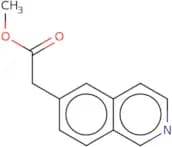
CAS:<p>Versatile small molecule scaffold</p>Formula:C12H11F2NPurity:Min. 95%Molecular weight:207.22 g/molMethyl 2-(isoquinolin-6-yl)acetate
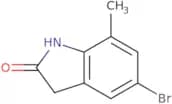
CAS:<p>Versatile small molecule scaffold</p>Formula:C12H11NO2Purity:Min. 95%Molecular weight:201.2 g/mol5-Bromo-7-methyl-2,3-dihydro-1H-indol-2-one
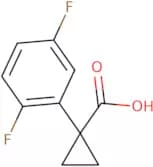
CAS:<p>Versatile small molecule scaffold</p>Formula:C9H8BrNOPurity:Min. 95%Molecular weight:226.07 g/mol1-(2,5-Difluorophenyl)cyclopropane-1-carboxylic acid
CAS:<p>Versatile small molecule scaffold</p>Formula:C10H8F2O2Purity:Min. 95%Molecular weight:198.17 g/molMethyl 2-bromo-3-[4-(trifluoromethyl)phenyl]propanoate
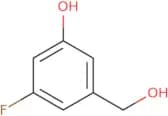
CAS:<p>Versatile small molecule scaffold</p>Formula:C11H10BrF3O2Purity:Min. 95%Molecular weight:311.09 g/mol3-Fluoro-5-(hydroxymethyl)phenol
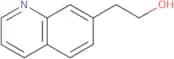
CAS:<p>Versatile small molecule scaffold</p>Formula:C7H7FO2Purity:Min. 95%Molecular weight:142.13 g/mol2-(Quinolin-7-yl)ethanol
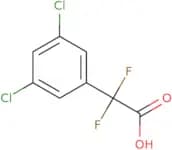
CAS:<p>Versatile small molecule scaffold</p>Formula:C11H11NOPurity:Min. 95%Molecular weight:173.21 g/mol2-(3,5-Dichlorophenyl)-2,2-difluoroacetic acid
CAS:<p>Versatile small molecule scaffold</p>Formula:C8H4Cl2F2O2Purity:Min. 95%Molecular weight:241.02 g/mol

![2-Chloro-N-[3-(propan-2-yloxy)propyl]acetamide](/_next/image/?url=https%3A%2Fstatic.cymitquimica.com%2Fproducts%2F3D%2Fthumb-webp%2FKAA26367.webp&w=3840&q=75)
![rac-(4aR,7aR)-Octahydro-1H-cyclopenta[C]pyridine](/_next/image/?url=https%3A%2Fstatic.cymitquimica.com%2Fproducts%2F3D%2Fthumb-webp%2FKAA26802.webp&w=3840&q=75)
![2-Oxo-2-{4,7,7-trimethyl-3-oxobicyclo[2.2.1]heptan-2-yl}acetic acid](/_next/image/?url=https%3A%2Fstatic.cymitquimica.com%2Fproducts%2F3D%2Fthumb-webp%2FKAA27734.webp&w=3840&q=75)
![({1,7,7-Trimethylbicyclo[2.2.1]heptan-2-ylidene}amino)urea](/_next/image/?url=https%3A%2Fstatic.cymitquimica.com%2Fproducts%2F3D%2Fthumb-webp%2FKAA28141.webp&w=3840&q=75)
![[1,3]Oxazolo[5,4-d]pyrimidin-7-amine](/_next/image/?url=https%3A%2Fstatic.cymitquimica.com%2Fproducts%2F3D%2Fthumb-webp%2FKAA32561.webp&w=3840&q=75)
![1-[2-(Dimethylamino)phenyl]ethan-1-one](/_next/image/?url=https%3A%2Fstatic.cymitquimica.com%2Fproducts%2F3D%2Fthumb-webp%2FKAA33655.webp&w=3840&q=75)
![1-[4-(4-Hydroxypiperidin-1-yl)phenyl]ethan-1-one](/_next/image/?url=https%3A%2Fstatic.cymitquimica.com%2Fproducts%2F3D%2Fthumb-webp%2FKAA34287.webp&w=3840&q=75)
![5,6-Dihydro[1,1'-biphenyl]-3(4H)-one](/_next/image/?url=https%3A%2Fstatic.cymitquimica.com%2Fproducts%2F3D%2Fthumb-webp%2FKAA34587.webp&w=3840&q=75)
![N-[(4-Nitrophenyl)methyl]aniline](/_next/image/?url=https%3A%2Fstatic.cymitquimica.com%2Fproducts%2F3D%2Fthumb-webp%2FKAA35918.webp&w=3840&q=75)
![5,6,7,8-Tetrahydro-1H-cyclohepta[C]furan-1,3(4H)-dione](/_next/image/?url=https%3A%2Fstatic.cymitquimica.com%2Fproducts%2F3D%2Fthumb-webp%2FKAA41204.webp&w=3840&q=75)

![1-[2-Chloro-5-(trifluoromethyl)phenyl]cyclopropane-1-carboxylic acid](/_next/image/?url=https%3A%2Fstatic.cymitquimica.com%2Fproducts%2F3D%2Fthumb-webp%2FKAC67652.webp&w=3840&q=75)
![2-Bromo-6-methyl-[1,2,4]triazolo[1,5-a]pyridine](/_next/image/?url=https%3A%2Fstatic.cymitquimica.com%2Fproducts%2F3D%2Fthumb-webp%2FKAC67893.webp&w=3840&q=75)
![1-[4-(Trifluoromethyl)phenyl]pyrazole-4-carboxylic acid](/_next/image/?url=https%3A%2Fstatic.cymitquimica.com%2Fproducts%2F3D%2Fthumb-webp%2FKAC74053.webp&w=3840&q=75)

![1-[3-(Trifluoromethoxy)phenyl]cyclopropane-1-carboxylic acid](/_next/image/?url=https%3A%2Fstatic.cymitquimica.com%2Fproducts%2F3D%2Fthumb-webp%2FKAC74141.webp&w=3840&q=75)
![7-Bromobenzo[d]isoxazole](/_next/image/?url=https%3A%2Fstatic.cymitquimica.com%2Fproducts%2F3D%2Fthumb-webp%2FKAC75181.webp&w=3840&q=75)
![4-{[(tert-Butoxy)carbonyl]amino}-4-methylpent-2-ynoic acid](/_next/image/?url=https%3A%2Fstatic.cymitquimica.com%2Fproducts%2F3D%2Fthumb-webp%2FKAC75730.webp&w=3840&q=75)
![Methyl 2-bromo-3-[4-(trifluoromethyl)phenyl]propanoate](/_next/image/?url=https%3A%2Fstatic.cymitquimica.com%2Fproducts%2F3D%2Fthumb-webp%2FKAC76144.webp&w=3840&q=75)