Building Blocks
This section contains fundamental products for the synthesis of organic and biological compounds. Building blocks are the essential starting materials used to construct complex molecules through various chemical reactions. They play a critical role in drug discovery, material science, and chemical research. At CymitQuimica, we offer a diverse range of high-quality building blocks to support your innovative research and industrial projects, ensuring you have the essential components for successful synthesis.
Subcategories of "Building Blocks"
- Boronic Acids & Boronic Acid Derivatives(5,756 products)
- Chiral Building Blocks(1,242 products)
- Hydrocarbon Building Blocks(6,093 products)
- Organic Building Blocks(60,519 products)
Found 195533 products of "Building Blocks"
Sort by
Purity (%)
0
100
|
0
|
50
|
90
|
95
|
100
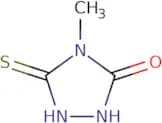
5-Mercapto-4-methyl-4H-1,2,4-triazol-3-ol
CAS:<p>Versatile small molecule scaffold</p>Formula:C3H5N3OSPurity:Min. 95%Molecular weight:131.16 g/mol5-Mercapto-1-methyl-1,2-dihydro-3H-1,2,4-triazol-3-one
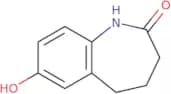
CAS:<p>Versatile small molecule scaffold</p>Formula:C3H5N3OSPurity:Min. 95%Molecular weight:131.16 g/mol7-Hydroxy-2,3,4,5-tetrahydro-1H-1-benzazepin-2-one
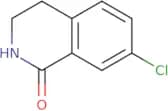
CAS:<p>Versatile small molecule scaffold</p>Formula:C10H11NO2Purity:Min. 95%Molecular weight:177.2 g/mol7-Chloro-3,4-dihydro-2H-isoquinolin-1-one
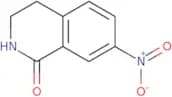
CAS:<p>Versatile small molecule scaffold</p>Formula:C9H8ClNOPurity:Min. 95%Molecular weight:181.62 g/mol7-Nitro-3,4-dihydroisoquinolin-1(2H)-one
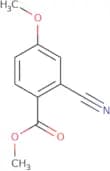
CAS:<p>Versatile small molecule scaffold</p>Formula:C9H8N2O3Purity:Min. 95%Molecular weight:192.17 g/molMethyl 2-cyano-4-methoxybenzoate
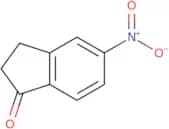
CAS:<p>Versatile small molecule scaffold</p>Formula:C10H9NO3Purity:Min. 95%Molecular weight:191.18 g/mol5-Nitro-indan-1-one
CAS:<p>5-Nitroindan-1-one is an organometallic compound and a reagent used in the synthesis of indenes. It can be prepared by the condensation of nitroethane with acetaldehyde, followed by treatment with sodium nitrite in sulfuric acid. 5-Nitroindan-1-one is a multistep process, which involves dehydration, sequence, and cross-coupling reactions. This compound is also an analogously multifunctional module that can be used as a reagent in the synthesis of other indenes or as an intermediate for other functional groups.</p>Formula:C9H7NO3Purity:Min. 95%Molecular weight:177.16 g/mol1,2,3,4,5,6-Hexahydro-1-benzazocin-2-one
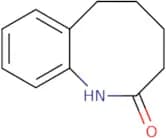
CAS:<p>1,2,3,4,5,6-Hexahydro-1-benzazocin-2-one is a hydrocarbon molecule that is used as an analgesic and a prophylactic. It has been shown to have some effect on the nervous system by acting on the nociceptin receptor. Some of the effects of 1,2,3,4,5,6-hexahydro-1-benzazocin-2-one are caused by its ability to bind to the hydrocarbon receptor in the central nervous system. As a hydrocarbon molecule it is composed of carbon and hydrogen atoms only. The symbol for this compound is CHZN.</p>Formula:C11H13NOPurity:Min. 95%Molecular weight:175.23 g/mol7-Hydroxy-2,3,4,5-tetrahydro-1H-2-benzazepin-1-one
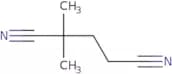
CAS:<p>Versatile small molecule scaffold</p>Formula:C10H11NO2Purity:Min. 95%Molecular weight:177.2 g/mol2,2-Dimethylpentanedinitrile
CAS:<p>Versatile small molecule scaffold</p>Formula:C7H10N2Purity:Min. 95%Molecular weight:122.17 g/mol4-(1H-Indol-3-yl)-thiazol-2-ylamine
CAS:<p>4-(1H-Indol-3-yl)-thiazol-2-ylamine is a novel small molecule that has been shown to have anti-cancer activity. This drug induces apoptosis by activation of the caspase-3 pathway and minimal toxicity in human cells. 4-(1H-Indol-3-yl)-thiazol-2-ylamine has also been shown to be effective against cancer cells that are resistant to chemotherapeutic drugs. The drug's ability to inhibit cell proliferation may be due to its ability to activate p53, which is a cellular protein that regulates cell growth and death. 4-(1H-Indol-3-yl)-thiazol-2-ylamine activates caspase 3 in MDA MB231 breast cancer cells, leading to apoptosis or programmed cell death.</p>Formula:C11H9N3SPurity:Min. 95%Molecular weight:215.28 g/mol1-(2-Ethylphenyl)-2-thiourea
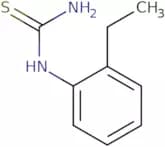
CAS:<p>Versatile small molecule scaffold</p>Formula:C9H12N2SPurity:Min. 95%Molecular weight:180.27 g/mol1-(4-Ethylphenyl)-2-thiourea
CAS:<p>Versatile small molecule scaffold</p>Formula:C9H12N2SPurity:Min. 95%Molecular weight:180.27 g/mol3-(Piperazin-1-yl)propanoic acid dihydrochloride
CAS:<p>Versatile small molecule scaffold</p>Formula:C7H16Cl2N2O2Purity:Min. 95%Molecular weight:231.12 g/mol2,5-Dimethylpyridin-4-amine
CAS:<p>Versatile small molecule scaffold</p>Formula:C7H10N2Purity:Min. 95%Molecular weight:122.17 g/mol2-Iodo-4-methylpyridine
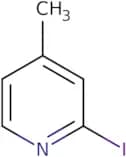
CAS:<p>2-Iodo-4-methylpyridine is a heterocyclic compound that can be used as a reagent in the synthesis of other compounds. It can be used to synthesize allenes and cyclohexadienes, which are important in organic chemistry. 2-Iodo-4-methylpyridine can also serve as an intermediate in palladium-catalyzed cross-coupling reactions, including cross coupling reactions with heterocycles and primary amines.<br>2-Iodo-4-methylpyridine is soluble in water and has a low toxicity. It reacts with aliphatic amines to form iodides, which are reactive intermediates that can be used for cycloisomerization reactions with monosubstituted alkynes.</p>Formula:C6H6INPurity:Min. 95%Molecular weight:219.03 g/mol5-Acetyl-1,6-dimethyl-1,2,3,4-tetrahydropyrimidine-2,4-dione
CAS:<p>Versatile small molecule scaffold</p>Formula:C8H10N2O3Purity:Min. 95%Molecular weight:182.18 g/mol5-Iodo-4-methylpyrimidin-2-amine
CAS:<p>Versatile small molecule scaffold</p>Formula:C5H6IN3Purity:Min. 95%Molecular weight:235.03 g/mol2-Chloro-N-ethyl-N-(naphthalen-1-yl)acetamide
CAS:<p>Versatile small molecule scaffold</p>Formula:C14H14ClNOPurity:Min. 95%Molecular weight:247.72 g/mol2-Chloro-N-(2,4,6-trichloro-phenyl)-acetamide
CAS:<p>Versatile small molecule scaffold</p>Formula:C8H5Cl4NOPurity:Min. 95%Molecular weight:272.94 g/mol2-(5-Phenyl-2H-1,2,3,4-tetrazol-2-yl)propanoic acid
CAS:<p>Versatile small molecule scaffold</p>Formula:C10H10N4O2Purity:Min. 95%Molecular weight:218.21 g/molN-(2-Amino-benzothiazol-6-yl)-acetamide
CAS:<p>6-Amino-2-aminobenzothiazole is a chemical substance that has been used as an antituberculosis drug. It is an antimicrobial agent that inhibits the growth of microorganisms by binding to their ribosomes and blocking protein synthesis. 6-Amino-2-aminobenzothiazole can be used for the treatment of tuberculosis and other bacterial infections. The compound binds to the 16S ribosomal RNA, inhibiting protein synthesis and cell division. 6-Amino-2-aminobenzothiazole also inhibits microbial growth by binding to DNA gyrase, which is an enzyme that maintains the integrity of bacterial DNA. This drug has been shown to be effective against Staphylococcus aureus, Pseudomonas aeruginosa, Escherichia coli, and Bacillus cereus.</p>Formula:C9H9N3OSPurity:Min. 95%Molecular weight:207.25 g/mol2-(2,3-Dihydro-1,4-benzodioxin-6-yl)ethan-1-amine hydrochloride
CAS:Controlled Product<p>Versatile small molecule scaffold</p>Formula:C10H14ClNO2Purity:Min. 95%Molecular weight:215.67 g/mol1-(2,3-Dihydro-1,4-benzodioxin-6-yl)-3-(morpholin-4-yl)propan-1-one hydrochloride
CAS:<p>Versatile small molecule scaffold</p>Formula:C15H20ClNO4Purity:Min. 95%Molecular weight:313.77 g/mol2-(2-Chloroacetamido)-N-(4-methoxyphenyl)benzamide
CAS:<p>Versatile small molecule scaffold</p>Formula:C16H15ClN2O3Purity:Min. 95%Molecular weight:318.75 g/mol3,8-diazabicyclo[3.2.1]octan-2-one
CAS:<p>3,8-Diazabicyclo[3.2.1]octan-2-one is a compound that contains an enolate group, which is the conjugate base of an enol. It has been used to synthesize cycloadducts and peptidomimetics as well as for research purposes. 3,8-Diazabicyclo[3.2.1]octan-2-one has also been shown to inhibit farnesyltransferase and may be useful in the treatment of cancer due to its ability to halt the production of proteins that regulate cell division and growth.</p>Formula:C6H10N2OPurity:Min. 95%Molecular weight:126.16 g/mol2-Methyl-3-(4-methylphenyl)-3,4-dihydroquinazolin-4-one
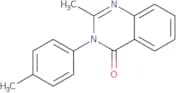
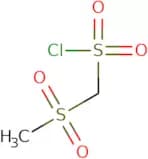
CAS:Controlled Product<p>2-Methyl-3-(4-methylphenyl)-3,4-dihydroquinazolin-4-one is a benzoyl peroxide derivative that is used as a thermal stabilizer in polymers. It is prepared by bromination of 2-methyl-3-(4-methylphenyl) quinazoline and then reacting the bromine with benzoyl peroxide. 2-Methyl-3-(4-methylphenyl)-3,4-dihydroquinazolin-4-one has been shown to be an efficient catalyst for the hydrobromic acid catalyzed conversion of benzoyl chlorides to their corresponding peroxyacids.<br>2mMDQQ has been studied for its ability to inhibit the growth of bacteria such as Staphylococcus aureus and Streptococcus pyogenes, as well as Candida albicans yeast cells.</p>Formula:C16H14N2OPurity:Min. 95%Molecular weight:250.29 g/mol(Methylsulphonyl)methanesulphonyl chloride
CAS:<p>Methylsulphonylmethanesulphonyl chloride (MSMCl) is an immunosuppressive drug. It is a pyrazole-containing compound that inhibits the production of TNF-α, which is produced by macrophages in response to inflammation. The activity of MSMCl has been shown to be due to the inhibition of protein synthesis and induction of necrosis in macrophages. Radiolabeled studies have shown that this agent binds preferentially to lipoprotein and cholestane, which are both enriched in atherosclerotic lesions. These findings may explain its anti-inflammatory effects on autoimmune diseases such as multiple sclerosis.<br>MSMCl may also be used as a positron emission tomography (PET) radiotracer, which is a special type of radioactive imaging test that uses small amounts of radioactive material called tracers that are injected into the body and can be detected with a PET scan. A PET scan can show where there</p>Formula:C2H5ClO4S2Purity:Min. 95%Molecular weight:192.64 g/mol8-Chloro-6-fluoroquinoline
CAS:<p>Versatile small molecule scaffold</p>Formula:C9H5ClFNPurity:Min. 95%Molecular weight:181.59 g/mol2-Methyl-6-indolizinecarbonitrile
CAS:<p>2-Methyl-6-indolizinecarbonitrile is a natural product that belongs to the class of isothiocyanates. It has been shown to inhibit the growth of Pekinensis (a type of bacteria) and also has antioxidant properties. 2-Methyl-6-indolizinecarbonitrile also contains flavonoids, glucosinolates, phenolic compounds, and carbohydrates. The volatile compounds in this extract have been shown to have a variety of physiological effects, such as reducing inflammation and relieving symptoms of respiratory tract infections.</p>Formula:C10H8N2Purity:Min. 95%Molecular weight:156.18 g/mol2,5-Dimethylbenzoyl chloride
CAS:<p>2,5-Dimethylbenzoyl chloride is an oxadiazole that was studied for pharmacological applications. It has been shown to be a potent inhibitor of the vasopressin receptor and is therefore a potential lead compound for the development of drugs to treat diseases such as diabetes and hypertension. The chloro group in 2,5-dimethylbenzoyl chloride can be modified by substituting it with another group, such as hydrogen or chlorine. This substitution changes the properties of the molecule, which can be beneficial for certain applications. For example, 2-methylbenzoyl chloride is more soluble in water than 2,5-dimethylbenzoyl chloride.<br>2,5-Dimethylbenzoyl chloride was also synthesized using phosphorus pentachloride and ethyl group as starting materials. The x-ray data showed that the molecule has a planar structure with four chiral centers (C1, C2, C3 and</p>Formula:C9H9ClOPurity:Min. 95%Molecular weight:168.62 g/molEthyl 2,3-Dihydroindene-1-acetate
CAS:<p>Versatile small molecule scaffold</p>Formula:C13H16O2Purity:Min. 95%Molecular weight:204.27 g/mol7-Chloro-4,5-dihydro-1H-benzo[b]azepin-2(3H)-one
CAS:<p>Versatile small molecule scaffold</p>Formula:C10H10ClNOPurity:Min. 95%Molecular weight:195.64 g/mol2-Methyl-5,6,7,8-tetrahydroquinolin-4-amine
CAS:<p>Versatile small molecule scaffold</p>Formula:C10H14N2Purity:Min. 95%Molecular weight:162.23 g/mol3-Phenyl-2-(pyridin-2-yl)prop-2-enenitrile
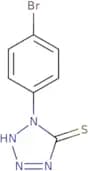
CAS:<p>Versatile small molecule scaffold</p>Formula:C14H10N2Purity:Min. 95%Molecular weight:206.24 g/mol1-(4-Bromophenyl)-4,5-dihydro-1H-1,2,3,4-tetrazole-5-thione
CAS:<p>1-(4-Bromophenyl)-4,5-dihydro-1H-1,2,3,4-tetrazole-5-thione (BPHT) is a potent thyroid hormone antagonist that inhibits the synthesis of thyroxine by binding to the thyroxine receptor. It has been shown to be effective in animals and humans with hypothyroidism. BPHT has also been shown to inhibit adenosine deaminase and cyclic adenosine monophosphate (cAMP) levels in certain cell types. BPHT has also been shown to have a weak effect on the liver enzymes alanine aminotransferase and aspartate aminotransferase.</p>Formula:C7H5BrN4SPurity:Min. 95%Molecular weight:257.11 g/moltrans-4-(Methylamino)cyclohexanol
CAS:<p>Versatile small molecule scaffold</p>Formula:C7H15NOPurity:Min. 95%Molecular weight:129.2 g/molIodomethanesulfonyl chloride
CAS:<p>Iodomethanesulfonyl chloride is a ligand that binds to metal carbonyl complexes. It is used as a polymerization initiator for the production of polyurethane and as a reagent in organic syntheses. Iodomethanesulfonyl chloride is prepared by reacting methanesulfonyl chloride with elemental iodine. The molecule has a hydrocarbon group and two chlorine atoms, which are present in a stereoselective arrangement. The hydroxy group is bonded to one chlorine atom, while the other has a hydroxyl group.</p>Formula:CH2ClIO2SPurity:Min. 95%Molecular weight:240.45 g/molIodomethanesulfonamide
CAS:<p>Iodomethanesulfonamide is a hydrogenolysis agent that functions by reacting with organic materials and inactivating them. It inhibits the growth of bacteria by binding to their ribosomes and preventing protein synthesis. Iodomethanesulfonamide has been shown to be non-selective, reacting with both aminoglycoside antibiotics and alkylating agents. This compound has also been shown to have osmotic effects on plant cells, which can be used for weed control. Iodomethanesulfonamide is also used as an intermediate in the production of other pharmaceuticals.</p>Formula:CH4INO2SPurity:Min. 95%Molecular weight:221 g/mol3-Amino-1,4-dimethyl-4,5-dihydro-1H-1,2,4-triazol-5-one
CAS:<p>Versatile small molecule scaffold</p>Formula:C4H8N4OPurity:Min. 95%Molecular weight:128.13 g/mol3-Bromo-1,4-dimethyl-4,5-dihydro-1H-1,2,4-triazol-5-one
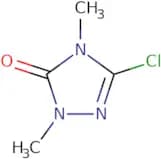
CAS:<p>Versatile small molecule scaffold</p>Formula:C4H6BrN3OPurity:Min. 95%Molecular weight:192.01 g/mol3-Chloro-1,4-dimethyl-4,5-dihydro-1H-1,2,4-triazol-5-one
CAS:<p>Versatile small molecule scaffold</p>Formula:C4H6ClN3OPurity:Min. 95%Molecular weight:147.56 g/mol2-(4-Nitrophenyl)propan-2-ol
CAS:<p>2-(4-Nitrophenyl)propan-2-ol is a reactive chemical that immobilizes fatty acids. It has been shown to inhibit the enzyme lipase, an esterase that hydrolyzes esters and triglycerides, in hexane. The reaction between 2-(4-nitrophenyl)propan-2-ol and the headspace of glycolaldehyde, cell membrane, or sarin, an organophosphate nerve agent, has yielded a covalent adduct. This immobilization method can be used to study the reactivity of fatty acids with other chemicals in a reactive environment.</p>Formula:C9H11NO3Purity:Min. 95%Molecular weight:181.19 g/mol2-(3-Nitrophenyl)propan-2-ol
CAS:<p>Versatile small molecule scaffold</p>Formula:C9H11NO3Purity:Min. 95%Molecular weight:181.2 g/mol2-Bromo-5-methanesulfonylbenzoic acid
CAS:<p>Versatile small molecule scaffold</p>Formula:C8H7BrO4SPurity:Min. 95%Molecular weight:279.11 g/mol2-Bromo-5-(ethanesulfonyl)benzoic acid
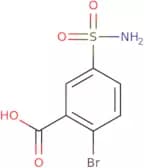
CAS:<p>Versatile small molecule scaffold</p>Formula:C9H9BrO4SPurity:Min. 95%Molecular weight:293.14 g/mol5-(Aminosulfonyl)-2-bromobenzoic acid
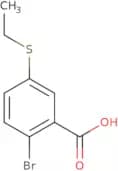
CAS:<p>Versatile small molecule scaffold</p>Formula:C7H6BrNO4SPurity:Min. 95%Molecular weight:280.1 g/mol2-Bromo-5-(ethylsulfanyl)benzoic acid
CAS:<p>Versatile small molecule scaffold</p>Formula:C9H9BrO2SPurity:Min. 95%Molecular weight:261.14 g/mol4H-Thiochromeno[3,4-d][1,2]oxazole
CAS:<p>Versatile small molecule scaffold</p>Formula:C10H7NOSPurity:Min. 95%Molecular weight:189.24 g/molN-(2-Bromo-4,5-dimethylphenyl)-acetamide
CAS:<p>Versatile small molecule scaffold</p>Formula:C10H12BrNOPurity:Min. 95%Molecular weight:242.11 g/mol6-Amino-5-(2-chloroacetyl)-1-methyl-1,2,3,4-tetrahydropyrimidine-2,4-dione
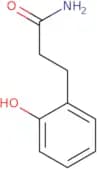
CAS:<p>Versatile small molecule scaffold</p>Formula:C7H8ClN3O3Purity:Min. 95%Molecular weight:217.61 g/mol3-(2-Hydroxyphenyl)propionamide
CAS:<p>Versatile small molecule scaffold</p>Formula:C9H11NO2Purity:Min. 95%Molecular weight:165.19 g/mol3-Methylbenzofuran-2-carboxylic acid ethyl ester
CAS:<p>3-Methylbenzofuran-2-carboxylic acid ethyl ester (MBFE) is a modulator that inhibits the activity of the mcf-7 protein, which is involved in metabolic disorders. MBFE also has activating effects on insulin sensitivity and carbonic anhydrase. This compound has been shown to inhibit the growth of cancer cells in culture, as well as reduce cholesterol levels when administered orally. MBFE may also be used to introduce a mitochondrial biogenesis factor into cancer cells, preventing tumor formation.</p>Formula:C12H12O3Purity:Min. 95%Molecular weight:204.22 g/molN-Cbz-(S)-2-amino-1-butanol
CAS:<p>Versatile small molecule scaffold</p>Formula:C12H17NO3Purity:Min. 95%Molecular weight:223.27 g/mol1-Chloro-4-ethoxyphthalazine
CAS:<p>Versatile small molecule scaffold</p>Formula:C10H9ClN2OPurity:Min. 95%Molecular weight:208.64 g/mol2-bromo-3,4-dimethyl-6-nitroaniline
CAS:<p>Versatile small molecule scaffold</p>Formula:C8H9BrN2O2Purity:Min. 95%Molecular weight:245.1 g/mol3-(2,3-Dimethylphenoxy)propanoic acid
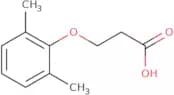
CAS:<p>Versatile small molecule scaffold</p>Formula:C11H14O3Purity:Min. 95%Molecular weight:194.23 g/mol3-(2,6-Dimethylphenoxy)propanoic acid
CAS:<p>Versatile small molecule scaffold</p>Formula:C11H14O3Purity:Min. 95%Molecular weight:194.23 g/mol3-(5-Bromo-2,4-dioxo-1,2,3,4-tetrahydropyrimidin-1-yl)propanoic acid
CAS:<p>Versatile small molecule scaffold</p>Formula:C7H7BrN2O4Purity:Min. 95%Molecular weight:263.05 g/mol4-Amino-5,6,7,8-tetrahydropteridin-6-one
CAS:<p>Versatile small molecule scaffold</p>Formula:C6H7N5OPurity:Min. 95%Molecular weight:165.15 g/mol8-Methyl-7H-purin-6-amine
CAS:<p>8-Methyl-7H-purin-6-amine is a chemical with a molecular weight of 194.2 and a boiling point of 248 °C. It has no color or odor, but it is corrosive in nature. Vapor pressure is 0.0013 mm Hg at 25 °C, acid hydrolysis produces an amide, catalase is unreactive to this compound, and 8-methyl-7H-purin-6-amine does not react with nucleobases under incubated conditions. 8MMP does not form sulfoxide derivatives and is unreactive to alkaline hydrolysis. This compound may be carcinogenic to humans and laboratory studies have shown that benzyl alcohol increases the rate of absorption of 8MMP when ingested orally by rats. Purines are found in RNA and DNA molecules and are essential for life.</p>Formula:C6H7N5Purity:Min. 95%Molecular weight:149.15 g/molPyrido[3,4-d]pyrimidin-4(1H)-one, 2-methyl-
CAS:<p>Versatile small molecule scaffold</p>Formula:C8H7N3OPurity:Min. 95%Molecular weight:161.16 g/mol3,4-Dichloro-6-methylpyridazine
CAS:<p>Versatile small molecule scaffold</p>Formula:C5H4Cl2N2Purity:Min. 95%Molecular weight:163 g/mol2-[2-(2-Bromoacetyl)phenyl]-2,3-dihydro-1H-isoindole-1,3-dione
CAS:<p>Versatile small molecule scaffold</p>Formula:C16H10BrNO3Purity:Min. 95%Molecular weight:344.16 g/molEthyl 2-cyclopropyl-3-oxobutanoate
CAS:<p>Versatile small molecule scaffold</p>Formula:C9H14O3Purity:Min. 95%Molecular weight:170.21 g/mol4-n-Propylpiperidine
CAS:<p>4-n-Propylpiperidine is a piperidine derivative, which is used as a building block in organic synthesis. It has been shown to have anticancer properties in some models of cancer and can be used to treat testicular cancer. 4-n-Propylpiperidine is a carcinogen that can cause mutations and DNA damage, leading to uncontrolled cellular growth. 4-n-Propylpiperidine is an amide or piperazine derivative that has been found to be systematically active against certain types of tumors. This compound is also toxic to the testes and other tissues, and can cause kidney damage.</p>Formula:C8H17NPurity:Min. 95%Molecular weight:127.23 g/molDimethyl 2-(Methoxymethylene)malonate
CAS:<p>Dimethyl 2-(methoxymethylene)malonate is a synthetic molecule that belongs to the class of organic compounds known as dialkylamino malonic esters. It has been shown to inhibit HIV integrase, an enzyme that is essential for HIV replication. Dimethyl 2-(methoxymethylene)malonate was synthesized in two steps from diethyl malonate and methoxyamine hydrochloride. The first step involved the reaction of diethyl malonate with methoxyamine hydrochloride in the presence of nitrobenzene to produce dimethyldiethoxymethoxymethoxymalonic acid methyl ester. The second step involved reacting this product with trimethylamine in the presence of potassium carbonate to produce dimethyl 2-(methoxymethylene)malonate.</p>Formula:C7H10O3Purity:Min. 95%Molecular weight:142.15 g/mol2-Benzylpyrimidin-4-amine
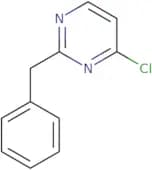
CAS:<p>Versatile small molecule scaffold</p>Formula:C11H11N3Purity:Min. 95%Molecular weight:185.22 g/mol2-Benzyl-4-chloropyrimidine
CAS:<p>2-Benzyl-4-chloropyrimidine is a heterocyclic compound that can be synthesized in three steps from potassium. The reaction pathway starts with the addition of chloroacetic acid to pyrimidine-2,4(1H,3H)-dione and then the intermediate 2-benzylpyrimidine is formed by nucleophilic substitution with an amide. Finally, halogenation of the benzyl group forms 2-benzyl-4-chloropyrimidine. This transformation is due to the fact that pyrimidines are nucleophiles, and chloroacetate is a good leaving group. The substituent on the 4 position of the pyrimidine ring determines whether it will be an amide or a halogenated product.</p>Formula:C11H9ClN2Purity:Min. 95%Molecular weight:204.65 g/mol5,8-Dichloro-3,4-dihydro-2H-1-benzopyran-4-one
CAS:<p>Versatile small molecule scaffold</p>Formula:C9H6Cl2O2Purity:Min. 95%Molecular weight:217.05 g/mol8-Chloro-5-methyl-3,4-dihydro-2H-1-benzopyran-4-one
CAS:<p>Versatile small molecule scaffold</p>Formula:C10H9ClO2Purity:Min. 95%Molecular weight:196.63 g/mol3-Amino-8-methoxy-3,4-dihydro-2H-1-benzopyran-4-one hydrochloride
CAS:<p>Versatile small molecule scaffold</p>Formula:C10H12ClNO3Purity:Min. 95%Molecular weight:229.66 g/mol1-({6-[(1-Cyanocyclohexyl)amino]hexyl}amino)cyclohexane-1-carbonitrile
CAS:<p>Versatile small molecule scaffold</p>Formula:C20H34N4Purity:Min. 95%Molecular weight:330.5 g/mol4-(tert-Butoxy)-2-methylbutan-2-ol
CAS:<p>Versatile small molecule scaffold</p>Formula:C9H20O2Purity:Min. 95%Molecular weight:160.25 g/mol4'-Methyl-3-chloropropiophenone
CAS:<p>Versatile small molecule scaffold</p>Formula:C10H11ClOPurity:Min. 95%Molecular weight:182.65 g/mol2-Cyano-3-methylbutanoic acid
CAS:<p>2-Cyano-3-methylbutanoic acid is a solid with an acidic or basic group. It can be obtained by catalytic reduction of isovaleric acid and has been used to synthesize silicone grafts. 2-Cyano-3-methylbutanoic acid has also shown anticancer activity in a number of animal models, including those for solid tumours. In addition, this compound is conjugated with various drugs and functions as a polymer drug that can be degraded in the body.<br>END></p>Formula:C6H9NO2Purity:Min. 95%Molecular weight:127.14 g/mol2-Cyano-2,2-dimethylacetic acid
CAS:<p>2-Cyano-2,2-dimethylacetic acid (CDMA) is an analog of methylethylcarboxylic acid, which is the precursor for the synthesis of 2-chloro-2,2-dimethylpropionic acid (CDMP). CDMA has been used in the preparation of chromanones and other analogs. It also has a temporary hydroxyl group that can be methylated to form aldehydes or amides. The chloride group can be replaced with dialkylaminocarboxylates, such as dimethoxybenzene or methoxy.</p>Purity:Min. 95%Molecular weight:113.11 g/molBenzyl 5-nitrofuran-2-carboxylate
CAS:<p>Benzyl 5-nitrofuran-2-carboxylate is a catalytic hydrogenolysis agent that can be used to reduce fluoride. It is prepared by the reaction of benzyl chloride with nitrofuran-2-carboxylic acid in the presence of tetraphenylphosphonium and sulfolane. The catalyst, tetraphenylphosphonium, has been shown to increase the yield of benzyl 5-nitrofuran-2-carboxylate. Benzyl 5-nitrofuran-2-carboxylate is mainly used for the synthesis of dimethoxybenzene from dimethylphenol and has also been used as a catalyst for the hydrogenation of ethylene oxide.</p>Formula:C12H9NO5Purity:Min. 95%Molecular weight:247.2 g/molSpiro[2.5]octan-6-ol
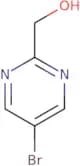
CAS:<p>Spiro[2.5]octan-6-ol is a substrate for the enzyme spiroketal synthase. The enzyme binds to its substrate at one of two active sites and converts it into a spiroketal product. Spiro[2.5]octan-6-ol is converted by the enzyme in an ATP-dependent reaction that requires proton transfer and conformational changes in the enzyme, as shown by magnetic resonance spectroscopy measurements.<br>The enzyme also catalyzes the reverse reaction, converting the spiroketal product back into the original substrate. The reaction mechanism involves a proton transfer between water and an amino acid residue in the active site of the enzyme, followed by nucleophilic attack on an adjacent carbonyl group of the substrate. This results in formation of a tetrahedral intermediate which then collapses to form either products or reactant depending on whether it was formed from reactant or product respectively.</p>Formula:C8H14OPurity:Min. 95%Molecular weight:126.2 g/mol(5-Bromopyrimidin-2-yl)methanol
CAS:<p>Versatile small molecule scaffold</p>Formula:C5H5BrN2OPurity:Min. 95%Molecular weight:189.01 g/mol5-Phenylpyrimidin-4(3H)-one
CAS:<p>Versatile small molecule scaffold</p>Formula:C10H8N2OPurity:Min. 95%Molecular weight:172.18 g/mol2-Bromobenzene-1,3-dicarboxylic acid
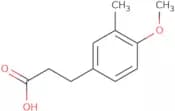
CAS:<p>2-Bromobenzene-1,3-dicarboxylic acid is a carboxylic acid that belongs to the class of aromatic hydrocarbons. It is used in the synthesis of biphenyls and has been found to be an inhibitor of serine proteases. 2-Bromobenzene-1,3-dicarboxylic acid has been shown to be a substrate for oxytocin receptors with hydrogen bonding interactions. This compound also has antireflection properties and can be functionalized by conjugation with other molecules containing functional groups (e.g., biphenyl). 2-Bromobenzene-1,3-dicarboxylic acid can also react with palladium complexes to form aryl chlorides.</p>Formula:C8H5BrO4Purity:Min. 95%Molecular weight:245.03 g/mol3-(4-Methoxy-3-methylphenyl)propanoic acid
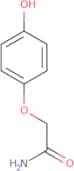
CAS:<p>Versatile small molecule scaffold</p>Formula:C11H14O3Purity:Min. 95%Molecular weight:194.23 g/mol2-(4-Hydroxyphenoxy)acetamide
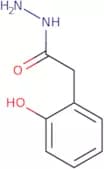
CAS:<p>Versatile small molecule scaffold</p>Formula:C8H9NO3Purity:Min. 95%Molecular weight:167.16 g/mol2-(2-Hydroxyphenyl)acetohydrazide
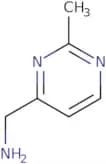
CAS:<p>Versatile small molecule scaffold</p>Formula:C8H10N2O2Purity:Min. 95%Molecular weight:166.18 g/mol(2-Methylpyrimidin-4-yl)methanamine
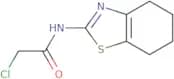
CAS:<p>Versatile small molecule scaffold</p>Formula:C6H9N3Purity:Min. 95%Molecular weight:123.16 g/mol2-Chloro-N-(4,5,6,7-tetrahydro-1,3-benzothiazol-2-yl)acetamide
CAS:<p>Versatile small molecule scaffold</p>Formula:C9H11ClN2OSPurity:Min. 95%Molecular weight:230.72 g/mol4-Bromomethanesulfonylmorpholine
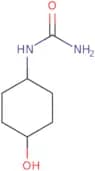
CAS:<p>Versatile small molecule scaffold</p>Formula:C5H10BrNO3SPurity:Min. 95%Molecular weight:244.11 g/mol(4-Hydroxycyclohexyl)urea
CAS:<p>Versatile small molecule scaffold</p>Formula:C7H14N2O2Purity:Min. 95%Molecular weight:158.2 g/mol1H,2H,3H,3aH,4H,9H-Pyrrolo[2,1-b]quinazolin-9-one
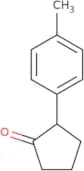
CAS:<p>Versatile small molecule scaffold</p>Formula:C11H12N2OPurity:Min. 95%Molecular weight:188.23 g/mol2-(4-Methylphenyl)cyclopentan-1-one
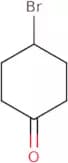
CAS:<p>Versatile small molecule scaffold</p>Formula:C12H14OPurity:Min. 95%Molecular weight:174.24 g/mol4-bromocyclohexan-1-one
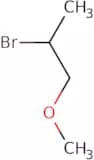
CAS:<p>4-Bromocyclohexan-1-one is a dicarbonyl compound with a cyclohexane ring. It is used as an intermediate in the synthesis of other chemicals, such as dibromobenzene and monomers. This chemical has been shown to have anti-tumor activity against colon cancer cells in vitro and in vivo. 4-Bromocyclohexan-1-one has been shown to bind to DNA, inhibiting DNA synthesis and RNA synthesis. 4-Bromocyclohexan-1-one also inhibits the growth of human tumor cells in culture. The chemical is biodegradable, which limits its toxicity to the environment.</p>Formula:C6H9BrOPurity:Min. 95%Molecular weight:177 g/mol2-bromo-1-methoxypropane
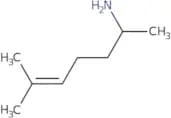
CAS:<p>2-bromo-1-methoxypropane (BMP) is a molecule that inhibits the activity of the enzyme cytochrome P450. It has high solubility and permeability, which makes it suitable for oral administration. BMP is metabolized by esterases and glucuronidases to produce 2-bromo-1-hydroxypropane, which is more soluble in water than 2-bromo-1-methoxypropane. This drug has been shown to be orally bioavailable when administered in rats and monkeys. BMP also has a low molecular weight, which facilitates its passage across cellular membranes. The metabolic stability of BMP has been optimized to increase its bioavailability.</p>Formula:C4H9BrOPurity:Min. 95%Molecular weight:153.02 g/mol6-Methylhept-5-en-2-amine
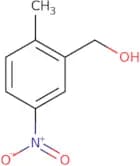
CAS:<p>Versatile small molecule scaffold</p>Formula:C8H17NPurity:Min. 95%Molecular weight:127.23 g/mol(2-Methyl-5-nitrophenyl)methanol
CAS:<p>(2-Methyl-5-nitrophenyl)methanol is an ionic, synthetic and diaxial analog that summarizes the diversity of ketones, nitro compounds and dopamine. It has been synthesized from 2-methylphenol and nitric acid in one step. This compound has been found to be a precursor for the biosynthesis of natural products such as dobutamine, dopamine and nitric oxide. The rearrangement of this compound leads to the formation of an aromatic ring with a nitrogen atom at its center. The synthesis of this compound is summarized in Figure 1.</p>Formula:C8H9NO3Purity:Min. 95%Molecular weight:167.16 g/mol4-(4-nitrophenyl)pyrrolidin-2-one
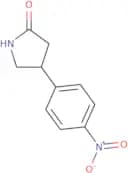
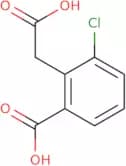
CAS:<p>Versatile small molecule scaffold</p>Formula:C10H10N2O3Purity:Min. 95%Molecular weight:206.2 g/mol2-(Carboxymethyl)-3-chlorobenzoic acid
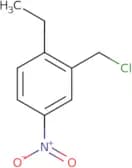
CAS:<p>Versatile small molecule scaffold</p>Formula:C9H7ClO4Purity:Min. 95%Molecular weight:214.6 g/mol2-(Chloromethyl)-1-ethyl-4-nitrobenzene
CAS:<p>Versatile small molecule scaffold</p>Formula:C9H10ClNO2Purity:Min. 95%Molecular weight:199.63 g/mol





![(Bicyclo[1.1.1]pent-1-yl)methanol](/_next/image/?url=https%3A%2Fstatic.cymitquimica.com%2Fproducts%2F3D%2Fthumb-webp%2FXAA28732.webp&w=3840&q=75)


![3,8-diazabicyclo[3.2.1]octan-2-one](/_next/image/?url=https%3A%2Fstatic.cymitquimica.com%2Fproducts%2F3D%2Fthumb-webp%2FXAA31517.webp&w=3840&q=75)


![7-Chloro-4,5-dihydro-1H-benzo[b]azepin-2(3H)-one](/_next/image/?url=https%3A%2Fstatic.cymitquimica.com%2Fproducts%2F3D%2Fthumb-webp%2FXAA34477.webp&w=3840&q=75)






![4H-Thiochromeno[3,4-d][1,2]oxazole](/_next/image/?url=https%3A%2Fstatic.cymitquimica.com%2Fproducts%2F3D%2Fthumb-webp%2FXAA36253.webp&w=3840&q=75)








![Pyrido[3,4-d]pyrimidin-4(1H)-one, 2-methyl-](/_next/image/?url=https%3A%2Fstatic.cymitquimica.com%2Fproducts%2F3D%2Fthumb-webp%2FXAA38985.webp&w=3840&q=75)

![2-[2-(2-Bromoacetyl)phenyl]-2,3-dihydro-1H-isoindole-1,3-dione](/_next/image/?url=https%3A%2Fstatic.cymitquimica.com%2Fproducts%2F3D%2Fthumb-webp%2FXAA39423.webp&w=3840&q=75)




![1-({6-[(1-Cyanocyclohexyl)amino]hexyl}amino)cyclohexane-1-carbonitrile](/_next/image/?url=https%3A%2Fstatic.cymitquimica.com%2Fproducts%2F3D%2Fthumb-webp%2FXAA41141.webp&w=3840&q=75)


![Spiro[2.5]octan-6-ol](/_next/image/?url=https%3A%2Fstatic.cymitquimica.com%2Fproducts%2F3D%2Fthumb-webp%2FXAA42883.webp&w=3840&q=75)



![1H,2H,3H,3aH,4H,9H-Pyrrolo[2,1-b]quinazolin-9-one](/_next/image/?url=https%3A%2Fstatic.cymitquimica.com%2Fproducts%2F3D%2Fthumb-webp%2FXAA45810.webp&w=3840&q=75)