Building Blocks
This section contains fundamental products for the synthesis of organic and biological compounds. Building blocks are the essential starting materials used to construct complex molecules through various chemical reactions. They play a critical role in drug discovery, material science, and chemical research. At CymitQuimica, we offer a diverse range of high-quality building blocks to support your innovative research and industrial projects, ensuring you have the essential components for successful synthesis.
Subcategories of "Building Blocks"
- Boronic Acids & Boronic Acid Derivatives(5,756 products)
- Chiral Building Blocks(1,242 products)
- Hydrocarbon Building Blocks(6,093 products)
- Organic Building Blocks(60,534 products)
Found 195534 products of "Building Blocks"
Sort by
Purity (%)
0
100
|
0
|
50
|
90
|
95
|
100
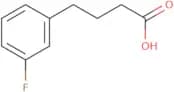
4-(3-Fluorophenyl)butanoic acid
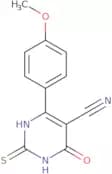
CAS:<p>Versatile small molecule scaffold</p>Formula:C10H11FO2Purity:Min. 95%Molecular weight:182.19 g/mol4-(4-Methoxyphenyl)-6-oxo-2-sulfanyl-1,6-dihydropyrimidine-5-carbonitrile
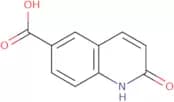
CAS:<p>4-(4-Methoxyphenyl)-6-oxo-2-sulfanyl-1,6-dihydropyrimidine-5-carbonitrile (DMP) is a potentiodynamic polarization and electrochemical impedance spectroscopic technique that can be used to measure the corrosion inhibition efficiency of anodic inhibitors. DMP is an electron donor that can reduce the concentration of chloride ions and copper ions on the anode surface. It also has a strong inhibition effect on both kinetic and equilibrium corrosion reactions. The impedance analysis of DMP shows that it does not have any significant effect on the elements in the solution, such as copper, chloride, or sulfuric acid. This suggests that DMP is a good inhibitor for corrosion reactions in alkaline solutions.</p>Formula:C12H9N3O2SPurity:Min. 95%Molecular weight:259.29 g/mol2-oxo-1,2-dihydroquinoline-6-carboxylic acid
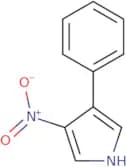
CAS:<p>Quinoline-2-carboxylic acid is a quinoline residue that has been hydrolyzed to the corresponding 2-oxo-1,2-dihydroquinoline-6-carboxylic acid. It is an alkoxy, alkenyl, and cardiotonic drug that has been used as a carbostyril skeleton.</p>Formula:C10H7NO3Purity:Min. 95%Molecular weight:189.17 g/mol3-Nitro-4-phenyl-1H-pyrrole
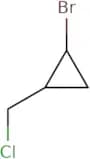
CAS:<p>Versatile small molecule scaffold</p>Formula:C10H8N2O2Purity:Min. 95%Molecular weight:188.18 g/mol1-Bromo-2-(chloromethyl)cyclopropane
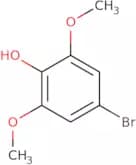
CAS:<p>1-Bromo-2-(chloromethyl)cyclopropane is a methylenecyclopropane that reacts with thiophenol to form an anion. This reaction can be catalyzed by bases or acid. 1-Bromo-2-(chloromethyl)cyclopropane reacts with alcohols to produce nitriles, which are compounds containing the functional group, -C(O)NRR'. Nitriles can also be formed by the direct reaction of anions and alcohols, but this process is less efficient. 1-Bromo-2-(chloromethyl)cyclopropane is used as a solvent in organic chemistry because it reacts with many substances and forms new compounds.</p>Formula:C4H6BrClPurity:Min. 95%Molecular weight:169.4 g/mol4-Bromo-2,6-dimethoxyphenol
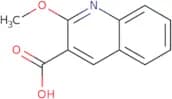
CAS:<p>4-Bromo-2,6-dimethoxyphenol is a synthetic intramolecular nucleophilic substitution product of 2,6-dimethoxybenzaldehyde. The asymmetric synthesis of 4-bromo-2,6-dimethoxyphenol was achieved by the biomimetic strategy. This reaction is catalyzed by palladium and utilizes a chiral phosphine ligand.</p>Formula:C8H9BrO3Purity:Min. 95%Molecular weight:233.06 g/mol2-Methoxyquinoline-3-carboxylic acid
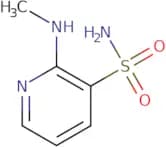
CAS:<p>2-Methoxyquinoline-3-carboxylic acid is an alkaloid that was synthesized by the methoxylation of 2-methoxyquinoline. This compound has been shown to be a good analogue for optimising the reaction between acetone and bromine in order to produce dehydrobrominated compounds. The redox reaction of this compound with hydrogen peroxide is also interesting, as it produces hydrogen gas in addition to the desired products.</p>Formula:C11H9NO3Purity:Min. 95%Molecular weight:203.19 g/mol2-(Methylamino)pyridine-3-sulfonamide
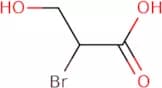
CAS:<p>Versatile small molecule scaffold</p>Formula:C6H9N3O2SPurity:Min. 95%Molecular weight:187.22 g/mol(2S)-2-Bromo-3-hydroxypropanoic acid
CAS:<p>Versatile small molecule scaffold</p>Formula:C3H5BrO3Purity:Min. 95%Molecular weight:168.97 g/mol5-Bromo-3-methylbenzo[D]oxazol-2(3H)-one
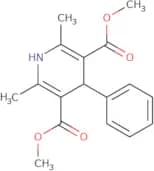
CAS:<p>Versatile small molecule scaffold</p>Formula:C8H6BrNO2Purity:Min. 95%Molecular weight:228.04 g/molDimethyl 2,6-dimethyl-4-phenyl-1,4-dihydropyridine-3,5-dicarboxylate
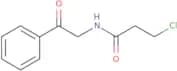
CAS:<p>Dimethyl 2,6-dimethyl-4-phenyl-1,4-dihydropyridine-3,5-dicarboxylate is a radioligand that binds to calcium channels. It is used as a radioligand in binding studies to determine the affinity of various drugs for specific types of calcium channels. Dimethyl 2,6-dimethyl-4-phenyl-1,4-dihydropyridine 3,5 dicarboxylate has been shown to bind specifically to a particular class of calcium channel antagonists (i.e., monosubstituted) and can be used as a pharmacological probe for the study of these compounds.</p>Formula:C17H19NO4Purity:Min. 95%Molecular weight:301.34 g/mol3-Chloro-N-(2-oxo-2-phenylethyl)propanamide
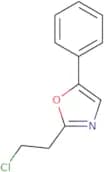
CAS:<p>Versatile small molecule scaffold</p>Formula:C11H12ClNO2Purity:Min. 95%Molecular weight:225.67 g/mol2-(2-Chloroethyl)-5-phenyl-1,3-oxazole
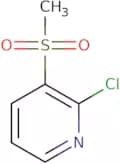
CAS:<p>Versatile small molecule scaffold</p>Formula:C11H10ClNOPurity:Min. 95%Molecular weight:207.65 g/mol2-chloro-3-(methylsulfonyl)pyridine
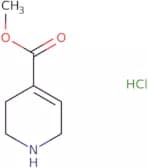
CAS:<p>Versatile small molecule scaffold</p>Formula:C6H6ClNO2SPurity:Min. 95%Molecular weight:191.63 g/molMethyl 1,2,3,6-tetrahydropyridine-4-carboxylate hydrochloride
CAS:<p>Versatile small molecule scaffold</p>Formula:C7H11NO2·HClPurity:Min. 95%Molecular weight:177.63 g/mol1-[(tert-butoxy)carbonyl]-1,2,3,6-tetrahydropyridine-4-carboxylic acid
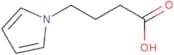
CAS:<p>Versatile small molecule scaffold</p>Formula:C11H17NO4Purity:Min. 95%Molecular weight:227.3 g/mol4-(1H-Pyrrol-1-yl)butanoic acid
CAS:<p>4-(1H-Pyrrol-1-yl)butanoic acid is a biotinylated chemical compound that can be used as a labeling agent for analytical chemistry. The compound has been used to detect the presence of polygonatine, a neurotoxin that affects the central nervous system. 4-(1H-Pyrrol-1-yl)butanoic acid also has been used in conjunction with acridone and an intercalator to form a fluorescent sensor for DNA hybridization. The compound is also used in virus detection because of its ability to bind to viral dna and inhibit protein synthesis. 4-(1H-Pyrrol-1-yl)butanoic acid is an acetylation inhibitor, which means it prevents the formation of acetyl groups from acetate. This inhibition prevents the conversion of pyruvate into lactic acid, which is required for glycolysis in cells.</p>Formula:C8H11NO2Purity:Min. 95%Molecular weight:153.18 g/mol5-Methoxy-1-methylpyrrolidin-2-one
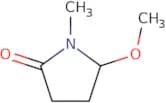
CAS:<p>Versatile small molecule scaffold</p>Formula:C6H11NO2Purity:Min. 95%Molecular weight:129.16 g/mol4-Chloro-2-methyl-1-(trifluoromethoxy)benzene
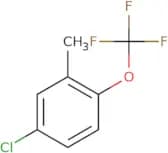
CAS:<p>Versatile small molecule scaffold</p>Formula:C8H6ClF3OPurity:Min. 95%Molecular weight:210.58 g/molo-Aminobenzene sulfon-N-methyl cyclohexylamide
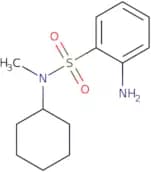
CAS:<p>Versatile small molecule scaffold</p>Formula:C13H20N2O2SPurity:Min. 95%Molecular weight:268.38 g/mol[(5-Chlorothiophen-2-yl)methyl](methyl)amine
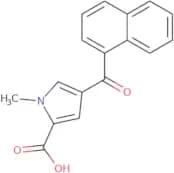
CAS:<p>Versatile small molecule scaffold</p>Formula:C6H8ClNSPurity:Min. 95%Molecular weight:161.65 g/mol1-Methyl-4-(naphthalene-1-carbonyl)-1H-pyrrole-2-carboxylic acid
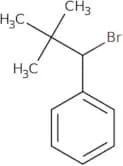
CAS:Controlled Product<p>1-Methyl-4-(naphthalene-1-carbonyl)-1H-pyrrole-2-carboxylic acid is a prodrug that is hydrolyzed in vivo to its active form, 1-methyl-4-(naphthalene-1-ylcarbonyl)-1H-pyrrole 2,3 dicarboxylic acid. The active compound has been shown to bind to the hydroxyl group of an amino acid sequence and inhibit the activity of enzymes that require this group for activity. It also has a high solubility in organic solvents and can be used as a diagnostic agent for nitrate reduction.</p>Formula:C17H13NO3Purity:Min. 95%Molecular weight:279.29 g/mol(1-Bromo-2,2-dimethylpropyl)benzene
CAS:<p>Versatile small molecule scaffold</p>Formula:C11H15BrPurity:Min. 95%Molecular weight:227.14 g/mol2-[3-(6-Methylpyridin-2-yl)propoxy]ethan-1-ol
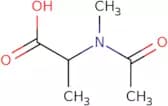
CAS:<p>Versatile small molecule scaffold</p>Formula:C11H17NO2Purity:Min. 95%Molecular weight:195.26 g/mol2-(N-Methylacetamido)propanoic acid
CAS:<p>Versatile small molecule scaffold</p>Formula:C6H11NO3Purity:Min. 95%Molecular weight:145.16 g/mol6-[Methyl(phenyl)amino]pyridine-3-carboxylic acid
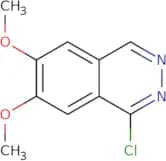
CAS:<p>Versatile small molecule scaffold</p>Formula:C13H12N2O2Purity:Min. 95%Molecular weight:228.25 g/mol1-Chloro-6,7-dimethoxyphthalazine
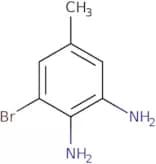
CAS:<p>Versatile small molecule scaffold</p>Formula:C10H9ClN2O2Purity:Min. 95%Molecular weight:224.64 g/mol3-Bromo-5-methyl-benzene-1,2-diamine
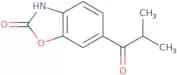
CAS:<p>Versatile small molecule scaffold</p>Formula:C7H9BrN2Purity:Min. 95%Molecular weight:201.06 g/mol6-(2-Methylpropanoyl)-2,3-dihydro-1,3-benzoxazol-2-one
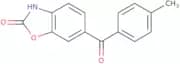
CAS:<p>Versatile small molecule scaffold</p>Formula:C11H11NO3Purity:Min. 95%Molecular weight:205.21 g/mol6-(4-Methylbenzoyl)-2,3-dihydro-1,3-benzoxazol-2-one
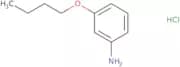
CAS:<p>Versatile small molecule scaffold</p>Formula:C15H11NO3Purity:Min. 95%Molecular weight:253.25 g/mol3-Butoxyaniline hydrochloride
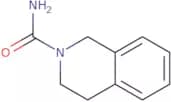
CAS:<p>Versatile small molecule scaffold</p>Formula:C10H16ClNOPurity:Min. 95%Molecular weight:201.69 g/mol1,2,3,4-Tetrahydroisoquinoline-2-carboxamide
CAS:<p>1,2,3,4-Tetrahydroisoquinoline-2-carboxamide is a pigmentosa that has been shown to have analgesic and antidepressant effects. It also has yellow color and a symptom of eye disease. The cycle of this drug is dose-dependent. It has been postulated that 1,2,3,4-tetrahydroisoquinoline-2-carboxamide may be an antidepressant because it produces antidepressant effects in the nervous system. This drug also has a depressive effect on the central nervous system and is used as an antidepressant drug.</p>Formula:C10H12N2OPurity:Min. 95%Molecular weight:176.21 g/mol3-Hydroxyazetidine-3-carboxylic acid hydrochloride
CAS:<p>Versatile small molecule scaffold</p>Formula:C4H8ClNO3Purity:Min. 95%Molecular weight:153.56 g/mol1-[(benzyloxy)carbonyl]-3-hydroxyazetidine-3-carboxylic acid
CAS:<p>Versatile small molecule scaffold</p>Formula:C12H13NO5Purity:Min. 95%Molecular weight:251.2 g/mol1,3-Bis(4-methylphenyl)propan-2-one
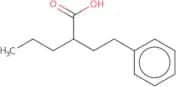
CAS:<p>Versatile small molecule scaffold</p>Formula:C17H18OPurity:Min. 95%Molecular weight:238.32 g/mol2-(2-Phenylethyl)pentanoic acid
CAS:<p>Versatile small molecule scaffold</p>Formula:C13H18O2Purity:Min. 95%Molecular weight:206.3 g/mol3-Methyl-2-(2-phenylethyl)butanoic acid
CAS:<p>Versatile small molecule scaffold</p>Formula:C13H18O2Purity:Min. 95%Molecular weight:206.28 g/mol2-Chloro-4-((trifluoromethyl)thio)phenol
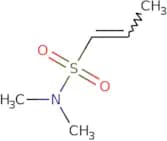
CAS:<p>Versatile small molecule scaffold</p>Formula:C7H4ClF3OSPurity:Min. 95%Molecular weight:228.62 g/molN,N-Dimethylprop-1-ene-1-sulfonamide
CAS:<p>Versatile small molecule scaffold</p>Formula:C5H11NO2SPurity:Min. 95%Molecular weight:149.2 g/mol2-Hydroxy-N-{[(prop-2-en-1-yl)carbamothioyl]amino}propanamide
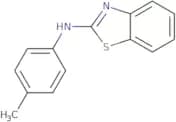
CAS:<p>Versatile small molecule scaffold</p>Formula:C7H13N3O2SPurity:Min. 95%Molecular weight:203.26 g/molN-(4-Methylphenyl)-1,3-benzothiazol-2-amine
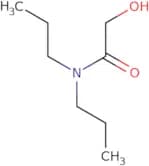
CAS:<p>Versatile small molecule scaffold</p>Formula:C14H12N2SPurity:Min. 95%Molecular weight:240.33 g/mol2-Hydroxy-N,N-dipropylacetamide
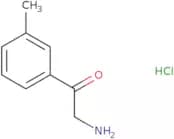
CAS:<p>Versatile small molecule scaffold</p>Formula:C8H17NO2Purity:Min. 95%Molecular weight:159.23 g/mol2-Amino-1-(3-methylphenyl)ethan-1-one hydrochloride
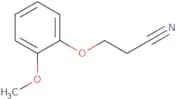
CAS:Controlled Product<p>Versatile small molecule scaffold</p>Formula:C9H12ClNOPurity:Min. 95%Molecular weight:185.65 g/mol3-(2-Methoxyphenoxy)propanenitrile
CAS:<p>Versatile small molecule scaffold</p>Formula:C10H11NO2Purity:Min. 95%Molecular weight:177.2 g/mol2-[(2-Hydroxyethyl)amino]-2-methylpropan-1-ol
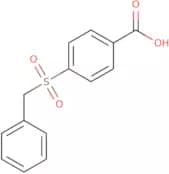
CAS:<p>Versatile small molecule scaffold</p>Formula:C6H15NO2Purity:Min. 95%Molecular weight:133.19 g/mol4-Phenylmethanesulfonylbenzoic acid
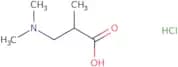
CAS:<p>Versatile small molecule scaffold</p>Formula:C14H12O4SPurity:Min. 95%Molecular weight:276.31 g/mol3-(Dimethylamino)-2-methylpropanoic acid hydrochloride
CAS:<p>Versatile small molecule scaffold</p>Formula:C6H14ClNO2Purity:Min. 95%Molecular weight:167.63 g/mol4-[(Dimethylamino)methyl]phenylboronic acid
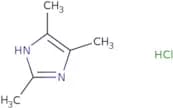
CAS:<p>Versatile small molecule scaffold</p>Formula:C9H14BNO2Purity:Min. 95%Molecular weight:179.03 g/mol2,4,5-Trimethyl-1H-imidazole hydrochloride
CAS:<p>Versatile small molecule scaffold</p>Formula:C6H11ClN2Purity:Min. 95%Molecular weight:146.62 g/molrac-(1R,2S)-2-Phenylcycloheptan-1-ol
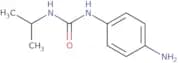
CAS:<p>Versatile small molecule scaffold</p>Formula:C13H18OPurity:Min. 95%Molecular weight:190.3 g/mol1-(4-Aminophenyl)-3-(propan-2-yl)urea
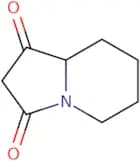
CAS:<p>Versatile small molecule scaffold</p>Formula:C10H15N3OPurity:Min. 95%Molecular weight:193.25 g/molOctahydroindolizine-1,3-dione
CAS:<p>Versatile small molecule scaffold</p>Formula:C8H11NO2Purity:Min. 95%Molecular weight:153.18 g/molN-[(4-Methoxyphenyl)methyl]prop-2-enamide
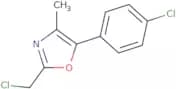
CAS:<p>5-HTP is a naturally occurring amino acid and chemical precursor for the neurotransmitter serotonin (5-hydroxytryptamine, 5-HT). It is found in plants, animals, and bacteria. The human body can convert tryptophan to 5-HTP, which then becomes serotonin. This product has been shown to be effective at doses of 100 mg/kg in rats.<br>5-HTP has been shown to have a significant effect on locomotor activity after administration of either 5-HTP or fluoxetine (Prozac). The effects were blocked by ketanserin and methysergide, which are known as receptor antagonists for 5-HT2A and 5-HT2C receptors respectively.<br>5-HTP has also been shown to increase bladder function in rats with spinal cord injury.</p>Formula:C11H13NO2Purity:Min. 95%Molecular weight:191.23 g/mol2-(Chloromethyl)-5-(4-chlorophenyl)-4-methyl-1,3-oxazole
CAS:<p>Versatile small molecule scaffold</p>Formula:C11H9Cl2NOPurity:Min. 95%Molecular weight:242.1 g/mol2-(4-Cyanophenyl)-3-methylbutanoic acid
CAS:<p>Versatile small molecule scaffold</p>Formula:C12H13NO2Purity:Min. 95%Molecular weight:203.2 g/mol2-{[(tert-Butoxy)carbonyl](2-{[(tert-butoxy)carbonyl]amino}ethyl)amino}acetic acid
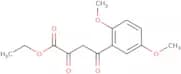
CAS:<p>Versatile small molecule scaffold</p>Formula:C14H26N2O6Purity:Min. 95%Molecular weight:318.37 g/molEthyl 4-(2,5-dimethoxyphenyl)-2,4-dioxobutanoate
CAS:<p>Versatile small molecule scaffold</p>Formula:C14H16O6Purity:Min. 95%Molecular weight:280.27 g/mol5-(Bromomethyl)-3-methyl-2,3-dihydro-1,3-benzoxazol-2-one
CAS:<p>Versatile small molecule scaffold</p>Formula:C9H8BrNO2Purity:Min. 95%Molecular weight:242.07 g/mol2-(3-Methyl-2-oxo-2,3-dihydro-1,3-benzoxazol-5-yl)acetonitrile
CAS:<p>Versatile small molecule scaffold</p>Formula:C10H8N2O2Purity:Min. 95%Molecular weight:188.18 g/mol7-amino-5-chloropyrazolo[1,5-a]pyrimidine
CAS:<p>Versatile small molecule scaffold</p>Formula:C6H5ClN4Purity:Min. 95%Molecular weight:168.58 g/molN-(2-bromo-6-nitrophenyl)acetamide
CAS:<p>N-(2-bromo-6-nitrophenyl)acetamide is a bidentate ligand that was synthesized as an acetylated derivative of diazonium salt. It binds to transition metal ions such as copper and nickel, which are important for the catalytic activity of many enzymes. The binding of N-(2-bromo-6-nitrophenyl)acetamide to the active site of these enzymes inhibits the reaction by forming a complex with the substrate, thereby preventing it from reacting with the enzyme. In addition, this ligand has been shown to have strong absorption in the visible range, which is useful for detection of transitions in organic molecules. Nitro groups can be introduced through nitration reactions or by adding nitrobenzene to N-(2-bromo-6-nitrophenyl)acetamide. One advantage of N-(2-bromo-6-nitrophenyl)acetamide over other</p>Formula:C8H7BrN2O3Purity:Min. 95%Molecular weight:259.06 g/mol4-(4-Methyl-3-nitrophenyl)morpholine
CAS:<p>Versatile small molecule scaffold</p>Formula:C11H14N2O3Purity:Min. 95%Molecular weight:222.24 g/mol4-Aminopyrimidine-2-carbonitrile
CAS:<p>4-Aminopyrimidine-2-carbonitrile is an organic compound that is structurally related to pyrimidine derivatives. It is a drug candidate for the treatment of tuberculosis (TB) and other multidrug resistant bacteria. 4-Aminopyrimidine-2-carbonitrile has been shown to be more potent than formamide and triethyl orthoformate, but less potent than aminopyrazole. The mechanism of action of 4-aminopyrimidine-2-carbonitrile is not well understood, but it may involve an epoxide intermediate that generates reactive oxygen species, which causes necrosis in the bacterial cell. The drug also exhibits some activity against tumour necrosis factor alpha (TNFα).</p>Purity:Min. 95%3-Methyl-N-(prop-2-yn-1-yl)but-2-enamide
CAS:<p>Versatile small molecule scaffold</p>Formula:C8H11NOPurity:Min. 95%Molecular weight:137.18 g/mol2-Chloro-4-ethoxybenzaldehyde
CAS:<p>Versatile small molecule scaffold</p>Formula:C9H9ClO2Purity:Min. 95%Molecular weight:184.62 g/mol4-(3-Bromophenyl)oxane-4-carbonitrile
CAS:<p>Versatile small molecule scaffold</p>Formula:C12H12BrNOPurity:Min. 95%Molecular weight:266.14 g/mol1-{1-Methyl-1H-pyrazolo[3,4-d]pyrimidin-4-yl}piperazine
CAS:<p>Versatile small molecule scaffold</p>Formula:C10H14N6Purity:Min. 95%Molecular weight:218.26 g/mol3-Acetamido-1-methyl-1H-pyrazole-5-carboxylic acid
CAS:<p>Versatile small molecule scaffold</p>Formula:C7H9N3O3Purity:Min. 95%Molecular weight:183.16 g/molMethyl (2E)-3-(5-methoxy-1H-indol-2-yl)prop-2-enoate
CAS:<p>Versatile small molecule scaffold</p>Formula:C13H13NO3Purity:Min. 95%Molecular weight:231.2 g/mol2,2,2-Trifluoro-1-(Piperazin-1-Yl)Ethanone Hydrochloride
CAS:<p>Versatile small molecule scaffold</p>Formula:C6H10ClF3N2OPurity:Min. 95%Molecular weight:218.6 g/mol2-(Isobutylamino)ethanol hydrochloride
CAS:<p>Versatile small molecule scaffold</p>Formula:C6H16ClNOPurity:Min. 95%Molecular weight:153.65 g/mol1-[(4-Aminophenyl)methyl]pyrrolidine-2,5-dione
CAS:<p>Versatile small molecule scaffold</p>Formula:C11H12N2O2Purity:Min. 95%Molecular weight:204.22 g/molEthyl 2-(5-amino-3-phenyl-1H-pyrazol-1-yl)acetate
CAS:<p>Versatile small molecule scaffold</p>Formula:C13H15N3O2Purity:Min. 95%Molecular weight:245.28 g/mol4-[[(1,1-Dimethylethyl)dimethylsilyl]oxy]-1-butanamine
CAS:<p>Versatile small molecule scaffold</p>Formula:C10H25NOSiPurity:Min. 95%Color and Shape:Clear LiquidMolecular weight:203.4 g/mol2-(2-Propen-1-yl)pyrrolidine hydrochloride
CAS:<p>Versatile small molecule scaffold</p>Formula:C7H14ClNPurity:Min. 95%Molecular weight:147.64 g/mol[2-(4-Morpholinyl)-3-pyridinyl]methanamine
CAS:<p>Versatile small molecule scaffold</p>Formula:C10H15N3OPurity:Min. 95%Molecular weight:193.25 g/mol[2-(Pyridin-4-yl)phenyl]methanamine
CAS:<p>Versatile small molecule scaffold</p>Formula:C12H12N2Purity:Min. 95%Molecular weight:184.24 g/mol(3-Chloropyridin-4-yl)methanamine
CAS:<p>Versatile small molecule scaffold</p>Formula:C6H7ClN2Purity:Min. 95%Molecular weight:142.59 g/mol6-Chloro-8-nitro-4H-benzo[1,4]oxazin-3-one
CAS:<p>Versatile small molecule scaffold</p>Formula:C8H5ClN2O4Purity:Min. 95%Molecular weight:228.59 g/mol2-Chloro-3-fluoroisonicotinonitrile
CAS:<p>Versatile small molecule scaffold</p>Formula:C6H2ClFN2Purity:Min. 95%Molecular weight:156.55 g/mol4-(3,4-Dichlorophenyl)-2-(ethanesulfonyl)-6-(trifluoromethyl)pyrimidine
CAS:<p>Versatile small molecule scaffold</p>Formula:C13H9Cl2F3N2O2SPurity:Min. 95%Molecular weight:385.2 g/molMethyl 5-Amino-4-Bromopicolinate
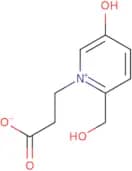
CAS:<p>Versatile small molecule scaffold</p>Formula:C7H7BrN2O2Purity:Min. 95%Molecular weight:231.05 g/mol1-(2-Carboxyethyl)-5-hydroxy-2-(hydroxymethyl)pyridin-1-ium
CAS:<p>Versatile small molecule scaffold</p>Formula:C9H11NO4Purity:Min. 95%Molecular weight:197.19 g/mol2-({[(9H-Fluoren-9-yl)methoxy]carbonyl}amino)-6-methylbenzoic acid
CAS:<p>Versatile small molecule scaffold</p>Formula:C23H19NO4Purity:Min. 95%Molecular weight:373.4 g/mol3-Hydroxy-4-methyl-N-[3-(trifluoromethyl)phenyl]benzamide
CAS:<p>Versatile small molecule scaffold</p>Formula:C15H12F3NO2Purity:Min. 95%Molecular weight:295.26 g/mol4-fluorothieno[2,3-c]pyridine-2-carboxylic acid
CAS:<p>Versatile small molecule scaffold</p>Formula:C8H4FNO2SPurity:Min. 95%Molecular weight:197.19 g/molMethyl thieno[2,3-c]pyridine-2-carboxylate
CAS:<p>Versatile small molecule scaffold</p>Formula:C9H7NO2SPurity:Min. 95%Molecular weight:193.22 g/mol2-[2-(tert-Butoxy)ethoxy]-2,3-dihydro-1H-isoindole-1,3-dione
CAS:<p>Versatile small molecule scaffold</p>Formula:C14H17NO4Purity:Min. 95%Molecular weight:263.3 g/mol4-Bromo-1H-pyrazolo[3,4-c]pyridin-3-amine
CAS:<p>Versatile small molecule scaffold</p>Formula:C6H5BrN4Purity:Min. 95%Molecular weight:213.04 g/mol2-{[(tert-Butoxy)carbonyl]amino}-3-(furan-2-yl)propanoic acid
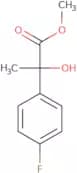
CAS:<p>Versatile small molecule scaffold</p>Formula:C12H17NO5Purity:Min. 95%Molecular weight:255.27 g/molMethyl 2-(4-fluorophenyl)-2-hydroxypropanoate
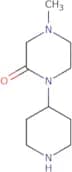
CAS:<p>Versatile small molecule scaffold</p>Formula:C10H11FO3Purity:Min. 95%Molecular weight:198.19 g/mol4-Methyl-1-(piperidin-4-yl)piperazin-2-one
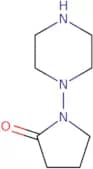
CAS:<p>Versatile small molecule scaffold</p>Formula:C10H19N3OPurity:Min. 95%Molecular weight:197.28 g/mol1-(1-Piperazinyl)-2-pyrrolidinone
CAS:<p>Versatile small molecule scaffold</p>Formula:C8H15N3OPurity:Min. 95%Molecular weight:169.22 g/moltert-Butyl N-[(benzenesulfonyl)methyl]-N-hydroxycarbamate
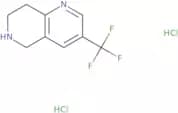
CAS:<p>Versatile small molecule scaffold</p>Formula:C12H17NO5SPurity:Min. 95%Molecular weight:287.33 g/mol3-(Trifluoromethyl)-5,6,7,8-tetrahydro-1,6-naphthyridine diHCl
CAS:<p>Versatile small molecule scaffold</p>Formula:C9H11Cl2F3N2Purity:Min. 95%Molecular weight:275.1 g/mol2-(2-Chloro-5-fluorophenyl)-4,4,5,5-tetramethyl-1,3,2-dioxaborolane
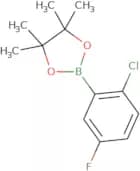
CAS:<p>Versatile small molecule scaffold</p>Formula:C12H15BClFO2Purity:Min. 95%Molecular weight:256.51 g/mol5-Bromo-2-isopropoxypyridine
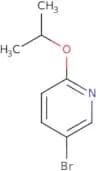
CAS:<p>5-Bromo-2-isopropoxypyridine is a regiospecific aminating agent that can be used to synthesize β-carboline derivatives. It is an important intermediate in the synthesis of biologically active natural products, such as β-carbolines and other carbocyclic compounds. 5-Bromo-2-isopropoxypyridine reacts with nucleophiles to form a five membered ring containing two heteroatoms, which are often nitrogen or oxygen. The presence of a nitrogen atom in the ring gives rise to the name "β" for this type of compound. This reaction is catalyzed by palladium and is known as the Buchwald reaction.</p>Formula:C8H10BrNOPurity:Min. 95%Molecular weight:216.08 g/mol1,2,5-Thiadiazol-3-yl trifluoromethanesulfonate
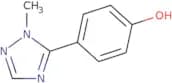
CAS:<p>Versatile small molecule scaffold</p>Formula:C3HF3N2O3S2Purity:Min. 95%Molecular weight:234.18 g/mol4-(1-Methyl-1H-1,2,4-triazol-5-yl)phenol
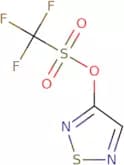
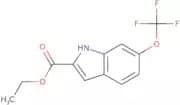
CAS:<p>Versatile small molecule scaffold</p>Formula:C9H9N3OPurity:Min. 95%Molecular weight:175.19 g/molEthyl 6-(trifluoromethoxy)-1H-indole-2-carboxylate
CAS:<p>Versatile small molecule scaffold</p>Formula:C12H10F3NO3Purity:Min. 95%Molecular weight:273.21 g/mol

![5-Bromo-3-methylbenzo[D]oxazol-2(3H)-one](/_next/image/?url=https%3A%2Fstatic.cymitquimica.com%2Fproducts%2F3D%2Fthumb-webp%2FVCA67282.webp&w=3840&q=75)
![1-[(tert-butoxy)carbonyl]-1,2,3,6-tetrahydropyridine-4-carboxylic acid](/_next/image/?url=https%3A%2Fstatic.cymitquimica.com%2Fproducts%2F3D%2Fthumb-webp%2FVCA68484.webp&w=3840&q=75)
amine](/_next/image/?url=https%3A%2Fstatic.cymitquimica.com%2Fproducts%2F3D%2Fthumb-webp%2FVCA69637.webp&w=3840&q=75)
![2-[3-(6-Methylpyridin-2-yl)propoxy]ethan-1-ol](/_next/image/?url=https%3A%2Fstatic.cymitquimica.com%2Fproducts%2F3D%2Fthumb-webp%2FVCA71517.webp&w=3840&q=75)
![6-[Methyl(phenyl)amino]pyridine-3-carboxylic acid](/_next/image/?url=https%3A%2Fstatic.cymitquimica.com%2Fproducts%2F3D%2Fthumb-webp%2FVCA72013.webp&w=3840&q=75)

![1-[(benzyloxy)carbonyl]-3-hydroxyazetidine-3-carboxylic acid](/_next/image/?url=https%3A%2Fstatic.cymitquimica.com%2Fproducts%2F3D%2Fthumb-webp%2FVCA76764.webp&w=3840&q=75)



![2-Hydroxy-N-{[(prop-2-en-1-yl)carbamothioyl]amino}propanamide](/_next/image/?url=https%3A%2Fstatic.cymitquimica.com%2Fproducts%2F3D%2Fthumb-webp%2FVCA78514.webp&w=3840&q=75)
![2-[(2-Hydroxyethyl)amino]-2-methylpropan-1-ol](/_next/image/?url=https%3A%2Fstatic.cymitquimica.com%2Fproducts%2F3D%2Fthumb-webp%2FVCA78740.webp&w=3840&q=75)
![4-[(Dimethylamino)methyl]phenylboronic acid](/_next/image/?url=https%3A%2Fstatic.cymitquimica.com%2Fproducts%2F3D%2Fthumb-webp%2FVCA79912.webp&w=3840&q=75)
![N-[(4-Methoxyphenyl)methyl]prop-2-enamide](/_next/image/?url=https%3A%2Fstatic.cymitquimica.com%2Fproducts%2F3D%2Fthumb-webp%2FVCA87553.webp&w=3840&q=75)
carbonyl]amino}ethyl)amino}acetic acid](/_next/image/?url=https%3A%2Fstatic.cymitquimica.com%2Fproducts%2F3D%2Fthumb-webp%2FVCA88973.webp&w=3840&q=75)


![7-amino-5-chloropyrazolo[1,5-a]pyrimidine](/_next/image/?url=https%3A%2Fstatic.cymitquimica.com%2Fproducts%2F3D%2Fthumb-webp%2FVJA09596.webp&w=3840&q=75)


![1-{1-Methyl-1H-pyrazolo[3,4-d]pyrimidin-4-yl}piperazine](/_next/image/?url=https%3A%2Fstatic.cymitquimica.com%2Fproducts%2F3D%2Fthumb-webp%2FVJA44997.webp&w=3840&q=75)


![1-[(4-Aminophenyl)methyl]pyrrolidine-2,5-dione](/_next/image/?url=https%3A%2Fstatic.cymitquimica.com%2Fproducts%2F3D%2Fthumb-webp%2FVJA54725.webp&w=3840&q=75)

![4-[[(1,1-Dimethylethyl)dimethylsilyl]oxy]-1-butanamine](/_next/image/?url=https%3A%2Fstatic.cymitquimica.com%2Fproducts%2F3D%2Fthumb-webp%2FVJA66015.webp&w=3840&q=75)

![[2-(4-Morpholinyl)-3-pyridinyl]methanamine](/_next/image/?url=https%3A%2Fstatic.cymitquimica.com%2Fproducts%2F3D%2Fthumb-webp%2FVJB06329.webp&w=3840&q=75)
![[2-(Pyridin-4-yl)phenyl]methanamine](/_next/image/?url=https%3A%2Fstatic.cymitquimica.com%2Fproducts%2F3D%2Fthumb-webp%2FVJB06339.webp&w=3840&q=75)

![6-Chloro-8-nitro-4H-benzo[1,4]oxazin-3-one](/_next/image/?url=https%3A%2Fstatic.cymitquimica.com%2Fproducts%2F3D%2Fthumb-webp%2FVJB06473.webp&w=3840&q=75)


![2-({[(9H-Fluoren-9-yl)methoxy]carbonyl}amino)-6-methylbenzoic acid](/_next/image/?url=https%3A%2Fstatic.cymitquimica.com%2Fproducts%2F3D%2Fthumb-webp%2FVJB15057.webp&w=3840&q=75)
![3-Hydroxy-4-methyl-N-[3-(trifluoromethyl)phenyl]benzamide](/_next/image/?url=https%3A%2Fstatic.cymitquimica.com%2Fproducts%2F3D%2Fthumb-webp%2FVJB22173.webp&w=3840&q=75)
![4-fluorothieno[2,3-c]pyridine-2-carboxylic acid](/_next/image/?url=https%3A%2Fstatic.cymitquimica.com%2Fproducts%2F3D%2Fthumb-webp%2FVJB23546.webp&w=3840&q=75)
![Methyl thieno[2,3-c]pyridine-2-carboxylate](/_next/image/?url=https%3A%2Fstatic.cymitquimica.com%2Fproducts%2F3D%2Fthumb-webp%2FVJB24358.webp&w=3840&q=75)
![2-[2-(tert-Butoxy)ethoxy]-2,3-dihydro-1H-isoindole-1,3-dione](/_next/image/?url=https%3A%2Fstatic.cymitquimica.com%2Fproducts%2F3D%2Fthumb-webp%2FVJB24367.webp&w=3840&q=75)
![4-Bromo-1H-pyrazolo[3,4-c]pyridin-3-amine](/_next/image/?url=https%3A%2Fstatic.cymitquimica.com%2Fproducts%2F3D%2Fthumb-webp%2FVJB24435.webp&w=3840&q=75)
![2-{[(tert-Butoxy)carbonyl]amino}-3-(furan-2-yl)propanoic acid](/_next/image/?url=https%3A%2Fstatic.cymitquimica.com%2Fproducts%2F3D%2Fthumb-webp%2FVJB24594.webp&w=3840&q=75)
![tert-Butyl N-[(benzenesulfonyl)methyl]-N-hydroxycarbamate](/_next/image/?url=https%3A%2Fstatic.cymitquimica.com%2Fproducts%2F3D%2Fthumb-webp%2FVJB30076.webp&w=3840&q=75)