Building Blocks
This section contains fundamental products for the synthesis of organic and biological compounds. Building blocks are the essential starting materials used to construct complex molecules through various chemical reactions. They play a critical role in drug discovery, material science, and chemical research. At CymitQuimica, we offer a diverse range of high-quality building blocks to support your innovative research and industrial projects, ensuring you have the essential components for successful synthesis.
Subcategories of "Building Blocks"
- Boronic Acids & Boronic Acid Derivatives(5,756 products)
- Chiral Building Blocks(1,242 products)
- Hydrocarbon Building Blocks(6,093 products)
- Organic Building Blocks(60,519 products)
Found 195533 products of "Building Blocks"
Sort by
Purity (%)
0
100
|
0
|
50
|
90
|
95
|
100
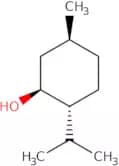
(1S,2R,5S)-(+)-Menthol
CAS:<p>(1S,2R,5S)-(+)-Menthol is a pharmacological agent that has been shown to have anti-inflammatory activity. It inhibits prostaglandin synthesis by competitively blocking cyclooxygenase-1 and cyclooxygenase-2. (1S,2R,5S)-(+)-Menthol has also been shown to have x-ray crystal structures of the complex with sodium citrate in solution. These structures provide information about how menthol reacts with sodium citrate and water vapor for its reaction mechanism. The thermodynamic data for this process are also available. Menthol was found to be most effective when used in cell lysis experiments at a concentration of 1.0 mM and at room temperature. This compound is a white crystalline solid that is soluble in ethanol or chloroform but insoluble in water.</p>Formula:C10H20OPurity:Min. 98%Color and Shape:White PowderMolecular weight:156.27 g/mol2-Methyl-1,5-hexadiene
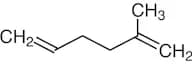
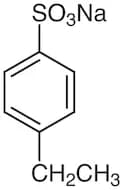
CAS:Formula:C7H12Purity:>98.0%(GC)Color and Shape:Colorless to Almost colorless clear liquidMolecular weight:96.17Sodium 4-Ethylbenzenesulfonate
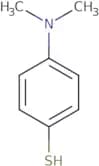
CAS:Formula:C8H9NaO3SPurity:>98.0%(T)(HPLC)Color and Shape:White to Almost white powder to crystalMolecular weight:208.214-(Dimethylamino)benzenethiol
CAS:<p>4-(Dimethylamino)benzenethiol (DMAT) is a thiol that has coordination chemistry with metal ions. DMAT exhibits transport properties, such as solubility in water and chloride, which may be due to its electrochemical properties. DMAT can be photooxidized by ultraviolet light to form the reactive species, 4-dimethylaminobenzoquinone. This reactive species can then react with hydrogen peroxide to produce the intermediate radical cation, which can react with other molecules to produce singlet oxygen and superoxide radicals. These reactions are responsible for the photooxidation of organic materials.<br>The enhanced Raman spectra of DMAT have been studied using surface-enhanced Raman spectroscopy (SERS). The SERS technique enhances the intensity of scattered laser light by orders of magnitude by tapping into a phenomenon known as surface plasmon resonance. The nmr spectra of DMAT have been studied and show that it is</p>Formula:C8H11NSPurity:Min. 95%Color and Shape:PowderMolecular weight:153.25 g/mol5-Methyl-2-phenyl-1H-imidazole-4-carboxylic acid
CAS:<p>5-Methyl-2-phenyl-1H-imidazole-4-carboxylic acid (MPICA) is a potent inhibitor of xanthine oxidase. It is also an inhibitor of β-glucuronidase and enzymes that maintain the integrity of bacterial DNA. MPICA has been shown to inhibit xanthine oxidase in a dose dependent manner and can be used as a lead compound for new inhibitors of this enzyme.</p>Formula:C11H10N2O2Purity:Min. 95%Color and Shape:White PowderMolecular weight:202.21 g/mol1,2,3,4-Tetrachlorohexafluorobutane
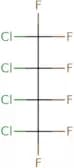
CAS:<p>1,2,3,4-Tetrachlorohexafluorobutane is a colorless liquid with an unpleasant odor. It is used as a solvent and as a chemical intermediate in the production of other chemicals. 1,2,3,4-Tetrachlorohexafluorobutane has been shown to react with hydrochloric acid to produce hydrogen chloride gas and hydrogen fluoride. The reaction vessel must be well-ventilated and the use of protective clothing is recommended due to the potential for exposure to hydrogen fluoride. This compound can also be chlorinated using chlorine gas or hypochlorite solution.</p>Formula:C4Cl4F6Purity:Min. 95%Color and Shape:Colorless Clear LiquidMolecular weight:303.84 g/mol4-(2-Thienyl)piperidine
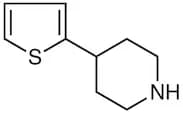
CAS:Formula:C9H13NSPurity:>98.0%(GC)Color and Shape:Light yellow to Brown powder to lumpMolecular weight:167.273,5-Dimethoxy-4-hydroxybenzoic acid methyl ester
CAS:<p>3,5-Dimethoxy-4-hydroxybenzoic acid methyl ester (DMHBME) is a natural compound that has been shown to have high redox potential values and chemical stability. This compound is an inhibitor of p-hydroxylases and has been shown to inhibit human serum laccase activity. DMHBME also inhibits polymerase chain reactions in the presence of DNA templates, which may be due to its ability to bind to the enzyme at the active site. DMHBME is a potent antimicrobial agent that can be used as a fungicide or preservative in food products. It is also effective against bacteria such as Staphylococcus aureus, Clostridium perfringens, Escherichia coli, and Mycobacterium tuberculosis.</p>Formula:C10H12O5Purity:Min. 95%Color and Shape:White PowderMolecular weight:212.2 g/molPyridinium p-Toluenesulfonate
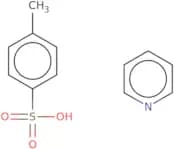
CAS:<p>Pyridinium p-toluenesulfonate is a reagent that can be used in the reduction of chloride to produce chloride ions. This process is called desulfurization. Pyridinium p-toluenesulfonate also reacts with cyclodepsipeptides, and can be used to recrystallize them. The main use for this reagent is in organic synthesis, where it can be used as an acid catalyst to synthesize polyene compounds or as a stereoselective agent for the preparation of dye cations.</p>Formula:C7H8O3S·C5H5NPurity:Min. 95%Color and Shape:White PowderMolecular weight:251.3 g/mol3,5-Dibromo-4-hydroxytoluene
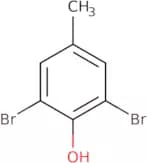
CAS:<p>3,5-Dibromo-4-hydroxytoluene (DBHT) is a brominated aromatic hydrocarbon. It has been shown to be an efficient debrominating agent for bromophenols and chloride, which are two major environmental pollutants. DBHT can also catalyze the conversion of styrene to benzene and acetic acid in the presence of hydrogen, as well as methylating styrene. This chemical is an effective catalyst for the formation of metabolic intermediates and crystal x-ray diffraction studies have shown that DBHT is a good substrate for enzyme activity.</p>Formula:C7H6Br2OPurity:Min. 95%Color and Shape:White To Yellow To Light Brown SolidMolecular weight:265.93 g/mol1,3-Thiazol-2-ylmethanol
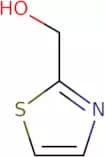
CAS:<p>1,3-Thiazol-2-ylmethanol is a macrocyclic compound that has a structure similar to that of the natural product phenylbutazone. It is synthesized from 1,3-thiazol-2-amine and benzaldehyde by dehydrogenative condensation. The ligand binds with metal ions via its thionyl group. The metal ion coordinates with the chloride anion and the ligand to produce a planar geometry. This process also produces a distillate that contains phenylbutazone as a major product.</p>Formula:C4H5NOSPurity:Min. 95%Color and Shape:White PowderMolecular weight:115.15 g/mol5,6-Diaminobenzimidazole dihydrochloride
CAS:<p>Please enquire for more information about 5,6-Diaminobenzimidazole dihydrochloride including the price, delivery time and more detailed product information at the technical inquiry form on this page</p>Formula:C7H10Cl2N4Purity:Min. 95%Color and Shape:Off-white to pale brown solid.Molecular weight:221.09 g/mol7,7,8,8-Tetracyanoquinodimethane
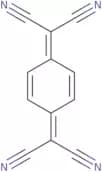
CAS:<p>7,7,8,8-Tetracyanoquinodimethane is a quinoid compound that is used as an analytical chemical reagent. It has been shown to be a powerful reducing agent and can be used in the determination of trace amounts of metals. 7,7,8,8-Tetracyanoquinodimethane also reacts with cationic surfactants and hydroxyl groups to form stable compounds. The nitrogen atoms in this molecule are capable of multiple transfer reactions with other molecules.br>br> <br>The redox potentials of this substance are negative and it has been shown to have the ability to transport pharmaceutical preparations across cell membranes. Boron nitride (BN) has been shown to stabilize the structure of 7,7,8,8-tetracyanoquinodimethane by forming strong hydrogen bonds between the BN and hydroxyl groups on this molecule.</p>Formula:C12H4N4Purity:Min. 95%Color and Shape:Yellow To Green Or Brown SolidMolecular weight:204.19 g/mol2-Acetylpyrazine
CAS:<p>2-Acetylpyrazine is a nitrogen containing compound that has been used in biological studies. 2-Acetylpyrazine has been shown to have inhibitory properties against the growth of prostate cancer cells and other cell lines. It also inhibits the production of fatty acids and epidermal growth factor, which are important for cellular proliferation. The inhibition is due to the photochemical properties of 2-acetylpyrazine, which cause the formation of reactive species that react with biological molecules. The reactive species may be generated by either a reaction mechanism or a reaction pathway that involve coordination geometry.<br>2-acetylpyrazine has also been used as a fluorescence probe for fatty acid detection in lipid bilayers and liposomes.</p>Formula:C6H6N2OPurity:Min. 95%Color and Shape:PowderMolecular weight:122.12 g/mol6-Bromo-7-azaindole
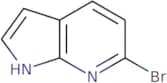
CAS:<p>6-Bromo-7-azaindole is a homologous molecule. It is an electron deficient compound with a piperidine moiety at the 6 position and a nitrogen atom at the 7 position. The nitrogen atom substitutes for an oxygen atom, making this molecule reactive. The electron deficient nature of this molecule makes it suitable for use in transistors and other physicochemical devices. 6-Bromo-7-azaindole has been shown to be effective against carcinoma cells in vitro, as well as to inhibit tumor growth in vivo. This drug also causes homologous recombination by interacting with DNA in mammalian cells. 6-Bromo-7-azaindole binds to DNA, forming a covalent bond with the guanine base of DNA through the nitrogen atom, which is electron deficient.</p>Formula:C7H5BrN2Purity:Min. 95%Color and Shape:Off-White To Beige To Yellow SolidMolecular weight:197.03 g/mol2-Bromo-4-chlorotoluene
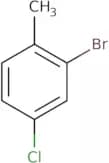
CAS:<p>2-Bromo-4-chlorotoluene is a chemical compound with the molecular formula C6H4BrClO. It is an aromatic peroxide that has a chlorine atom attached to one of the benzene rings. 2-Bromo-4-chlorotoluene is produced by the reaction of bromine with chlorotoluene in the presence of hydrogen peroxide and sodium periodate. The reaction takes place at room temperature, producing a colourless liquid with a pungent odour. This chemical can be identified by its infrared frequencies, which are observed as vibrations between 1650 and 1700 cm−1. The molecule has a dipole moment of 0.5 D, which means it can transfer electrons to other molecules or atoms in order to form bonds. 2-Bromo-4-chlorotoluene is used as an intermediate for organic compounds such as glycol dimethyl ethers.<br>2-Bromo</p>Formula:C7H6BrClPurity:Min. 95%Color and Shape:PowderMolecular weight:205.48 g/mol5-Methoxyindole-3-acetic acid
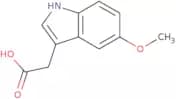
CAS:<p>5-Methoxyindole-3-acetic acid (5MI) is an endogenous indole and metabolite of melatonin that is found in high concentrations in the human serum. 5MI has been shown to inhibit the activity of cyclase enzymes and may be a specific inhibitor of the type I form of estrone sulfate, which is involved in estrogen production. This agent also inhibits matrix metalloproteinases and aminotransferases, which are enzymes that play a role in oxidative injury. 5MI also has a fluorescent derivative that can be used as a probe for biological samples or to study the target enzyme.</p>Formula:C11H11NO3Purity:Min. 97.5 Area-%Color and Shape:PowderMolecular weight:205.21 g/mol5-Amino-6-(methylamino)quinoline
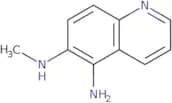
CAS:<p>5-Amino-6-(methylamino)quinoline is a molecule that inhibits the enzymatic activity of tyrosine phosphatases and has been shown to inhibit the growth of typhimurium ta98, which is resistant to quinoxaline. It has also been shown to be mutagenic in vitro. 5-Amino-6-(methylamino)quinoline has an imidazole ring and is synthesized from 2-methylbenzothiazole and N,N'-dimethylethylenediamine. The synthesis of this compound takes place in two steps with the first step being an oxidative cyclization followed by a reductive amination.</p>Formula:C10H11N3Purity:Min. 95%Color and Shape:Green Brown To Brown SolidMolecular weight:173.21 g/mol5-Bromo-6-chloro-1H-indole
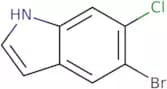
CAS:<p>5-Bromo-6-chloro-1H-indole is a fine chemical that is used as a building block for research chemicals, reagents, and speciality chemicals. It is soluble in chloroform and benzene, but insoluble in water. This product can be used as a reaction component or a useful intermediate in the production of complex compounds. 5-Bromo-6-chloro-1H-indole has been reported to be an effective scaffold for the synthesis of many novel compounds with potential applications such as pharmaceuticals, agrochemicals, and dyes.</p>Formula:C8H5BrClNPurity:Min. 95%Color and Shape:PowderMolecular weight:230.49 g/mol2-Amino-5-ureido-4,6-pyrimidinedione
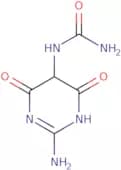
CAS:<p>2-Amino-5-ureido-4,6-pyrimidinedione is a chemical building block that can be used in research, as a reagent for the synthesis of other compounds, or as an intermediate. It is also a versatile building block and reaction component. 2-Amino-5-ureido-4,6-pyrimidinedione is a high purity compound with a CAS number of 21823-25-6.</p>Formula:C5H7N5O3Purity:Min. 95%Color and Shape:PowderMolecular weight:185.14 g/mol