Building Blocks
This section contains fundamental products for the synthesis of organic and biological compounds. Building blocks are the essential starting materials used to construct complex molecules through various chemical reactions. They play a critical role in drug discovery, material science, and chemical research. At CymitQuimica, we offer a diverse range of high-quality building blocks to support your innovative research and industrial projects, ensuring you have the essential components for successful synthesis.
Subcategories of "Building Blocks"
- Boronic Acids & Boronic Acid Derivatives(5,756 products)
- Chiral Building Blocks(1,242 products)
- Hydrocarbon Building Blocks(6,093 products)
- Organic Building Blocks(60,519 products)
Found 195533 products of "Building Blocks"
Sort by
Purity (%)
0
100
|
0
|
50
|
90
|
95
|
100
3-Methoxy-5-(trifluoromethyl)aniline
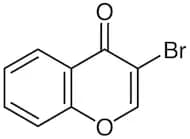
CAS:Formula:C8H8F3NOPurity:>98.0%(GC)(T)Color and Shape:Light yellow to Brown to Dark red powder to crystalMolecular weight:191.153-Bromochromone
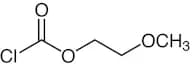
CAS:Formula:C9H5BrO2Purity:>98.0%(GC)Color and Shape:White to Orange to Green powder to crystalMolecular weight:225.042-Methoxyethyl Chloroformate
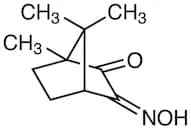
CAS:Formula:C4H7ClO3Purity:>93.0%(GC)(T)Color and Shape:Colorless to Light yellow clear liquidMolecular weight:138.55anti-(1R)-(+)-Camphorquinone 3-Oxime
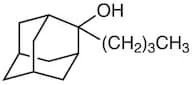
CAS:Formula:C10H15NO2Purity:>95.0%(GC)(N)Color and Shape:White to Orange to Green powder to crystalMolecular weight:181.242-Butyl-2-adamantanol
CAS:Formula:C14H24OPurity:>98.0%(GC)Color and Shape:White to Almost white powder to crystalMolecular weight:208.354-Chlorobenzofuro[3,2-d]pyrimidine
CAS:Formula:C10H5ClN2OPurity:>98.0%(GC)Color and Shape:White to Yellow to Green powder to crystalMolecular weight:204.61N,N-Bis(4-bromobenzyl)amine
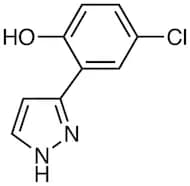
CAS:Formula:C14H13Br2NPurity:>98.0%(GC)(T)Color and Shape:White to Orange to Green powder to crystalMolecular weight:355.074-Chloro-2-(1H-pyrazol-3-yl)phenol
CAS:Formula:C9H7ClN2OPurity:>98.0%(GC)(T)Color and Shape:White to Orange to Green powder to crystalMolecular weight:194.622-Cyano-N,N-diethylacetamide
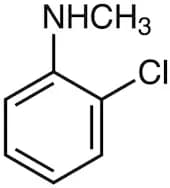
CAS:Formula:C7H12N2OPurity:>98.0%(GC)Color and Shape:Colorless to Light yellow clear liquidMolecular weight:140.192-Chloro-N-methylaniline
CAS:Formula:C7H8ClNPurity:>98.0%(GC)(T)Color and Shape:Colorless to Red to Green clear liquidMolecular weight:141.602-Chloro-5-(4,4,5,5-tetramethyl-1,3,2-dioxaborolan-2-yl)pyridine
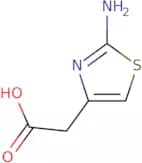
CAS:Formula:C11H15BClNO2Purity:>98.0%(GC)(T)Color and Shape:White to Almost white powder to crystalMolecular weight:239.512-Amino-4-thiazole acetic acid
CAS:<p>2-Amino-4-thiazole acetic acid is a trifluoroacetic acid salt that is formed by the reaction of hydrochloric acid with 2-amino-4-thiazoleacetic acid. This compound has been shown to have antimicrobial activity against gram positive bacteria, such as Staphylococcus aureus and Enterococcus faecalis. The mechanism of action is not known, but it has been hypothesized that this compound may inhibit the bacterial gyrase enzyme.</p>Formula:C5H6N2O2SPurity:Min. 95%Color and Shape:PowderMolecular weight:158.18 g/mol6-Amino-1-hexanol
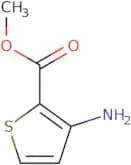
CAS:<p>6-Amino-1-hexanol is a chemical compound that belongs to the group of amines. It is also an ester of hexanol and ethylene diamine. 6-Amino-1-hexanol has been shown to have hemolytic activity, which is due to its ability to form an acyl chain with the hydroxyl group on the plate test. 6-Amino-1-hexanol has been used as a chemical intermediate in analytical chemistry and has been shown to be effective against bacterial strains such as Staphylococcus aureus and Bacillus subtilis. This substance also inhibits the growth of Streptococcus pneumoniae and Mycoplasma pneumoniae.6-Amino-1-hexanol does not inhibit uptake by bacteria, which may be due to its lack of amine functionality.</p>Formula:C6H15NOPurity:(Titration) Min. 97%Color and Shape:PowderMolecular weight:117.19 g/mol3-Amino-2-thiophenecarboxylic acid methyl ester
CAS:<p>3-Amino-2-thiophenecarboxylic acid methyl ester is a replication inhibitor that targets hydroxyl groups in the mitochondrial membrane. It has been shown to induce a decrease in the mitochondrial membrane potential, leading to a loss of cell viability and an increase in locomotor activity. 3-Amino-2-thiophenecarboxylic acid methyl ester also induces apoptosis by inhibiting the expression of cyclin D1 and Bcl-XL proteins, which are key regulators of cancer cell proliferation. 3-Amino-2-thiophenecarboxylic acid methyl ester is able to inhibit cancer cell growth in vitro, which may be due to its ability to inhibit h3 acetylation and MDA-MB231 cell proliferation. 3-Amino-2-thiophenecarboxylic acid methyl ester also has antiinflammatory effects by modulating inflammation pathways such as NFκB signaling.</p>Formula:C6H7NO2SPurity:Min. 95%Color and Shape:PowderMolecular weight:157.19 g/mol3-Amino-2-pyrazinecarboxylic acid
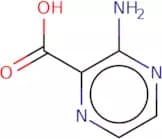
CAS:<p>3-Amino-2-pyrazinecarboxylic acid (APC) is a molecule that has been studied from many different theoretical perspectives. It has been shown to have magnetic, vibrational and spectroscopic properties. APC has a molecular electrostatic potential that can be calculated by the functional theory of atoms in molecules. This theory predicts the distribution of electron density between atoms in molecules and is used to identify which parts of a molecule are more likely to react with other molecules. The Raman spectra of APC show an intense peak at 1108 cm-1 and two weak peaks at 1265 cm-1 and 1403 cm-1. The frequency of these peaks corresponds to a bond length of 1.3 Å, 1.5 Å, and 1.7 Å respectively, corresponding to π bonds in benzene rings, σ bonds and π bonds in amide groups respectively, or σ bonds in amide groups respectively.</p>Formula:C5H5N3O2Purity:Min. 95%Color and Shape:PowderMolecular weight:139.11 g/mol2-Amino-3-pyridinecarbonitrile
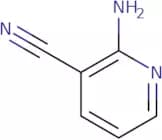
CAS:<p>2-Amino-3-pyridinecarbonitrile is an analgesic that belongs to the group of nonsteroidal anti-inflammatory drugs. It is a member of the class of chemical compounds known as aminopyridines. 2-Amino-3-pyridinecarbonitrile has been shown to have a high affinity for binding to the water vapor in cells, and has physiological effects on tissues. 2APC binds to adenosine receptors in cell membranes and blocks their activation. As a result, it inhibits the release of substances such as prostaglandins and leukotrienes that are involved in inflammation. This drug also has an inhibitory effect on the growth of cancerous cells by interfering with cell proliferation.</p>Purity:Min. 95%Color and Shape:PowderMolecular weight:119.12 g/mol2-Amino-5-bromo-3-iodopyridine
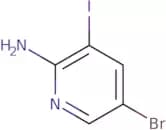
CAS:<p>2-Amino-5-bromo-3-iodopyridine (2AB3IP) is a cacchi anthelmintic that is active against the trophozoites of Giardia lamblia. 2AB3IP also has antimicrobial properties, but is not active against bacteria. The high lipophilicity and pharmacokinetic properties of this drug make it a potential therapeutic candidate for the treatment of giardiasis. The mechanism of action of 2AB3IP is mediated by potassium t-butoxide, which activates the drug to form its reactive intermediate. This intermediate reacts with DNA in the parasite to form covalent adducts. This process leads to inhibition of RNA synthesis and subsequent cell death.</p>Formula:C5H4BrIN2Purity:Min. 95%Color and Shape:White to tan solid.Molecular weight:298.9 g/mol2-Amino-3-methoxybenzoic acid
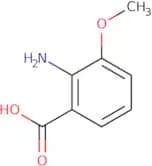
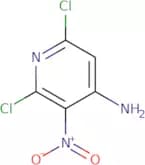
CAS:<p>2-Amino-3-methoxybenzoic acid is a chemical compound that is found in humans. It has antioxidative activity, and it inhibits the conversion of picolinic acid to kynurenine in vitro. 2-Amino-3-methoxybenzoic acid also significantly inhibits the formation of 3-hydroxyanthranilic acid and xanthurenic acid from anthranilic acid. This inhibition may be due to its ability to form hydrogen bonds with the substrate or competitive inhibition of enzymes such as quinoline reductase.<br>2-Amino-3-methoxybenzoic acid has been shown to have significant inhibitory effects on thermodynamic parameters for hydroxy group addition reactions involving quinoline derivatives, which may be due to its ability to bind covalently with these substrates.</p>Formula:C8H9NO3Purity:Min. 95%Color and Shape:PowderMolecular weight:167.16 g/mol4-Amino-2,6-dichloro-3-nitropyridine
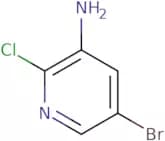
CAS:<p>4-Amino-2,6-dichloro-3-nitropyridine is a synthetic compound that inhibits tyrosine kinases. It is an isomer of 2,6-Dichloropyridine and has been shown to inhibit the growth of lymphoma cells in vitro. 4-Amino-2,6-dichloro-3-nitropyridine has three substitutions on the pyridine ring as compared to 2,6-Dichloropyridine. The substitutions are thought to be responsible for the increased hydrophilic properties of this compound. This may lead to increased cellular uptake and better bioavailability.</p>Formula:C5H3Cl2N3O2Purity:Min. 95%Color and Shape:Slightly Yellow PowderMolecular weight:208 g/mol3-Amino-5-bromo-2-chloropyridine
CAS:<p>3-Amino-5-bromo-2-chloropyridine is a synthetic compound that has been shown to be an inhibitor of phosphoinositide 3 kinase delta (PI3Kδ). It is also a potent inhibitor of the proliferation of human cancer cells in vitro and in vivo. The PI3Kδ is activated by insulin and other growth factors, which leads to the activation of downstream pathways. These pathways trigger cell growth and proliferation. 3-Amino-5-bromo-2-chloropyridine may have potential as a novel anticancer drug due to its ability to inhibit PI3Kδ activity and prevent the progression of cancer.</p>Formula:C5H4BrClN2Purity:Min. 95%Color and Shape:Yellow PowderMolecular weight:207.46 g/mol


![4-Chlorobenzofuro[3,2-d]pyrimidine](/_next/image/?url=https%3A%2Fstatic.cymitquimica.com%2Fproducts%2F3B%2Fthumb-webp%2FC2800.webp&w=3840&q=75)