Building Blocks
This section contains fundamental products for the synthesis of organic and biological compounds. Building blocks are the essential starting materials used to construct complex molecules through various chemical reactions. They play a critical role in drug discovery, material science, and chemical research. At CymitQuimica, we offer a diverse range of high-quality building blocks to support your innovative research and industrial projects, ensuring you have the essential components for successful synthesis.
Subcategories of "Building Blocks"
- Boronic Acids & Boronic Acid Derivatives(5,756 products)
- Chiral Building Blocks(1,242 products)
- Hydrocarbon Building Blocks(6,093 products)
- Organic Building Blocks(60,519 products)
Found 195533 products of "Building Blocks"
Sort by
Purity (%)
0
100
|
0
|
50
|
90
|
95
|
100
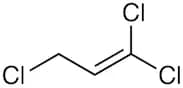
1,1,3-Trichloro-1-propene
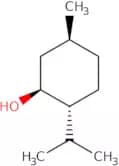
CAS:Formula:C3H3Cl3Purity:>98.0%(GC)Color and Shape:Colorless to Light yellow clear liquidMolecular weight:145.41(1S,2R,5S)-(+)-Menthol
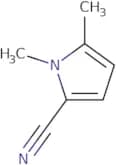
CAS:<p>(1S,2R,5S)-(+)-Menthol is a pharmacological agent that has been shown to have anti-inflammatory activity. It inhibits prostaglandin synthesis by competitively blocking cyclooxygenase-1 and cyclooxygenase-2. (1S,2R,5S)-(+)-Menthol has also been shown to have x-ray crystal structures of the complex with sodium citrate in solution. These structures provide information about how menthol reacts with sodium citrate and water vapor for its reaction mechanism. The thermodynamic data for this process are also available. Menthol was found to be most effective when used in cell lysis experiments at a concentration of 1.0 mM and at room temperature. This compound is a white crystalline solid that is soluble in ethanol or chloroform but insoluble in water.</p>Formula:C10H20OPurity:Min. 98%Color and Shape:White PowderMolecular weight:156.27 g/mol2-Cyano-1,5-dimethylpyrrole
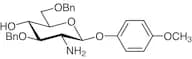
CAS:<p>2-Cyano-1,5-dimethylpyrrole is a quinone antibiotic. It has been shown to have antibacterial activity against organisms such as Staphylococcus, Streptococcus, and Pyogenes. This chemical has been shown to be active in the gaseous phase and against test organisms in alcohol extracts. 2-Cyano-1,5-dimethylpyrrole also exhibits flavonoid and saponin properties that may contribute to its antimicrobial activity.</p>Formula:C7H8N2Purity:Min. 95%Color and Shape:PowderMolecular weight:120.15 g/mol4-Methoxyphenyl 2-Amino-3,6-di-O-benzyl-2-deoxy-β-D-glucopyranoside
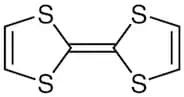
CAS:Formula:C27H31NO6Color and Shape:White to Almost white powder to crystalMolecular weight:465.55Tetrathiafulvalene
CAS:Formula:C6H4S4Purity:>98.0%(GC)Color and Shape:Orange to Brown powder to crystalMolecular weight:204.342-(2-Bromo-1,1,2,2-tetrafluoroethoxy)-1,1,1,2,3,3-hexafluoro-3-(pentafluoroethoxy)propane
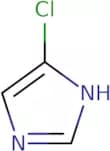
CAS:Formula:C7BrF15O2Purity:>98.0%(GC)Color and Shape:Colorless to Almost colorless clear liquidMolecular weight:480.964-Chloro-1H-imidazole
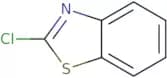
CAS:<p>4-Chloro-1H-imidazole is an organic chemical compound that contains a heterocyclic ring with one nitrogen and three carbons. It is classified as a weak acid. 4-Chloro-1H-imidazole can be found in hydrochloric acid, methyl ketones, and the acid conjugates of pyrazole rings. It has minimal toxicity. 4-Chloro-1H-imidazole binds to receptors in the body, which may account for its effects on blood pressure and heart rate. This drug also reacts with diazonium salts to form an intermediate that is then oxidized by chloride ions to form a reactive intermediate that can react with histidine or flavin (a type of vitamin B2) to form a fluorescent product that can be detected by light absorption or fluorescence emission spectroscopy.</p>Formula:C3H3ClN2Purity:Min. 95%Color and Shape:White PowderMolecular weight:102.52 g/mol2-Chlorobenzothiazole
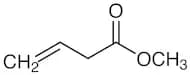
CAS:<p>2-Chlorobenzothiazole is an organic compound with the formula CHClS. It is a reactive and versatile chemical that can be used in both synthesis and as a reagent. The compound is a white solid, but samples are often yellow due to impurities. 2-Chlorobenzothiazole can be prepared by reaction of hydrochloric acid with benzotriazole, followed by reduction of the resulting salt with sodium hydroxide. This product has shown antiinflammatory activity in mice. It has also been shown to inhibit prostaglandin synthesis in vitro through its reaction with amines and carbodiimides, which are nucleophiles, or halides such as Cl or Br. 2-Chlorobenzothiazole was also found to have cytotoxic activity against human colon cancer cells in culture.</p>Formula:C7H4ClNPurity:Min. 95%Color and Shape:Yellow PowderMolecular weight:137.57 g/molMethyl But-3-enoate
CAS:Formula:C5H8O2Purity:>95.0%(GC)Color and Shape:Colorless to Light yellow clear liquidMolecular weight:100.122-Iodo-2-methylpropane (stabilized with Copper chip)
CAS:Formula:C4H9IPurity:>97.0%(GC)Color and Shape:Colorless to Yellow clear liquid to cloudy liquidMolecular weight:184.02DL-Valine
CAS:<p>Valine is a non-essential, branched-chain amino acid that is used for the treatment of bowel disease. Valine is a water-soluble, colorless and odorless crystalline powder that has a sour taste. It can be prepared by reacting valeric acid with ammonia in the presence of an alkali or by hydrolysis of proteins. Valine is also widely distributed in animal tissues, where it participates in the biosynthesis of important biological compounds such as coenzyme A. The optimum concentration to achieve maximum electrochemical impedance spectroscopy (EIS) signal was observed at 20 mM. The EIS signal was found to be dependent on the pH and protein content of the solution matrix. Valine binds to human serum albumin and exhibits strong hydrogen bonding interactions. In addition, valine possesses a signal peptide that helps export it from cells into blood plasma.</p>Formula:C5H11NO2Color and Shape:PowderMolecular weight:117.15 g/mol6-Hydroxy-2-naphtoic acid
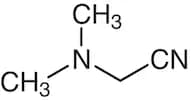
CAS:<p>6-Hydroxy-2-naphtoic acid is an amide that is hydrolyzed to 6-hydroxybenzoic acid and formamide. It has been used as a viscosity modifier in the synthesis of polymers. 6-Hydroxy-2-naphtoic acid can be produced by a borane-tetrahydrofuran complex reaction with naphthalene. This reaction also produces p-hydroxybenzoic acid, which can then be converted to hydroxybenzoic acid with hydrochloric acid. The structural analysis of this compound has been performed using fluorescence probes and an inorganic acid.</p>Formula:C11H8O3Purity:Min. 95%Color and Shape:Yellow PowderMolecular weight:188.18 g/mol(Dimethylamino)acetonitrile
CAS:Formula:C4H8N2Purity:>96.0%(GC)(T)Color and Shape:Colorless to Light yellow to Light orange clear liquidMolecular weight:84.123'-Iodoacetophenone
CAS:<p>3'-Iodoacetophenone is a synthetic analog of o-chloroaniline. 3'-Iodoacetophenone is used as a reagent for the kinetic study of anions and hydrogenated derivatives. It is also used in the palladium-catalyzed coupling of monobenzyl phenols to form phenol nucleophiles. The synthesis of 3'-iodoacetophenone starts with the dehydration of 2,6-dichloroaniline with phosphorous pentachloride and subsequent reaction with iodine in acetic acid.</p>Formula:C8H7IOPurity:Min. 95%Color and Shape:Off-White Clear LiquidMolecular weight:246.05 g/molMethyl 5-methoxy-2-methylindole-3-acetate
CAS:<p>Methyl 5-methoxy-2-methylindole-3-acetate is a versatile building block that can be used as a research chemical, reagent, or speciality chemical. It is also an intermediate in the synthesis of other compounds and has been shown to be useful in reactions involving nucleophilic substitution and electrophilic addition. This compound can be used as a scaffold for complex organic molecules. CAS No. 7588-36-5</p>Formula:C13H15NO3Purity:Min. 95%Color and Shape:Beige SolidMolecular weight:233.26 g/mol2,3,4-Trifluorobenzoic acid
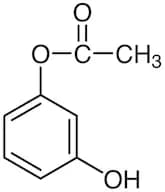
CAS:<p>2,3,4-Trifluorobenzoic acid is a fluorinated fatty acid that has been shown to have anticancer activity. The molecule can be synthesized by reacting 2-bromo-1-(trifluoromethyl)benzene with potassium hydroxide in the presence of benzoic anhydride. This synthesis reaction yields (2,3,4-trifluoro)benzoic acid as the main product and a small amount of 2,3-dihydrobenzoic acid. The analytical method used to determine the purity of this compound is LC-MS/MS. The vibrational spectrum of this compound has been found to show strong absorption in the UV region at 290 nm. It also shows strong absorption at uv wavelengths greater than 300 nm due to its conjugation with fluorine atoms. This chemical is a precursor for synthesis of coumarin derivatives such as 4-[(2,3</p>Formula:C7H3F3O2Purity:Min. 95%Color and Shape:White PowderMolecular weight:176.09 g/molResorcinol Monoacetate
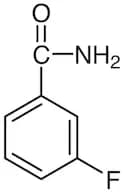
CAS:Formula:C8H8O3Purity:>50.0%(GC)Color and Shape:Colorless to Yellow to Orange clear liquidMolecular weight:152.153-Fluorobenzamide
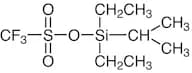
CAS:Formula:C7H6FNOPurity:>97.0%(HPLC)(N)Color and Shape:White to Almost white powder to crystalMolecular weight:139.13Diethylisopropylsilyl Trifluoromethanesulfonate
CAS:Formula:C8H17F3O3SSiPurity:>98.0%(T)Color and Shape:Colorless to Light yellow to Light orange clear liquidMolecular weight:278.362,2':6',2'-Terpyridine-4,4',4''-tricarboxylic acid
CAS:<p>2,2':6',2'-Terpyridine-4,4',4''-tricarboxylic acid is a model system that has been studied for its photochemical properties. In this molecule, there are two carboxyl groups and three pyridine rings. The molecule can be protonated easily by electron transfer to form a positively charged anion. This allows the molecule to undergo electron transfer reactions with other molecules in the presence of radiation or visible light. 2,2':6',2'-Terpyridine-4,4',4''-tricarboxylic acid absorbs photons easily and then transfers its energy to a nearby electron. The electron then passes on the energy to another molecule, which can produce a photocurrent.</p>Formula:C18H11N3O6Purity:Min. 95%Color and Shape:Brown SolidMolecular weight:365.3 g/mol