Building Blocks
This section contains fundamental products for the synthesis of organic and biological compounds. Building blocks are the essential starting materials used to construct complex molecules through various chemical reactions. They play a critical role in drug discovery, material science, and chemical research. At CymitQuimica, we offer a diverse range of high-quality building blocks to support your innovative research and industrial projects, ensuring you have the essential components for successful synthesis.
Subcategories of "Building Blocks"
- Boronic Acids & Boronic Acid Derivatives(5,756 products)
- Chiral Building Blocks(1,242 products)
- Hydrocarbon Building Blocks(6,093 products)
- Organic Building Blocks(60,519 products)
Found 195533 products of "Building Blocks"
Sort by
Purity (%)
0
100
|
0
|
50
|
90
|
95
|
100
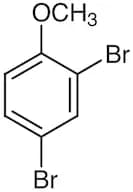
2,4-Dibromoanisole
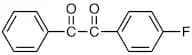
CAS:Formula:C7H6Br2OPurity:>98.0%(GC)Color and Shape:White to Light yellow to Light red powder to crystalMolecular weight:265.934-Fluorobenzil
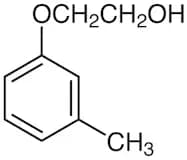
CAS:Formula:C14H9FO2Purity:>98.0%(GC)Color and Shape:Light yellow to Brown powder to crystalMolecular weight:228.22Ethylene Glycol Mono-m-tolyl Ether
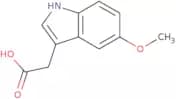
CAS:Formula:C9H12O2Purity:>98.0%(GC)Color and Shape:Colorless to Almost colorless clear liquidMolecular weight:152.195-Methoxyindole-3-acetic acid
CAS:<p>5-Methoxyindole-3-acetic acid (5MI) is an endogenous indole and metabolite of melatonin that is found in high concentrations in the human serum. 5MI has been shown to inhibit the activity of cyclase enzymes and may be a specific inhibitor of the type I form of estrone sulfate, which is involved in estrogen production. This agent also inhibits matrix metalloproteinases and aminotransferases, which are enzymes that play a role in oxidative injury. 5MI also has a fluorescent derivative that can be used as a probe for biological samples or to study the target enzyme.</p>Formula:C11H11NO3Purity:Min. 97.5 Area-%Color and Shape:PowderMolecular weight:205.21 g/mol6-Bromo-7-azaindole
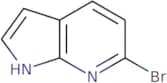
CAS:<p>6-Bromo-7-azaindole is a homologous molecule. It is an electron deficient compound with a piperidine moiety at the 6 position and a nitrogen atom at the 7 position. The nitrogen atom substitutes for an oxygen atom, making this molecule reactive. The electron deficient nature of this molecule makes it suitable for use in transistors and other physicochemical devices. 6-Bromo-7-azaindole has been shown to be effective against carcinoma cells in vitro, as well as to inhibit tumor growth in vivo. This drug also causes homologous recombination by interacting with DNA in mammalian cells. 6-Bromo-7-azaindole binds to DNA, forming a covalent bond with the guanine base of DNA through the nitrogen atom, which is electron deficient.</p>Formula:C7H5BrN2Purity:Min. 95%Color and Shape:Off-White To Beige To Yellow SolidMolecular weight:197.03 g/mol2-(2,2-Diethoxyethyl)-1,3-propanediol
CAS:Formula:C9H20O4Purity:>88.0%(GC)Color and Shape:Colorless to Light yellow clear liquidMolecular weight:192.26N-Benzyloxycarbonyl-L-proline
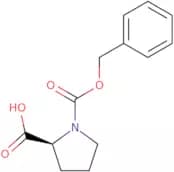
CAS:<p>N-Benzyloxycarbonyl-L-proline is a cationic polymerization inhibitor that has been shown to inhibit the growth of Pseudomonas aeruginosa. It inhibits bacterial growth by inhibiting the production of collagen, an important component in the cell wall. N-Benzyloxycarbonyl-L-proline is also used as a histological staining agent and has been shown to be effective against breast cancer cells resistant to tamoxifen therapy.</p>Formula:C13H15NO4Purity:Min. 95%Color and Shape:PowderMolecular weight:249.26 g/mol3,4'-Dichloropropiophenone
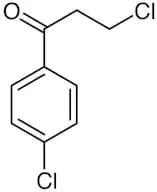
CAS:Formula:C9H8Cl2OPurity:>98.0%(GC)(T)Color and Shape:White to Yellow to Orange powder to crystalMolecular weight:203.062,6-Difluorobenzoyl Chloride
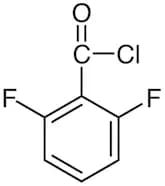
CAS:Formula:C7H3ClF2OPurity:>97.0%(GC)(T)Color and Shape:Colorless to Light orange to Yellow clear liquidMolecular weight:176.553-Methylamino-1,2-propanediol
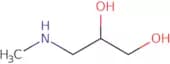
CAS:<p>3-Methylamino-1,2-propanediol is a reactive compound that is used in the synthesis of organic acids. It is also used as an intermediate in the manufacture of polyethylene glycols and particle coatings. 3-Methylamino-1,2-propanediol can be synthesized from allylamine and alkanolamine via a thermal process. It reacts with chloride to form methyl chloroacetate, which can then be converted into 3-methylamino-1,2-propanediol by reaction with methanol. The production process for this substance has been shown to generate low levels of hazardous substances such as polycyclic aromatic hydrocarbons (PAHs) and dioxins.</p>Formula:C4H11NO2Purity:Min. 95%Color and Shape:PowderMolecular weight:105.14 g/mol2,3-Dichlorobenzyl Bromide
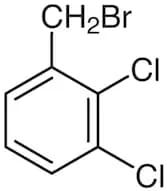
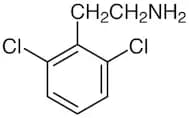
CAS:Formula:C7H5BrCl2Purity:>98.0%(GC)(T)Color and Shape:White or Colorless to Light yellow powder to lump to clear liquidMolecular weight:239.922-(2,6-Dichlorophenyl)ethylamine
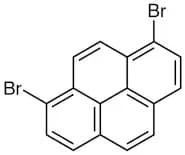
CAS:Formula:C8H9Cl2NPurity:>98.0%(GC)(T)Color and Shape:Colorless to Light orange to Yellow clear liquidMolecular weight:190.071,8-Dibromopyrene
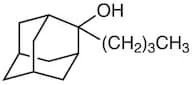
CAS:Formula:C16H8Br2Purity:>90.0%(HPLC)Color and Shape:White to Light yellow powder to crystalMolecular weight:360.052-Butyl-2-adamantanol
CAS:Formula:C14H24OPurity:>98.0%(GC)Color and Shape:White to Almost white powder to crystalMolecular weight:208.358-Bromo-1-octene
CAS:<p>8-Bromo-1-octene is a biologically active molecule that is an aliphatic hydrocarbon with a hydroxyl group. It is used in the study of growth factors and viruses, and has been shown to inhibit the growth of cells in tissue cultures. 8-Bromo-1-octene has also been shown to inhibit RNA synthesis and protein synthesis in vitro, as well as the growth of recombinant virus. 8-Bromo-1-octene can be synthesized by reacting 6-bromo-1-hexene with hydrogen bromide, or can be obtained from commercially available sources.</p>Formula:C8H15BrPurity:Min. 95%Color and Shape:Colorless Slightly Yellow Clear LiquidMolecular weight:191.11 g/mol2-Mercapto-1H-imidazole
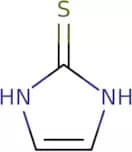
CAS:<p>2-Mercapto-1H-imidazole is an irreversible inhibitor of xanthine oxidase. It binds to the nitrogen atoms of the enzyme's active site and forms a strong hydrogen bond with the oxygen atom of the xanthine substrate. The steric interactions between 2-mercapto-1H-imidazole and the substrate prevent binding and catalysis. The crystal structures of 2-mercapto-1H-imidazole in complex with xanthine oxidase have been determined using X-ray crystallography. FTIR spectroscopy has shown that 2-mercapto-1H-imidazole coordinates in a geometry similar to that of the reactant, hydrochloric acid. Electrochemical impedance spectroscopy (EIS) has revealed that proton transfer takes place when 2-mercapto-1H imidazole binds to xanthine oxidase, which is consistent with reaction mechanism involving elect</p>Formula:C3H4N2SPurity:Min. 95%Color and Shape:PowderMolecular weight:100.14 g/mol(S)-(-)-2-Acetoxypropionic Acid
CAS:Formula:C5H8O4Purity:>98.0%(T)Color and Shape:Colorless to Almost colorless clear liquidMolecular weight:132.12Benzofuran-2-carboxaldehyde
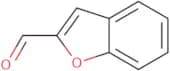
CAS:<p>Benzofuran-2-carboxaldehyde is a compound that inhibits metathesis reactions. It has been shown to inhibit the growth of cancer cells in vivo and in vitro. Benzofuran-2-carboxaldehyde also shows estrogen receptor modulator activity, which may be due to its ability to bind to estrogen receptors. The molecular modelling study of this compound reveals a possible mechanism for benzofuran-2-carboxaldehyde’s inhibition of metathesis reactions as well as its cytotoxicity. This mechanism suggests that the benzofuran-2-carboxaldehyde molecule can form hydrogen bonds with diphenyl ether and mcf7 cells, leading to their destabilization.</p>Formula:C9H6O2Purity:Min. 95%Molecular weight:146.14 g/mol5-Bromo-1-pentene
CAS:<p>5-Bromo-1-pentene (5BP) is an antitumoral drug that has potent inhibitory activity against the t-cell leukemia cell line and other tumor cells. 5BP is an organoborane ester with a bromine atom at the 1-position. It is synthesized by reacting trifluoroacetic acid with a hydrohalic acid such as hydrochloric acid, or with a metal halide such as sodium carbonate, followed by reaction with dimethyl formamide and n-dimethylformamide. The 5BP molecule has a coordination geometry of octahedral and its structure consists of three hydrogen atoms, two methyl groups, one hydroxyl group, and one unsaturated alkyl group. The mechanism of action of 5BP is still unclear. The inhibition of protein synthesis may be due to the steric hindrance caused by the bulky bromine atom at the 1 position on the benzene ring.</p>Formula:C5H9BrPurity:Min. 95%Color and Shape:Colorless Clear LiquidMolecular weight:149.03 g/molDiethylene glycol dimethanesulfonate
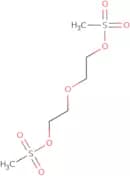
CAS:<p>Diethylene glycol dimethanesulfonate is a functional group that is used in the synthesis of organic compounds. It is a white crystalline solid with a melting point of about 130°C. Diethylene glycol dimethanesulfonate reacts slowly with water and hydrochloric acid to produce diethyl ether and hydrogen chloride gas. The reaction time for this process can be affected by the concentration of reactants, temperature, and pH. Diethylene glycol dimethanesulfonate undergoes acidic hydrolysis in the presence of hydrochloric acid or sodium hydroxide. This reaction produces sodium chloride and ethylene glycol. Busulfan, an anti-cancer drug, is produced by the dehydration of diethylene glycol dimethanesulfonate with copper chloride or chlorine gas. Intramolecular hydrogen bonds are formed during this process to give grandis as an intermediate product. Grandis can be converted into busulfan by</p>Formula:C6H14O7S2Purity:Min. 95%Color and Shape:PowderMolecular weight:262.3 g/mol