Building Blocks
This section contains fundamental products for the synthesis of organic and biological compounds. Building blocks are the essential starting materials used to construct complex molecules through various chemical reactions. They play a critical role in drug discovery, material science, and chemical research. At CymitQuimica, we offer a diverse range of high-quality building blocks to support your innovative research and industrial projects, ensuring you have the essential components for successful synthesis.
Subcategories of "Building Blocks"
- Boronic Acids & Boronic Acid Derivatives(5,756 products)
- Chiral Building Blocks(1,242 products)
- Hydrocarbon Building Blocks(6,093 products)
- Organic Building Blocks(60,519 products)
Found 195533 products of "Building Blocks"
Sort by
Purity (%)
0
100
|
0
|
50
|
90
|
95
|
100
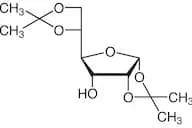
1,2:5,6-Di-O-isopropylidene-α-D-allofuranose
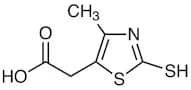
CAS:Formula:C12H20O6Purity:>98.0%(GC)Color and Shape:White to Almost white powder to crystalMolecular weight:260.29(2-Mercapto-4-methyl-5-thiazolyl)acetic Acid
CAS:Formula:C6H7NO2S2Purity:>98.0%(T)(HPLC)Color and Shape:White to Light yellow powder to crystalMolecular weight:189.25Thieno[3,2-d]pyrimidin-4(1H)-one
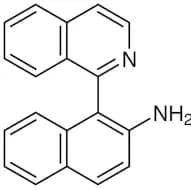
CAS:Formula:C6H4N2OSPurity:>98.0%(T)(HPLC)Color and Shape:White to Almost white powder to crystalMolecular weight:152.171-(2-Amino-1-naphthyl)isoquinoline
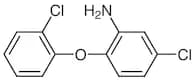
CAS:Formula:C19H14N2Purity:>98.0%(T)Color and Shape:White to Orange to Green powder to crystalMolecular weight:270.342-Amino-2',4-dichlorodiphenyl Ether
CAS:Formula:C12H9Cl2NOPurity:>98.0%(GC)(T)Color and Shape:Colorless to Brown clear liquidMolecular weight:254.114-Chloro-7-(p-toluenesulfonyl)-7H-pyrrolo[2,3-d]pyrimidine
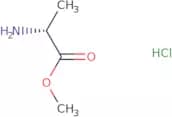
CAS:Formula:C13H10ClN3O2SPurity:>96.0%(HPLC)(N)Color and Shape:White to Orange to Green powder to crystalMolecular weight:307.75D-Alanine methyl ester HCl
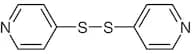
CAS:<p>D-Alanine methyl ester HCl is a diamide with antimycobacterial activity. It was synthesized by the reaction of D-alanine and methyl acrylate in the presence of methanesulfonic acid. The chiral compound was obtained as a racemic mixture. Optical properties are not reported.</p>Formula:C4H9NO2HCIPurity:Min. 95%Color and Shape:White To Off-White SolidMolecular weight:243.04 g/mol4,4'-Dipyridyl Disulfide
CAS:Formula:C10H8N2S2Purity:>97.0%(GC)(T)Color and Shape:White to Light yellow to Light red powder to crystalMolecular weight:220.311-Hexadecanol
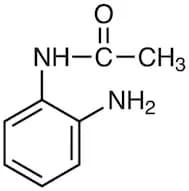
CAS:<p>1-Hexadecanol is a monohydroxy alcohol that is used as a surfactant in analytical chemistry. It can be found naturally in the secretions of some glands and has an optimum concentration of 0.2% to 1%. 1-Hexadecanol has been shown to inhibit bacterial growth by reducing the mitochondrial membrane potential, which leads to cell death. 1-Hexadecanol also reacts with benzalkonium chloride to form ester hydrochloride, which is a reagent for the detection of bacteria. The reaction mechanism for this process is not yet fully understood, but it may involve a metastable form of 1-hexadecanol reacting with benzalkonium chloride.</p>Formula:C16H34OPurity:Min. 95%Color and Shape:PowderMolecular weight:242.44 g/mol2'-Aminoacetanilide
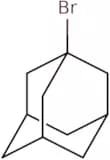
CAS:Formula:C8H10N2OPurity:>98.0%(T)Color and Shape:Light orange to Light red powder to crystallineMolecular weight:150.181-Bromoadamantane - 99%min
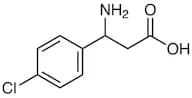
CAS:<p>1-Bromoadamantane is a quinoline derivative that is used as a pharmaceutical preparation. It was first synthesized in the 1950s, and has been used to treat inflammatory bowel disease. The synthesis of 1-Bromoadamantane is accomplished by the palladium-catalyzed coupling of trifluoromethanesulfonic acid with an organic solution containing the bromide salt of the quinoline. The chemical structure of 1-Bromoadamantane can be seen below:</p>Formula:C10H15BrPurity:Min. 98.5%Color and Shape:PowderMolecular weight:215.13 g/mol3-Amino-3-(4-chlorophenyl)propionic Acid
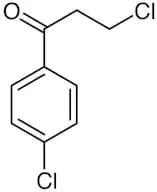
CAS:Formula:C9H10ClNO2Purity:>97.0%(T)(HPLC)Color and Shape:White to Almost white powder to crystalMolecular weight:199.633,4'-Dichloropropiophenone
CAS:Formula:C9H8Cl2OPurity:>98.0%(GC)(T)Color and Shape:White to Yellow to Orange powder to crystalMolecular weight:203.068-Bromo-1-octene
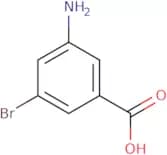
CAS:<p>8-Bromo-1-octene is a biologically active molecule that is an aliphatic hydrocarbon with a hydroxyl group. It is used in the study of growth factors and viruses, and has been shown to inhibit the growth of cells in tissue cultures. 8-Bromo-1-octene has also been shown to inhibit RNA synthesis and protein synthesis in vitro, as well as the growth of recombinant virus. 8-Bromo-1-octene can be synthesized by reacting 6-bromo-1-hexene with hydrogen bromide, or can be obtained from commercially available sources.</p>Formula:C8H15BrPurity:Min. 95%Color and Shape:Colorless Slightly Yellow Clear LiquidMolecular weight:191.11 g/mol3-Amino-5-bromobenzoic acid
CAS:<p>3-Amino-5-bromobenzoic acid is a synthetic, water soluble anti-inflammatory agent. It is cytotoxic to macrophages in vitro and has significant efficacy in vivo. Its mechanism of action is to inhibit the synthesis of nucleotides in the cell. 3-Amino-5-bromobenzoic acid also inhibits inflammation by inhibiting prostaglandin synthesis and has been shown to be effective against seborrheic dermatitis. This drug has pharmacokinetic properties that are favourable for oral administration and is rapidly absorbed from the gastrointestinal tract with a half life of 2 hours. The drug is eliminated through the kidneys, with an elimination half life of 6 hours.</p>Formula:C7H6BrNO2Purity:Min. 95%Color and Shape:PowderMolecular weight:216.03 g/mol1,2-Dibromo-2,4-dicyanobutane
CAS:<p>1,2-Dibromo-2,4-dicyanobutane is a chemical substance with antimicrobial properties. It is used as an ingredient in the production of health care products and preservatives for food. 1,2-Dibromo-2,4-dicyanobutane inhibits bacterial growth by preventing the synthesis of fatty acids and proteins. This compound has been shown to have synergistic effects when combined with benzalkonium chloride or potassium dichromate. 1,2-Dibromo-2,4-dicyanobutane has not been found to be carcinogenic in animal studies and does not cause allergic reactions.</p>Formula:C6H6Br2N2Purity:Min. 95%Color and Shape:White PowderMolecular weight:265.93 g/molOctadecylcyclohexane
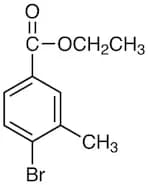
CAS:Formula:C24H48Purity:>98.0%(GC)Color and Shape:White to Almost white powder to crystalMolecular weight:336.65Ethyl 4-Bromo-3-methylbenzoate
CAS:Formula:C10H11BrO2Purity:>98.0%(GC)Color and Shape:Colorless to Light yellow clear liquidMolecular weight:243.10N-Butanesulfonyl-O-[4-(4-pyridinyl)-butyl]-(S)-tyrosine
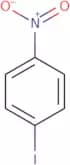
CAS:<p>N-Butanesulfonyl-O-[4-(4-pyridinyl)-butyl]-(S)-tyrosine is a synthetic amino acid. It is soluble in water and forms hydrates. The yield of this reaction is 60%. The molecular weight of this compound is 233.3 g/mol. This compound has been shown to have proteolytic activity, which may be due to its ability to cleave peptide bonds in proteins. N-Butanesulfonyl-O-[4-(4-pyridinyl)-butyl]-(S)-tyrosine may also be used as an intermediate for the synthesis of other compounds, such as aminoglycosides and antibiotics. This chemical can be synthesized by reacting L-tyrosine with butanesulfonyl chloride in the presence of sodium hydroxide and an organic base, such as pyridine. The solvents used in this process are chloroform, dich</p>Formula:C22H30N2O5SPurity:Min. 95%Color and Shape:PowderMolecular weight:434.55 g/mol1-Iodo-4-nitrobenzene
CAS:<p>1-Iodo-4-nitrobenzene is an insecticide with a nitro group. It is synthesized by the asymmetric synthesis of diazonium salt and hydroxyl group in the presence of a solid catalyst, such as palladium. 1-Iodo-4-nitrobenzene can be used as a coupling reagent for Suzuki coupling reactions, halide transfer reactions, and other multi-walled carbon transfer reactions. It has also been reported to have neuroprotective effects against Parkinson's disease in levopimaric acid model system. 1-Iodo-4-nitrobenzene has also been shown to inhibit the proliferation of neuro2a cells.</p>Formula:C6H4INO2Purity:Min. 95%Color and Shape:Slightly Yellow PowderMolecular weight:249.01 g/mol

![Thieno[3,2-d]pyrimidin-4(1H)-one](/_next/image/?url=https%3A%2Fstatic.cymitquimica.com%2Fproducts%2F3B%2Fthumb-webp%2FT3301.webp&w=3840&q=75)
![4-Chloro-7-(p-toluenesulfonyl)-7H-pyrrolo[2,3-d]pyrimidine](/_next/image/?url=https%3A%2Fstatic.cymitquimica.com%2Fproducts%2F3B%2Fthumb-webp%2FC3036.webp&w=3840&q=75)





![N-Butanesulfonyl-O-[4-(4-pyridinyl)-butyl]-(S)-tyrosine](/_next/image/?url=https%3A%2Fstatic.cymitquimica.com%2Fproducts%2F3D%2Fthumb-webp%2FFB19373.webp&w=3840&q=75)