Building Blocks
This section contains fundamental products for the synthesis of organic and biological compounds. Building blocks are the essential starting materials used to construct complex molecules through various chemical reactions. They play a critical role in drug discovery, material science, and chemical research. At CymitQuimica, we offer a diverse range of high-quality building blocks to support your innovative research and industrial projects, ensuring you have the essential components for successful synthesis.
Subcategories of "Building Blocks"
- Boronic Acids & Boronic Acid Derivatives(5,756 products)
- Chiral Building Blocks(1,242 products)
- Hydrocarbon Building Blocks(6,093 products)
- Organic Building Blocks(60,519 products)
Found 195533 products of "Building Blocks"
Sort by
Purity (%)
0
100
|
0
|
50
|
90
|
95
|
100
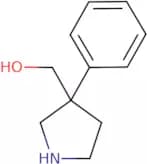
(3-Phenylpyrrolidin-3-yl)methanol
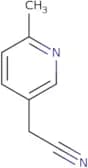
CAS:<p>Versatile small molecule scaffold</p>Formula:C11H15NOPurity:Min. 95%Molecular weight:177.24 g/mol2-(6-Methylpyridin-3-yl)acetonitrile
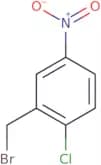
CAS:<p>Versatile small molecule scaffold</p>Formula:C8H8N2Purity:Min. 95%Molecular weight:132.16 g/mol2-(Bromomethyl)-1-chloro-4-nitrobenzene
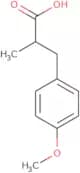
CAS:<p>Versatile small molecule scaffold</p>Formula:C7H5BrClNO2Purity:Min. 95%Molecular weight:250.48 g/mol3-(4-Methoxyphenyl)-2-methylpropanoic acid
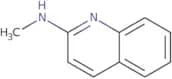
CAS:<p>Versatile small molecule scaffold</p>Formula:C11H14O3Purity:Min. 95%Molecular weight:194.23 g/molN-Methylquinolin-2-amine
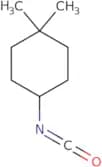
CAS:<p>N-Methylquinolin-2-amine is a quinoline derivative that binds to the fatty acid ester of amides, which are found on the surface of cells. It has high specificity for hydroxy groups and is operational in aqueous solutions. N-Methylquinolin-2-amine has been shown to have activity against Alzheimer's disease by binding to the fatty acid ester of amide and blocking the function of ligands. The reaction time can be reduced by adding hydroxy group and alkyl group to the molecule. A molecular orbital diagram shows how this compound reacts with an amide substrate. This drug can be used as a diagnostic or postoperative treatment for Alzheimer's disease.</p>Formula:C10H10N2Purity:Min. 95%Molecular weight:158.2 g/mol4-Isocyanato-1,1-dimethylcyclohexane
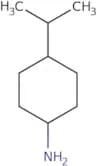
CAS:<p>Versatile small molecule scaffold</p>Formula:C9H15NOPurity:Min. 95%Molecular weight:153.22 g/mol4-Isopropylcyclohexylamine (cis- and trans- mixture)
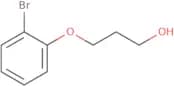
CAS:<p>4-Isopropylcyclohexylamine is an organic compound that belongs to the group of anilines. It is a colorless liquid with a camphor-like odor. 4-Isopropylcyclohexylamine has been shown to be a potent dehydrogenase in vitro and in vivo. It catalyzes the conversion of various substrates, including amines and imines, into alcohols, with or without oxidizing water. The reaction proceeds via the elimination of hydrogen cyanide as the final product. 4-Isopropylcyclohexylamine also has been shown to catalyze the oxidation of diarylamines and aminomethanes to nitrosamines and nitramines, respectively.</p>Formula:C9H19NPurity:Min. 95%Molecular weight:141.26 g/mol3-(2-Bromophenoxy)propan-1-ol
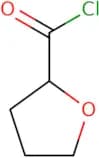
CAS:<p>Versatile small molecule scaffold</p>Formula:C9H11BrO2Purity:Min. 95%Molecular weight:231.09 g/molTetrahydrofuranyl-2-carbonyl Chloride
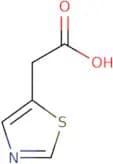
CAS:<p>Tetrahydrofuranyl-2-carbonyl Chloride is a reactive chemical that has been used in the treatment of pediatric cancer. It is a prodrug that undergoes enzymatic hydrolysis to release an active form of hydrochloric acid, which is cytotoxic and induces apoptosis in cells. Tetrahydrofuranyl-2-carbonyl Chloride binds to annexin, which triggers the activation of caspases and leads to the cleavage of poly(ADP-ribose) polymerase (PARP). This cleavage leads to mitochondrial membrane depolarization and subsequent cell death. The x-ray structures of tetrahydrofuranyl-2-carbonyl chloride show that it has an unsymmetrical carbonyl group. When it reacts with chloride ions, it forms an intermediate with a carbonyl group on one side and a bromide ion on the other. This intermediate can then react with</p>Formula:C5H7ClO2Purity:Min. 95%Molecular weight:134.56 g/mol2-(Thiazol-5-yl)acetic acid
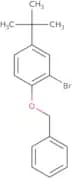
CAS:<p>2-(Thiazol-5-yl)acetic acid is an antimicrobial that is used as a fungicide. It has been shown to inhibit the growth of Fusarium and Curvularia. 2-(Thiazol-5-yl)acetic acid also has fungicidal activity against Refluxing, butanoic acid, and Oxysporum. This compound has been found to be effective against fungi in a number of different studies. 2-(Thiazol-5-yl)acetic acid inhibits the synthesis of ribosomes by inhibiting mRNA translation, leading to cell death by inhibition of protein synthesis.</p>Formula:C5H5NO2SPurity:Min. 95%Molecular weight:143.16 g/mol1-Benzyloxy-2-bromo-4-t-butylbenzene
CAS:<p>1-Benzyloxy-2-bromo-4-t-butylbenzene is a fungicide that inhibits the growth of fungi by inhibiting the synthesis of ergosterol, a component of the fungal cell membrane. It also has anti-inflammatory effects, as shown in animal models. 1-Benzyloxy-2-bromo-4-t-butylbenzene is used to control phytopathogenic fungi such as Fusarium, Rhizoctonia, and Phytophthora. This compound is not active against Gram (+) or Gram (-) bacteria.</p>Formula:C17H19BrOPurity:Min. 95%Molecular weight:319.24 g/mol2-(Methylsulfanyl)cyclohex-1-ene-1-carboxylic acid
CAS:<p>Versatile small molecule scaffold</p>Formula:C8H12O2SPurity:Min. 95%Molecular weight:172.2 g/mol1H,2H,3H,4H,5H-[1,4]Diazepino[1,2-a]indole hydrochloride
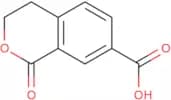
CAS:<p>Versatile small molecule scaffold</p>Formula:C12H15ClN2Purity:Min. 95%Molecular weight:222.71 g/mol1-Oxo-3,4-dihydro-1H-2-benzopyran-7-carboxylic acid
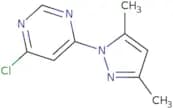
CAS:<p>Versatile small molecule scaffold</p>Formula:C10H8O4Purity:Min. 95%Molecular weight:192.17 g/mol4-Chloro-6-(3,5-dimethyl-1H-pyrazol-1-yl)pyrimidine
CAS:<p>Versatile small molecule scaffold</p>Formula:C9H9ClN4Purity:Min. 95%Molecular weight:208.65 g/mol2-Chloro-4-(3,5-dimethyl-1H-pyrazol-1-yl)pyrimidine
CAS:<p>2-Chloro-4-(3,5-dimethyl-1H-pyrazol-1-yl)pyrimidine is an inhibitor of DNA polymerase. It has been shown to be a potent inhibitor of the synthesis of dna and protein in bacterial cells. 2-Chloro-4-(3,5-dimethyl-1H-pyrazol-1-yl)pyrimidine forms two types of interactions with the enzyme: intermolecular interactions with the enzyme's active site, which prevents substrate binding, and intramolecular interactions with residues on the enzyme's surface, which inhibits catalysis. The crystal structure shows that hydrogen bonds form between the inhibitory molecule and amino acid residues on the enzyme's surface.</p>Formula:C9H9ClN4Purity:Min. 95%Molecular weight:208.65 g/mol6-Chloro-N-methylpyridine-3-sulfonamide
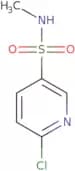
CAS:<p>Versatile small molecule scaffold</p>Formula:C6H7ClN2O2SPurity:Min. 95%Molecular weight:206.65 g/mol2,5-Dimethyl-1,4-dihydroquinolin-4-one
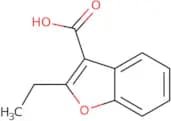
CAS:<p>Versatile small molecule scaffold</p>Formula:C11H11NOPurity:Min. 95%Molecular weight:173.21 g/mol2-Ethyl-1-benzofuran-3-carboxylic acid
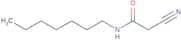
CAS:<p>Versatile small molecule scaffold</p>Formula:C11H10O3Purity:Min. 95%Molecular weight:190.19 g/mol2-Cyano-N-heptylacetamide
CAS:<p>Versatile small molecule scaffold</p>Formula:C10H18N2OPurity:Min. 95%Molecular weight:182.26 g/mol

![1H,2H,3H,4H,5H-[1,4]Diazepino[1,2-a]indole hydrochloride](/_next/image/?url=https%3A%2Fstatic.cymitquimica.com%2Fproducts%2F3D%2Fthumb-webp%2FCCA46156.webp&w=3840&q=75)