


Building Blocks
This section contains fundamental products for the synthesis of organic and biological compounds. Building blocks are the essential starting materials used to construct complex molecules through various chemical reactions. They play a critical role in drug discovery, material science, and chemical research. At CymitQuimica, we offer a diverse range of high-quality building blocks to support your innovative research and industrial projects, ensuring you have the essential components for successful synthesis.
Subcategories of "Building Blocks"
- Boronic Acids & Boronic Acid Derivatives(5,756 products)
- Chiral Building Blocks(1,242 products)
- Hydrocarbon Building Blocks(6,093 products)
- Organic Building Blocks(60,519 products)
Found 195533 products of "Building Blocks"
Sort by
Purity (%)
0
100
|
0
|
50
|
90
|
95
|
100
Methyl[(2E)-3-phenylprop-2-en-1-yl]amine hydrochloride
CAS:<p>Versatile small molecule scaffold</p>Formula:C10H14ClNPurity:Min. 95%Molecular weight:183.68 g/mol4-Hydroxycyclohexane-1-carboxamide
CAS:<p>4-Hydroxycyclohexane-1-carboxamide is a derivative of cyclohexane. It is a potent inhibitor of the enzyme monoamine oxidase (MAO) and has been used in positron emission studies to study MAO activity in rat hepatocytes. The compound has also been shown to inhibit the linkage of 5HT1A receptors with phospholipase C, which may be due to its ability to inhibit amine uptake. 4-Hydroxycyclohexane-1-carboxamide metabolizes rapidly in humans, but not in rats. Studies have shown that it hydrolyzes quickly into an amide form when exposed to human erythrocytes, whereas it does not react with rat erythrocytes.</p>Formula:C7H13NO2Purity:Min. 95%Molecular weight:143.19 g/mol4-Amino-2-(tert-butyl)phenol hydrochloride
CAS:<p>Versatile small molecule scaffold</p>Formula:C10H16ClNOPurity:Min. 95%Molecular weight:201.69 g/mol5,6,7,8-Tetrahydropteridine hydrochloride
CAS:<p>Versatile small molecule scaffold</p>Formula:C6H9ClN4Purity:Min. 95%Molecular weight:172.61 g/mol[(1-Methyl-1H-imidazol-2-yl)thio]acetic acid hydrochloride
CAS:<p>Versatile small molecule scaffold</p>Formula:C6H9ClN2O2SPurity:Min. 95%Molecular weight:208.67 g/molN-[2-(Propylamino)ethyl]isoquinoline-5-sulfonamide
CAS:<p>Versatile small molecule scaffold</p>Formula:C14H19N3O2SPurity:Min. 95%Molecular weight:293.39 g/mol1-Amino-3-(2-cyanoethyl)thiourea
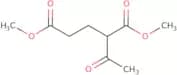
CAS:<p>Versatile small molecule scaffold</p>Formula:C4H8N4SPurity:Min. 95%Molecular weight:144.2 g/mol1,5-Dimethyl 2-acetylpentanedioate
CAS:<p>1,5-Dimethyl 2-acetylpentanedioate is an organic compound that contains a cyclobutane ring. The titanium tetrachloride reacts with this compound to produce 1,5-dimethylcyclobutanes and titanium tetrachloride. This reaction is stereoselective, meaning that it only occurs if the reactant molecules are in a specific orientation. Silylation of the carbonyl groups at the end of each ring yields two products: dimethylsilyl ethers and dianions. The dianions are then cyclized to form a cyclopropane ring with two methyl groups on one side of the ring and one on the other. This product may be used as a precursor for other compounds containing cyclopropane rings.</p>Formula:C9H14O5Purity:Min. 95%Molecular weight:202.2 g/molMethyl 3-methylpyridine-4-carboxylate
CAS:<p>Methyl 3-methylpyridine-4-carboxylate is a synthetic compound that has been used in the discovery of new drugs to treat a variety of diseases, including cancer. It is also used in the synthesis of medicines such as anticancer agents, antibiotics, and antihistamines. Methyl 3-methylpyridine-4-carboxylate can be used in combination with other compounds to produce new medicines. This compound may also be useful for hydrogenation reactions. Hydrogenation is a chemical reaction where hydrogen gas is combined with another substance and this process leads to the addition of hydrogen atoms. The type of hydrogenation reactions that are catalyzed by methyl 3-methylpyridine-4-carboxylate include cyclization and aromatic heterocycle formation.</p>Formula:C8H9NO2Purity:Min. 95%Molecular weight:151.16 g/mol2-(Propan-2-yl)heptanoic acid
CAS:<p>2-(Propan-2-yl)heptanoic acid (2PHEA) is a colorless liquid that can be used as an industrial chemical. 2PHEA is produced by the dehydration of heptanol and reacts with metal oxides to form metal salts, which are then used in the production of metal oxide catalysts. 2PHEA is also used as a plasticizer and to produce sodium sulfate. In the presence of air, 2PHEA can be oxidized to form propanoic acid and carbon dioxide. 2PHEA can also react with sulfur dioxide to form sulfuric acid and 2-propanethiol. This reaction is an oxidation process that can lead to pollution if not controlled properly. The use of phthalates in plastics may also lead to the accumulation of these chemicals in the environment, which can lead to health problems for humans and animals.</p>Formula:C10H20O2Purity:Min. 95%Molecular weight:172.26 g/mol2-(2-Nitro-1H-imidazol-1-yl)ethanamine hydrochloride
CAS:<p>Versatile small molecule scaffold</p>Formula:C5H9ClN4O2Purity:Min. 95%Molecular weight:192.6 g/molThiazolo[5,4-c]pyridine-2-thiol
CAS:<p>Thiazolo[5,4-c]pyridine-2-thiol is an antibacterial heterocycle that has been shown to have a long duration of action. The antimicrobial activity of this molecule is due to its ability to inhibit the growth of bacteria by binding to their ribosomes and preventing protein synthesis. This drug has been shown to have a high affinity for methicillin-resistant Staphylococcus aureus (MRSA) and Pseudomonas aeruginosa, with low MIC values.</p>Formula:C6H4N2S2Purity:Min. 95%Molecular weight:168.23 g/mol7-Hydroxy-5-oxo-1,2,3,5-tetrahydroindolizine-8-carboxylic acid
CAS:<p>Versatile small molecule scaffold</p>Formula:C9H9NO4Purity:Min. 95%Molecular weight:195.17 g/molrac-(1R,2R)-2-Ethoxycyclohexan-1-amine
CAS:<p>Versatile small molecule scaffold</p>Formula:C8H17NOPurity:Min. 95%Molecular weight:143.2 g/mol2-(Benzyloxy)-1-phenylethan-1-amine hydrochloride
CAS:<p>Versatile small molecule scaffold</p>Formula:C15H18ClNOPurity:Min. 95%Molecular weight:263.76 g/mol(5-Amino-1-benzofuran-2-yl)methanol
CAS:<p>Versatile small molecule scaffold</p>Formula:C9H9NO2Purity:Min. 95%Molecular weight:163.17 g/mol(2E)-3-{1-[(tert-Butoxy)carbonyl]pyrrolidin-2-yl}prop-2-enoic acid
CAS:<p>Versatile small molecule scaffold</p>Formula:C12H19NO4Purity:Min. 95%Molecular weight:241.28 g/molEthyl 4-(4-ethylphenyl)-2,4-dioxobutanoate
CAS:<p>Versatile small molecule scaffold</p>Formula:C14H16O4Purity:Min. 95%Molecular weight:248.27 g/molEthyl 2,4-dioxo-4-o-tolylbutanoate
CAS:<p>Versatile small molecule scaffold</p>Formula:C13H14O4Purity:Min. 95%Molecular weight:234.25 g/mol1,3,3-Trimethylpiperazine-2,5-dione
CAS:<p>Versatile small molecule scaffold</p>Formula:C7H12N2O2Purity:Min. 95%Molecular weight:156.18 g/mol
![Methyl[(2E)-3-phenylprop-2-en-1-yl]amine hydrochloride](/_next/image/?url=https%3A%2Fstatic.cymitquimica.com%2Fproducts%2F3D%2Fthumb-webp%2FREA93914.webp&w=3840&q=75)


![[(1-Methyl-1H-imidazol-2-yl)thio]acetic acid hydrochloride](/_next/image/?url=https%3A%2Fstatic.cymitquimica.com%2Fproducts%2F3D%2Fthumb-webp%2FREA95603.webp&w=3840&q=75)
![N-[2-(Propylamino)ethyl]isoquinoline-5-sulfonamide](/_next/image/?url=https%3A%2Fstatic.cymitquimica.com%2Fproducts%2F3D%2Fthumb-webp%2FREA97090.webp&w=3840&q=75)



![Thiazolo[5,4-c]pyridine-2-thiol](/_next/image/?url=https%3A%2Fstatic.cymitquimica.com%2Fproducts%2F3D%2Fthumb-webp%2FREA99044.webp&w=3840&q=75)


![(2E)-3-{1-[(tert-Butoxy)carbonyl]pyrrolidin-2-yl}prop-2-enoic acid](/_next/image/?url=https%3A%2Fstatic.cymitquimica.com%2Fproducts%2F3D%2Fthumb-webp%2FREB26902.webp&w=3840&q=75)


