Building Blocks
This section contains fundamental products for the synthesis of organic and biological compounds. Building blocks are the essential starting materials used to construct complex molecules through various chemical reactions. They play a critical role in drug discovery, material science, and chemical research. At CymitQuimica, we offer a diverse range of high-quality building blocks to support your innovative research and industrial projects, ensuring you have the essential components for successful synthesis.
Subcategories of "Building Blocks"
- Boronic Acids & Boronic Acid Derivatives(5,756 products)
- Chiral Building Blocks(1,242 products)
- Hydrocarbon Building Blocks(6,093 products)
- Organic Building Blocks(60,519 products)
Found 195533 products of "Building Blocks"
Sort by
Purity (%)
0
100
|
0
|
50
|
90
|
95
|
100
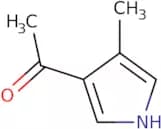
1-(4-Methyl-1H-pyrrol-3-yl)ethanone
CAS:<p>1-(4-Methyl-1H-pyrrol-3-yl)ethanone is a metabolite of eupenicillium, which is found in the bark of several species of conifer trees. This natural product has been shown to be biogenetically related to the biosynthesis of nitrogenous compounds and has been identified in various plant tissues as a secondary metabolite. 1-(4-Methyl-1H-pyrrol-3-yl)ethanone has also been shown to have antibiotic activity against gram positive bacteria such as Bacillus subtilis, Staphylococcus aureus, and Streptococcus pyogenes.</p>Formula:C7H9NOPurity:Min. 95%Molecular weight:123.15 g/mol3-Azatricyclo[7.3.1.0,5,13]trideca-1(12),5(13),6,8,10-pentaen-2-one
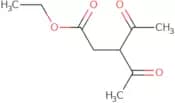
CAS:<p>Versatile small molecule scaffold</p>Formula:C14H11NO2Purity:Min. 95%Molecular weight:225.24 g/molEthyl 3-acetyl-4-oxopentanoate
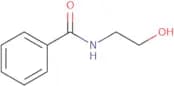
CAS:<p>Ethyl 3-acetyl-4-oxopentanoate is a synthetic chemical that has been found to be an ancillary ligand for the diazepine ring. The chloride group is activated by hydrogen chloride and can form a bifunctional complex with the formyl group. This compound has been used in kinetic and structural analysis as a surrogate for the more difficult to obtain diazocompounds, which are often used in medicinal chemistry.</p>Formula:C9H14O4Purity:Min. 95%Molecular weight:186.21 g/molN-(2-hydroxyethyl)benzamide
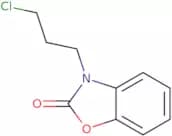
CAS:<p>N-(2-hydroxyethyl)benzamide is an amido-containing preservative used in cosmetics and personal care products. It is a synthetic, water-soluble compound that has been shown to be effective against gram-positive bacteria such as Bacillus cereus and methicillin-resistant Staphylococcus aureus (MRSA). It also has the ability to inhibit the growth of gram-negative bacteria such as Escherichia coli and Pseudomonas aeruginosa. N-(2-hydroxyethyl)benzamide has been found to be stable at pH values from 3 to 10 and can be used in many cosmetic formulations, including sunscreen, shampoo, conditioner, hair colorant, eye shadow, mascara, lipstick, lip gloss and nail polish. This preservative should not be used in products that contain polyols or ethyl groups since it will react with these ingredients.</p>Formula:C9H11NO2Purity:Min. 95%Molecular weight:165.19 g/mol3-(3-Chloropropyl)-2,3-dihydro-1,3-benzoxazol-2-one
CAS:<p>Versatile small molecule scaffold</p>Formula:C10H10ClNO2Purity:Min. 95%Molecular weight:211.64 g/mol4-[(4-Methylphenyl)sulfanyl]butanoic acid
CAS:<p>Versatile small molecule scaffold</p>Formula:C11H14O2SPurity:Min. 95%Molecular weight:210.29 g/molBenzene, 1-ethyl-4-isothiocyanato-
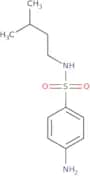
CAS:<p>Benzene, 1-ethyl-4-isothiocyanato-, is a potential cancer drug that has been shown to be an active compound in inhibiting the growth of cancer cells. It is a synthetic terpene that is known to have many volatile compounds, including isothiocyanates. Benzene activates inflammatory cytokines and inhibits the production of inflammatory mediators in chronic inflammatory disease. The mechanism of action for benzene is unknown, but it may be due to its ability to signal cells through a transducer or receptor that regulates cellular proliferation and differentiation.</p>Formula:C9H9NSPurity:Min. 95%Molecular weight:163.24 g/mol4-Amino-N-(3-methylbutyl)benzene-1-sulfonamide
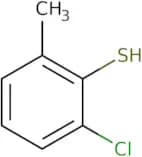
CAS:<p>Versatile small molecule scaffold</p>Formula:C11H18N2O2SPurity:Min. 95%Molecular weight:242.34 g/mol2-Chloro-6-methylthiophenol
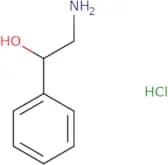
CAS:<p>2-Chloro-6-methylthiophenol is an annulated compound that is a catalyst for hydrogenation. It can be used in the production of trifluoroacetic acid and polyphosphoric acid. 2-Chloro-6-methylthiophenol has been shown to act as a dehydrogenating agent, which is useful in the synthesis of conjugates. Catalytic hydrogenation can also be achieved with this compound in the presence of trimethylaluminium, which has been shown to be more efficient than copper.</p>Formula:C7H7ClSPurity:Min. 95%Molecular weight:158.65 g/mol(R)-(-)-2-Amino-1-phenylethanol hydrochloride
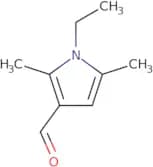
CAS:<p>Versatile small molecule scaffold</p>Formula:C8H12ClNOPurity:Min. 95%Molecular weight:173.64 g/mol1-Ethyl-2,5-dimethyl-1H-pyrrole-3-carbaldehyde
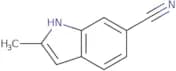
CAS:<p>Versatile small molecule scaffold</p>Formula:C9H13NOPurity:Min. 95%Molecular weight:151.21 g/mol2-Methylindole-6-carbonitrile
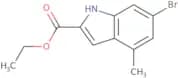
CAS:<p>Versatile small molecule scaffold</p>Formula:C10H8N2Purity:Min. 95%Molecular weight:156.18 g/molEthyl 6-bromo-4-methyl-1H-indole-2-carboxylate
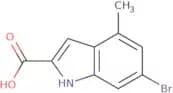
CAS:<p>Versatile small molecule scaffold</p>Formula:C12H12BrNO2Purity:Min. 95%Molecular weight:282.13 g/mol6-Bromo-4-methyl-1H-indole-2-carboxylic acid
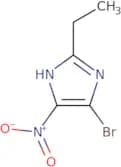
CAS:<p>Versatile small molecule scaffold</p>Formula:C10H8BrNO2Purity:Min. 95%Molecular weight:254.08 g/mol4-Bromo-2-ethyl-5-nitro-1H-imidazole
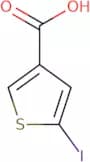
CAS:<p>Versatile small molecule scaffold</p>Formula:C5H6BrN3O2Purity:Min. 95%Molecular weight:220.02 g/mol5-Iodothiophene-3-carboxylic acid
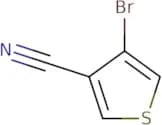
CAS:<p>Versatile small molecule scaffold</p>Formula:C5H3IO2SPurity:Min. 95%Molecular weight:254.05 g/mol4-Bromothiophene-3-carbonitrile
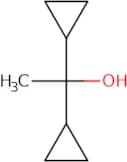
CAS:<p>4-Bromothiophene-3-carbonitrile is a reactive, heterocyclic compound that can be prepared by reacting ethyl bromide with 3-carbonitrile in the presence of triethyl orthoformate. This compound can be used as an acceptor for electron and has an optical spectrum that contains a strong absorption at 295 nm, which corresponds to its electron affinity. The compound is also resistant to halogenation and has three functional groups. 4-Bromothiophene-3-carbonitrile can react with various types of halides or other organic compounds to form addition products.</p>Formula:C5H2BrNSPurity:Min. 95%Molecular weight:188.05 g/mol1,1-Dicyclopropylethan-1-ol
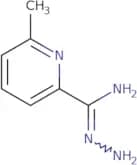
CAS:<p>Versatile small molecule scaffold</p>Formula:C8H14OPurity:Min. 95%Molecular weight:126.2 g/molN-Amino-6-methylpyridine-2-carboximidamide
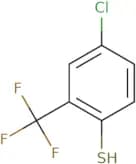
CAS:<p>Versatile small molecule scaffold</p>Formula:C7H10N4Purity:Min. 95%Molecular weight:150.18 g/mol4-Chloro-2-trifluoromethylbenzenethiol
CAS:<p>Versatile small molecule scaffold</p>Formula:C7H4ClF3SPurity:Min. 95%Molecular weight:212.62 g/mol

![3-Azatricyclo[7.3.1.0,5,13]trideca-1(12),5(13),6,8,10-pentaen-2-one](/_next/image/?url=https%3A%2Fstatic.cymitquimica.com%2Fproducts%2F3D%2Fthumb-webp%2FTAA83341.webp&w=3840&q=75)
![4-[(4-Methylphenyl)sulfanyl]butanoic acid](/_next/image/?url=https%3A%2Fstatic.cymitquimica.com%2Fproducts%2F3D%2Fthumb-webp%2FTAA85048.webp&w=3840&q=75)