Building Blocks
This section contains fundamental products for the synthesis of organic and biological compounds. Building blocks are the essential starting materials used to construct complex molecules through various chemical reactions. They play a critical role in drug discovery, material science, and chemical research. At CymitQuimica, we offer a diverse range of high-quality building blocks to support your innovative research and industrial projects, ensuring you have the essential components for successful synthesis.
Subcategories of "Building Blocks"
- Boronic Acids & Boronic Acid Derivatives(5,756 products)
- Chiral Building Blocks(1,242 products)
- Hydrocarbon Building Blocks(6,093 products)
- Organic Building Blocks(60,519 products)
Found 195533 products of "Building Blocks"
Sort by
Purity (%)
0
100
|
0
|
50
|
90
|
95
|
100
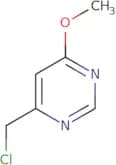
4-(Chloromethyl)-6-methoxypyrimidine
CAS:<p>Versatile small molecule scaffold</p>Formula:C6H7ClN2OPurity:Min. 95%Molecular weight:158.58 g/mol6-(Chloromethyl)pyrimidin-4-ol
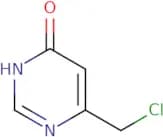
CAS:<p>Versatile small molecule scaffold</p>Formula:C5H5ClN2OPurity:Min. 95%Molecular weight:144.56 g/mol3-Bromothieno[3,2-b]pyridine
CAS:<p>Versatile small molecule scaffold</p>Formula:C7H4BrNSPurity:Min. 95%Molecular weight:214.08 g/mol2-Bromothieno[3,2-b]pyridine
CAS:<p>Versatile small molecule scaffold</p>Formula:C7H4BrNSPurity:Min. 95%Molecular weight:214.08 g/mol3-(2-Methoxyethoxy)propan-1-ol
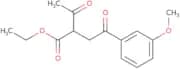
CAS:<p>Versatile small molecule scaffold</p>Formula:C6H14O3Purity:Min. 95%Molecular weight:134.17 g/molEthyl 2-acetyl-4-(3-methoxyphenyl)-4-oxobutanoate
CAS:<p>Versatile small molecule scaffold</p>Formula:C15H18O5Purity:Min. 95%Molecular weight:278.3 g/mol4-[2,3,5,6-Tetrafluoro-4-(4-hydroxyphenoxy)phenoxy]phenol
CAS:<p>Versatile small molecule scaffold</p>Formula:C18H10F4O4Purity:Min. 95%Molecular weight:366.3 g/molEthyl thieno[3,2-c]pyridine-2-carboxylate
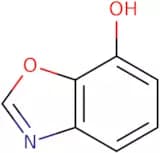
CAS:<p>Versatile small molecule scaffold</p>Formula:C10H9NO2SPurity:Min. 95%Molecular weight:207.25 g/mol1,3-Benzoxazol-7-ol
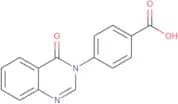
CAS:<p>Benzoxazoles are a class of heterocyclic compounds that have been used extensively in organic chemistry. They are terminal oxidants, which means they can form bonds with other molecules by adding an oxygen atom to them. Benzoxazoles are also efficient catalysts for the synthesis of a variety of functionalized compounds and react selectively with dichlorobenzene to form benzoxazole derivatives. This process is catalytic, meaning it does not require any external energy source. The use of benzoxazole as a catalyst has many advantages over traditional methods, including improved efficiency and regioselectivity.</p>Formula:C7H5NO2Purity:Min. 95%Molecular weight:135.12 g/mol4-(4-Oxo-3,4-dihydroquinazolin-3-yl)benzoic acid
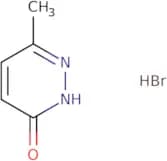
CAS:Controlled Product<p>Versatile small molecule scaffold</p>Formula:C15H10N2O3Purity:Min. 95%Molecular weight:266.25 g/mol6-Methylpyridazin-3(2H)-one hydrobromide
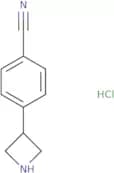
CAS:<p>Versatile small molecule scaffold</p>Formula:C5H6N2O·HBrPurity:Min. 95%Molecular weight:191.03 g/mol4-(Azetidin-3-yl)benzonitrile hydrochloride
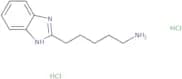
CAS:<p>Versatile small molecule scaffold</p>Formula:C10H11ClN2Purity:Min. 95%Molecular weight:194.66 g/mol5-(1H-1,3-Benzodiazol-2-yl)pentan-1-amine dihydrochloride
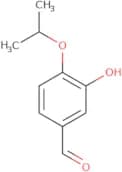
CAS:<p>Versatile small molecule scaffold</p>Formula:C12H19Cl2N3Purity:Min. 95%Molecular weight:276.2 g/mol3-Hydroxy-4-(propan-2-yloxy)benzaldehyde
CAS:<p>Versatile small molecule scaffold</p>Formula:C10H12O3Purity:Min. 95%Molecular weight:180.2 g/mol4-Methyl-5-(pyridin-2-yl)-1,3-thiazol-2-amine
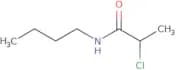
CAS:<p>Versatile small molecule scaffold</p>Formula:C9H9N3SPurity:Min. 95%Molecular weight:191.26 g/molN-Butyl-2-chloropropanamide
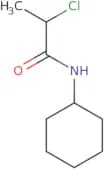
CAS:<p>Versatile small molecule scaffold</p>Formula:C7H14ClNOPurity:Min. 95%Molecular weight:163.64 g/mol2-Chloro-N-cyclohexylpropanamide
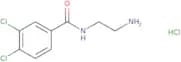
CAS:<p>2-Chloro-N-cyclohexylpropanamide is a chemical compound with the molecular formula CHClNO. It is used as a precursor in the synthesis of different drugs, such as acetanilide and its derivatives. This reagent can be prepared at low cost and has been shown to be efficient for the preparation of various compounds. 2-Chloro-N-cyclohexylpropanamide has been used in research to synthesize acetanilide and its derivatives. The reaction mechanism for this process involves the addition of chloride ion to an amide group on a cyclic ketone. The chloride ion acts as a nucleophile that attacks the carbonyl carbon atom, displacing water and forming an α-chloroketone. This reaction is catalyzed by copper metal or copper oxide.<br>Synopses:<br>Preparative: <br>Yields: <br>Chemical Research:</p>Formula:C9H16ClNOPurity:Min. 95%Molecular weight:189.68 g/molN-(2-Aminoethyl)-3,4-dichlorobenzamide hydrochloride
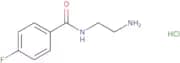
CAS:<p>Versatile small molecule scaffold</p>Formula:C9H11Cl3N2OPurity:Min. 95%Molecular weight:269.6 g/molN-(2-Aminoethyl)-4-fluorobenzamide hydrochloride
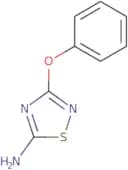
CAS:<p>Versatile small molecule scaffold</p>Formula:C9H12ClFN2OPurity:Min. 95%Molecular weight:218.65 g/mol3-Phenoxy-1,2,4-thiadiazol-5-amine
CAS:<p>Versatile small molecule scaffold</p>Formula:C8H7N3OSPurity:Min. 95%Molecular weight:193.23 g/mol

![3-Bromothieno[3,2-b]pyridine](/_next/image/?url=https%3A%2Fstatic.cymitquimica.com%2Fproducts%2F3D%2Fthumb-webp%2FUDA19112.webp&w=3840&q=75)
![2-Bromothieno[3,2-b]pyridine](/_next/image/?url=https%3A%2Fstatic.cymitquimica.com%2Fproducts%2F3D%2Fthumb-webp%2FUDA19115.webp&w=3840&q=75)

![4-[2,3,5,6-Tetrafluoro-4-(4-hydroxyphenoxy)phenoxy]phenol](/_next/image/?url=https%3A%2Fstatic.cymitquimica.com%2Fproducts%2F3D%2Fthumb-webp%2FUDA19717.webp&w=3840&q=75)
![Ethyl thieno[3,2-c]pyridine-2-carboxylate](/_next/image/?url=https%3A%2Fstatic.cymitquimica.com%2Fproducts%2F3D%2Fthumb-webp%2FUDA22616.webp&w=3840&q=75)