Building Blocks
This section contains fundamental products for the synthesis of organic and biological compounds. Building blocks are the essential starting materials used to construct complex molecules through various chemical reactions. They play a critical role in drug discovery, material science, and chemical research. At CymitQuimica, we offer a diverse range of high-quality building blocks to support your innovative research and industrial projects, ensuring you have the essential components for successful synthesis.
Subcategories of "Building Blocks"
- Boronic Acids & Boronic Acid Derivatives(5,756 products)
- Chiral Building Blocks(1,242 products)
- Hydrocarbon Building Blocks(6,093 products)
- Organic Building Blocks(60,519 products)
Found 195533 products of "Building Blocks"
Sort by
Purity (%)
0
100
|
0
|
50
|
90
|
95
|
100
tert-Butyl 5-oxo-9-oxa-2-azaspiro[5.5]undecane-2-carboxylate
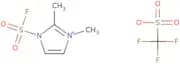
CAS:<p>Versatile small molecule scaffold</p>Formula:C14H23NO4Purity:Min. 95%Molecular weight:269.3 g/mol1-(Fluorosulfonyl)-2,3-dimethyl-1H-imidazol-3-ium trifluoromethanesulfonate
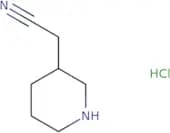
CAS:<p>Versatile small molecule scaffold</p>Formula:C6H8F4N2O5S2Purity:Min. 95%Molecular weight:328.26 g/mol2-(3-Piperidyl)acetonitrile hydrochloride
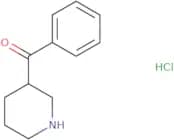
CAS:<p>Versatile small molecule scaffold</p>Formula:C7H13ClN2Purity:Min. 95%Molecular weight:160.64 g/mol3-Benzoylpiperidine HCl
CAS:<p>Versatile small molecule scaffold</p>Formula:C12H15NO·HClPurity:Min. 95%Molecular weight:225.72 g/molEthyl 5-hydroxy-2-methyl-1-phenyl-1H-indole-3-carboxylate
CAS:Controlled Product<p>Ethyl 5-hydroxy-2-methyl-1-phenyl-1H-indole-3-carboxylate is a linker molecule that is used in the synthesis of bioreductive agents. It has been shown to inhibit cell growth in human K562 cells, as well as ascidian eggs and to be involved in the transfer of genetic information from DNA to RNA. Ethyl 5-hydroxy-2-methyl-1-phenyl-1H-indole-3 carboxylate has also been synthesized, and its molecular modeling studies have revealed that it inhibits tumour cells by interfering with Ezh2 inhibitors.</p>Formula:C18H17NO3Purity:Min. 95%Molecular weight:295.3 g/mol2-(3-Nitrophenyl)-1,3,4-oxadiazole
CAS:<p>The synthesis of 2-nitrophenyl-1,3,4-oxadiazole is achieved by condensation of hydrazides and orthoesters. The catalytic solvents used in the reaction are trifluoroacetic acid or acetic anhydride. The use of this methodology has been shown to be efficient and can be used for the synthesis of other derivatives. This method is also efficient and does not require more than one reagent or catalyst. It is toxic to humans but does not have any mutagenic effects on DNA.</p>Formula:C8H5N3O3Purity:Min. 95%Molecular weight:191.14 g/mol4-Chloro-1-(propan-2-yl)piperidine hydrochloride
CAS:<p>Versatile small molecule scaffold</p>Formula:C8H17Cl2NPurity:Min. 95%Molecular weight:198.1 g/molEthyl 1,2,3,4-tetrahydroquinoline-6-carboxylate
CAS:<p>Versatile small molecule scaffold</p>Formula:C12H15NO2Purity:Min. 95%Molecular weight:205.25 g/mol1-Nitro-4-(2-nitroethenyl)benzene
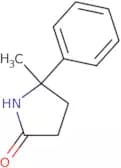
CAS:<p>Versatile small molecule scaffold</p>Formula:C8H6N2O4Purity:Min. 95%Molecular weight:194.14 g/mol5-Methyl-5-phenylpyrrolidin-2-one
CAS:<p>5-Methyl-5-phenylpyrrolidin-2-one (MPP+) is an analog of butyric acid and the active substance in the neurotoxin MPTP. MPP+ causes death by inhibiting dopamine production, leading to Parkinson's disease. It also inhibits GABA synthesis and activates glutamate receptors. MPP+ has been shown to be toxic to rat brain cells in culture, causing neuronal degeneration. Injection of rats with MPP+ leads to decreased reflexes and a decrease in γ-aminobutyric acid (GABA) concentrations in the brain.</p>Formula:C11H13NOPurity:Min. 95%Molecular weight:175.23 g/molIopydol
CAS:<p>Iopydol is a drug that binds to specific proteins in the body, such as those found in the bowel, and causes a change in their structure or function. Iopydol is used to treat inflammatory bowel disease. It has also been shown to have an anti-inflammatory effect on other inflammatory diseases, such as rheumatoid arthritis and asthma. Iopydol has been shown to be effective at reducing the symptoms of infectious diseases, such as malaria and tuberculosis. This drug may also have therapeutic effects against cancer by binding to cancerous cells, which prevents them from proliferating and spreading.</p>Formula:C8H9I2NO3Purity:Min. 95%Molecular weight:420.97 g/mol2-Chloro-1-(5-nitrofuran-2-yl)ethan-1-one
CAS:<p>2-Chloro-1-(5-nitrofuran-2-yl)ethan-1-one is a molecule that belongs to the class of fatty alcohols. This drug is used in pharmaceutical preparations, specifically in pharmaceutical dosages, as an anti-inflammatory and bronchiolitis obliterans agent. The target tissue for this drug is the respiratory tract. 2CHNEE has been shown to inhibit the growth of cancer cells by targeting them with monoclonal antibodies that block their ability to synthesize fatty acids and fatty acid derivatives. It also inhibits fungal growth by binding to ergosterol, which prevents it from being converted into ergosterol peroxide and disrupting cell membranes.</p>Formula:C6H4ClNO4Purity:Min. 95%Molecular weight:189.55 g/mol1-(2-Methylphenyl)propan-2-amine
CAS:Controlled Product<p>1-(2-Methylphenyl)propan-2-amine is a fatty acid ester that is used as an excipient in pharmaceutical dosage forms. It is used to increase the viscosity of drug solutions and suspensions, and to provide a protective coating for tablets. 1-(2-Methylphenyl)propan-2-amine is insoluble in water, but soluble in organic solvents such as alcohols and acetone. It can be prepared by reacting a primary amine with a fatty acid chloride or anhydride. The compound has been shown to have high affinity for 5HT2A receptors in vitro, which may account for its psychoactive effects.</p>Formula:C10H15NPurity:Min. 95%Molecular weight:149.23 g/mol2-(5-Methyloxolan-2-yl)acetic acid
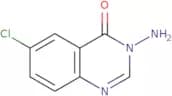
CAS:<p>Versatile small molecule scaffold</p>Formula:C7H12O3Purity:Min. 95%Molecular weight:144.17 g/mol3-Amino-6-chloro-3,4-dihydroquinazolin-4-one
CAS:<p>Versatile small molecule scaffold</p>Formula:C8H6ClN3OPurity:Min. 95%Molecular weight:195.6 g/mol6-Aminopyridine-2-carbohydrazide
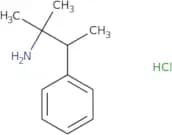
CAS:<p>Versatile small molecule scaffold</p>Formula:C6H8N4OPurity:Min. 95%Molecular weight:152.15 g/mol2-Methyl-3-phenylbutan-2-amine hydrochloride
CAS:Controlled Product<p>Versatile small molecule scaffold</p>Formula:C11H18ClNPurity:Min. 95%Molecular weight:199.72 g/mol4-Hydroxy-3,4-diphenylcyclopent-2-en-1-one
CAS:<p>Versatile small molecule scaffold</p>Formula:C17H14O2Purity:Min. 95%Molecular weight:250.29 g/mol2-(Benzylamino)benzonitrile
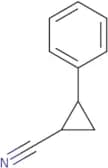
CAS:<p>2-(Benzylamino)benzonitrile is an organometallic reagent that is used in the synthesis of heterocyclic compounds. It can be used to form anions with various halides, such as 2-aminobenzaldehyde and quinazolines. The chemical rearrangements of acyl halides are a common reaction that occurs when 2-(benzylamino)benzonitrile is exposed to acid or base. This reaction produces 6-membered heterocycles, which have been shown to have therapeutic potential against cancer cells.</p>Formula:C14H12N2Purity:Min. 95%Molecular weight:208.26 g/molrac-(1R,2R)-2-Phenylcyclopropane-1-carbonitrile
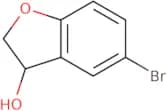
CAS:<p>Rac-1R,2R-2-phenylcyclopropane-1-carbonitrile is an enantiopure compound with two chiral centers. It is a reaction intermediate in the synthesis of prodrugs for the treatment of cancer. Rac-1R,2R-2-phenylcyclopropane-1-carbonitrile is converted to its corresponding amide by reaction with ammonia and then reacted with hydrochloric acid to form the corresponding ester. The optical purity of rac-(1R,2R)-2-phenylcyclopropane-1-carbonitrile can be determined by measuring the optical rotation of the chiral center at 366 nm. Rac-(1R,2R)-2-phenylcyclopropane-1-carbonitrile has a spontaneous rate constant of k=0.02±0.001 s−1 and an additivity parameter of ΔH=-3.84±0.17 kcal mol−1</p>Formula:C10H9NPurity:Min. 95%Molecular weight:143.18 g/mol5-Bromo-2,3-dihydro-1-benzofuran-3-ol
CAS:<p>Versatile small molecule scaffold</p>Formula:C8H7BrO2Purity:Min. 95%Molecular weight:215.04 g/mol2-Azabicyclo[3.2.2]nonan-3-one
CAS:<p>Versatile small molecule scaffold</p>Formula:C8H13NOPurity:Min. 95%Molecular weight:139.19 g/mol3-Azabicyclo[3.2.2]nonane HCl
CAS:<p>Versatile small molecule scaffold</p>Formula:C8H16ClNPurity:Min. 95%Molecular weight:161.67 g/molMethyl 6-methyl-7-oxooctanoate
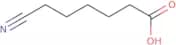
CAS:<p>Versatile small molecule scaffold</p>Formula:C10H18O3Purity:Min. 95%Molecular weight:186.25 g/mol6-Cyanohexanoic acid
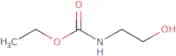
CAS:<p>6-Cyanohexanoic acid is a compound that belongs to the group of oximes. It is a deacetylase inhibitor, which inhibits the activity of histone deacetylases (HDACs). 6-Cyanohexanoic acid has been shown to inhibit HDACs in vitro and in vivo. 6-Cyanohexanoic acid also functions as an acetylcholinesterase inhibitor, and can be used for the treatment of Alzheimer's disease. This molecule has been shown to be effective against aluminium toxicity, by reducing its accumulation in the brain. 6-Cyanohexanoic acid also inhibits crotonoyl-CoA reductase, which can be used as a potential treatment for metabolic diseases such as type 2 diabetes.</p>Formula:C7H11NO2Purity:Min. 95%Molecular weight:141.17 g/molEthyl N-(2-hydroxyethyl)carbamate
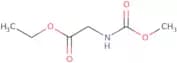
CAS:<p>Ethyl N-(2-hydroxyethyl)carbamate is a carbamate insecticide that is used in agriculture and horticultural industries to control lepidopteran insects. It is a metabolite of methoprene, which is an insect growth regulator. The ethyl group of ethyl N-(2-hydroxyethyl)carbamate is conjugated with the hydroxyl group of the 2-hydroxyethylamine moiety. This results in the formation of an antigenic site for antibody production, enhancing immunosorbent assays for determination of methoprene residues in plants or animal tissues.</p>Formula:C5H11NO3Purity:Min. 95%Molecular weight:133.15 g/molEthyl 2-((methoxycarbonyl)amino)acetate
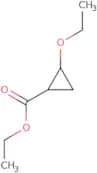
CAS:<p>Versatile small molecule scaffold</p>Formula:C6H11NO4Purity:Min. 95%Molecular weight:161.16 g/molEthyl 2-ethoxycyclopropane-1-carboxylate
CAS:<p>Versatile small molecule scaffold</p>Formula:C8H14O3Purity:Min. 95%Molecular weight:158.19 g/mol1-Oxa-4-thia-8-azaspiro[4.5]decane
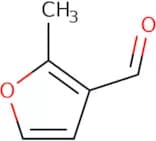
CAS:<p>Versatile small molecule scaffold</p>Formula:C7H13NOSPurity:Min. 95%Molecular weight:159.25 g/mol2-Methyl-3-furaldehyde
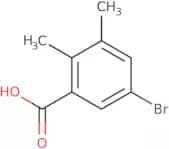
CAS:<p>Versatile small molecule scaffold</p>Formula:C6H6O2Purity:Min. 95%Molecular weight:110.11 g/mol5-Bromo-2,3-dimethylbenzoic acid
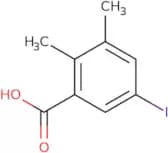
CAS:<p>Versatile small molecule scaffold</p>Formula:C9H9BrO2Purity:Min. 95%Molecular weight:229.07 g/mol5-Iodo-2,3-dimethylbenzoic acid
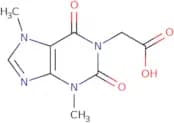
CAS:<p>Versatile small molecule scaffold</p>Formula:C9H9IO2Purity:Min. 95%Molecular weight:276.07 g/mol2-(3,7-Dimethyl-2,6-dioxo-2,3,6,7-tetrahydro-1H-purin-1-yl)acetic acid
CAS:Controlled Product<p>2-(3,7-Dimethyl-2,6-dioxo-2,3,6,7-tetrahydro-1H-purin-1-yl)acetic acid is a molecule used in various industries. It is an organic solvent that can be used to deodorize and clean surfaces. This compound is also used as a diagnostic agent for animal health. 2-(3,7-Dimethyl-2,6-dioxo-2,3,6,7-tetrahydro-1H-purin-- 1yl)acetic acid has been shown to have carboxylic acid group properties. It can be found in the leaves of marrubium and caffeic acid.</p>Formula:C9H10N4O4Purity:Min. 95%Molecular weight:238.2 g/mol2-[(Pyridin-2-yl)formamido]acetic acid
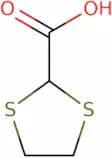
CAS:<p>2-[(Pyridin-2-yl)formamido]acetic acid is a chemical substance which can be used as a substrate in the production of 2-(pyridin-2-yl)acetic acid. It is also used to investigate the pharmacokinetics and biological properties of aromatic hydrocarbons. This compound has been found to induce proton release from fibrinogen and to inhibit aerobic glycolysis, n-oxide hydroxylase, and hydroxylase. 2-[(Pyridin-2-yl)formamido]acetic acid is an orally active compound that is excreted mainly in urine.</p>Formula:C8H8N2O3Purity:Min. 95%Molecular weight:180.16 g/mol1,3-Dithiolane-2-carboxylic acid
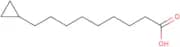
CAS:<p>1,3-Dithiolane-2-carboxylic acid is an organic molecule with the chemical formula C4H4O4. It is a dithiolane carboxylic acid that has been used in the preparation of glyoxylic acid and its derivatives. 1,3-Dithiolane-2-carboxylic acid can be prepared from the condensation of acetaldehyde and ethyl formate to give diethyl acetal, followed by reaction with sodium bisulfite to yield ethyl thioacetate. This compound can also be prepared by alkylation of diethyl sulfide with propylene oxide or butanol. The esterification of 1,3-dithiolane-2-carboxylic acid yields glyoxylic acid. Preparative methods for this compound include the use of acetals and dithioacetals as sources.</p>Formula:C4H6O2S2Purity:Min. 95%Molecular weight:150.2 g/mol9-Cyclopropylnonanoic acid
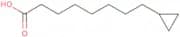
CAS:<p>Versatile small molecule scaffold</p>Formula:C12H22O2Purity:Min. 95%Molecular weight:198.3 g/mol8-Cyclopropyloctanoic acid
CAS:<p>Versatile small molecule scaffold</p>Formula:C11H20O2Purity:Min. 95%Molecular weight:184.3 g/mol2-([(Benzyloxy)carbonyl]amino)-3-(4-hydroxyphenyl)propanoic acid
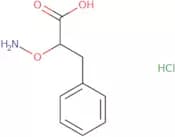
CAS:<p>2-([(Benzyloxy)carbonyl]amino)-3-(4-hydroxyphenyl)propanoic acid is a chemical compound that belongs to the class of amino acid derivatives. It has an optical isomer with a different configuration at the chiral centre and has been used as an experiment to study the optical properties of β-cyclodextrin. 2-([(Benzyloxy)carbonyl]amino)-3-(4-hydroxyphenyl)propanoic acid can be separated by chromatography using enantioseparation, which is a technique for separating molecules based on their asymmetric properties. The molecule functions as a cosolvent and transesterification agent in organic solvents. 2-([(Benzyloxy)carbonyl]amino)-3-(4-hydroxyphenyl)propanoic acid can also be synthesized from other compounds, such as acetophenone and benzaldehyde,</p>Formula:C17H17NO5Purity:Min. 95%Molecular weight:315.32 g/mol2-(Aminooxy)-3-phenylpropanoic acid hydrochloride
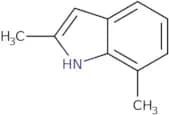
CAS:<p>Versatile small molecule scaffold</p>Formula:C9H12ClNO3Purity:Min. 95%Molecular weight:217.65 g/mol2,7-Dimethyl-1H-indole
CAS:<p>2,7-Dimethyl-1H-indole (3,4-dimethylaniline) is a nitrogenous organic compound that is used in the synthesis of trifluoride and dipyrroles. 3,4-Dimethylaniline can be synthesized by the reaction of 2,7-dimethylindole with magnesium metal and a halogenated hydrocarbon. This chemical has been shown to react with Grignard reagents to form quinoxalines. It is also used as a chromatographic stationary phase for separating organic compounds. 3,4-Dimethylaniline has been found to have a nonbasic character and cannot form salts with acids or bases. It is not soluble in water but soluble in most organic solvents such as ethers and alcohols.</p>Formula:C10H11NPurity:Min. 95%Molecular weight:145.2 g/mol1,8-Diazatricyclo[7.4.0.0,2,7]trideca-2,4,6,8-tetraene
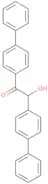
CAS:<p>1,8-Diazatricyclo[7.4.0.0,2,7]trideca-2,4,6,8-tetraene is an organic compound that belongs to the class of piperidines. It has a high yield with a reaction mixture of hydrochloric acid and ammonium hydroxide in chloroform at room temperature for 2 hours. The product can be cyclized to form 1,3-diazabicyclo[5.4.0]undecane with diaphragm reduction or hydrogenation in the presence of a Pd/C catalyst under environmentally friendly conditions.</p>Formula:C11H12N2Purity:Min. 95%Molecular weight:172.2 g/mol2-Hydroxy-1,2-bis(4-phenylphenyl)ethan-1-one
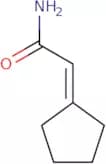
CAS:<p>Versatile small molecule scaffold</p>Formula:C26H20O2Purity:Min. 95%Molecular weight:364.4 g/mol2-Cyclopentylideneacetamide
CAS:<p>Versatile small molecule scaffold</p>Formula:C7H11NOPurity:Min. 95%Molecular weight:125.17 g/mol2-Oxaspiro[4.4]nonane-1,3-dione
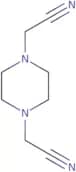
CAS:<p>2-Oxaspiro[4.4]nonane-1,3-dione is a heterocycle that has been developed as a lead molecule for the treatment of cancer. It was discovered by researchers at the University of Illinois who were investigating the use of Friedel-Crafts reaction to synthesize triazoles. 2-Oxaspiro[4.4]nonane-1,3-dione has physicochemical parameters that make it ideal for pharmaceutical research and development. This molecule has been shown to have anti-inflammatory properties and can be used to focus on carbon bond synthesis in order to synthesize pyridazines and ketocarboxylic acid derivatives.</p>Formula:C8H10O3Purity:Min. 95%Molecular weight:154.16 g/mol1,4-Piperazinediacetonitrile
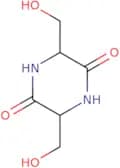
CAS:<p>1,4-Piperazinediacetonitrile is a molecule that has been studied in the field of cancer research. It is a fluorescent linker that can be used for conjugation to anticancer drugs. This compound has been shown to inhibit the growth of cancer cells by interfering with protein synthesis and cell division. The physicochemical properties of 1,4-piperazinediacetonitrile have been investigated with various techniques such as fluorescence spectroscopy, nuclear magnetic resonance, and mass spectrometry.</p>Formula:C8H12N4Purity:Min. 95%Molecular weight:164.21 g/mol3,6-Bis(hydroxymethyl)piperazine-2,5-dione
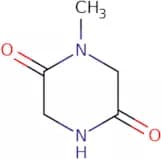
CAS:<p>Versatile small molecule scaffold</p>Formula:C6H10N2O4Purity:Min. 95%Molecular weight:174.15 g/mol1-Methylpiperazine-2,5-dione
CAS:<p>1-Methylpiperazine-2,5-dione is a selective inhibitor of peptide transporter 2 (PEPT2). It has been shown to inhibit the uptake of 1-methylpiperazine by wild-type mice. This is due to its ability to coordinate with sodium ions and anionic sites in the gut. 1-Methylpiperazine-2,5-dione also binds to the transmembrane domain of PEPT2 and blocks the transport of peptides through the membrane. This drug may be useful as a radiotracer for imaging techniques such as X-ray diffraction or electron microscopy. It may also be used as an antispasmodic drug for treatments of gastrointestinal disorders.</p>Formula:C5H8N2O2Purity:Min. 95%Molecular weight:128.13 g/mol(2-Aminoethyl)[2-(piperidin-1-yl)ethyl]amine
CAS:<p>Versatile small molecule scaffold</p>Formula:C9H21N3Purity:Min. 95%Molecular weight:171.28 g/mol(2-Aminoethyl)[2-(morpholin-4-yl)ethyl]amine
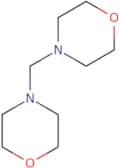
CAS:<p>Versatile small molecule scaffold</p>Formula:C8H19N3OPurity:Min. 95%Molecular weight:173.26 g/molDimorpholinomethane
CAS:<p>Dimorpholinomethane is a chemical compound that has two nitrogen atoms and one oxygen atom. It is colorless, odorless, and soluble in organic solvents. Dimorpholinomethane has been shown to have strong antibacterial activity against Gram-positive bacteria such as Staphylococcus aureus and some Gram-negative bacteria such as Pseudomonas aeruginosa. The biocidal action of dimorpholinomethane is due to its ability to inhibit the growth of microorganisms by disrupting the cell membrane or by inhibiting protein synthesis. This compound also has been used as an additive in bronchial reactivity tests on animals.</p>Formula:C9H18N2O2Purity:Min. 95%Molecular weight:186.26 g/mol
![tert-Butyl 5-oxo-9-oxa-2-azaspiro[5.5]undecane-2-carboxylate](/_next/image/?url=https%3A%2Fstatic.cymitquimica.com%2Fproducts%2F3D%2Fthumb-webp%2FEMD07132.webp&w=3840&q=75)









![2-Azabicyclo[3.2.2]nonan-3-one](/_next/image/?url=https%3A%2Fstatic.cymitquimica.com%2Fproducts%2F3D%2Fthumb-webp%2FFAA59732.webp&w=3840&q=75)
![3-Azabicyclo[3.2.2]nonane HCl](/_next/image/?url=https%3A%2Fstatic.cymitquimica.com%2Fproducts%2F3D%2Fthumb-webp%2FFAA59741.webp&w=3840&q=75)

![1-Oxa-4-thia-8-azaspiro[4.5]decane](/_next/image/?url=https%3A%2Fstatic.cymitquimica.com%2Fproducts%2F3D%2Fthumb-webp%2FFAA60898.webp&w=3840&q=75)
![2-[(Pyridin-2-yl)formamido]acetic acid](/_next/image/?url=https%3A%2Fstatic.cymitquimica.com%2Fproducts%2F3D%2Fthumb-webp%2FFAA61629.webp&w=3840&q=75)
![2-([(Benzyloxy)carbonyl]amino)-3-(4-hydroxyphenyl)propanoic acid](/_next/image/?url=https%3A%2Fstatic.cymitquimica.com%2Fproducts%2F3D%2Fthumb-webp%2FFAA61898.webp&w=3840&q=75)
![1,8-Diazatricyclo[7.4.0.0,2,7]trideca-2,4,6,8-tetraene](/_next/image/?url=https%3A%2Fstatic.cymitquimica.com%2Fproducts%2F3D%2Fthumb-webp%2FFAA62283.webp&w=3840&q=75)
![2-Oxaspiro[4.4]nonane-1,3-dione](/_next/image/?url=https%3A%2Fstatic.cymitquimica.com%2Fproducts%2F3D%2Fthumb-webp%2FFAA62390.webp&w=3840&q=75)
![(2-Aminoethyl)[2-(piperidin-1-yl)ethyl]amine](/_next/image/?url=https%3A%2Fstatic.cymitquimica.com%2Fproducts%2F3D%2Fthumb-webp%2FFAA62569.webp&w=3840&q=75)
![(2-Aminoethyl)[2-(morpholin-4-yl)ethyl]amine](/_next/image/?url=https%3A%2Fstatic.cymitquimica.com%2Fproducts%2F3D%2Fthumb-webp%2FFAA62580.webp&w=3840&q=75)