Building Blocks
This section contains fundamental products for the synthesis of organic and biological compounds. Building blocks are the essential starting materials used to construct complex molecules through various chemical reactions. They play a critical role in drug discovery, material science, and chemical research. At CymitQuimica, we offer a diverse range of high-quality building blocks to support your innovative research and industrial projects, ensuring you have the essential components for successful synthesis.
Subcategories of "Building Blocks"
- Boronic Acids & Boronic Acid Derivatives(5,756 products)
- Chiral Building Blocks(1,242 products)
- Hydrocarbon Building Blocks(6,093 products)
- Organic Building Blocks(60,519 products)
Found 195533 products of "Building Blocks"
Sort by
Purity (%)
0
100
|
0
|
50
|
90
|
95
|
100
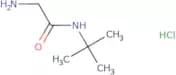
2-Amino-N-tert-butyl-acetamidehydrochloride
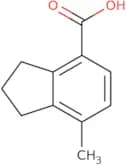
CAS:<p>Versatile small molecule scaffold</p>Formula:C6H15ClN2OPurity:Min. 95%Molecular weight:166.65 g/mol7-Methyl-2,3-dihydro-1H-indene-4-carboxylic acid
CAS:<p>Versatile small molecule scaffold</p>Formula:C11H12O2Purity:Min. 95%Molecular weight:176.21 g/mol2-[(1,1-Dioxo-1,2-benzothiazol-3-yl)amino]acetic acid
CAS:<p>Versatile small molecule scaffold</p>Formula:C9H8N2O4SPurity:Min. 95%Molecular weight:240.24 g/mol4-[(1,1-Dioxo-1,2-benzothiazol-3-yl)amino]butanoic acid
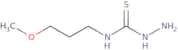
CAS:Controlled Product<p>4-[(1,1-Dioxo-1,2-benzothiazol-3-yl)amino]butanoic acid is a ligand of the nicotinic acetylcholine receptor (nAChR). It has been shown to inhibit or activate nAChRs depending on the receptor subtype. 4-[(1,1-Dioxo-1,2-benzothiazol-3-yl)amino]butanoic acid has also been shown to be an effective inhibitor of the sodium channel. 4-[(1,1-Dioxo-1,2-benzothiazol-3-yl)amino]butanoic acid is a peptide with a molecular weight of 269.30 Da and purity greater than 99%. This compound is a research tool that can be used as an antibody for cell biology and immunology experiments.</p>Formula:C11H12N2O4SPurity:Min. 95%Molecular weight:268.29 g/mol4-(3-Methoxypropyl)-3-thiosemicarbazide
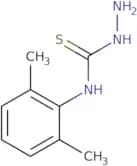
CAS:<p>Versatile small molecule scaffold</p>Formula:C5H13N3OSPurity:Min. 95%Molecular weight:163.24 g/mol4-(2,6-Dimethylphenyl)-3-thiosemicarbazide
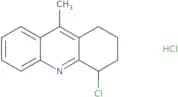
CAS:<p>Versatile small molecule scaffold</p>Formula:C9H13N3SPurity:Min. 95%Molecular weight:195.28 g/mol4-Chloro-9-methyl-1,2,3,4-tetrahydroacridine
CAS:<p>Versatile small molecule scaffold</p>Formula:C14H15Cl2NPurity:Min. 95%Molecular weight:268.2 g/molC -(4-Methyl-thiazol-2-yl)-methylamine dihydrochloride
CAS:<p>Versatile small molecule scaffold</p>Formula:C5H10Cl2N2SPurity:Min. 95%Molecular weight:201.12 g/mol1-(2,2-Dimethylpropanoyl)piperidin-4-one
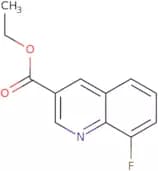
CAS:Controlled Product<p>Versatile small molecule scaffold</p>Formula:C10H17NO2Purity:Min. 95%Molecular weight:183.25 g/molEthyl 8-Fluoroquinoline-3-carboxylate
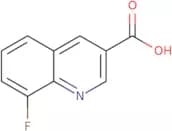
CAS:<p>Versatile small molecule scaffold</p>Formula:C12H10FNO2Purity:Min. 95%Molecular weight:219.21 g/mol8-Fluoroquinoline-3-carboxylic acid
CAS:<p>Versatile small molecule scaffold</p>Formula:C10H6FNO2Purity:Min. 95%Molecular weight:191.16 g/mol8-Chloroquinoline-3-carboxylic acid
CAS:<p>8-Chloroquinoline-3-carboxylic acid is an industrial chemical that is used as a pharmaceutical. It is also an antibacterial agent that has been shown to be effective against sulfite-reducing bacteria, such as Clostridium difficile and Helicobacter pylori. This drug inhibits bacterial growth by damaging the cell membrane and preventing the production of essential proteins for DNA replication. 8-Chloroquinoline-3-carboxylic acid is produced by treating quinoline with chlorination, followed by reaction with sulfuryl chloride or quinoline carboxylic acid.</p>Formula:C10H6ClNO2Purity:Min. 95%Molecular weight:207.61 g/mol8-Methyl-quinoline-3-carboxylic acid
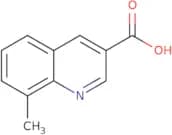
CAS:<p>Versatile small molecule scaffold</p>Formula:C11H9NO2Purity:Min. 95%Molecular weight:187.2 g/mol8-Fluoro-3-quinolinecarbonitrile
CAS:<p>Versatile small molecule scaffold</p>Formula:C10H5FN2Purity:Min. 95%Molecular weight:172.16 g/mol4-oxo-1,4-Dihydroquinoline-3-carbonitrile
CAS:<p>4-oxo-1,4-Dihydroquinoline-3-carbonitrile (4ODQ) is a synthetic compound that is acidic in nature. It hydrolyzes in acidic conditions to form a carboxylic acid and ammonia. 4ODQ can also react with amines to form azides, chloride to form chloramines, methyl anthranilate to form piperidines, trifluoride to form triflates, and morpholine to form morpholines. The chemical structure of 4ODQ consists of an anthranilate moiety which has been decarboxylated and an amine group which has been enaminated.<br>4ODQ inhibits the growth of cancer cells by binding to the ATP binding site on the enzyme kinase B (BRAF), thereby preventing phosphorylation of downstream proteins that are involved in cell proliferation. This inhibition leads to apoptosis or programmed cell death.</p>Formula:C10H6N2OPurity:Min. 95%Molecular weight:170.17 g/mol6-Chloro-4-oxo-1,4-dihydroquinoline-3-carbonitrile
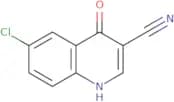
CAS:<p>Versatile small molecule scaffold</p>Formula:C10H5ClN2OPurity:Min. 95%Molecular weight:204.61 g/mol3-(2-Chloroethyl)-5-methyl-1,2,4-oxadiazole
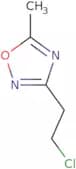
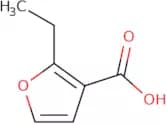
CAS:<p>Versatile small molecule scaffold</p>Formula:C5H7ClN2OPurity:Min. 95%Molecular weight:146.57 g/mol2-Ethylfuran-3-carboxylic acid
CAS:<p>Versatile small molecule scaffold</p>Formula:C7H8O3Purity:Min. 95%Molecular weight:140.14 g/molMethyl 4-methylidenecyclohexane-1-carboxylate
CAS:<p>Versatile small molecule scaffold</p>Formula:C9H14O2Purity:Min. 95%Molecular weight:154.21 g/mol1-Amino-2-(2-chlorophenyl)propan-2-ol
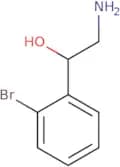
CAS:<p>Versatile small molecule scaffold</p>Formula:C9H12ClNOPurity:Min. 95%Molecular weight:185.65 g/mol2-amino-1-(2-bromophenyl)ethan-1-ol
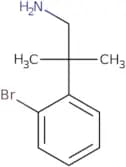
CAS:<p>Versatile small molecule scaffold</p>Formula:C8H10BrNOPurity:Min. 95%Molecular weight:216.1 g/mol2-(2-Bromophenyl)-2-methylpropan-1-amine
CAS:<p>Versatile small molecule scaffold</p>Formula:C10H14BrNPurity:Min. 95%Molecular weight:228.13 g/mol1-[(Oxolan-2-yl)methyl]piperidin-4-one
CAS:<p>Versatile small molecule scaffold</p>Formula:C10H17NO2Purity:Min. 95%Molecular weight:183.25 g/mol3-Methyl-[1,2]thiazolo[5,4-b]pyridine
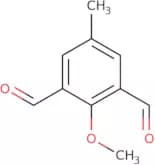
CAS:<p>Versatile small molecule scaffold</p>Formula:C7H6N2SPurity:Min. 95%Molecular weight:150.2 g/mol2-Methoxy-5-methylbenzene-1,3-dicarbaldehyde
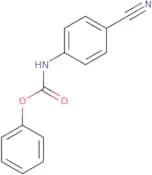
CAS:<p>2-Methoxy-5-methylbenzene-1,3-dicarbaldehyde (MMDA) is a reactive molecule that has been used for cross linking and insolubilizing polymers. It is an important intermediate in the synthesis of methyl methacrylate, which is used in the production of acrylic adhesives and coatings. 2-Methoxy-5-methylbenzene-1,3-dicarbaldehyde can be used as a monomer or comonomer to produce polymers with various functionalities. This molecule undergoes bifunctional reactions with acceptor molecules such as phenols, amines and alcohols. 2-Methoxy-5-methylbenzene-1,3-dicarbaldehyde reacts with triplet oxygen to form singlet oxygen. This reaction results in the formation of reactive radicals that can cause oxidation reactions on the acceptor molecule. Monitoring this process is possible through monitoring the accept</p>Formula:C10H10O3Purity:Min. 95%Molecular weight:178.18 g/molPhenyl-N-(4-cyanophenyl)carbamate
CAS:<p>Versatile small molecule scaffold</p>Formula:C14H10N2O2Purity:Min. 95%Molecular weight:238.24 g/mol2-(Chloromethyl)-[1,2,4]triazolo[1,5-a]pyridine
CAS:<p>Versatile small molecule scaffold</p>Formula:C7H6ClN3Purity:Min. 95%Molecular weight:167.59 g/mol1-Bromospiro[2.3]hexane
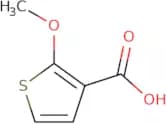
CAS:<p>Versatile small molecule scaffold</p>Formula:C6H9BrPurity:Min. 95%Molecular weight:161.04 g/mol2-Methoxythiophene-3-carboxylic acid
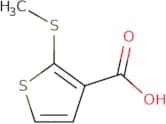
CAS:<p>Versatile small molecule scaffold</p>Formula:C6H6O3SPurity:Min. 95%Molecular weight:158.18 g/mol2-(Methylsulfanyl)thiophene-3-carboxylic acid
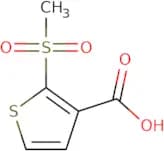
CAS:<p>Versatile small molecule scaffold</p>Formula:C6H6O2S2Purity:Min. 95%Molecular weight:174.2 g/mol2-Methanesulfonylthiophene-3-carboxylic acid
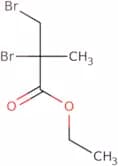
CAS:<p>Versatile small molecule scaffold</p>Formula:C6H6O4S2Purity:Min. 95%Molecular weight:206.2 g/molEthyl 2,3-dibromo-2-methylpropanoate
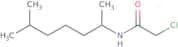
CAS:<p>Versatile small molecule scaffold</p>Formula:C6H10Br2O2Purity:Min. 95%Molecular weight:273.95 g/mol2-Chloro-N-(6-methylheptan-2-yl)acetamide
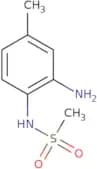
CAS:<p>Versatile small molecule scaffold</p>Formula:C10H20ClNOPurity:Min. 95%Molecular weight:205.72 g/molN-(2-Amino-4-methylphenyl)methanesulfonamide
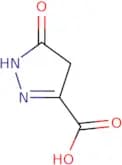
CAS:<p>Versatile small molecule scaffold</p>Formula:C8H12N2O2SPurity:Min. 95%Molecular weight:200.26 g/mol5-Oxo-4,5-dihydro-1H-pyrazole-3-carboxylic acid
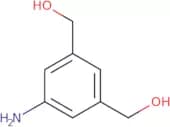
CAS:<p>Versatile small molecule scaffold</p>Formula:C4H4N2O3Purity:Min. 95%Molecular weight:128.09 g/mol5-Amino-1,3-dihydroxymethylbenzene
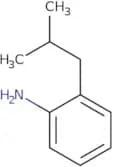
CAS:<p>5-Amino-1,3-dihydroxymethylbenzene is a ligand that binds to acetyl coenzyme A. It has been used in the cross-coupling of aryl halides with alkyl or aryl Grignard reagents. 5-Amino-1,3-dihydroxymethylbenzene is recycled and used as a ligand in reaction conditions that are not compatible with other ligands. The efficiency of this method is dependent on the use of magnetic nanoparticles for separation and filtering. 5-Amino-1,3-dihydroxymethylbenzene can be linked to diphosphine ligands by heating and stirring in order to create an efficient catalyst system.</p>Formula:C8H11NO2Purity:Min. 95%Molecular weight:153.18 g/mol2-(2-Methylpropyl)aniline
CAS:<p>2-(2-Methylpropyl)aniline is chemically related to nitroxyl, which is a reactive radical. 2-(2-Methylpropyl)aniline is used as an intermediate in the preparation of other chemical compounds. It can be found in solvents such as nitrobenzene and is prepared by alkylation of 2-methylpropanal with formaldehyde. This chemical has been shown to react with nuclei to form radical intermediates that are then stabilized by anion radicals. These reactions lead to the formation of reaction products such as hydrocarbons.</p>Formula:C10H15NPurity:Min. 95%Molecular weight:149.24 g/mol2-Bromo-1-isocyanato-4-methylbenzene
CAS:<p>Versatile small molecule scaffold</p>Formula:C8H6BrNOPurity:Min. 95%Molecular weight:212.04 g/mol2-Isocyanato-1,1-dimethoxyethane
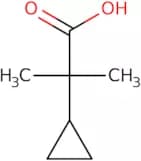
CAS:<p>Versatile small molecule scaffold</p>Formula:C5H9NO3Purity:Min. 95%Molecular weight:131.13 g/mol2-Cyclopropyl-2-methylpropanoic acid
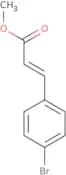
CAS:<p>Versatile small molecule scaffold</p>Formula:C7H12O2Purity:Min. 95%Molecular weight:128.17 g/mol(E)-Methyl 3-(4-bromophenyl)acrylate
CAS:<p>(E)-Methyl 3-(4-bromophenyl)acrylate is an isoenzyme that belongs to the group of cinnamic acid derivatives. It has been shown to induce apoptotic cell death in human ovarian carcinoma cells. This compound inhibits the production of histones and DNA, which may lead to the inhibition of transcription and replication of mRNA. (E)-Methyl 3-(4-bromophenyl)acrylate also induces modifications in proteins, such as acetylation, which may account for its apoptotic effects. Research has shown that (E)-methyl 3-(4-bromophenyl)acrylate has equitoxic effects on aryl halides and aryl chlorides.</p>Formula:C10H9BrO2Purity:Min. 95%Molecular weight:241.08 g/mol1H-1,3-Benzodiazole-5,6-diamine
CAS:<p>1,3-Benzodiazole-5,6-diamine is an antimicrobial agent that belongs to the group of benzimidazoles and has antifungal activities. It can be used for the treatment of infections caused by bacteria or fungi. 1,3-Benzodiazole-5,6-diamine binds to DNA gyrase and topoisomerase IV and inhibits bacterial growth. This drug also inhibits the synthesis of proteins in fungi and has been shown to inhibit the production of ergosterol, which is a major component of fungal cell membranes.</p>Formula:C7H8N4Purity:Min. 95%Molecular weight:148.17 g/mol1-(2-Chloroethyl)-2-methyl-1H-imidazole hydrochloride
CAS:<p>Versatile small molecule scaffold</p>Formula:C6H10Cl2N2Purity:Min. 95%Molecular weight:181.1 g/mol5-(Isocyanatomethyl)-1,3-benzodioxole
CAS:<p>Versatile small molecule scaffold</p>Formula:C9H7NO3Purity:Min. 95%Molecular weight:177.16 g/mol3-Methyl-1-(phenylsulfanyl)butan-2-one
CAS:<p>Versatile small molecule scaffold</p>Formula:C11H14OSPurity:Min. 95%Molecular weight:194.3 g/mol1-Methyl-1H,4H,5H,6H,7H-pyrazolo[3,4-c]pyridin-3-ol
CAS:<p>Versatile small molecule scaffold</p>Formula:C7H11N3OPurity:Min. 95%Molecular weight:153.18 g/mol1-tert-Butyl 4-methyl 1,2,3,4-tetrahydropyridine-1,4-dicarboxylate
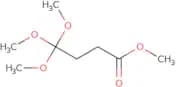
CAS:<p>Versatile small molecule scaffold</p>Formula:C12H19NO4Purity:Min. 95%Molecular weight:241.28 g/molMethyl 4,4,4-trimethoxybutanoate
CAS:<p>Versatile small molecule scaffold</p>Formula:C8H16O5Purity:Min. 95%Molecular weight:192.21 g/molMethyl 3-phenylfuran-2-carboxylate
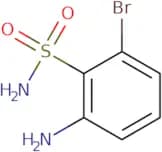
CAS:<p>Methyl 3-phenylfuran-2-carboxylate is a synthetic analogues of the natural product orobanche. It has been shown to have large-scale, synthetic and linkage properties. Methyl 3-phenylfuran-2-carboxylate has high activities against orobanche and other parasitic plants, such as striga and germination. Moreover, this compound is an analogue of the natural product orobanche.</p>Formula:C12H10O3Purity:Min. 95%Molecular weight:202.21 g/mol2-Amino-6-bromobenzene-1-sulfonamide
CAS:<p>Versatile small molecule scaffold</p>Formula:C6H7BrN2O2SPurity:Min. 95%Molecular weight:251.1 g/mol

![2-[(1,1-Dioxo-1,2-benzothiazol-3-yl)amino]acetic acid](/_next/image/?url=https%3A%2Fstatic.cymitquimica.com%2Fproducts%2F3D%2Fthumb-webp%2FWCA05477.webp&w=3840&q=75)
![4-[(1,1-Dioxo-1,2-benzothiazol-3-yl)amino]butanoic acid](/_next/image/?url=https%3A%2Fstatic.cymitquimica.com%2Fproducts%2F3D%2Fthumb-webp%2FWCA05478.webp&w=3840&q=75)







![1-[(Oxolan-2-yl)methyl]piperidin-4-one](/_next/image/?url=https%3A%2Fstatic.cymitquimica.com%2Fproducts%2F3D%2Fthumb-webp%2FWCA10610.webp&w=3840&q=75)
![3-Methyl-[1,2]thiazolo[5,4-b]pyridine](/_next/image/?url=https%3A%2Fstatic.cymitquimica.com%2Fproducts%2F3D%2Fthumb-webp%2FWCA10934.webp&w=3840&q=75)
![2-(Chloromethyl)-[1,2,4]triazolo[1,5-a]pyridine](/_next/image/?url=https%3A%2Fstatic.cymitquimica.com%2Fproducts%2F3D%2Fthumb-webp%2FWCA13994.webp&w=3840&q=75)
![1-Bromospiro[2.3]hexane](/_next/image/?url=https%3A%2Fstatic.cymitquimica.com%2Fproducts%2F3D%2Fthumb-webp%2FWCA15328.webp&w=3840&q=75)




![1-Methyl-1H,4H,5H,6H,7H-pyrazolo[3,4-c]pyridin-3-ol](/_next/image/?url=https%3A%2Fstatic.cymitquimica.com%2Fproducts%2F3D%2Fthumb-webp%2FWCA23324.webp&w=3840&q=75)