Building Blocks
This section contains fundamental products for the synthesis of organic and biological compounds. Building blocks are the essential starting materials used to construct complex molecules through various chemical reactions. They play a critical role in drug discovery, material science, and chemical research. At CymitQuimica, we offer a diverse range of high-quality building blocks to support your innovative research and industrial projects, ensuring you have the essential components for successful synthesis.
Subcategories of "Building Blocks"
- Boronic Acids & Boronic Acid Derivatives(5,756 products)
- Chiral Building Blocks(1,242 products)
- Hydrocarbon Building Blocks(6,093 products)
- Organic Building Blocks(60,519 products)
Found 195533 products of "Building Blocks"
Sort by
Purity (%)
0
100
|
0
|
50
|
90
|
95
|
100
Potassium 2-[(4-oxopent-2-en-2-yl)amino]acetate
CAS:<p>Versatile small molecule scaffold</p>Formula:C7H10KNO3Purity:Min. 95%Molecular weight:195.26 g/molMethyl 3-methanesulfonamidobenzoate
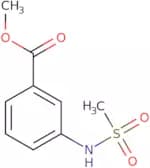
CAS:<p>Methyl 3-methanesulfonamidobenzoate is an organic compound that is used as a reagent in organic synthesis. It has the chemical formula CH3O2C(CH2)2SO2CH=NOH. Methyl 3-methanesulfonamidobenzoate is a methyl ester of benzoic acid, which is also known as methyl benzoate. This compound has been shown to react with DNA, forming adducts with guanine and cytosine bases.</p>Formula:C9H11NO4SPurity:Min. 95%Molecular weight:229.26 g/mol2-Ethyl-3-oxo-2-azatricyclo[6.3.1.0,4,12]dodeca-1(11),4(12),5,7,9-pentaene-9-sulfonyl chloride
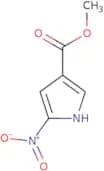
CAS:<p>Versatile small molecule scaffold</p>Formula:C13H10ClNO3SPurity:Min. 95%Molecular weight:295.74 g/molMethyl 5-nitro-1H-pyrrole-3-carboxylate
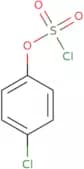
CAS:<p>Versatile small molecule scaffold</p>Formula:C6H6N2O4Purity:Min. 95%Molecular weight:170.12 g/mol4-Chlorophenyl chloranesulfonate
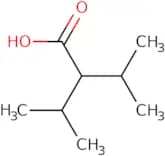
CAS:<p>Versatile small molecule scaffold</p>Formula:C6H4Cl2O3SPurity:Min. 95%Molecular weight:227.06 g/mol3-Methyl-2-(propan-2-yl)butanoic acid
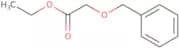
CAS:<p>3-Methyl-2-(propan-2-yl)butanoic acid is an inhibitor of cancer, which is structurally related to sulfamic acid. It has been shown to inhibit the growth of bacteria by binding to metal hydroxides and acting as a free radical scavenger. 3-Methyl-2-(propan-2-yl)butanoic acid inhibits the protease activity of trypsin and aminopeptidase and has depressant effects on the central nervous system. This compound also inhibits serotonin reuptake in the rat brain, suggesting that it may be a potential antidepressant. 3-Methyl-2-(propan-2-yl)butanoic acid has been shown to inhibit HIV infection by blocking the activation of tnf alpha.</p>Formula:C8H16O2Purity:Min. 95%Molecular weight:144.21 g/molEthyl (Benzyloxy)acetate
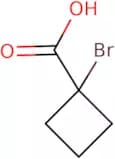
CAS:<p>Ethyl (Benzyloxy)acetate is a β-unsaturated ketone that is used in the synthesis of peroxisome proliferators. It is also used in the asymmetric synthesis of β-unsaturated ketones. Ethyl (Benzyloxy)acetate has been shown to induce inflammation and inhibit serine protease, which may be due to its ability to bind to hydroxyl groups and heterocycles. It can also act as an anti-HIV agent by binding to the hydroxyl group of insulin, which causes insulin resistance. This compound is also used as a solvent for organic chemistry reactions, including the conversion of ethyl formate into acetic acid.</p>Formula:C11H14O3Purity:Min. 95%Molecular weight:194.23 g/mol1-Bromocyclobutane-1-carboxylic acid
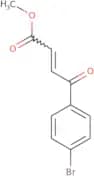
CAS:<p>Versatile small molecule scaffold</p>Formula:C5H7BrO2Purity:Min. 95%Molecular weight:179.01 g/molMethyl (2E)-4-(4-bromophenyl)-4-oxobut-2-enoate
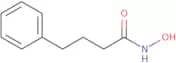
CAS:<p>Versatile small molecule scaffold</p>Formula:C11H9BrO3Purity:Min. 95%Molecular weight:269.09 g/molN-Hydroxy-4-phenylbutanamide
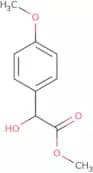
CAS:<p>N-Hydroxy-4-phenylbutanamide is a toolbox hydroxamic acid that has been shown to activate by reacting with the carbonyl group of an arylesterase. This reaction will generate an aldehyde, which can then undergo cyclodehydration in the presence of sodium periodate to form an alkene. The chiral nature of this molecule allows for selective activation on either the left or right side of the molecule. The aerobic conditions are required for this reaction to take place and it can be performed at room temperature. N-Hydroxy-4-phenylbutanamide is also used as a reagent in organic synthesis, crystallography, and alkene synthesis.</p>Formula:C10H13NO2Purity:Min. 95%Molecular weight:179.22 g/molMethyl (2R)-2-hydroxy-2-(4-methoxyphenyl)acetate
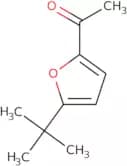
CAS:<p>Versatile small molecule scaffold</p>Formula:C10H12O4Purity:Min. 95%Molecular weight:196.2 g/mol1-(5-tert-Butylfuran-2-yl)ethan-1-one
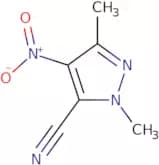
CAS:<p>Versatile small molecule scaffold</p>Formula:C10H14O2Purity:Min. 95%Molecular weight:166.22 g/mol1,3-Dimethyl-4-nitro-1H-pyrazole-5-carbonitrile
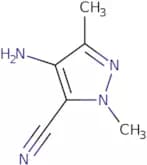
CAS:<p>Versatile small molecule scaffold</p>Formula:C6H6N4O2Purity:Min. 95%Molecular weight:166.14 g/mol4-Amino-1,3-dimethyl-1H-pyrazole-5-carbonitrile
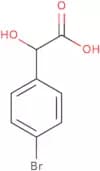
CAS:<p>Versatile small molecule scaffold</p>Formula:C6H8N4Purity:Min. 95%Molecular weight:136.15 g/mol(R)-4-Bromomandelic acid
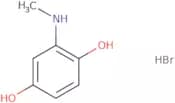
CAS:<p>Versatile small molecule scaffold</p>Formula:C8H7BrO3Purity:Min. 95%Molecular weight:231.04 g/mol2-(Methylamino)benzene-1,4-diol hydrobromide
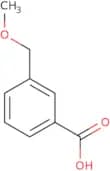
CAS:<p>Versatile small molecule scaffold</p>Formula:C7H10BrNO2Purity:Min. 95%Molecular weight:220.06 g/mol3-(Methoxymethyl)benzoic acid
CAS:<p>Versatile small molecule scaffold</p>Formula:C9H10O3Purity:Min. 95%Molecular weight:166.17 g/mol6-Chloro-2,3,4,9-tetrahydro-1H-carbazol-3-ol
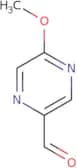
CAS:<p>Versatile small molecule scaffold</p>Formula:C12H12ClNOPurity:Min. 95%Molecular weight:221.68 g/mol5-Methoxypyrazine-2-carbaldehyde
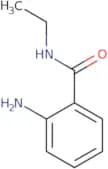
CAS:<p>Versatile small molecule scaffold</p>Formula:C6H6N2O2Purity:Min. 95%Molecular weight:138.12 g/mol2-Amino-N-ethylbenzamide
CAS:<p>2-Amino-N-ethylbenzamide is a synthetic compound that is used in the synthesis of quinazolinones and other pharmaceuticals. It is also used as a reagent for selective halogenation. 2-Amino-N-ethylbenzamide can be synthesized from anthranilic acid, which is produced by the degradation of amino acids in the body, and chloroform. The chlorination of this compound yields 2-chloroamino-N-ethylbenzamide. This reaction can be done in two ways: regioselectively or regiocontrolled. Regioselective reactions are those that have a specific orientation on the benzene ring, while regiocontrolled reactions are less specific.<br>2-Amino-N-ethylbenzamide has been used to produce trifluoromethylated compounds, which are often found in pharmaceuticals such as fluoroquinol</p>Formula:C9H12N2OPurity:Min. 95%Molecular weight:164.21 g/mol
![Potassium 2-[(4-oxopent-2-en-2-yl)amino]acetate](/_next/image/?url=https%3A%2Fstatic.cymitquimica.com%2Fproducts%2F3D%2Fthumb-webp%2FHBA08581.webp&w=3840&q=75)

![2-Ethyl-3-oxo-2-azatricyclo[6.3.1.0,4,12]dodeca-1(11),4(12),5,7,9-pentaene-9-sulfonyl chloride](/_next/image/?url=https%3A%2Fstatic.cymitquimica.com%2Fproducts%2F3D%2Fthumb-webp%2FHBA10315.webp&w=3840&q=75)