Building Blocks
This section contains fundamental products for the synthesis of organic and biological compounds. Building blocks are the essential starting materials used to construct complex molecules through various chemical reactions. They play a critical role in drug discovery, material science, and chemical research. At CymitQuimica, we offer a diverse range of high-quality building blocks to support your innovative research and industrial projects, ensuring you have the essential components for successful synthesis.
Subcategories of "Building Blocks"
- Boronic Acids & Boronic Acid Derivatives(5,756 products)
- Chiral Building Blocks(1,242 products)
- Hydrocarbon Building Blocks(6,093 products)
- Organic Building Blocks(60,519 products)
Found 195533 products of "Building Blocks"
Sort by
Purity (%)
0
100
|
0
|
50
|
90
|
95
|
100
2-{[(tert-Butoxy)carbonyl]amino}-3-(3-phenoxyphenyl)propanoic acid
CAS:<p>Versatile small molecule scaffold</p>Formula:C20H23NO5Purity:Min. 95%Molecular weight:357.4 g/mol2-Amino-3-(3-phenoxyphenyl)propanoic acid hydrochloride
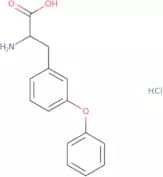
CAS:<p>Versatile small molecule scaffold</p>Formula:C15H16ClNO3Purity:Min. 95%Molecular weight:293.74 g/mol2-[(Benzyloxy)methyl]benzoic acid
CAS:<p>Versatile small molecule scaffold</p>Formula:C15H14O3Purity:Min. 95%Molecular weight:242.27 g/mol2-Methyl-8-quinoxalinesulfonyl Chloride
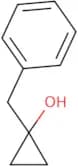
CAS:<p>Versatile small molecule scaffold</p>Formula:C10H8ClNO2SPurity:Min. 95%Molecular weight:241.69 g/mol1-Benzylcyclopropan-1-ol
CAS:<p>1-Benzylcyclopropan-1-ol is an organic compound that has been shown to be a reactive intermediate in the mechanistic pathway of bond cleavage. It can be formed from diketones by ring opening and subsequent protonation. The functional groups on 1-Benzylcyclopropan-1-ol are mainly electron donating and electron withdrawing, which gives it the capability to form covalent bonds with electron rich and electron poor molecules, respectively.</p>Formula:C10H12OPurity:Min. 95%Molecular weight:148.2 g/mol2-Amino-3-(1,2-oxazol-5-yl)propanoic acid hydrochloride
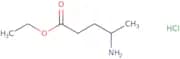
CAS:<p>Versatile small molecule scaffold</p>Formula:C6H9ClN2O3Purity:Min. 95%Molecular weight:192.6 g/molEthyl 4-aminopentanoate hydrochloride
CAS:<p>Versatile small molecule scaffold</p>Formula:C7H16ClNO2Purity:Min. 95%Molecular weight:181.66 g/mol[4-(Aminomethyl)-3-methoxyphenyl]methanamine
CAS:<p>Versatile small molecule scaffold</p>Formula:C9H14N2OPurity:Min. 95%Molecular weight:166.22 g/mol2-[2-(Trifluoromethyl)phenoxy]propanoic acid
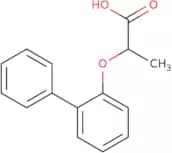
CAS:<p>Versatile small molecule scaffold</p>Formula:C10H9F3O3Purity:Min. 95%Molecular weight:234.17 g/mol2-(2-Phenylphenoxy)propanoic acid
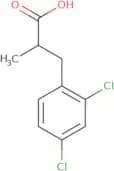
CAS:<p>Versatile small molecule scaffold</p>Formula:C15H14O3Purity:Min. 95%Molecular weight:242.27 g/mol3-(2,4-Dichlorophenyl)-2-methylpropanoic acid
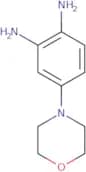
CAS:<p>Versatile small molecule scaffold</p>Formula:C10H10Cl2O2Purity:Min. 95%Molecular weight:233.09 g/mol4-(Morpholin-4-yl)benzene-1,2-diamine
CAS:<p>Versatile small molecule scaffold</p>Formula:C10H15N3OPurity:Min. 95%Molecular weight:193.25 g/mol3-(Pyridin-3-yl)-2-sulfanyl-3,4-dihydroquinazolin-4-one
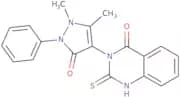
CAS:<p>Versatile small molecule scaffold</p>Formula:C13H9N3OSPurity:Min. 95%Molecular weight:255.3 g/mol3-(1,5-Dimethyl-3-oxo-2-phenyl-2,3-dihydro-1H-pyrazol-4-yl)-2-sulfanyl-3,4-dihydroquinazolin-4-one
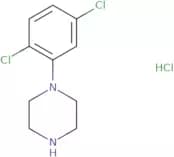
CAS:<p>Versatile small molecule scaffold</p>Formula:C19H16N4O2SPurity:Min. 95%Molecular weight:364.4 g/mol1-(2,5-Dichlorophenyl)piperazine hydrochloride
CAS:Controlled Product<p>Versatile small molecule scaffold</p>Formula:C10H13Cl3N2Purity:Min. 95%Molecular weight:267.6 g/mol2-Hydroxyquinoline-4-carboxamide
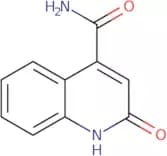
CAS:<p>2-Hydroxyquinoline-4-carboxamide is a diastereomer of the natural product quinoline, which is found in plants. This compound has been shown to have anti-inflammatory effects and may be a potential drug for arthritis due to its ability to inhibit prostaglandin synthesis. The ring structure of this compound is related to other biologically active natural products, such as the isatins, which are also found in plants. 2-Hydroxyquinoline-4-carboxamide is synthesized by a photocycloaddition reaction with an aromatic amide. This reaction mechanism was first proposed by E. J. Corey and co-workers in the 1970s and later confirmed by D. M. Evans and coworkers in 2007.</p>Formula:C10H8N2O2Purity:Min. 95%Molecular weight:188.18 g/molImidazo[1,2-a]pyridine-2-carbohydrazide
CAS:<p>Imidazo[1,2-a]pyridine-2-carbohydrazide is a synthetic compound that is used as an enhancer in organic synthesis. It has been shown to produce bathochromic shifts in the UV-visible spectra of ethyl esters and to be useful for identifying c. parapsilosis, a fungus that causes a form of erythema toxicum in infants. The anticancer activity of this compound has been demonstrated in vitro against cancer cells from different species, including human breast cancer cells. This anticancer activity may be due to its ability to inhibit microsporum and t. rubrum growth by inhibiting protein synthesis or DNA replication. Imidazo[1,2-a]pyridine-2-carbohydrazide is also capable of binding to DNA through hydrogen bonding interactions with the amine group on the N7 position of guanine residues and with the carbonyl group on the C5</p>Formula:C8H8N4OPurity:Min. 95%Molecular weight:176.18 g/mol(2,6-Dichloro-4-fluorophenyl)hydrazine
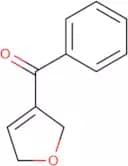
CAS:<p>Versatile small molecule scaffold</p>Formula:C6H5Cl2FN2Purity:Min. 95%Molecular weight:195.02 g/mol3-Benzoyl-2,5-dihydrofuran
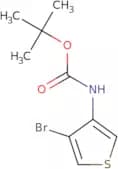
CAS:<p>Versatile small molecule scaffold</p>Formula:C11H10O2Purity:Min. 95%Molecular weight:174.2 g/moltert-Butyl N-(4-bromothiophen-3-yl)carbamate
CAS:<p>Versatile small molecule scaffold</p>Formula:C9H12BrNO2SPurity:Min. 95%Molecular weight:278.17 g/mol
![2-{[(tert-Butoxy)carbonyl]amino}-3-(3-phenoxyphenyl)propanoic acid](/_next/image/?url=https%3A%2Fstatic.cymitquimica.com%2Fproducts%2F3D%2Fthumb-webp%2FUEA34924.webp&w=3840&q=75)

![2-[(Benzyloxy)methyl]benzoic acid](/_next/image/?url=https%3A%2Fstatic.cymitquimica.com%2Fproducts%2F3D%2Fthumb-webp%2FUEA36789.webp&w=3840&q=75)


![[4-(Aminomethyl)-3-methoxyphenyl]methanamine](/_next/image/?url=https%3A%2Fstatic.cymitquimica.com%2Fproducts%2F3D%2Fthumb-webp%2FUEA40272.webp&w=3840&q=75)
![2-[2-(Trifluoromethyl)phenoxy]propanoic acid](/_next/image/?url=https%3A%2Fstatic.cymitquimica.com%2Fproducts%2F3D%2Fthumb-webp%2FUEA41177.webp&w=3840&q=75)

![Imidazo[1,2-a]pyridine-2-carbohydrazide](/_next/image/?url=https%3A%2Fstatic.cymitquimica.com%2Fproducts%2F3D%2Fthumb-webp%2FUEA44827.webp&w=3840&q=75)