Building Blocks
This section contains fundamental products for the synthesis of organic and biological compounds. Building blocks are the essential starting materials used to construct complex molecules through various chemical reactions. They play a critical role in drug discovery, material science, and chemical research. At CymitQuimica, we offer a diverse range of high-quality building blocks to support your innovative research and industrial projects, ensuring you have the essential components for successful synthesis.
Subcategories of "Building Blocks"
- Boronic Acids & Boronic Acid Derivatives(5,756 products)
- Chiral Building Blocks(1,242 products)
- Hydrocarbon Building Blocks(6,093 products)
- Organic Building Blocks(60,519 products)
Found 195533 products of "Building Blocks"
Sort by
Purity (%)
0
100
|
0
|
50
|
90
|
95
|
100
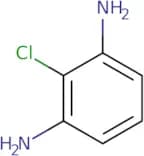
2-Chlorobenzene-1,3-diamine
CAS:<p>Versatile small molecule scaffold</p>Formula:C6H7ClN2Purity:Min. 95%Molecular weight:142.58 g/mol4-((Diethylamino)methyl)aniline
CAS:Controlled Product<p>Versatile small molecule scaffold</p>Formula:C11H18N2Purity:Min. 95%Molecular weight:178.28 g/mol3-Methyl-benzo[b]thiophene 1,1-dioxide
CAS:<p>Versatile small molecule scaffold</p>Formula:C9H8O2SPurity:Min. 95%Molecular weight:180.23 g/mol4-Azatricyclo[5.2.2.0,2,6]undec-8-ene-3,5-dione
CAS:<p>4-Azatricyclo[5.2.2.0,2,6]undec-8-ene-3,5-dione (ATU) is a chemical compound that has been shown to have antimicrobial properties. It inhibits the growth of gram-negative and gram-positive bacteria and shows significant inhibition of MT4 cells in culture. ATU also demonstrated antifungal properties against Candida albicans and Aspergillus niger in vitro. ATU has been found to be cytotoxic to cells in culture, but not to mammals. The mechanism of action is not known, but it may be due to binding with DNA or RNA.>>END>></p>Formula:C10H11NO2Purity:Min. 95%Molecular weight:177.2 g/mol3-(4-Iodo-5-methyl-1H-pyrazol-1-yl)propanoic acid
CAS:<p>Versatile small molecule scaffold</p>Formula:C7H9IN2O2Purity:Min. 95%Molecular weight:280.06 g/mol3,3-Dimethyl-1-phenylbutan-2-one
CAS:<p>3,3-Dimethyl-1-phenylbutan-2-one is a ketone that can be prepared by the hydration of acetophenone with toluene. The yield for this reaction is about 56%. This ketone has been shown to undergo photochemical reactions in benzene and dioxane. These reactions are classified as triketones, which are characterized by their electron transfer properties. 3,3-Dimethyl-1-phenylbutan-2-one is also capable of undergoing vicinal dioxan transfer reactions with electron donors like phenols or nitro compounds.</p>Formula:C12H16OPurity:Min. 95%Molecular weight:176.25 g/molPyrazolo[3,2-c][1,2,4]triazin-4-ol
CAS:<p>Versatile small molecule scaffold</p>Formula:C5H4N4OPurity:Min. 95%Molecular weight:136.11 g/mol4-Iodobutanenitrile
CAS:<p>4-Iodobutanenitrile is a synthetic compound that is used in the preparation of cyclobutanones. It can be prepared by the reaction of bromoacetic acid chloride with lysine. This procedure yields the product in high yield and purity and without significant amounts of undesired side products, such as 4-bromobutanenitrile and 2-chlorobenzene. The 4-iodobutanenitrile is synthesized using an asymmetric synthesis which includes hydrochloric acid as a reagent.</p>Formula:C4H6INPurity:Min. 95%Molecular weight:195 g/mol5-Iodopentanenitrile
CAS:<p>5-Iodopentanenitrile is a reactive chemical that can be used to produce organic compounds. This compound is an intermediate in the production of 5-iodo-1,3-dihydrobenzofuran and 5-iodoquinoline. It is also used for the production of pharmaceutical intermediates such as fluoroquinolones and alkylating agents. The mechanism of this chemical's reactivity has been studied extensively, which led to the discovery that it reacts by nucleophilic addition at electron deficient carbonyls groups. These reactions are known as Grignard reactions or halolactonizations. This chemical has also been shown to be reactive with biomolecules, such as DNA and RNA, and can bind to their sugar residues.</p>Formula:C5H8INPurity:Min. 95%Molecular weight:209.03 g/mol6-Bromo-4,5-dihydro-1H-benzo[b]azepin-2(3H)-one
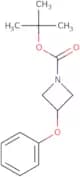
CAS:<p>Versatile small molecule scaffold</p>Formula:C10H10BrNOPurity:Min. 95%Molecular weight:240.1 g/moltert-Butyl 3-phenoxyazetidine-1-carboxylate
CAS:<p>Tert-butyl 3-phenoxyazetidine-1-carboxylate is a boronate ester that can be used in the coupling of arylboronic acids. It reacts with aryl halides or triflates to form a new carbon-carbon bond. This reaction proceeds through the formation of an intermediate, phenoxyacetylene. The tertiary alcohol group on the tert-butyl 3-phenoxyazetidine-1-carboxylate molecule is then attacked by the carbonyl carbon atom on the phenoxyacetylene intermediate to form a new carbon-carbon bond. This reaction can be catalyzed with palladium and copper catalysis.</p>Formula:C14H19NO3Purity:Min. 95%Molecular weight:249.3 g/mol2-cyclopropyl-1-phenylethan-1-one
CAS:<p>2-Cyclopropyl-1-phenylethan-1-one is a drug that has been used in the treatment of psychosis. It has been shown to have growth regulatory properties and to be able to inhibit the conversion of catecholamines and serotonin into their respective metabolites. 2-Cyclopropyl-1-phenylethan-1-one also decreases the level of dopamine, which can lead to symptoms such as psychosis. This drug is used for the treatment of hypofunction and may be effective in patients with Parkinson's disease who have low levels of dopamine in their brains. 2-Cyclopropyl-1-phenylethan-1-one has been shown to produce a number of hydrosilylation products when reacted with an alkene or alkyne substrate. These reactions are catalyzed by platinum complexes, which often undergo formylation, cyclization, or addition reactions during these processes. The 2-, 3-, 4-, 5-,</p>Formula:C11H12OPurity:Min. 95%Molecular weight:160.21 g/molMethyl 4-(2-oxopyrrolidin-1-yl)butanoate
CAS:<p>Versatile small molecule scaffold</p>Formula:C9H15NO3Purity:Min. 95%Molecular weight:185.22 g/molEthyl 1-Oxo-2,3-Dihydro-1H-Indene-2-Carboxylate
CAS:<p>Ethyl 1-Oxo-2,3-dihydro-1H-indene-2-carboxylate is an organic compound which is an envisaged dicarbonyl. It is also a reagent in the synthesis of naphthoquinones and aldol condensation. It has been used as a tosylating agent and diazo transfer agent. The crystal structure of this compound was determined by XRD analysis.</p>Formula:C12H12O3Purity:Min. 95%Molecular weight:204.22 g/mol2-(1-Oxo-1,2,3,4-tetrahydronaphthalen-2-yl)acetic acid
CAS:<p>Versatile small molecule scaffold</p>Formula:C12H12O3Purity:Min. 95%Molecular weight:204.2 g/mol4-(4-Methoxy-phenyl)-piperidine hydrochloride
CAS:<p>Versatile small molecule scaffold</p>Formula:C12H18ClNOPurity:Min. 95%Molecular weight:227.74 g/mol(2R,3S,4R,5R)-Oxane-2,3,4,5-tetrol
CAS:<p>(2R,3S,4R,5R)-Oxane-2,3,4,5-tetrol is a ligand that binds to metal ions and isomers of nitro groups. This compound has four chiral centers and two stereogenic centers. It has been used as an immobilized catalyst in the synthesis of enantiopure alcohols and aldehydes. (2R,3S,4R,5R)-Oxane-2,3,4,5-tetrol can be used as a feedstock for the production of polyols or polymers. It can also be used in fermentations such as the conversion of sugars into alcohols using yeast. (2R,3S,4R,5R)-Oxane-2,3,4,5-tetrol is transported across cell membranes by active transport or diffusion. Growth temperature affects its solubility in water and its ability to form hydrogen bonds</p>Formula:C5H10O5Purity:Min. 95%Molecular weight:150.13 g/mol3,7,11-Trimethyldodecan-1-ol
CAS:<p>Versatile small molecule scaffold</p>Formula:C15H32OPurity:Min. 95%Molecular weight:228.41 g/mol5-(Methoxycarbonyl)furan-2-carboxylic acid
CAS:<p>5-(Methoxycarbonyl)furan-2-carboxylic acid is a chemical that can be used as a feedstock for the production of chemicals such as polymers, plastics, and pharmaceuticals. It can be synthesized using an oxidation process involving 5-methoxybenzoic acid as a substrate.</p>Formula:C7H6O5Purity:Min. 95%Molecular weight:170.12 g/mol2-Bromoresorcinol
CAS:<p>2-Bromoresorcinol is a carbonyl compound that has been shown to inhibit farnesyltransferase, an enzyme that mediates the transfer of farnesyl groups. The inhibition of this enzyme leads to a decrease in the production of lipids and other substances essential for cancer cell growth. 2-Bromoresorcinol also inhibits the production of furocoumarins by hydroxide solution, trifluoromethanesulfonic acid, and sodium hydroxide solution. This product can be used as a synthetic intermediate for the synthesis of drugs such as benzofuran derivatives.</p>Formula:C6H5BrO2Purity:Min. 95%Molecular weight:189.01 g/mol

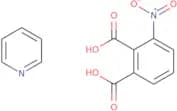
![3-Methyl-benzo[b]thiophene 1,1-dioxide](/_next/image/?url=https%3A%2Fstatic.cymitquimica.com%2Fproducts%2F3D%2Fthumb-webp%2FGAA40691.webp&w=3840&q=75)
![4-Azatricyclo[5.2.2.0,2,6]undec-8-ene-3,5-dione](/_next/image/?url=https%3A%2Fstatic.cymitquimica.com%2Fproducts%2F3D%2Fthumb-webp%2FGAA71529.webp&w=3840&q=75)


![Pyrazolo[3,2-c][1,2,4]triazin-4-ol](/_next/image/?url=https%3A%2Fstatic.cymitquimica.com%2Fproducts%2F3D%2Fthumb-webp%2FGAA72665.webp&w=3840&q=75)


![6-Bromo-4,5-dihydro-1H-benzo[b]azepin-2(3H)-one](/_next/image/?url=https%3A%2Fstatic.cymitquimica.com%2Fproducts%2F3D%2Fthumb-webp%2FGAA72930.webp&w=3840&q=75)