Building Blocks
This section contains fundamental products for the synthesis of organic and biological compounds. Building blocks are the essential starting materials used to construct complex molecules through various chemical reactions. They play a critical role in drug discovery, material science, and chemical research. At CymitQuimica, we offer a diverse range of high-quality building blocks to support your innovative research and industrial projects, ensuring you have the essential components for successful synthesis.
Subcategories of "Building Blocks"
- Boronic Acids & Boronic Acid Derivatives(5,756 products)
- Chiral Building Blocks(1,242 products)
- Hydrocarbon Building Blocks(6,093 products)
- Organic Building Blocks(60,519 products)
Found 195533 products of "Building Blocks"
Sort by
Purity (%)
0
100
|
0
|
50
|
90
|
95
|
100
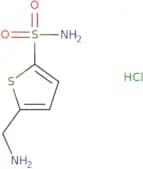
5-(Aminomethyl)thiophene-2-sulfonamide Hydrochloride
CAS:<p>Versatile small molecule scaffold</p>Formula:C5H8N2O2S2·HClPurity:Min. 95%Molecular weight:228.72 g/molrac-(1R,2S,4R,5R,6R)-3-Oxatricyclo[3.2.1.0,2,4]octane-6-carbonitrile
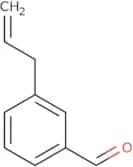
CAS:<p>Versatile small molecule scaffold</p>Formula:C8H9NOPurity:Min. 95%Molecular weight:135.16 g/mol3-(Prop-2-en-1-yl)benzaldehyde
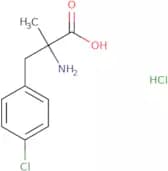
CAS:<p>Versatile small molecule scaffold</p>Formula:C10H10OPurity:Min. 95%Molecular weight:146.19 g/mol2-Amino-3-(4-chlorophenyl)-2-methylpropanoic acid hydrochloride
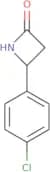
CAS:<p>Versatile small molecule scaffold</p>Formula:C10H13Cl2NO2Purity:Min. 95%Molecular weight:250.12 g/mol4-(4-Chlorophenyl)azetidin-2-one
CAS:<p>Versatile small molecule scaffold</p>Formula:C9H8ClNOPurity:Min. 95%Molecular weight:181.62 g/molEthyl 2-[(1-ethoxyethylidene)amino]acetate
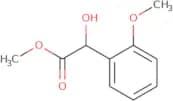
CAS:<p>Versatile small molecule scaffold</p>Formula:C8H15NO3Purity:Min. 95%Molecular weight:173.21 g/molMethyl 2-hydroxy-2-(2-methoxyphenyl)acetate
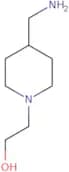
CAS:<p>Versatile small molecule scaffold</p>Formula:C10H12O4Purity:Min. 95%Molecular weight:196.2 g/mol2-(4-(Aminomethyl)piperidin-1-yl)ethanol
CAS:<p>Versatile small molecule scaffold</p>Formula:C8H18N2OPurity:Min. 95%Molecular weight:158.25 g/mol4-[(2-Oxopiperidin-1-yl)methyl]benzoic acid
CAS:<p>Versatile small molecule scaffold</p>Formula:C13H15NO3Purity:Min. 95%Molecular weight:233.26 g/mol1-[(3-Aminophenyl)methyl]piperidin-2-one
CAS:<p>1-[(3-Aminophenyl)methyl]piperidin-2-one is a potent and selective activator of the N-type calcium channels. It has been shown to inhibit voltage-gated calcium channels by binding to the pore region of the channel, inhibiting the flow of ions into the cell. This drug has been used as a pharmacological tool in research on ion channels, ligand binding and antibody production.</p>Formula:C12H16N2OPurity:Min. 95%Molecular weight:204.27 g/mol5-Benzyloxolan-2-one
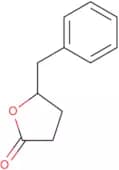
CAS:<p>5-Benzyloxolan-2-one is a flavanol that has been shown to inhibit the growth of Clostridium species. 5-Benzyloxolan-2-one is found in foods such as fructo-oligosaccharides and escherichia coli. In vitro studies have shown that this compound inhibits the utilisation of phenylpropionic acid by clostridia, leading to a significant inhibitory effect on their population. 5-Benzyloxolan-2-one also has prebiotic properties as it stimulates the growth of microflora populations in the gut.</p>Formula:C11H12O2Purity:Min. 95%Molecular weight:176.21 g/mol5-tert-Butyloxolan-2-one
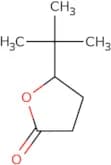
CAS:<p>Versatile small molecule scaffold</p>Formula:C8H14O2Purity:Min. 95%Molecular weight:142.2 g/molL-Homophenylalanine hydrochloride
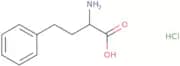
CAS:<p>L-Homophenylalanine hydrochloride is a chemical substance that belongs to the group of aspartic acid. It can be synthesized by the Friedel-Crafts reaction between L-aspartic acid and hydrochlorides, anhydride, or acylating agent. L-Homophenylalanine hydrochloride is used in the preparation of various drugs such as analgesics, antiarthritic agents, antidepressants, antipsychotics, and antihypertensives.</p>Formula:C10H14ClNO2Purity:Min. 95%Molecular weight:215.67 g/mol2-(Pyridin-4-yl)-1H-indole
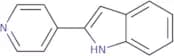
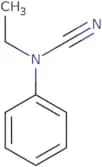
CAS:<p>2-(Pyridin-4-yl)-1H-indole is an antibiotic that functions as a proton pump inhibitor. It has been shown to be effective against methicillin-resistant Staphylococcus aureus (MRSA) and methicillin-sensitive Staphylococcus aureus (MSSA). 2-(Pyridin-4-yl)-1H-indole has been shown to inhibit the growth of MRSA by cleaving bonds in peptidoglycan, which is an essential component of the bacterial cell wall. Although this drug has not yet been tested in humans, it could have clinical relevance because it inhibits the production of penicillinase, which is a major mechanism of resistance to beta lactams.</p>Formula:C13H10N2Purity:Min. 95%Molecular weight:194.24 g/molN-Cyano-N-ethylaniline
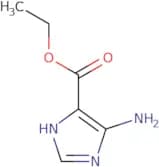
CAS:<p>Versatile small molecule scaffold</p>Formula:C9H10N2Purity:Min. 95%Molecular weight:146.19 g/molethyl 4-amino-1H-imidazole-5-carboxylate
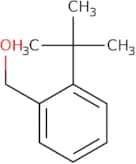
CAS:<p>Ethyl 4-amino-1H-imidazole-5-carboxylate is an ionotropic gelator, which means it is able to form gels when mixed with water. It is synthesised from aluminium chloride and primary amines. Ethyl 4-amino-1H-imidazole-5-carboxylate has been shown to have a carbonyl group and triethyl orthoformate as functional groups. The chemical structure of ethyl 4-amino-1H-imidazole-5-carboxylate is heterocyclic with three rings in the molecule. Ethyl 4 amino 1H imidazole 5 carboxylate has been used as a model substrate for biosynthesis studies of α,α'-diaminopropionic acid and its derivatives.</p>Formula:C6H9N3O2Purity:Min. 95%Molecular weight:155.2 g/mol(2-tert-Butylphenyl)methanol
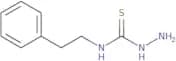
CAS:<p>Versatile small molecule scaffold</p>Formula:C11H16OPurity:Min. 95%Molecular weight:164.24 g/molN-(1-Phenylethyl)hydrazinecarbothioamide
CAS:<p>N-(1-Phenylethyl)hydrazinecarbothioamide (HZPCA) is a corrosion inhibitor that is used in acid solutions such as hydrochloric acid, nitric acid, phosphoric acid, and sulfuric acid. It is an organic compound that has been shown to be active against certain metal ions at the adsorption sites. The efficiency of HZPCA adsorption for different metal ions depends on the pH of the solution. HZPCA also has potent inhibitory effects on the corrosion process by reacting with the metal oxide film on metal surfaces and forming an insoluble hydrazine complex. This complex reduces further corrosion by blocking oxygen diffusion to the metal surface.</p>Formula:C9H13N3SPurity:Min. 95%Molecular weight:195.29 g/molN-(1H-1,3-Benzodiazol-2-yl)acetamide
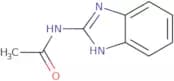
CAS:<p>N-(1H-1,3-Benzodiazol-2-yl)acetamide is a hydrophilic molecule that has been shown to be active against helminths. It is used as an experimental drug for the treatment of schistosomiasis. N-(1H-1,3-Benzodiazol-2-yl)acetamide binds to the nuclear membrane and prevents the formation of hydrogen bonds with cytosine residues. This leads to a disruption in the helical structure of DNA and causes cell death. The compound also inhibits protein synthesis by binding to ribosomes and inhibiting peptide bond formation. In addition, N-(1H-1,3-Benzodiazol-2-yl)acetamide has been shown to have antimicrobial activity against bacteria and fungi.<br>The profile of this molecule can be altered by changing its substituents on benzene ring or cyclopropane ring. It can also be modified by altering the</p>Formula:C9H9N3OPurity:Min. 95%Molecular weight:175.19 g/mol1-Ethyl-2-methyl-1H-imidazole
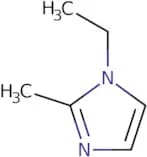
CAS:<p>1-Ethyl-2-methyl-1H-imidazole is an imidazole derivative that has been shown to be active against a variety of bacteria. It can be used as an antimicrobial agent in medicines, such as antibiotics and antifungal agents. 1-Ethyl-2-methyl-1H-imidazole is also used as a chemical intermediate for the synthesis of other compounds. This compound has been shown to have bifunctional properties by inhibiting both ion channels and membranes, which may be related to its antibacterial activity. The compound is stable at high temperatures and displays good chemical stability in aqueous media. It has also been shown to have antihypertensive effects in animal models.</p>Purity:Min. 95%

![rac-(1R,2S,4R,5R,6R)-3-Oxatricyclo[3.2.1.0,2,4]octane-6-carbonitrile](/_next/image/?url=https%3A%2Fstatic.cymitquimica.com%2Fproducts%2F3D%2Fthumb-webp%2FWAA15434.webp&w=3840&q=75)
![Ethyl 2-[(1-ethoxyethylidene)amino]acetate](/_next/image/?url=https%3A%2Fstatic.cymitquimica.com%2Fproducts%2F3D%2Fthumb-webp%2FWAA16433.webp&w=3840&q=75)
![4-[(2-Oxopiperidin-1-yl)methyl]benzoic acid](/_next/image/?url=https%3A%2Fstatic.cymitquimica.com%2Fproducts%2F3D%2Fthumb-webp%2FWAA17265.webp&w=3840&q=75)
![1-[(3-Aminophenyl)methyl]piperidin-2-one](/_next/image/?url=https%3A%2Fstatic.cymitquimica.com%2Fproducts%2F3D%2Fthumb-webp%2FWAA17267.webp&w=3840&q=75)