Building Blocks
This section contains fundamental products for the synthesis of organic and biological compounds. Building blocks are the essential starting materials used to construct complex molecules through various chemical reactions. They play a critical role in drug discovery, material science, and chemical research. At CymitQuimica, we offer a diverse range of high-quality building blocks to support your innovative research and industrial projects, ensuring you have the essential components for successful synthesis.
Subcategories of "Building Blocks"
- Boronic Acids & Boronic Acid Derivatives(5,756 products)
- Chiral Building Blocks(1,242 products)
- Hydrocarbon Building Blocks(6,093 products)
- Organic Building Blocks(60,519 products)
Found 195533 products of "Building Blocks"
Sort by
Purity (%)
0
100
|
0
|
50
|
90
|
95
|
100
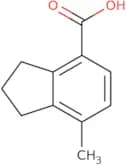
7-Methyl-2,3-dihydro-1H-indene-4-carboxylic acid
CAS:<p>Versatile small molecule scaffold</p>Formula:C11H12O2Purity:Min. 95%Molecular weight:176.21 g/mol2-[(1,1-Dioxo-1,2-benzothiazol-3-yl)amino]acetic acid
CAS:<p>Versatile small molecule scaffold</p>Formula:C9H8N2O4SPurity:Min. 95%Molecular weight:240.24 g/mol4-[(1,1-Dioxo-1,2-benzothiazol-3-yl)amino]butanoic acid
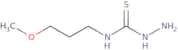
CAS:Controlled Product<p>4-[(1,1-Dioxo-1,2-benzothiazol-3-yl)amino]butanoic acid is a ligand of the nicotinic acetylcholine receptor (nAChR). It has been shown to inhibit or activate nAChRs depending on the receptor subtype. 4-[(1,1-Dioxo-1,2-benzothiazol-3-yl)amino]butanoic acid has also been shown to be an effective inhibitor of the sodium channel. 4-[(1,1-Dioxo-1,2-benzothiazol-3-yl)amino]butanoic acid is a peptide with a molecular weight of 269.30 Da and purity greater than 99%. This compound is a research tool that can be used as an antibody for cell biology and immunology experiments.</p>Formula:C11H12N2O4SPurity:Min. 95%Molecular weight:268.29 g/mol4-(3-Methoxypropyl)-3-thiosemicarbazide
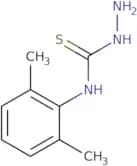
CAS:<p>Versatile small molecule scaffold</p>Formula:C5H13N3OSPurity:Min. 95%Molecular weight:163.24 g/mol4-(2,6-Dimethylphenyl)-3-thiosemicarbazide
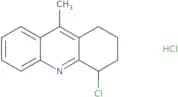
CAS:<p>Versatile small molecule scaffold</p>Formula:C9H13N3SPurity:Min. 95%Molecular weight:195.28 g/mol4-Chloro-9-methyl-1,2,3,4-tetrahydroacridine
CAS:<p>Versatile small molecule scaffold</p>Formula:C14H15Cl2NPurity:Min. 95%Molecular weight:268.2 g/molC -(4-Methyl-thiazol-2-yl)-methylamine dihydrochloride
CAS:<p>Versatile small molecule scaffold</p>Formula:C5H10Cl2N2SPurity:Min. 95%Molecular weight:201.12 g/mol1-(2,2-Dimethylpropanoyl)piperidin-4-one
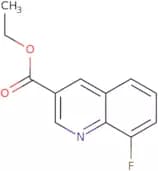
CAS:Controlled Product<p>Versatile small molecule scaffold</p>Formula:C10H17NO2Purity:Min. 95%Molecular weight:183.25 g/molEthyl 8-Fluoroquinoline-3-carboxylate
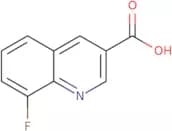
CAS:<p>Versatile small molecule scaffold</p>Formula:C12H10FNO2Purity:Min. 95%Molecular weight:219.21 g/mol8-Fluoroquinoline-3-carboxylic acid
CAS:<p>Versatile small molecule scaffold</p>Formula:C10H6FNO2Purity:Min. 95%Molecular weight:191.16 g/mol8-Chloroquinoline-3-carboxylic acid
CAS:<p>8-Chloroquinoline-3-carboxylic acid is an industrial chemical that is used as a pharmaceutical. It is also an antibacterial agent that has been shown to be effective against sulfite-reducing bacteria, such as Clostridium difficile and Helicobacter pylori. This drug inhibits bacterial growth by damaging the cell membrane and preventing the production of essential proteins for DNA replication. 8-Chloroquinoline-3-carboxylic acid is produced by treating quinoline with chlorination, followed by reaction with sulfuryl chloride or quinoline carboxylic acid.</p>Formula:C10H6ClNO2Purity:Min. 95%Molecular weight:207.61 g/mol8-Methyl-quinoline-3-carboxylic acid
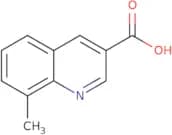
CAS:<p>Versatile small molecule scaffold</p>Formula:C11H9NO2Purity:Min. 95%Molecular weight:187.2 g/mol8-Fluoro-3-quinolinecarbonitrile
CAS:<p>Versatile small molecule scaffold</p>Formula:C10H5FN2Purity:Min. 95%Molecular weight:172.16 g/mol4-oxo-1,4-Dihydroquinoline-3-carbonitrile
CAS:<p>4-oxo-1,4-Dihydroquinoline-3-carbonitrile (4ODQ) is a synthetic compound that is acidic in nature. It hydrolyzes in acidic conditions to form a carboxylic acid and ammonia. 4ODQ can also react with amines to form azides, chloride to form chloramines, methyl anthranilate to form piperidines, trifluoride to form triflates, and morpholine to form morpholines. The chemical structure of 4ODQ consists of an anthranilate moiety which has been decarboxylated and an amine group which has been enaminated.<br>4ODQ inhibits the growth of cancer cells by binding to the ATP binding site on the enzyme kinase B (BRAF), thereby preventing phosphorylation of downstream proteins that are involved in cell proliferation. This inhibition leads to apoptosis or programmed cell death.</p>Formula:C10H6N2OPurity:Min. 95%Molecular weight:170.17 g/mol6-Chloro-4-oxo-1,4-dihydroquinoline-3-carbonitrile
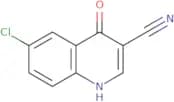
CAS:<p>Versatile small molecule scaffold</p>Formula:C10H5ClN2OPurity:Min. 95%Molecular weight:204.61 g/mol3-(2-Chloroethyl)-5-methyl-1,2,4-oxadiazole
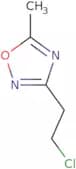
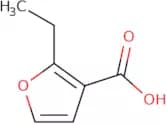
CAS:<p>Versatile small molecule scaffold</p>Formula:C5H7ClN2OPurity:Min. 95%Molecular weight:146.57 g/mol2-Ethylfuran-3-carboxylic acid
CAS:<p>Versatile small molecule scaffold</p>Formula:C7H8O3Purity:Min. 95%Molecular weight:140.14 g/molMethyl 4-methylidenecyclohexane-1-carboxylate
CAS:<p>Versatile small molecule scaffold</p>Formula:C9H14O2Purity:Min. 95%Molecular weight:154.21 g/mol1-Amino-2-(2-chlorophenyl)propan-2-ol
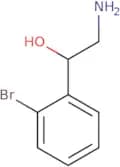
CAS:<p>Versatile small molecule scaffold</p>Formula:C9H12ClNOPurity:Min. 95%Molecular weight:185.65 g/mol2-amino-1-(2-bromophenyl)ethan-1-ol
CAS:<p>Versatile small molecule scaffold</p>Formula:C8H10BrNOPurity:Min. 95%Molecular weight:216.1 g/mol

![2-[(1,1-Dioxo-1,2-benzothiazol-3-yl)amino]acetic acid](/_next/image/?url=https%3A%2Fstatic.cymitquimica.com%2Fproducts%2F3D%2Fthumb-webp%2FWCA05477.webp&w=3840&q=75)
![4-[(1,1-Dioxo-1,2-benzothiazol-3-yl)amino]butanoic acid](/_next/image/?url=https%3A%2Fstatic.cymitquimica.com%2Fproducts%2F3D%2Fthumb-webp%2FWCA05478.webp&w=3840&q=75)