Amines
Amines are a set of molecules containing an amino functional group (derived from ammonia). This category includes amines at any level of substitution : primary, secondary, tertiary, and ammonium salts. Amines are fundamental in organic synthesis and are widely used in pharmaceuticals, agrochemicals, and materials science. At CymitQuimica, we provide a comprehensive selection of amines to meet your research and industrial needs. Our range ensures access to various amines for diverse chemical processes and innovative research.
Subcategories of "Amines"
- Nitrosamines(2,605 products)
- Primary Amines(30,805 products)
- Quaternary Ammonium Cations and Salts(1,099 products)
- Secondary Amines(20,809 products)
- Tertiary Amines(17,111 products)
Found 8776 products of "Amines"
Sort by
Purity (%)
0
100
|
0
|
50
|
90
|
95
|
100
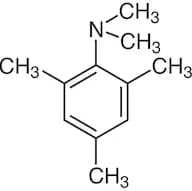
N,N,2,4,6-Pentamethylaniline
CAS:Formula:C11H17NPurity:>97.0%(GC)Color and Shape:White to Yellow to Green clear liquidMolecular weight:163.26Ref: 4Z-A-331069
Discontinued productRef: 4Z-A-331049
Discontinued productRef: 4Z-L-195036
Discontinued productRef: 4Z-A-331044
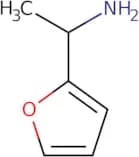
Discontinued product1-(2-Furyl)ethanamine
CAS:<p>1-(2-Furyl)ethanamine is a chiral compound that can be synthesized from readily available feedstocks. This synthetic method was developed to allow for the preparation of 1-(2-furyl)ethanamine in high yields and with good selectivity. The strategy involves the transfer of an ethyl group from an alcohol to a carbonyl group, which is catalyzed by gold nanoparticles. This process has been shown to be sustainable and provides an alternative for the use of more hazardous chemicals in the synthesis of this compound.</p>Formula:C6H9NOPurity:Min. 95%Color and Shape:Clear LiquidMolecular weight:111.14 g/molRef: 3D-FF116689
Discontinued productTrolamine salicylate
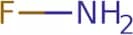
CAS:Controlled Product<p>Trolamine salicylate is a polymer film-forming drug that contains methyl anthranilate and trolamine. It is used in the treatment of skin cancer, as well as for the prevention of radiation-induced erythema. Trolamine salicylate has been shown to be effective in reducing the incidence of skin cancer caused by exposure to ultraviolet light at wavelengths below 320 nm. Trolamine salicylate forms a polymeric matrix on the surface of skin cells and acts as an anti-inflammatory agent. When applied topically, it undergoes chemical reactions with water vapor in the air and can be degraded by enzymes in human serum. The elimination rate of trolamine salicylate from body is about 1% per day and its half-life is about 20 days.<br>Trolamine salicylate is also used to treat acute dermatitis caused by contact with industrial chemicals such as phenols, amines, and ketones. It</p>Formula:C13H21NO6Purity:Min. 95%Color and Shape:PowderMolecular weight:287.31 g/molMonofluoroamine
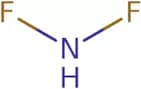
CAS:Controlled Product<p>Monofluoroamine is a chemical substance with the chemical formula NH2F. It is a colorless liquid that is stable to both acidic and basic environments, but reacts with fluorine gas to form hydrofluoric acid. Monofluoroamine is used in the synthesis of pharmaceuticals, pesticides, and other organic compounds. This compound can be prepared by reacting ammonia with hydrogen fluoride at low temperature or by reacting ammonia with hydrogen fluoride at high pressure. The Friedel-Crafts reaction of monofluoroamine with an amide produces the corresponding amine. Monofluoroamine has been used as a conditioning agent in NMR spectroscopy experiments to remove the water signal from complex NMR spectra. In addition, this compound has been shown to have antiviral effects against HIV infection through its ability to inhibit protein synthesis.</p>Formula:FH2NPurity:Min. 95%Molecular weight:35.02 g/molDifluoroamine
CAS:Controlled Product<p>Difluoroamine is a chemical compound that is used in the production of organic compounds. It has been shown to have high stability and detection sensitivity, which is attributed to its hydrogen bond forming ability. Difluoroamine also reacts with trifluoroacetic acid and hydrogen fluoride, both of which are strong acids. The reaction mechanism of difluoroamine involves the protonation of nitrogen atoms on the molecule followed by a nucleophilic attack on the electrophilic carbon atom that results in the formation of an amine group. This reaction can be carried out in a flow system as well as in a batch process. Difluoramine is an intermediate product during this process and can be converted into glycol ethers or nitrobenzene.</p>Formula:F2HNPurity:Min. 95%Molecular weight:53.01 g/mol4-Octyloxybenzylamine
CAS:<p>4-Octyloxybenzylamine is a fine chemical that is used as a building block in research or as a reagent in the synthesis of other compounds. It has CAS No. 37806-64-7 and can be used in organic synthesis as a speciality chemical or as an intermediate or scaffold for complex organic molecules. 4-Octyloxybenzylamine has many uses, including being a versatile building block for synthesizing other compounds, such as polymers and polyesters, which are useful for commercial applications, such as textiles and plastics.</p>Formula:C15H25NOPurity:Min. 95%Color and Shape:PowderMolecular weight:235.37 g/molTryptamine
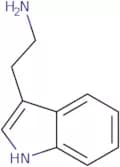
CAS:Controlled Product<p>Please enquire for more information about Tryptamine including the price, delivery time and more detailed product information at the technical inquiry form on this page</p>Formula:C10H12N2Purity:Min. 95%Color and Shape:PowderMolecular weight:160.22 g/molTryptamine hydrochloride
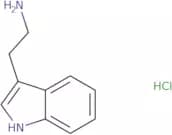
CAS:Controlled Product<p>Tryptamine hydrochloride is a tryptamine that is used in the synthesis of various drugs with antiinflammatory properties. It has been shown to be a potent and selective antagonist of 5-HT2 receptors, with a pKi value of 7.4. Tryptamine hydrochloride has also been found to have an inhibitory effect on mitochondrial membrane potential and to decrease human serum 5-HT levels at physiological doses. This drug is structurally related to serotonin, which is believed to be a cause for its antiinflammatory activity.</p>Formula:C10H12N2HClPurity:Min. 95%Color and Shape:Brown White Yellow Orange PowderMolecular weight:196.68 g/molRef: 3D-FT37087
Discontinued product1-Aminopyrene (purified by sublimation)
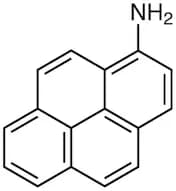
CAS:Formula:C16H11NPurity:>99.0%(T)(HPLC)Color and Shape:Light yellow to Amber to Dark green powder to crystalMolecular weight:217.27Neopentyl Glycol Bis(4-aminophenyl) Ether
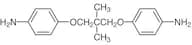
CAS:Formula:C17H22N2O2Purity:>97.0%(T)Color and Shape:White to Light yellow to Light orange powder to crystalMolecular weight:286.38Ammonium hexafluorotitanate(iv)
CAS:<p>Ammonium hexafluorotitanate(IV) is a fine chemical that can be used as a reagent, building block, or intermediate in the synthesis of other chemicals. It is a versatile building block and reacts with other compounds to form complex compounds. Ammonium hexafluorotitanate(IV) is also an intermediate for the production of ammonium hexafluorophosphate (III), which is used in the manufacture of fertilizers. Ammonium hexafluorotitanate(IV) can be used as a reactant to produce titanium metal, which has many industrial applications.</p>Formula:F6H8N2TiPurity:Min. 95%Color and Shape:White SolidMolecular weight:197.93 g/molRef: 3D-FA105292
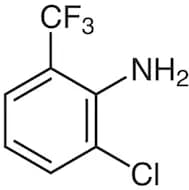
Discontinued product2-Amino-3-chlorobenzotrifluoride
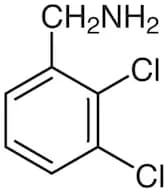
CAS:Formula:C7H5ClF3NPurity:>97.0%(GC)Color and Shape:Colorless to Almost colorless clear liquidMolecular weight:195.572,3-Dichlorobenzylamine
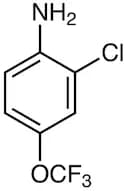
CAS:Formula:C7H7Cl2NPurity:>98.0%(GC)(T)Color and Shape:Colorless to Light orange to Yellow clear liquidMolecular weight:176.042-Chloro-4-(trifluoromethoxy)aniline
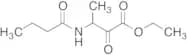
CAS:Formula:C7H5ClF3NOPurity:>97.0%(GC)(T)Color and Shape:Colorless to Light yellow to Light orange clear liquidMolecular weight:211.57Ethyl 3-(Butanoylamino)-2-oxobutanoate
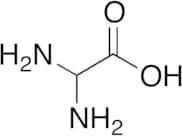
CAS:Controlled Product<p>Applications Ethyl 3-(Butanoylamino)-2-oxobutanoate s a reactant used to prepare Vardenafil (V098001, 2HCl salt) which is a selective phosphodiesterase type 5 (PDE5) inhibitor.<br>References Bischoff, E., et al.: J. Urol., 165, 1316 (2001), Kim, N.N., et al.: Life Sci., 69, 2249 (2001), Kendirci, M., et al.: Expert Opin. Pharmacother., 5, 923 (2004)<br></p>Formula:C10H17NO4Color and Shape:NeatMolecular weight:215.252,2-Diaminoacetic Acid
CAS:Controlled ProductFormula:C2H6N2O2Color and Shape:NeatMolecular weight:90.081