Cyano-, Nitrile-
Cyano and nitrile compounds are organic molecules that contain cyano (C≡N) or nitrile groups in their structure, characterized by the presence of nitrogen. These groups play important roles in various chemical reactions and industrial applications. In this category, you will find a wide range of cyano and nitrile compounds, ranging from simple to complex structures. At CymitQuimica, we offer high-quality cyano and nitrile compounds tailored to meet research and industrial needs. Our compounds are suitable for a variety of synthesis and analytical applications.
Found 9618 products of "Cyano-, Nitrile-"
Sort by
Purity (%)
0
100
|
0
|
50
|
90
|
95
|
100
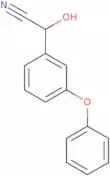
2-Hydroxy-2-(3-phenoxyphenyl)acetonitrile
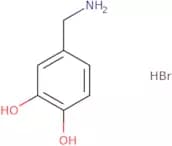
CAS:<p>2-Hydroxy-2-(3-phenoxyphenyl)acetonitrile is an organic compound that is synthesized by the reaction of 3-phenoxybenzaldehyde with nitrous acid in aqueous solution. This compound can be racemized by the enzyme lipase and esterified to form an ester linkage. 2-Hydroxy-2-(3-phenoxyphenyl)acetonitrile has been shown to exhibit insecticidal activity against various strains of bacteria, including Bacillus subtilis, Staphylococcus aureus, and Escherichia coli. 2HPA is a pyrethroid insecticide that has been shown to inhibit lipid synthesis by binding to phospholipids in the bacterial cell membrane. This inhibits the production of fatty acids and glycerol phosphate, inhibiting the growth of the bacteria.</p>Formula:C14H11NO2Purity:Min. 95%Color and Shape:Clear LiquidMolecular weight:225.24 g/mol3,4-Dihydroxybenzylamine hydrobromide
CAS:<p>3,4-Dihydroxybenzylamine hydrobromide is a chemical that reacts with hydrogen peroxide to produce light. It is used as a nutrient for the chemiluminescent reaction in a nutrient solution to detect dopamine, chlorogenic acids, and trifluoroacetic acid. 3,4-Dihydroxybenzylamine hydrobromide can also be used as an analytical method for the measurement of cortisol concentration in plasma and saliva samples. This chemical analogically reacts with monoamine neurotransmitters such as dopamine and gamma-aminobutyric acid (GABA) to form fluorescent probes. 3,4-Dihydroxybenzylamine hydrobromide is not toxic or mutagenic and has been shown to be safe for use in humans.</p>Formula:C7H10BrNO2Purity:Min. 95%Color and Shape:PowderMolecular weight:220.06 g/mol5,6-Diamino-2,3-dicyanopyrazine
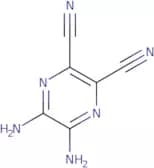
CAS:<p>5,6-Diamino-2,3-dicyanopyrazine (5,6-DDA) is a synthetic compound that has been shown to emit in the visible region. The emission spectrum of 5,6-DDA shows three peaks at 599 nm, 614 nm, and 637 nm. The molecular orbitals of 5,6-DDA are calculated to be sp2 hybridized with a singlet ground state. This molecule has been shown to form imines with aniline and pyrrole in the presence of chloride ions. It also forms a zn complex with zinc chloride and nitrate ions. The thermolysis of furyl derivatives produces the corresponding anions. 5,6-DDA can also undergo a photochemical reaction with chlorine gas to form its molecular ion at 637 nm.</p>Formula:C6N4N6Purity:(%) Min. 98%Color and Shape:PowderMolecular weight:160.14 g/mol5-Cyano-2-fluorobenzoic acid
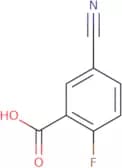
CAS:<p>5-Cyano-2-fluorobenzoic acid is a macrocyclization agent that is used in the synthesis of 16-membered macrocycles. It is a nucleophilic reagent that reacts with an electrophile to form a 5,5'-bifluoro-2,2'-dioxodibenzofuranone. This reaction can be performed under mild conditions and proceeds via a 1,4-addition mechanism. The product has two stereogenic centers and four stereoisomers that are formed by the relative configuration of these centers. 5-Cyano-2-fluorobenzoic acid also has application in the clinic as an analogue for fluoroquinolones.</p>Formula:C8H4FNO2Purity:Min. 95%Color and Shape:PowderMolecular weight:165.12 g/mol4-Amino-3-nitrobenzylamine hydrochloride
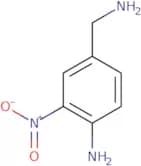
CAS:<p>4-Amino-3-nitrobenzylamine hydrochloride is a potential vanilloid receptor antagonist with potent antagonistic activities. It has been shown to inhibit the activation of neuronal TRPV1 receptors, as well as the uptake of 4-aminobenzoic acid (4-BA) in rat brain synaptosomes. In addition, this compound can be used to optimize drug structure, acting as an amide and alkyl groups. 4-Amino-3-nitrobenzylamine hydrochloride binds to the vanilloid receptor TRPV1 and blocks its activation. This prevents the release of proinflammatory substances that are responsible for pain, inflammation, and tissue injury.</p>Formula:C7H9N3O2·HClPurity:Min. 95%Color and Shape:PowderMolecular weight:203.63 g/mol4-Aminobenzonitrile
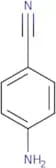
CAS:<p>4-Aminobenzonitrile is a chemical compound that has been shown to be an antimicrobial agent. It has been found to be active against bacteria and fungi, such as Candida albicans and Aspergillus niger. 4-Aminobenzonitrile binds with epidermal growth factor (EGF) by intramolecular hydrogen bonding, which leads to the disruption of the protein's tertiary structure. The nitrogen atoms in this compound have been shown to react with water vapor at high temperatures, which results in the release of hydrogen gas. This reaction can be used for phase transition temperature studies. 4-Aminobenzonitrile also shows intermolecular hydrogen bonding with fatty acids, which causes the molecule to change its shape and protonation state. These changes affect its frequency shift and molecular modeling study results.</p>Formula:C7H6N2Purity:Min. 95%Color and Shape:Off-White PowderMolecular weight:118.14 g/mol2-Amino-4-cyano-phenol
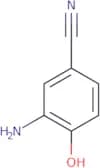
CAS:<p>2-Amino-4-cyano-phenol is a compound that has been shown to have antitubercular activity. It modulates the activity of cromakalim, which is a drug used for the treatment of tuberculosis. 2-Amino-4-cyano-phenol is also an antibacterial agent and has been shown to activate bacterial DNA replication and protein synthesis. The mechanism of action of this compound is thought to be due in part to its ability to bind with the ribosomes on the outside surface of cells and inhibit their function. 2-Amino-4-cyano-phenol has also been shown to have structural similarities with phenylephrine, which inhibits bacterial growth by binding to DNA gyrase, thereby preventing transcription and replication.</p>Formula:C7H6N2OPurity:Min. 95%Color and Shape:PowderMolecular weight:134.14 g/mol2-Cyanoethyl phosphate barium salt hydrate
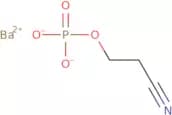
CAS:<p>2-Cyanoethyl phosphate barium salt hydrate is an alkaline compound that is soluble in water. It has been used to synthesize phosphodiesters, benzene, dioxan and alcohols. The chemical was originally developed as a reagent for the quantitative conversion of ethyl acetate esters to their corresponding acid chlorides. This reaction can be carried out quantitatively in tetrahydrofuran at room temperature with yields of about 95%. 2-Cyanoethyl phosphate barium salt hydrate also converts alcohols to their corresponding monophosphates quantitatively in alkaline conditions. Crystalline forms are obtained by reacting the compound with triethylamine and benzene.</p>Formula:C3H6BaNO4P•xH2OPurity:Min. 95%Color and Shape:PowderMolecular weight:324.42 g/mol2,6-Difluorobenzonitrile
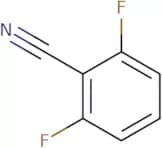
CAS:<p>2,6-Difluorobenzonitrile is a nucleophilic compound that reacts with inorganic acids to form new chemical structures. It has been shown to react with hydrochloric acid, sodium carbonate and phosphotungstic acid. The FT-IR spectroscopy of 2,6-difluorobenzonitrile shows a reaction product with a proton. This means that the molecule is able to transfer a hydrogen ion from one site to another. The reaction between 2,6-difluorobenzonitrile and sodium carbonate produces an insoluble precipitate of sodium phosphate and sodium chloride, which can be analyzed gravimetrically. 2,6-Difluorobenzonitrile has also been shown to have fluorescence properties that are activated by ultraviolet light and naphthalene.</p>Formula:C7H3F2NPurity:Min. 95%Color and Shape:PowderMolecular weight:139.1 g/mol2-Fluoro-4-methoxybenzylamine hydrochloride
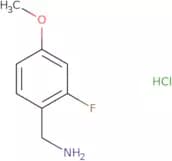
CAS:<p>2-Fluoro-4-methoxybenzylamine hydrochloride is a potent inhibitor of polymerase (DNA and RNA). It has been shown to inhibit the growth of human breast cancer cells and to induce apoptosis. 2-Fluoro-4-methoxybenzylamine hydrochloride binds to the polymerase, which blocks synthesis of DNA or RNA. The binding site is located near the active site of the enzyme. This drug also has an insulin-like effect by stimulating IGF-I production and increasing protein synthesis in somatotrophic cells.</p>Formula:C8H11ClFNOPurity:Min. 95%Color and Shape:PowderMolecular weight:191.63 g/molDiphenylacetonitrile
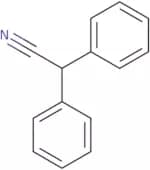
CAS:<p>Diphenylacetonitrile is an organic compound that has a low energy and is used as a nutritional supplement. It is a derivative of mandelonitrile, which can be synthesized by the Friedel-Crafts reaction between chloroform and diphenylacetic acid. Diphenylacetonitrile is an aromatic hydrocarbon with nitrogen atoms and hydroxyl groups, which can be found in the virus or p. aeruginosa. The molecule has been shown to have anti-inflammatory potency in animal models. The synthesis of this compound involves the use of halides, such as hydrogen sulfate or bromide, which are also present in high concentrations in this product. <br>Diphenylacetonitrile (DPCN) is a low-energy nitrile that undergoes Friedel-Crafts reactions with chloroform to produce the corresponding chloride (DPCCl). DPCN has been shown to inhibit inflammatory responses</p>Formula:C14H11NPurity:Min. 95%Color and Shape:PowderMolecular weight:193.24 g/mol4-Hydroxy-3-methoxybenzylamine hydrochloride
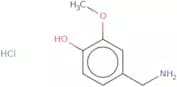
CAS:<p>4-Hydroxy-3-methoxybenzylamine hydrochloride is a reagent, complex compound and useful intermediate for the production of speciality chemicals. CAS No. 7149-10-2 is not a hazardous chemical and does not pose any significant risk to human health or the environment when used as intended. This chemical has many uses including being a useful scaffold in organic synthesis, a useful building block for the preparation of other compounds, and a versatile building block for the preparation of various compounds. It also has many applications in research such as being an intermediate for the synthesis of other compounds, or as a reactant in various reactions.</p>Formula:C8H12NO2ClPurity:Min. 98 Area-%Color and Shape:White PowderMolecular weight:189.64 g/mol2-Amino-5-chlorobenzonitrile
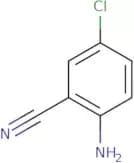
CAS:<p>2-Amino-5-chlorobenzonitrile is a potent inhibitor of butyrylcholinesterase (BChE) and has been shown to inhibit the activity of this enzyme in cell lung cancer and muscle. 2-Amino-5-chlorobenzonitrile also inhibits the activity of other enzymes, such as acetylcholinesterase (AChE) and phosphatidylcholine esterase (PCE), that are found in the membranes of cells. This inhibition leads to increased levels of acetylcholine in the synaptic cleft, which may lead to an increase in muscular contractions. 2-Amino-5-chlorobenzonitrile is also a product yield enhancer for chromene synthesis.</p>Formula:C7H5ClN2Purity:Min. 95%Color and Shape:PowderMolecular weight:152.58 g/mol(2,3-Dichlorophenyl)acetonitrile
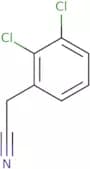
CAS:<p>(2,3-Dichlorophenyl)acetonitrile is a fine chemical that is useful as a building block in the synthesis of more complex compounds. It has been used in research as a reagent and as a speciality chemical. (2,3-Dichlorophenyl)acetonitrile reacts with many different types of compounds to form new molecules. This intermediate can be used in the synthesis of many different types of compounds and also serves as an important scaffold for larger molecules.</p>Formula:C8H5Cl2NPurity:Min. 95%Color and Shape:PowderMolecular weight:186.04 g/mol2-Amino-4-fluorobenzylamine dihydrochloride
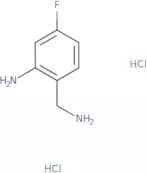
CAS:<p>2-Amino-4-fluorobenzylamine dihydrochloride is a research chemical that is used as a reactant in organic synthesis. 2-Amino-4-fluorobenzylamine dihydrochloride is an intermediate for the preparation of other chemicals and can also be used as a building block for more complex compounds. This chemical has been shown to have good quality and can be used in many different types of research.<br>2-Amino-4-fluorobenzylamine dihydrochloride has CAS number 606139-20-2.</p>Formula:C7H9FN2·2HClPurity:Min. 95 Area-%Color and Shape:PowderMolecular weight:213.08 g/mol(5-Methyl-1,3-thiazol-2-yl)acetonitrile
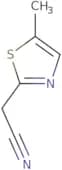
CAS:<p>5-Methyl-1,3-thiazol-2-yl)acetonitrile is a chemical that is used as a building block in organic synthesis. It has been shown to be an intermediate in the preparation of other compounds and has been used as a research chemical. This chemical has also been shown to have useful properties, such as high quality and versatility. 5-Methyl-1,3-thiazol-2-yl)acetonitrile can be used as a reaction component or a reagent for synthesizing other chemicals.</p>Formula:C6H6N2SPurity:Min. 95%Color and Shape:Clear LiquidMolecular weight:138.19 g/molXylene cyanol
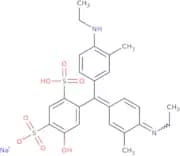
CAS:<p>Xylene cyanol is a chemical compound that belongs to the group of phenols. It has been shown to be active in vitro against human skin cancer cells, and induces cell lysis. Xylene cyanol has also been found to bind to the BCR-ABL kinase domain, which is an enzyme that plays a crucial role in the development of leukemia and other autoimmune diseases. Xylene cyanol binds to dna binding domains on the protein surface and forms an adduct with bcr-abl kinase, which inhibits its activity. This inhibition prevents activation of this enzyme and leads to cell death by preventing DNA synthesis.</p>Formula:C25H27N2O7S2•NaPurity:Min. 90%Color and Shape:PowderMolecular weight:554.61 g/mol