Cyano-, Nitrile-
Cyano and nitrile compounds are organic molecules that contain cyano (C≡N) or nitrile groups in their structure, characterized by the presence of nitrogen. These groups play important roles in various chemical reactions and industrial applications. In this category, you will find a wide range of cyano and nitrile compounds, ranging from simple to complex structures. At CymitQuimica, we offer high-quality cyano and nitrile compounds tailored to meet research and industrial needs. Our compounds are suitable for a variety of synthesis and analytical applications.
Found 9618 products of "Cyano-, Nitrile-"
Sort by
Purity (%)
0
100
|
0
|
50
|
90
|
95
|
100
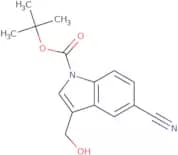
1-Boc-5-Cyano-3-hydroxymethylindole
CAS:<p>Please enquire for more information about 1-Boc-5-Cyano-3-hydroxymethylindole including the price, delivery time and more detailed product information at the technical inquiry form on this page</p>Formula:C15H16N2O3Purity:Min. 95%Molecular weight:272.3 g/mol2-[4-(2-Cyanoethylthio)methyl]thiazolyl guanidine
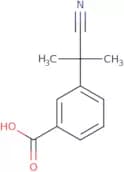
CAS:<p>2-[4-(2-Cyanoethylthio)methyl]thiazolyl guanidine (HCTZ) is a histamine H2 receptor antagonist that belongs to the class of synthetic compounds. It is an effective anti-histamine and has been shown to inhibit acid secretion in the stomach in response to histamine. HCTZ also inhibits the release of gastric acid by blocking the action of histamine on the H2 receptor of parietal cells, which are located in the lining of the stomach. This drug is also used for treating reflux esophagitis and gastroesophageal reflux disease. Other uses include as a proton pump inhibitor for treatment of peptic ulcers, and as an adjunct therapy for ulcerative colitis. The following product details are about a company that sells organic food products:</p>Formula:C8H11N5S2Purity:Min. 98 Area-%Color and Shape:White PowderMolecular weight:241.34 g/mol3-(2-Cyanopropan-2-yl)benzoic acid
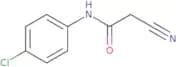
CAS:<p>Please enquire for more information about 3-(2-Cyanopropan-2-yl)benzoic acid including the price, delivery time and more detailed product information at the technical inquiry form on this page</p>Formula:C11H11NO2Purity:Min. 95%Molecular weight:189.21 g/molN-(4-Chlorophenyl)-2-cyanoacetamide
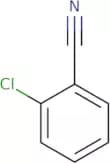
CAS:<p>N-(4-Chlorophenyl)-2-cyanoacetamide is a pyridine compound that can be synthesized from chloroacetonitrile and acetamide. It has been shown to react with an active methylene group in benzene or pyridine to produce a heterocycle. This reaction is reversible and can be used as a preparative method for the synthesis of heterocycles. The 1,3-dipolar cycloaddition of N-(4-chlorophenyl)-2-cyanoacetamide with nitro groups in nitrobenzene produces the corresponding 2-nitropyridines, which are important intermediates in the synthesis of other heterocycles. N-(4-Chlorophenyl)-2-cyanoacetamide has been used as an efficient method for the preparation of nitrogen nucleophiles that are useful for catalysis.</p>Formula:C9H7ClN2OPurity:Min. 95%Molecular weight:194.62 g/mol2-Chlorobenzonitrile
CAS:<p>2-Chlorobenzonitrile is a white solid that is soluble in organic solvents. It is an aryl halide and has a chemical structure of C6ClCN. 2-Chlorobenzonitrile is used as a raw material for the production of dyes and pharmaceuticals. This compound reacts with hydrochloric acid to form 4-chlorobenzonitrile, which can be used in the synthesis of other chemicals. 2-Chlorobenzonitrile can also react with n-dimethyl formamide in an optimal reaction solution to form 4-chlorobenzonitrile. The FTIR spectroscopy on this compound shows that it has a chloride group at 795 cm−1. The optimum reaction temperature for this compound is between 100 and 120 °C, but it will react with inorganic acids such as sulfuric acid or phosphoric acid at higher temperatures. Synthesis of this compound can be done by reacting</p>Formula:C7H4ClNPurity:Min. 95%Color and Shape:White PowderMolecular weight:137.57 g/mol2-Cyano-3,4,5,6-tetrachloropyridine
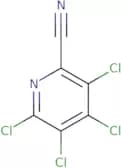
CAS:<p>2-Cyano-3,4,5,6-tetrachloropyridine is a genotoxic compound that is used for the preparation of picolinic acid. It has been shown to induce DNA damage and cytotoxicity in vitro. The reaction products of this compound have also been found to be genotoxic in vitro and in vivo. This chemical has been shown to inhibit the growth of cells in culture as well as cause cell death by releasing hydrogen chloride gas. 2-Cyano-3,4,5,6-tetrachloropyridine is a potent mutagen and carcinogen that can be activated by fluorine or chlorine compounds. This chemical can also form chlorinated derivatives with chlorine. 2-Cyano-3,4,5,6-tetrachloropyridine reacts with phosphorus pentachloride to produce hydrogen chloride gas and other reaction products such as chloride (Cl) or sublimed (P</p>Formula:C6Cl4N2Purity:Min. 95%Molecular weight:241.89 g/mol4-Biphenylacetonitrile
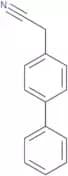
CAS:<p>Biphenylacetonitrile is an organic compound that belongs to the group of reactive functional groups and is used as a reagent in organic synthesis. It has been shown to inhibit the growth of cancer cells, likely due to its ability to react with sulfamates. Biphenylacetonitrile inhibits the production of the inflammatory mediator nitric oxide by reacting with trifluoroacetic acid, which may be useful for treating inflammatory diseases such as endometriosis. This drug also has an inhibitory effect on fatty acid metabolism and can thus be used for treating diabetes patients.</p>Formula:C14H11NPurity:Min. 95%Molecular weight:193.24 g/mol3,5-Bis(trifluoromethyl)phenylacetonitrile
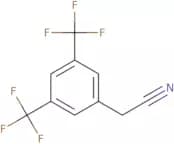
CAS:<p>3,5-Bis(trifluoromethyl)phenylacetonitrile (3,5-BTFAPN) is a compound that has anticancer activity. It can be used to treat cancer by inhibiting the growth of cancer cells. 3,5-BTFAPN has been shown to be effective against some human cancer cell lines in vitro and in vivo. The drug was found to have cytotoxic effects by inducing apoptosis through changes in mitochondrial membrane potential and cytochrome c release. 3,5-BTFAPN also binds to DNA and forms adducts with guanine residues, which may explain its anticancer activity.</p>Formula:C10H5F6NPurity:Min. 98 Area-%Color and Shape:Colorless Yellow Clear LiquidMolecular weight:253.14 g/molPhycocyanobilin
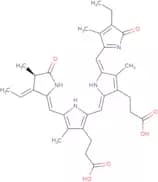
CAS:<p>Phycocyanobilin is a chromophore found in blue-green algae and cyanobacteria. It is a component of the holoprotein phycocyanin and aids in the harvesting of light energy. This biliverdin derivative is converted to phycocyanorubin by biliverdin reductase in mammalian cells. The addition of phycocyanobilin to human cells leads to potent inhibition of NADPH oxidase. It also binds to human serum albumin (HSA). Structurally, Phycocyanin shares many similarities to bilirubin and biliverdin.</p>Formula:C33H38N4O6Purity:Min. 95 Area-%Color and Shape:Blue PowderMolecular weight:586.68 g/mol3'-[2- Cyanoethyl N, N- bis(1- methylethyl) phosphoramidite]-5'- O- [bis(4- methoxyphenyl) phenylmethyl] - 2'- O- methyl- N- [2- [4- (1- methylethyl) phenoxy] acetyl] -guanosine
CAS:<p>Please enquire for more information about 3'-[2- Cyanoethyl N, N- bis(1- methylethyl) phosphoramidite]-5'- O- [bis(4- methoxyphenyl) phenylmethyl] - 2'- O- methyl- N- [2- [4- (1- methylethyl) phenoxy] acetyl] -guanosine including the price, delivery time and more detailed product information at the technical inquiry form on this page</p>Formula:C52H62N7O10PPurity:Min. 95%Molecular weight:976.06 g/mol2,6-Dimethoxy-4-hydroxybenzylamine
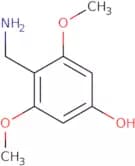
CAS:<p>2,6-Dimethoxy-4-hydroxybenzylamine is a fine chemical that is used as a versatile building block for the synthesis of complex compounds. It is also used as a reagent and reaction component in various chemical reactions. CAS No. 130632-98-3.</p>Formula:C9H13NO3Purity:Min. 95%Color and Shape:Yellow PowderMolecular weight:183.2 g/mol2-Fluoro-5-(trifluoromethyl)benzonitrile
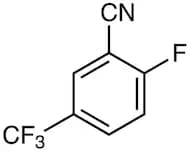
CAS:Formula:C8H3F4NPurity:>98.0%(GC)Color and Shape:Colorless to Almost colorless clear liquidMolecular weight:189.114-(Trifluoromethoxy)benzonitrile
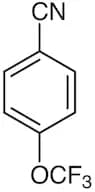
CAS:Formula:C8H4F3NOPurity:>98.0%(GC)Color and Shape:Colorless to Almost colorless clear liquidMolecular weight:187.121-Pentyl isocyanate, 97%
CAS:<p>This Thermo Scientific Chemicals brand product was originally part of the Alfa Aesar product portfolio. Some documentation and label information may refer to the legacy brand. The original Alfa Aesar product / item code or SKU reference has not changed as a part of the brand transition to Thermo Scientific Chemicals.</p>Formula:C6H11NOPurity:97%Color and Shape:Liquid, Clear colorlessMolecular weight:113.162-(Triphenylphosphoranylidene)acetonitrile
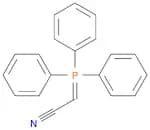
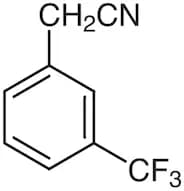
CAS:Formula:C20H16NPPurity:98%Color and Shape:SolidMolecular weight:301.32153-(Trifluoromethyl)phenylacetonitrile
CAS:Formula:C9H6F3NPurity:>98.0%(GC)Color and Shape:Colorless to Almost colorless clear liquidMolecular weight:185.152,4,5-Trifluorobenzonitrile
CAS:Formula:C7H2F3NPurity:>98.0%(GC)Color and Shape:Colorless to Light yellow to Light orange clear liquidMolecular weight:157.10

![2-[4-(2-Cyanoethylthio)methyl]thiazolyl guanidine](/_next/image/?url=https%3A%2Fstatic.cymitquimica.com%2Fproducts%2F3D%2Fthumb-webp%2FFC21486.webp&w=3840&q=75)
![3'-[2- Cyanoethyl N, N- bis(1- methylethyl) phosphoramidite]-5'- O- [bis(4- methoxyphenyl) phenylm…](/_next/image/?url=https%3A%2Fstatic.cymitquimica.com%2Fproducts%2F3D%2Fthumb-webp%2FFC165570.webp&w=3840&q=75)