Amides
Amides are a wide range of chemical compounds that contain at least one heterocyclic ring, which has atoms of at least two different elements in the ring structure, and at least one amide group (-CONH2). These compounds are crucial in the synthesis of pharmaceuticals, polymers, and agrochemicals. Amides exhibit unique properties and reactivity, making them valuable intermediates in organic synthesis. At CymitQuimica, we offer a comprehensive selection of high-quality amides to support your research and industrial needs.
Found 16393 products of "Amides"
Sort by
Purity (%)
0
100
|
0
|
50
|
90
|
95
|
100
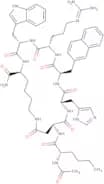
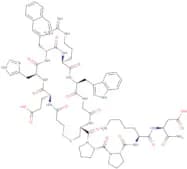
N-Acetyl-L-norleucyl-L-a-aspartyl-L-histidyl-3-(2-naphthalenyl)-D-alanyl-L-arginyl-L-tryptophyl-L-lysinamide-(2,7) -lactam
CAS:<p>Please enquire for more information about N-Acetyl-L-norleucyl-L-a-aspartyl-L-histidyl-3-(2-naphthalenyl)-D-alanyl-L-arginyl-L-tryptophyl-L-lysinamide-(2,7) -lactam including the price, delivery time and more detailed product information at the technical inquiry form on this page</p>Formula:C54H71N15O9Purity:Min. 95%Molecular weight:1,074.24 g/mol(Deamino-Cys3, Nle 4,Arg5,D-2-Nal 7,Cys11)-a-MSH (3-11) amide trifluoroacetate salt
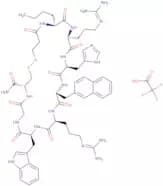
CAS:<p>Please enquire for more information about (Deamino-Cys3, Nle 4,Arg5,D-2-Nal 7,Cys11)-a-MSH (3-11) amide trifluoroacetate salt including the price, delivery time and more detailed product information at the technical inquiry form on this page</p>Formula:C56H76N18O9S2Purity:Min. 95%Molecular weight:1,209.45 g/molGRF (1-29) amide (rat)
CAS:<p>Growth hormone-releasing factor (GRF) is a peptide fragment of amino acids 1–2 from GHRH (growth hormone-releasing hormone). This 1-29 region is the shortest fully functional fragment of GHRH. GRF is also known as sermorelin. Sermorelin binds to the growth hormone-releasing hormone receptor (GHRH-R), and acts as a surrogate for GHRH, causing growth hormone secretion.human: H-YADAIFTNSYRKVLGQLSARKLLQDIMSR-NH2rat: H-HADAIFTSSYRR I LGQLYARKLLHEIMNR-NH2</p>Formula:C155H251N49O40SPurity:Min. 95%Molecular weight:3,473.02 g/molMca-Amyloid β/A4 Protein Precursor770 (667-676)-Lys(Dnp)-Arg-Arg amide trifluoroacetate salt
CAS:<p>Please enquire for more information about Mca-Amyloid beta/A4 Protein Precursor770 (667-676)-Lys(Dnp)-Arg-Arg amide trifluoroacetate salt including the price, delivery time and more detailed product information at the technical inquiry form on this page</p>Formula:C87H129N27O28SPurity:Min. 95%Molecular weight:2,033.19 g/molBiotinyl-LL-37 amide trifluoroacetate salt
CAS:<p>Please enquire for more information about Biotinyl-LL-37 amide trifluoroacetate salt including the price, delivery time and more detailed product information at the technical inquiry form on this page</p>Formula:C215H355N63O54SPurity:Min. 95%Molecular weight:4,718.58 g/mol(D-Arg2,Lys4)-Dermorphin (1-4) amide
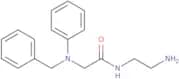
CAS:<p>Dermorphin is a neuropeptide that has been shown to reduce cortisol levels in badgers and has been shown to have biological activity in vitro. Dermorphin also has a number of pharmacokinetic properties, including water solubility, lipid solubility, and oral bioavailability. The drug binds to δ receptors and inhibits the enzyme activities of rat liver microsomes. Dermorphin is used as an analgesic for bowel disease, such as inflammatory bowel disease or hypogaea. Dermorphin has antinociceptive properties (pain-relieving).</p>Formula:C30H45N9O5Purity:Min. 95%Molecular weight:611.74 g/molN-(2-Amino-ethyl)-2-(benzyl-phenyl-amino)-acetamide
CAS:<p>Please enquire for more information about N-(2-Amino-ethyl)-2-(benzyl-phenyl-amino)-acetamide including the price, delivery time and more detailed product information at the technical inquiry form on this page</p>Formula:C17H21N3OPurity:Min. 95%Color and Shape:White PowderMolecular weight:283.37 g/mol(D-Ala3)-Dynorphin A (1-11) amide trifluoroacetate salt
CAS:<p>Please enquire for more information about (D-Ala3)-Dynorphin A (1-11) amide trifluoroacetate salt including the price, delivery time and more detailed product information at the technical inquiry form on this page</p>Formula:C64H106N22O12Purity:Min. 95%Molecular weight:1,375.67 g/molMetorphamide (free acid)
CAS:<p>Please enquire for more information about Metorphamide (free acid) including the price, delivery time and more detailed product information at the technical inquiry form on this page</p>Formula:C44H68N14O10SPurity:Min. 95%Molecular weight:985.17 g/molNeural-Cadherin (76-85) amide (chicken)
CAS:<p>Please enquire for more information about Neural-Cadherin (76-85) amide (chicken) including the price, delivery time and more detailed product information at the technical inquiry form on this page</p>Formula:C44H75N17O13Purity:Min. 95%Molecular weight:1,050.17 g/molAcetyl-(Cys(Acm)33·42)-EGF (33-42) amide (mouse)
CAS:<p>Please enquire for more information about Acetyl-(Cys(Acm)33·42)-EGF (33-42) amide (mouse) including the price, delivery time and more detailed product information at the technical inquiry form on this page</p>Formula:C51H82N16O17S2Purity:Min. 95%Molecular weight:1,255.43 g/molAcetyl-(D-Phe2)-GRF (1-29) amide (human) trifluoroacetate salt
CAS:<p>Please enquire for more information about Acetyl-(D-Phe2)-GRF (1-29) amide (human) trifluoroacetate salt including the price, delivery time and more detailed product information at the technical inquiry form on this page</p>Formula:C157H252N44O43SPurity:Min. 95%Molecular weight:3,476.02 g/molFITC-epsilonAhx-Antennapedia Homeobox (43-58) amide trifluoroacetate salt
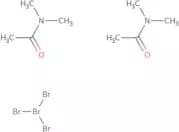
CAS:<p>Please enquire for more information about FITC-epsilonAhx-Antennapedia Homeobox (43-58) amide trifluoroacetate salt including the price, delivery time and more detailed product information at the technical inquiry form on this page</p>Formula:C131H191N37O25S2Purity:Min. 95%Molecular weight:2,748.28 g/molBis(N,N-dimethylacetamide) hydrogen dibromobromate
CAS:<p>Bis(N,N-dimethylacetamide) hydrogen dibromobromate (DMBB) is a chemical with a variety of uses in research and industrial chemistry. It is an intermediate for the synthesis of other chemicals and can be used as a reagent in organic synthesis. DMBB is also known to be useful as a building block for the synthesis of complex compounds. The CAS number for DMBB is 75381-80-5.</p>Formula:C4H9NO·HBr4Purity:Min. 95%Color and Shape:PowderMolecular weight:494.86 g/molPAR-3 (1-6) amide (human) trifluoroacetate salt
<p>Please enquire for more information about PAR-3 (1-6) amide (human) trifluoroacetate salt including the price, delivery time and more detailed product information at the technical inquiry form on this page</p>Formula:C29H46N10O7Purity:Min. 95%Molecular weight:646.74 g/mol(Nle 27)-GRF (1-29) amide (human)
CAS:<p>Please enquire for more information about (Nle 27)-GRF (1-29) amide (human) including the price, delivery time and more detailed product information at the technical inquiry form on this page</p>Formula:C150H248N44O42Purity:Min. 95%Molecular weight:3,339.85 g/mol(Deamino-Cys11,D-2-Nal 14,Cys18)-b-MSH (11-22) amide trifluoroacetate salt
CAS:<p>Please enquire for more information about (Deamino-Cys11,D-2-Nal 14,Cys18)-b-MSH (11-22) amide trifluoroacetate salt including the price, delivery time and more detailed product information at the technical inquiry form on this page</p>Formula:C69H91N19O16S2Purity:Min. 95%Molecular weight:1,506.71 g/mol2-[(4-Chloro-2-nitrophenyl)azo]-N-(2-methoxyphenyl)-3-oxobutanamide
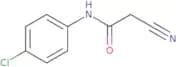
CAS:<p>2-[(4-Chloro-2-nitrophenyl)azo]-N-(2-methoxyphenyl)-3-oxobutanamide is a chelating agent that has been used as a control agent in the manufacture of dyes, plastics, and rubber. It is also used as an additive in paints, textiles, and paper. 2-[(4-Chloro-2-nitrophenyl)azo]-N-(2-methoxyphenyl)-3-oxobutanamide is nonvolatile, nonflammable, and does not produce toxic byproducts when heated. This compound has low molecular weight with a molecular formula of C12H13NO5Cl. The structure of this compound includes two hydroxy groups (OH), one aliphatic hydrocarbon group (CH3), one carboxylic acid group (COOH), and three chlorine atoms (Cl). This product is soluble in water</p>Formula:C17H15ClN4O5Color and Shape:Yellow Clear LiquidMolecular weight:390.78 g/molN-(4-Chlorophenyl)-2-cyanoacetamide
CAS:<p>N-(4-Chlorophenyl)-2-cyanoacetamide is a pyridine compound that can be synthesized from chloroacetonitrile and acetamide. It has been shown to react with an active methylene group in benzene or pyridine to produce a heterocycle. This reaction is reversible and can be used as a preparative method for the synthesis of heterocycles. The 1,3-dipolar cycloaddition of N-(4-chlorophenyl)-2-cyanoacetamide with nitro groups in nitrobenzene produces the corresponding 2-nitropyridines, which are important intermediates in the synthesis of other heterocycles. N-(4-Chlorophenyl)-2-cyanoacetamide has been used as an efficient method for the preparation of nitrogen nucleophiles that are useful for catalysis.</p>Formula:C9H7ClN2OPurity:Min. 95%Molecular weight:194.62 g/molpTH-Related Protein (67-86) amide (human, bovine, dog, mouse, ovine, rat) trifluoroacetate salt
CAS:<p>Please enquire for more information about pTH-Related Protein (67-86) amide (human, bovine, dog, mouse, ovine, rat) trifluoroacetate salt including the price, delivery time and more detailed product information at the technical inquiry form on this page</p>Formula:C108H173N27O35Purity:Min. 95%Molecular weight:2,409.69 g/mol3-Nitro-4-[[(tetrahydropyran-4-yl)methyl]amino]benzenesulfonamide
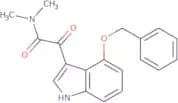
CAS:<p>Please enquire for more information about 3-Nitro-4-[[(tetrahydropyran-4-yl)methyl]amino]benzenesulfonamide including the price, delivery time and more detailed product information at the technical inquiry form on this page</p>Formula:C12H17N3O5SPurity:Min. 95%Molecular weight:315.35 g/mol4-(Benzyloxy)-N,N-dimethyl-indole-3-glyoxylamide
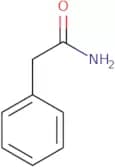
CAS:<p>Please enquire for more information about 4-(Benzyloxy)-N,N-dimethyl-indole-3-glyoxylamide including the price, delivery time and more detailed product information at the technical inquiry form on this page</p>Formula:C19H18N2O3Purity:Min. 95%Molecular weight:322.36 g/mol2-Phenylacetamide
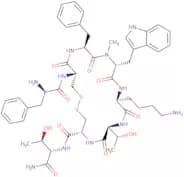
CAS:Controlled Product<p>2-Phenylacetamide is a nitro, acetate extract that has been shown to have antimicrobial activity. It can inhibit HIV infection and has been investigated as an antiviral drug. 2-Phenylacetamide binds to the 2-adrenergic receptor, which is found in high concentrations in the brain and inhibits the release of neurotransmitters. It also binds to κ-opioid receptors and sodium carbonate, which are found on cells throughout the body. The biological properties of this substance have not been fully elucidated but some studies suggest that it may be able to inhibit microbial metabolism or stimulate monoamine neurotransmitters.</p>Formula:C8H9NOPurity:Min. 95%Color and Shape:White PowderMolecular weight:135.16 g/mol(D-Phe5,Cys6·11,N-Me-D-Trp8)-Somatostatin-14 (5-12) amide
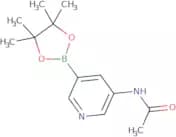
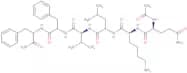
CAS:<p>Please enquire for more information about (D-Phe5,Cys6·11,N-Me-D-Trp8)-Somatostatin-14 (5-12) amide including the price, delivery time and more detailed product information at the technical inquiry form on this page</p>Formula:C50H67N11O10S2Purity:Min. 95%Molecular weight:1,046.27 g/molN-(5-(4,4,5,5-Tetramethyl-1,3,2-dioxaborolan-2-yl)pyridin-3-yl)acetamide
CAS:<p>Please enquire for more information about N-(5-(4,4,5,5-Tetramethyl-1,3,2-dioxaborolan-2-yl)pyridin-3-yl)acetamide including the price, delivery time and more detailed product information at the technical inquiry form on this page</p>Formula:C13H19BN2O3Purity:Min. 95%Molecular weight:262.11 g/molChorionic Gonadotropin-β (109-119) amide (human)
CAS:<p>Please enquire for more information about Chorionic Gonadotropin-beta (109-119) amide (human) including the price, delivery time and more detailed product information at the technical inquiry form on this page</p>Formula:C50H76N16O21SPurity:Min. 95%Molecular weight:1,269.3 g/mol(D-Ala2)-Leu-Enkephalin amide
CAS:<p>Hyaluronic acid is a natural component of connective tissue and synovial fluid in animals. It is a linear, unbranched polysaccharide consisting of alternating D-glucuronic acid and N-acetyl-D-glucosamine. Hyaluronic acid has been shown to be useful in the treatment of long-term diseases such as heart disease or skin conditions like eczema. It is important for the efficient production of vaccines, which are used to prevent infectious diseases such as streptococcal infections. Hyaluronic acid can also be used as a microcontroller for minimally invasive procedures. This molecule can be used as an additive in the production of metallocene catalysts to increase the efficiency of these reactions, while reducing impurities during the process. The use of hyaluronic acid has been studied extensively, with many techniques employed to study its properties and functions. Genetic factors have also been found to play a role in</p>Formula:C29H40N6O6Purity:Min. 95%Molecular weight:568.66 g/mol(E)-2-(Aminomethyl)-N,N-diethyl-1-phenylcyclopropanecarboxamideHydrochloride
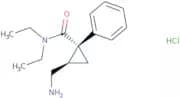
CAS:Controlled Product<p>Levomilnacipran is a serotonin-norepinephrine reuptake inhibitor (SNRI) that is used for the treatment of major depressive disorder and fibromyalgia. It has been shown to have antidepressant effects in patients with major depressive disorder and fibromyalgia. Levomilnacipran inhibits the reuptake of serotonin and norepinephrine by blocking the transporter proteins in these neurotransmitter pathways, increasing their availability to interact with receptors in the brain. Levomilnacipran also has been found to inhibit aminotransferase activity, which may be responsible for its hepatotoxicity.</p>Formula:C15H23ClN2OPurity:Min. 95%Molecular weight:282.81 g/molN-Methyl-4-oxo-4,5-dihydropyridine-3-carboxamide
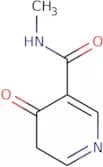
CAS:<p>N-Methyl-4-oxo-4,5-dihydropyridine-3-carboxamide is a fine chemical that can be used as a reagent or intermediate. It is a versatile building block that can be used in the production of useful scaffolds or useful intermediates. This compound has been shown to react with many different types of chemicals, including alcohols and amines. N-Methyl-4-oxo-4,5-dihydropyridine-3-carboxamide can also be used as a reaction component in the synthesis of diverse compounds.</p>Formula:C7H8N2O2Purity:Min. 95%Color and Shape:White to grey solid.Molecular weight:152.15 g/molAcetyl-L-leucine amide
CAS:<p>Acetyl-L-leucine amide is a drug used to treat symptoms of depression in geriatric patients. It is an amide form of acetyl-L-leucine, which is an amino acid that plays a role in the synthesis of proteins and lipids. Acetyl-L-leucine amide has been shown to have antidepressant effects in geriatric patients with mild to moderate depression. This drug can be used as part of a combination therapy for infectious diseases, such as tuberculosis, when there is no infection or when resistance to other antibiotics has occurred. Acetyl-L-leucine amide has also been shown to be effective against cervical cancer and breast cancer cells. The synthesis of this drug involves two steps: first, reacting L-leucine with acetyl chloride; second, reacting the product with aqueous ammonia solution.</p>Formula:C8H16N2O2Purity:Min. 95%Molecular weight:172.22 g/molDynorphin A (1-11) amide trifluoroacetate salt
CAS:<p>Dynorphin A (1-11) amide trifluoroacetate salt is a modified form of the opioid peptide dynorphin, which is a natural ligand for kappa-opioid receptors. It has affinity for the surface receptors and can be used to study the modifications that occur in cell function. Dynorphin A (1-11) amide trifluoroacetate salt has been shown to decrease cell function when it interacts with these surface receptors, which are found in brain homogenates and other tissues. Dynorphin A (1-11) amide trifluoroacetate salt also has an effect on brain cells, which may be due to its ability to alter conformational changes in proteins by binding to them. This can lead to alterations in the structure of certain enzymes or receptor proteins.</p>Formula:C63H104N22O12Purity:Min. 95%Molecular weight:1,361.64 g/molPAR-4 (1-6) amide (human) trifluoroacetate salt
CAS:<p>Please enquire for more information about PAR-4 (1-6) amide (human) trifluoroacetate salt including the price, delivery time and more detailed product information at the technical inquiry form on this page</p>Formula:C28H42N8O8Purity:Min. 95%Molecular weight:618.68 g/molLeptin (116-130) amide (mouse) trifluoroacetate salt
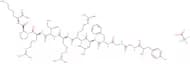
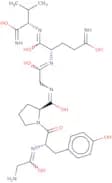
CAS:<p>Amide; Trifluoroacetate salt</p>Formula:C64H109N19O24SPurity:Min. 95%Molecular weight:1,560.73 g/mol(Tyr34)-pTH (7-34) amide (bovine) trifluoroacetate salt
CAS:<p>Please enquire for more information about (Tyr34)-pTH (7-34) amide (bovine) trifluoroacetate salt including the price, delivery time and more detailed product information at the technical inquiry form on this page</p>Formula:C156H244N48O40S2Purity:Min. 95%Molecular weight:3,496.04 g/molN-(2-Hydroxypropyl)benzenesulfonamide
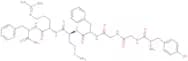
CAS:<p>N-(2-Hydroxypropyl)benzenesulfonamide is a sulfonamide that is used as a plasticizer in thermoplastics. It is the sodium salt of 2-hydroxypropyl benzenesulfonic acid and has been shown to be effective as an antimicrobial agent in plastics. N-(2-Hydroxypropyl)benzenesulfonamide may be used for the prevention of bacterial growth and may inhibit the growth of fungi and algae, although more studies are needed to determine its effectiveness.</p>Formula:C9H13NO3SPurity:Min. 95%Molecular weight:215.27 g/molMet-Enkephalin-Arg-Phe amide
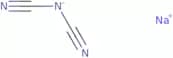
CAS:<p>Met-Enkephalin-Arg-Phe amide H-Tyr-Gly-Gly-Phe-Met-Arg-Phe is a subunit of the endogenous opioid peptide Met-enkephalin. It is a proteolytic cleavage product of proenkephalin A and is also known as Tyr2, Phe2, or Arg6. Met-enkephalin has been shown to participate in signal transduction pathways that regulate blood pressure and exocrine secretion. Metenkephalin is an amide containing two cysteine residues with a hydrophobic side chain, which can bind metal ions such as calcium ions. Metenkephalin binds to the membrane of cells, altering membrane potential and naloxone binding sites.<br>Met enkephalin has been shown to be involved in serotonin release from platelets and inhibition of serotonin uptake by platelets.</p>Formula:C42H57N11O8SPurity:Min. 95%Molecular weight:876.04 g/molSodium dicyanamide
CAS:<p>Sodium dicyanamide is a diphenyl ether that has been shown to be effective in the treatment of polycystic ovarian syndrome. It binds to picolinic acid, which is a cofactor for the enzyme phenylalanine hydroxylase, and inhibits the production of tyrosine. This leads to an increase in the levels of luteinizing hormone and follicle-stimulating hormone, which helps ovulation. Sodium dicyanamide also interacts with hydrogen bond interactions and chelate ligands. The reaction mechanism of this compound is not well understood, but it is known that it can react with oxygen at high temperatures.</p>Formula:C2N3NaPurity:Min. 95%Color and Shape:White PowderMolecular weight:89.03 g/molN-Acetyl-L-norleucyl-L-glutaminyl-L-histidyl-D-phenylalanyl-L-arginyl-D-tryptophylglycinamide
CAS:<p>Please enquire for more information about N-Acetyl-L-norleucyl-L-glutaminyl-L-histidyl-D-phenylalanyl-L-arginyl-D-tryptophylglycinamide including the price, delivery time and more detailed product information at the technical inquiry form on this page</p>Formula:C47H65N15O9Purity:Min. 95%Molecular weight:984.11 g/molLymnaDFamide-1
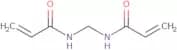
CAS:<p>LymnaDFamide-1 is a neuropeptide that belongs to the family of c-terminal peptides. It is a dipeptide with a sequence of L-Pro-Tyr-Asp-Arg-Ile-Ser-Asn-Ser-Ala-Phe. This peptide was found in the nervous system of invertebrates, where it is believed to play an important role in the regulation of neurotransmitter release. In mammals, LymnaDFamide has been detected in the brain and in the gallbladder. It may be involved in regulating feeding behavior and gastric motility.</p>Formula:C68H96N18O22Purity:Min. 95%Molecular weight:1,517.6 g/molN,N'-Methylenediacrylamide
CAS:<p>N,N'-Methylenediacrylamide is a water-soluble compound that has been used as a fluorescent probe for hydrogen bonding. It has been shown to have different phase transition temperatures in different solvents and can be used as an experimental model for studying the effects of temperature on the behavior of water molecules. N,N'-Methylenediacrylamide reacts with hydrochloric acid to form the fatty acid N,N'-methylenebis(3-chloroacrylic acid) under acidic conditions. This reaction is reversible, and the reverse process can be catalyzed by sodium citrate or human serum. When exposed to radiation or surface methodology, it emits light at a wavelength of 350 nm.</p>Formula:C7H10N2O2Purity:Min. 95%Color and Shape:White Clear LiquidMolecular weight:154.17 g/molN-Me-Abz-Amyloid β/A4 Protein Precursor770 (708-715)-Lys(Dnp)-D-Arg-D-Arg-D-Arg amide trifluoroacetate salt
CAS:<p>Please enquire for more information about N-Me-Abz-Amyloid beta/A4 Protein Precursor770 (708-715)-Lys(Dnp)-D-Arg-D-Arg-D-Arg amide trifluoroacetate salt including the price, delivery time and more detailed product information at the technical inquiry form on this page</p>Formula:C70H116N26O18Purity:Min. 95%Molecular weight:1,609.83 g/mol(Ser8)-GLP-1 (7-36) amide (human, bovine, guinea pig, mouse, rat) trifluoroacetate salt
CAS:<p>Please enquire for more information about (Ser8)-GLP-1 (7-36) amide (human, bovine, guinea pig, mouse, rat) trifluoroacetate salt including the price, delivery time and more detailed product information at the technical inquiry form on this page</p>Formula:C149H226N40O46Purity:Min. 95%Molecular weight:3,313.63 g/mol(Nle 8·21,Tyr34)-pTH (1-34) amide (rat)
CAS:<p>Please enquire for more information about (Nle 8·21,Tyr34)-pTH (1-34) amide (rat) including the price, delivery time and more detailed product information at the technical inquiry form on this page</p>Formula:C182H296N56O48Purity:Min. 95%Molecular weight:4,036.65 g/molAcetyl-Amyloid b-Protein (15-20) amide trifluoroacetate salt
CAS:<p>Please enquire for more information about Acetyl-Amyloid b-Protein (15-20) amide trifluoroacetate salt including the price, delivery time and more detailed product information at the technical inquiry form on this page</p>Formula:C42H63N9O8Purity:Min. 95%Molecular weight:822.01 g/molGalanin (1-13)-Neuropeptide Y (25-36) amide
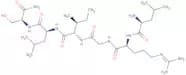
CAS:<p>Please enquire for more information about Galanin (1-13)-Neuropeptide Y (25-36) amide including the price, delivery time and more detailed product information at the technical inquiry form on this page</p>Formula:C136H209N41O34Purity:Min. 95%Molecular weight:2,962.37 g/molPAR-2 (6-1) amide (mouse, rat) trifluoroacetate salt
CAS:<p>PAR-2 (6-1) amide is a proteolytic enzyme that is activated by inflammatory stimuli. It has been shown to be a major contributor to the pathogenesis of inflammatory bowel disease, and is found in neurons, the bowel, and pancreatic acinar cells. PAR-2 (6-1) amide activates proteases such as trypsin and chymotrypsin and also functions as an antimicrobial peptide. Activation of PAR-2 (6-1) amide leads to the cleavage of proteins at specific sites on their amino acid chains. This cleavage can lead to changes in protein conformation or function. PAR-2 (6-1) amide has been shown to increase endothelial cell proliferation and inhibit bacterial growth, but does not have any effect on cultured normal human skin fibroblasts.</p>Formula:C29H56N10O7Purity:Min. 95%Molecular weight:656.82 g/molOsteostatin amide trifluoroacetate
CAS:<p>Please enquire for more information about Osteostatin amide trifluoroacetate including the price, delivery time and more detailed product information at the technical inquiry form on this page</p>Formula:C142H229N43O57•(C2HF3O2)xPurity:Min. 95%Molecular weight:3,450.59 g/molNeuropeptide Y (1-24) amide (human, rat) trifluoroacetate salt
CAS:<p>Please enquire for more information about Neuropeptide Y (1-24) amide (human, rat) trifluoroacetate salt including the price, delivery time and more detailed product information at the technical inquiry form on this page</p>Formula:C116H170N30O40SPurity:Min. 95%Molecular weight:2,656.84 g/mol(Tyr36)-pTH-Related Protein (1-36) amide (chicken)
CAS:<p>Please enquire for more information about (Tyr36)-pTH-Related Protein (1-36) amide (chicken) including the price, delivery time and more detailed product information at the technical inquiry form on this page</p>Formula:C184H301N57O55Purity:Min. 95%Molecular weight:4,191.71 g/molN-Hydroxyethylacrylamide
CAS:<p>N-Hydroxyethylacrylamide is a compound that has been shown to have anti-infective properties against microbial infection. It was found to inhibit the growth of bacteria in human serum and fetal bovine serum, and it has minimal toxicity in mice. N-Hydroxyethylacrylamide also prevents the growth of fungi and yeasts by binding to basic proteins, such as lysine, arginine, and histidine. This drug also inhibits the growth of viruses by inhibiting their ability to replicate their own nucleic acids. In addition, N-Hydroxyethylacrylamide may be used as an inhibitor in titration calorimetry to measure the concentration of other compounds.</p>Formula:C5H9NO2Purity:Min. 95%Color and Shape:Colourless To Pale Yellow Clear LiquidMolecular weight:115.13 g/mol





![2-[(4-Chloro-2-nitrophenyl)azo]-N-(2-methoxyphenyl)-3-oxobutanamide](/_next/image/?url=https%3A%2Fstatic.cymitquimica.com%2Fproducts%2F3D%2Fthumb-webp%2FFC149929.webp&w=3840&q=75)
![3-Nitro-4-[[(tetrahydropyran-4-yl)methyl]amino]benzenesulfonamide](/_next/image/?url=https%3A%2Fstatic.cymitquimica.com%2Fproducts%2F3D%2Fthumb-webp%2FFN145631.webp&w=3840&q=75)