Amides
Amides are a wide range of chemical compounds that contain at least one heterocyclic ring, which has atoms of at least two different elements in the ring structure, and at least one amide group (-CONH2). These compounds are crucial in the synthesis of pharmaceuticals, polymers, and agrochemicals. Amides exhibit unique properties and reactivity, making them valuable intermediates in organic synthesis. At CymitQuimica, we offer a comprehensive selection of high-quality amides to support your research and industrial needs.
Found 16385 products of "Amides"
Sort by
Purity (%)
0
100
|
0
|
50
|
90
|
95
|
100
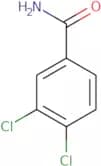
3,4-Dichlorobenzamide
CAS:<p>3,4-Dichlorobenzamide is a synthetic opioid analgesic that binds to the μ-opioid receptor. It has a side-effect profile that is similar to other opioids, with an addiction risk and potential for abuse. 3,4-Dichlorobenzamide has been used in the synthesis of new drugs, such as phenazepam (a benzodiazepine) and etizolam (a thienodiazepine). This drug is chiral and can be synthesized in two stereoisomeric forms: 3-(+)-chloro-N-(2-chlorophenyl)benzamide and 3-(−)-chloro-N-(2-chlorophenyl)benzamide. The former form is marketed under the trade name Analgin, while the latter form is marketed under the trade name Etilex. The (+) form of this drug has a higher affinity for μ receptors than the (−) form.</p>Formula:C7H5Cl2NOPurity:Min. 95%Molecular weight:190.03 g/molFlutamide
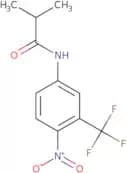
CAS:<p>Non-steroidal androgen receptor antagonist</p>Formula:C11H11F3N2O3Purity:Min. 95%Color and Shape:Off-White PowderMolecular weight:276.21 g/mol2-Amino-3-benzoylbenzeneacetamide
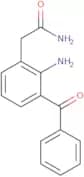
CAS:<p>2-Amino-3-benzoylbenzeneacetamide is an ophthalmic drug that has significant cytotoxicity. It is used to treat inflammation of the retina and macula, as well as other diseases of the eye such as uveitis. 2-Amino-3-benzoylbenzeneacetamide is a nonsteroidal anti-inflammatory drug (NSAID) that inhibits prostaglandin synthesis by blocking cyclooxygenase. This agent has been shown to be effective in reducing pain and inflammation in animal models, but there are no studies on its side effects or analytical methods for detection. There are also no studies on the effectiveness of this drug for treating uveitis.</p>Formula:C15H14N2O2Purity:Min. 95%Color and Shape:PowderMolecular weight:254.28 g/mol4-Aminobenzamide
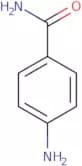
CAS:<p>4-Aminobenzamide is a compound that is used as an anti-tuberculosis drug. It inhibits the activity of aminotransferase, which is an enzyme responsible for converting amino acids into other compounds. 4-Aminobenzamide has been shown to have antimicrobial properties against bacteria, fungi and protozoa. It also has a protective effect on human liver cells, but can cause damage to rat liver cells in vitro. 4-Aminobenzamide also shows some activity against microbial metabolism and can be hydrolyzed by hydrochloric acid to form phenylacetic acid and ammonia. This compound has been shown to inhibit the nervous system disease progression of Huntington's disease in mice.</p>Purity:Min. 95%Color and Shape:PowderMolecular weight:136.15 g/molEliglustat
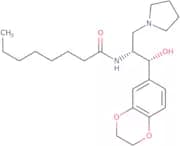
CAS:<p>Eliglustat is an oral medication used as a substrate reduction therapy for Gaucher disease type 1, which is an inherited lysosomal storage disorder. This product is a small-molecule inhibitor derived via chemical synthesis. Its primary mode of action involves the selective inhibition of glucosylceramide synthase, an enzyme responsible for the first committed step in glycosphingolipid biosynthesis. By reducing the production of glucosylceramide, eliglustat decreases the substrate accumulation that contributes to the pathophysiology of Gaucher disease.</p>Formula:C23H36N2O4Purity:Min. 97 Area-%Color and Shape:White PowderMolecular weight:404.54 g/mol4-[2-[(3-Ethyl-4-methyl-2-oxo-3-pyrrolin-1-yl)carboxamido]ethyl]benzenesulfonamide
CAS:<p>Metformin is an antidiabetic drug that is used to treat type 2 diabetes. It works by increasing insulin sensitivity and decreasing glucose production in the liver. Metformin does not cause low blood sugar in people with diabetes, but it can lower blood sugar in those without the condition. Metformin is available as metformin hydrochloride and has a molecular weight of 314.5 g/mol. Metformin is excreted primarily through the kidneys, with less than 10% of a dose being excreted unchanged in the urine. Excipients include acetonitrile, which is used as an organic solvent for liquid drug products; impurities may be present due to incomplete synthesis or purification processes; and animal studies are performed to assess safety and efficacy of drugs that may have adverse effects on humans.<br>Metformin has been shown to decrease blood sugar levels in animals through its antidiabetic potential, but there are no studies showing its effect on humans with type</p>Formula:C16H21N3O4SPurity:Min. 95%Color and Shape:White PowderMolecular weight:351.42 g/molAZD 1152
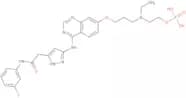
CAS:<p>AZD 1152 is an Aurora kinase inhibitor, which is a type of small-molecule therapeutic agent. It is derived from the pharmaceutical research conducted by AstraZeneca. Its primary mode of action involves the selective inhibition of Aurora B kinase, an enzyme crucial for the regulation of mitosis. By interfering with this enzyme, AZD 1152 disrupts the normal progression of cell division, leading to the inhibition of proliferation and induction of apoptosis in rapidly dividing cells.</p>Formula:C26H31FN7O6PPurity:Min. 97 Area-%Color and Shape:Slightly Yellow PowderMolecular weight:587.54 g/molDorzolamide hydrochloride
CAS:<p>Carbonic anhydrase inhibitor; anti-glaucoma agent</p>Formula:C10H16N2O4S3•HClPurity:Min. 95%Color and Shape:PowderMolecular weight:360.9 g/molN-α-Benzoyl-L-arginine amide hydrochloride
CAS:<p>N-alpha-Benzoyl-L-arginine amide hydrochloride (BA) is a synthetic, noncompetitive inhibitor of phosphodiesterase. It has been shown to inhibit protease activity in vitro and rhizosphere enzyme activities in vivo. BA also inhibits the formation of hippuric acid from benzoic acid, which is a reaction catalyzed by the enzyme phosphatase. The kinetics of this inhibition have been studied using a number of different substrates and enzymes. BA binds to the catalytic site on the enzyme, sterically hindering binding of the substrate and preventing hydrolysis.</p>Formula:C13H19N5O2·HClPurity:Min. 95%Color and Shape:PowderMolecular weight:313.78 g/mol2-[Ethyl-[2-(3-hydroxy-2,6-dimethyl-anilino)-2-oxo-ethyl]amino]-N-(3-hydroxy-2,6-dimethyl-phenyl)acetamide
CAS:<p>2-[Ethyl-[2-(3-hydroxy-2,6-dimethyl-anilino)-2-oxo-ethyl]amino]-N-(3-hydroxy-2,6-dimethylphenyl)acetamide is a reaction component that is used in the synthesis of complex compounds. It is a versatile building block and useful intermediate for the synthesis of fine chemicals. This chemical has been shown to be an effective reagent for the preparation of high quality research chemicals. CAS No. 2200280-96-0</p>Formula:C22H29N3O4Purity:Min. 95%Color and Shape:White to off-white solid.Molecular weight:399.48 g/mol2-(4,5-dichloroimidazolyl)-N-(2-indol-3-ylethyl)ethanamide
CAS:<p>Please enquire for more information about 2-(4,5-dichloroimidazolyl)-N-(2-indol-3-ylethyl)ethanamide including the price, delivery time and more detailed product information at the technical inquiry form on this page</p>Purity:Min. 95%N,N'-Dimethyl-3,3'-dithiodipropionamide
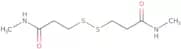
CAS:<p>N,N'-Dimethyl-3,3'-dithiodipropionamide (DTDPA) is a strong oxidizing agent that is used as a catalyst in organic synthesis. It can be used to convert xylene and benzene into products that are less toxic and more easily removed from the environment. DTDPA can also be used to remove 2-methyl-4-isothiazolin-3-one, chloroform, and other pollutants from water. DTDPA has been shown to react with hydrogen peroxide or hydrochloric acid to produce oxygen gas and chlorine, which is an effective disinfectant against bacteria such as Staphylococcus aureus or Pseudomonas aeruginosa. This chemical also reacts with toluene or chloroform to produce peroxides which have been shown to have an anti-inflammatory effect on cells.</p>Formula:C8H16N2O2S2Purity:(Q-1H Nmr) Min 95%Color and Shape:White/Off-White SolidMolecular weight:236.36 g/molN-(2-Fluorophenyl)-N-[4-(4-Methyl-1,3-Thiazol-2-Yl)-1-(2-Thiophen-3-Ylethyl)Piperidin-4-Yl]Propanamide
CAS:Controlled Product<p>N-(2-Fluorophenyl)-N-[4-(4-methyl-1,3-thiazol-2-yl)-1-(2-thiophen-3-ylethyl)piperidin-4-yl]propanamide is a drug that is used for the treatment of cancer. This drug is hydrophobic and has a molecular weight of 455. It has been shown to be effective in treating cancer cells by binding to the cell membrane and inhibiting the proliferation of these cells. N-(2-Fluorophenyl)-N-[4-(4-methyl-1,3-thiazol-2-yl)-1-(2-thiophen-3-ylethyl)piperidin]-4-- yl]propanamide also inhibits tumor growth by reducing extracellular matrix production and inducing apoptosis in cancer cells. This drug has a fluorescent property and can be detected with an optical microscope at a</p>Formula:C24H28FN3OS2Purity:Min. 95%Molecular weight:457.63 g/molGlycine amide acetate
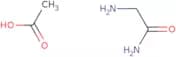
CAS:Controlled Product<p>Glycine amide acetate is a product that contains an imine group. It has been shown to have staining properties when applied to human keratin and is used in the cosmetic industry as a depigmenting agent. Glycine amide acetate has been shown to be effective in the treatment of depression, although it is not yet approved for this use. The molecule also contains an iridoid compound, which may be responsible for its effects on mood.</p>Formula:C2H6N2O•C2H4O2Purity:Min. 95%Color and Shape:PowderMolecular weight:134.13 g/mol4-Benzylpiperazine-1-carboximidamide sulfate
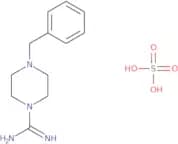
CAS:<p>4-Benzylpiperazine-1-carboximidamide sulfate is a versatile building block that can be used in the synthesis of complex compounds. It is a useful intermediate that can be used in the production of research chemicals and speciality chemicals. 4-Benzylpiperazine-1-carboximidamide sulfate is also an excellent reagent for reactions involving complex substrates, such as high quality and useful scaffolds.</p>Formula:C12H20N4O4SPurity:Min. 95%Color and Shape:PowderMolecular weight:316.4 g/mol1,1,2,2,3,3,4,4,5,5,6,6,7,7,8,8,8-Heptadecafluoro-N-methyloctane-1-sulfonamide
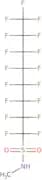
CAS:Controlled Product<p>1,1,2,2,3,3,4,4,5,5,6,6,7,7,8,8-heptadecafluoro-N-methyloctane-1-sulfonamide is a perfluorinated sulfonate that is used as a surfactant in wastewater treatment and to package food. This compound is not water soluble and requires an organic solvent to dissolve it. It has been shown that the use of 1HFAFMS can reduce the amount of phosphates in packaging materials by up to 50%. 1HFAFMS also has been found to be safe for humans and does not accumulate in the environment. It does not bioaccumulate and is rapidly excreted through urine.</p>Formula:C9H4F17NO2SPurity:Min. 95%Color and Shape:PowderMolecular weight:513.17 g/mol2-Hydroxy-N-(1-phenylpropan-2-yl)acetamide
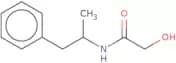
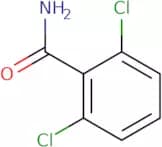
CAS:Controlled Product<p>2-Hydroxy-N-(1-phenylpropan-2-yl)acetamide is a versatile building block that can be used as a reagent or research chemical. This compound is an intermediate in the synthesis of many other organic compounds and has been shown to be useful for the production of pharmaceuticals, agrochemicals, and other industrial chemicals. The CAS number for this compound is 99985-83-8.</p>Formula:C11H15NO2Purity:Min. 95%Color and Shape:PowderMolecular weight:193.24 g/mol2,6-Dichlorobenzamide
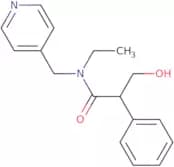
CAS:<p>2,6-Dichlorobenzamide is a chemical compound that belongs to the group of organochlorine compounds. It is soluble in water and has been shown to be an effective treatment for metal contamination in groundwater. 2,6-Dichlorobenzamide reacts with metal ions at the surface of cells by forming an insoluble metal chloride complex that accumulates inside the cell and leads to cell death. 2,6-Dichlorobenzamide has been shown to be toxic to bacteria, particularly gram-positive bacteria such as Staphylococcus aureus and Bacillus subtilis. This compound also binds to bacterial membrane lipids with high affinity constants. This activity may be due to its ability to form lipid hydroperoxides and free radicals.</p>Formula:C7H5Cl2NOPurity:Min. 95%Color and Shape:PowderMolecular weight:190.03 g/molTropicamide
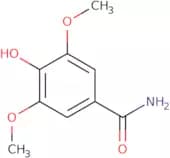
CAS:<p>Tropicamide is a cholinergic agent that is used as a short-term mydriatic, or eye dilator, for diagnostic purposes. It belongs to the group of nonsteroidal anti-inflammatory drugs and has been shown to have a stable complex with benzalkonium chloride. Tropicamide has been shown to affect the signal pathways in cells, leading to an increase in IL-2 receptor expression. This drug also affects locomotor activity and has been studied as a potential treatment for murine sarcoma virus. Tropicamide is administered intravenously and can cause side effects such as blurred vision, nausea, vomiting and convulsions. Tropicamide may be given together with phenylephrine in order to reduce these side effects.</p>Formula:C17H20N2O2Purity:Min. 95%Color and Shape:PowderMolecular weight:284.35 g/mol4-Hydroxy-3,5-dimethoxybenzamide
CAS:<p>4-Hydroxy-3,5-dimethoxybenzamide is a phenolic compound that is soluble in organic solvents. It has been shown to bind to fatty acid sequences and neutral polypeptides in the presence of an acidic or basic environment. 4-Hydroxy-3,5-dimethoxybenzamide has also been shown to have catalytic activity, which may be due to its ability to form a polymeric matrix with other compounds.</p>Formula:C9H11NO4Purity:Min. 95%Color and Shape:PowderMolecular weight:197.19 g/mol2-Cyanoacetamide
CAS:<p>2-Cyanoacetamide is an organic compound that is used in pharmaceutical preparations. It reacts with malonic acid to form a dioxime, which is a precursor of various drugs. The optimum concentration for the reaction to occur is at 10% (w/v). The reaction mechanism has not been fully elucidated and it involves the transfer of nitrogen from an amide group to a carbonyl group. 2-Cyanoacetamide has shown anti-angiogenic effects in mice by inhibiting the expression of Mcl-1 protein, which is involved in the regulation of apoptosis and inflammation. This drug also has biological functions as a precursor for dopamine, which helps regulate motor and cognitive functions.</p>Formula:C3H4N2OPurity:Min. 98%Color and Shape:White Off-White PowderMolecular weight:84.08 g/molN-[(2R)-1,2,3,4-Tetrahydro-5-methoxy-2-naphthalenyl]propanamide
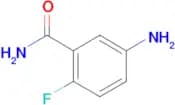
CAS:Purity:98%Molecular weight:233.31100465-amino-2-fluorobenzamide
CAS:Formula:C7H7FN2OPurity:98%Color and Shape:Solid, Beige powderMolecular weight:154.144TERT-BUTYL (1-ACETYLAZETIDIN-3-YL)METHYLCARBAMATE
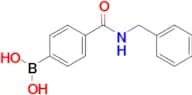
CAS:Formula:C11H20N2O3Purity:95%Molecular weight:228.292(4-(Benzylcarbamoyl)phenyl)boronic acid
CAS:Formula:C14H14BNO3Purity:98%Color and Shape:SolidMolecular weight:255.08(4-Fluoro-3-(methylcarbamoyl)phenyl)boronic acid
CAS:Formula:C8H9BFNO3Purity:95%Molecular weight:196.97(3S 4S)-3-[ (R)-1-(T-Butyldimethylsilyloxy)ethyl]-4[(R)-1-carboxyethyl]-2-azetidinone
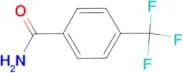
CAS:<p>S03379 - (3S 4S)-3-[ (R)-1-(T-Butyldimethylsilyloxy)ethyl]-4[(R)-1-carboxyethyl]-2-azetidinone</p>Formula:C14H27NO4SiPurity:97%Color and Shape:SolidMolecular weight:301.4584-(Trifluoromethyl)benzamide
CAS:Formula:C8H6F3NOPurity:95%Color and Shape:SolidMolecular weight:189.1378-BROMO-2H-BENZO[B][1,4]OXAZIN-3(4H)-ONE
CAS:Formula:C8H6BrNO2Purity:97%Color and Shape:SolidMolecular weight:228.045Sodium (R)-3-(2,4-dihydroxy-3,3-dimethylbutanamido)propanoate
CAS:Formula:C9H16NNaO5Purity:97%Color and Shape:Solid, White powderMolecular weight:241.2191H-Pyrrolo[3,4-c]pyridin-3(2H)-one
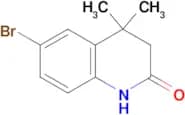
CAS:Formula:C7H6N2OPurity:97%Color and Shape:SolidMolecular weight:134.1386-Bromo-3,4-dihydro-4,4-dimethylquinolin-2(1H)-one
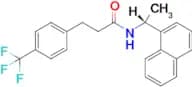
CAS:Formula:C11H12BrNOPurity:97%Color and Shape:SolidMolecular weight:254.127(R)-N-(1-(naphthalen-1-yl)ethyl)-3-(4-(trifluoromethyl)phenyl)propanamide
Purity:98%Molecular weight:371.40301512-Chloro-N,N-dimethylacetamide
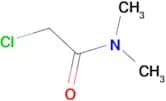
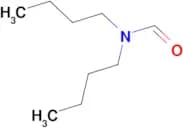
CAS:Formula:C4H8ClNOPurity:97%Color and Shape:ClearMolecular weight:121.56N,N-Dibutylformamide
CAS:Formula:C9H19NOPurity:95%Color and Shape:Liquid, ClearMolecular weight:157.257

![4-[2-[(3-Ethyl-4-methyl-2-oxo-3-pyrrolin-1-yl)carboxamido]ethyl]benzenesulfonamide](/_next/image/?url=https%3A%2Fstatic.cymitquimica.com%2Fproducts%2F3D%2Fthumb-webp%2FFE23124.webp&w=3840&q=75)


![2-[Ethyl-[2-(3-hydroxy-2,6-dimethyl-anilino)-2-oxo-ethyl]amino]-N-(3-hydroxy-2,6-dimethyl-phenyl)a…](/_next/image/?url=https%3A%2Fstatic.cymitquimica.com%2Fproducts%2F3D%2Fthumb-webp%2FFE145458.webp&w=3840&q=75)

![N-(2-Fluorophenyl)-N-[4-(4-Methyl-1,3-Thiazol-2-Yl)-1-(2-Thiophen-3-Ylethyl)Piperidin-4-Yl]Propana…](/_next/image/?url=https%3A%2Fstatic.cymitquimica.com%2Fproducts%2F3D%2Fthumb-webp%2FFF102591.webp&w=3840&q=75)


![N-[(2R)-1,2,3,4-Tetrahydro-5-methoxy-2-naphthalenyl]propanamide](/_next/image/?url=https%3A%2Fstatic.cymitquimica.com%2Fproducts%2F10%2Fthumb-webp%2FF601547.webp&w=3840&q=75)


![(3S 4S)-3-[ (R)-1-(T-Butyldimethylsilyloxy)ethyl]-4[(R)-1-carboxyethyl]-2-azetidinone](/_next/image/?url=https%3A%2Fstatic.cymitquimica.com%2Fproducts%2F10%2Fthumb-webp%2FS03379.webp&w=3840&q=75)


![8-BROMO-2H-BENZO[B][1,4]OXAZIN-3(4H)-ONE](/_next/image/?url=https%3A%2Fstatic.cymitquimica.com%2Fproducts%2F10%2Fthumb-webp%2FF305103.webp&w=3840&q=75)

![1H-Pyrrolo[3,4-c]pyridin-3(2H)-one](/_next/image/?url=https%3A%2Fstatic.cymitquimica.com%2Fproducts%2F10%2Fthumb-webp%2FF440517.webp&w=3840&q=75)
![[(4-Methylphenyl)sulfonyl]methylformamide](/_next/image/?url=https%3A%2Fstatic.cymitquimica.com%2Fproducts%2F10%2Fthumb-webp%2FF617832.webp&w=3840&q=75)
![n-[bis(4-methoxyphenyl)methyl]-2-chloroacetamide](/_next/image/?url=https%3A%2Fstatic.cymitquimica.com%2Fproducts%2F10%2Fthumb-webp%2FF651802.webp&w=3840&q=75)