Amides
Amides are a wide range of chemical compounds that contain at least one heterocyclic ring, which has atoms of at least two different elements in the ring structure, and at least one amide group (-CONH2). These compounds are crucial in the synthesis of pharmaceuticals, polymers, and agrochemicals. Amides exhibit unique properties and reactivity, making them valuable intermediates in organic synthesis. At CymitQuimica, we offer a comprehensive selection of high-quality amides to support your research and industrial needs.
Found 16393 products of "Amides"
Sort by
Purity (%)
0
100
|
0
|
50
|
90
|
95
|
100
(Nle 8·21,Tyr34)-pTH (1-34) amide (rat)
CAS:<p>Please enquire for more information about (Nle 8·21,Tyr34)-pTH (1-34) amide (rat) including the price, delivery time and more detailed product information at the technical inquiry form on this page</p>Formula:C182H296N56O48Purity:Min. 95%Molecular weight:4,036.65 g/mol(Tyr34)-pTH (7-34) amide (bovine) trifluoroacetate salt
CAS:<p>Please enquire for more information about (Tyr34)-pTH (7-34) amide (bovine) trifluoroacetate salt including the price, delivery time and more detailed product information at the technical inquiry form on this page</p>Formula:C156H244N48O40S2Purity:Min. 95%Molecular weight:3,496.04 g/mol(Asn10,Leu11,D-Trp12)-pTH-Related Protein (7-34) amide (human, mouse, rat)
CAS:<p>Please enquire for more information about (Asn10,Leu11,D-Trp12)-pTH-Related Protein (7-34) amide (human, mouse, rat) including the price, delivery time and more detailed product information at the technical inquiry form on this page</p>Formula:C162H254N50O36Purity:Min. 95%Molecular weight:3,478.07 g/molMidodrine
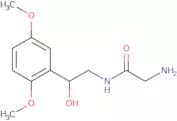
CAS:Controlled Product<p>2-Amino-N-[2-(2,5-dimethoxyphenyl)-2-hydroxyethyl]-acetamide is a drug that has been used to treat a variety of diseases and conditions. It is an alpha adrenergic agonist that works by stimulating the alpha receptors in the body, which increase blood pressure and improve blood flow. This drug also has significant effects on energy metabolism, including the production of ATP. 2-Amino-N-[2-(2,5-dimethoxyphenyl)-2-hydroxyethyl]-acetamide is used to treat patients with congestive heart failure who are taking low doses of midodrine hydrochloride or nonsteroidal antiinflammatory drugs.</p>Formula:C12H18N2O4Purity:Min. 95%Color and Shape:PowderMolecular weight:254.28 g/molGalanin (2-11) amide trifluoroacetate salt
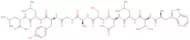
CAS:<p>Galanin (2-11) amide trifluoroacetate salt H-Trp-Thr-Leu-Asn-Ser-Ala-Gly-Tyr-Leu-Leu is a galanin analog and a ligand for the galanin receptor 1. It has affinity for the receptors in the brain, which are involved in cognition, and is used to study Alzheimer's disease. Galanin (2-11) amide trifluoroacetate salt H-Trp-Thr-Leu-Asn-Ser -Ala -Gly -Tyr -Leu -Leu is a member of the family of neuropeptides and neuromodulators that regulate nerve injury and alzheimer's disease.</p>Formula:C54H81N13O14Purity:Min. 95%Molecular weight:1,136.3 g/molPhenylacetyl-(D-Arg2·28,p-chloro-Phe6, Homoarg 9·29,Tyr(Me)10, Abu 15, Nle 27)-GRF (1-29) amide (human)
CAS:<p>Please enquire for more information about Phenylacetyl-(D-Arg2·28,p-chloro-Phe6, Homoarg 9·29,Tyr(Me)10, Abu 15, Nle 27)-GRF (1-29) amide (human) including the price, delivery time and more detailed product information at the technical inquiry form on this page</p>Formula:C172H284ClN53O41Purity:Min. 95%Molecular weight:3,785.88 g/molPAR-2 (6-1) amide (human) trifluoroacetate salt
CAS:<p>Please enquire for more information about PAR-2 (6-1) amide (human) trifluoroacetate salt including the price, delivery time and more detailed product information at the technical inquiry form on this page</p>Formula:C28H54N8O7Purity:Min. 95%Molecular weight:614.78 g/molN-Hydroxyethylacrylamide
CAS:<p>N-Hydroxyethylacrylamide is a compound that has been shown to have anti-infective properties against microbial infection. It was found to inhibit the growth of bacteria in human serum and fetal bovine serum, and it has minimal toxicity in mice. N-Hydroxyethylacrylamide also prevents the growth of fungi and yeasts by binding to basic proteins, such as lysine, arginine, and histidine. This drug also inhibits the growth of viruses by inhibiting their ability to replicate their own nucleic acids. In addition, N-Hydroxyethylacrylamide may be used as an inhibitor in titration calorimetry to measure the concentration of other compounds.</p>Formula:C5H9NO2Purity:Min. 95%Color and Shape:Colourless To Pale Yellow Clear LiquidMolecular weight:115.13 g/mol(Nle 27)-GRF (1-29) amide (human)
CAS:<p>Please enquire for more information about (Nle 27)-GRF (1-29) amide (human) including the price, delivery time and more detailed product information at the technical inquiry form on this page</p>Formula:C150H248N44O42Purity:Min. 95%Molecular weight:3,339.85 g/molMca-(endo-1a-Dap (Dnp))-TNF-a (-5 to +6) amide (human) trifluoroacetate salt
CAS:<p>Please enquire for more information about Mca-(endo-1a-Dap (Dnp))-TNF-a (-5 to +6) amide (human) trifluoroacetate salt including the price, delivery time and more detailed product information at the technical inquiry form on this page</p>Formula:C69H103N23O24Purity:Min. 95%Molecular weight:1,638.7 g/molGastric Inhibitory Polypeptide (1-30) amide (porcine)
CAS:<p>Please enquire for more information about Gastric Inhibitory Polypeptide (1-30) amide (porcine) including the price, delivery time and more detailed product information at the technical inquiry form on this page</p>Formula:C162H245N41O47SPurity:Min. 95%Molecular weight:3,550.99 g/mol4-Methylsalicylamide
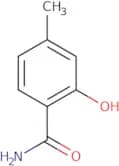
CAS:<p>4-Methylsalicylamide is a chemical compound that belongs to the class of isonicotinic amides. It is a potent anti-inflammatory agent with minimal inhibitory concentration (MIC) values of 4 µg/mL for gram-positive bacteria and 8 µg/mL for gram-negative bacteria. This compound has been shown to be effective against methicillin-resistant Staphylococcus aureus (MRSA) and Clostridium perfringens, although is not active against acid-fast bacteria such as Mycobacterium tuberculosis or Mycobacterium avium complex. 4-Methylsalicylamide has been shown to have an inhibitory effect on ring-opening, which may be due to its ability to acetylate mitochondrial membranes, altering the membrane potential. The molecular modeling studies also showed that 4MSAM binds at the same site as antibiotics such as penicillin and erythromycin in bacterial ribos</p>Formula:C8H9NO2Purity:Min. 95%Color and Shape:PowderMolecular weight:151.16 g/molOsteostatin amide trifluoroacetate
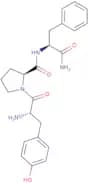
CAS:<p>Please enquire for more information about Osteostatin amide trifluoroacetate including the price, delivery time and more detailed product information at the technical inquiry form on this page</p>Formula:C142H229N43O57•(C2HF3O2)xPurity:Min. 95%Molecular weight:3,450.59 g/molβ-Casomorphin (1-3) amide acetate salt
CAS:<p>Beta-casomorphin (1-3) amide acetate salt (BCMA) is a peptide that belongs to the class of opioid compounds. It is an amino acid and has been shown to be a potent agonist at opioid receptors. BCMA is used in vivo as a tritiated ligand for mapping the distribution of opioid receptors in rat brain. The affinity of BCMA for opioid receptors increases with dose, and its antinociceptive effects are dose-dependent. Beta-casomorphin (1-3) amide acetate salt has also been shown to have affinity for enkephalins, which are naturally occurring peptides that bind to opioid receptors.</p>Formula:C23H28N4O4Purity:Min. 95%Molecular weight:424.49 g/mol(D-Arg2)-Dermorphin (1-4) amide trifluoroacetate salt
CAS:<p>Please enquire for more information about (D-Arg2)-Dermorphin (1-4) amide trifluoroacetate salt including the price, delivery time and more detailed product information at the technical inquiry form on this page</p>Formula:C26H36N8O5Purity:Min. 95%Molecular weight:540.61 g/molGLP-1 (7-36)-Lys(biotinyl) amide (human, bovine, guinea pig, mouse, rat) trifluoroacetate
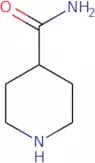
CAS:<p>Please enquire for more information about GLP-1 (7-36)-Lys(biotinyl) amide (human, bovine, guinea pig, mouse, rat) trifluoroacetate including the price, delivery time and more detailed product information at the technical inquiry form on this page</p>Formula:C165H252N44O48S•(C2HF3O2)xPurity:Min. 95%Molecular weight:3,652.1 g/molHexahydroisonicotinamide
CAS:<p>Hexahydroisonicotinamide (HNI) is a potent amyloid protein inhibitor that is structurally related to picolinic acid. HNI has been shown to be effective in the treatment of infectious diseases caused by bacteria, such as diazonium salt-resistant strains of Pseudomonas aeruginosa and Enterobacter cloacae. Hexahydroisonicotinamide is also active against methicillin-resistant Staphylococcus aureus (MRSA), which may be due to its structural similarity to picolinic acid. The molecular weight of HNI is 587.6, with a molecular formula of C9H11N3O2. It has been shown that hexahydroisonicotinamide inhibits the transfer reaction between an amide and piperidinium, as well as the phosphorylation of proteins by enzyme kinases. This drug binds to hydrated biphenyl molecules and inhibits their</p>Formula:C6H12N2OPurity:Min. 95%Color and Shape:White To Yellow SolidMolecular weight:128.17 g/molN-(2-Hydroxypropyl)benzenesulfonamide
CAS:<p>N-(2-Hydroxypropyl)benzenesulfonamide is a sulfonamide that is used as a plasticizer in thermoplastics. It is the sodium salt of 2-hydroxypropyl benzenesulfonic acid and has been shown to be effective as an antimicrobial agent in plastics. N-(2-Hydroxypropyl)benzenesulfonamide may be used for the prevention of bacterial growth and may inhibit the growth of fungi and algae, although more studies are needed to determine its effectiveness.</p>Formula:C9H13NO3SPurity:Min. 95%Molecular weight:215.27 g/molpTH (1-34) amide (human) trifluoroacetate salt
CAS:<p>Parathyroid hormone (PTH) is a peptide hormone that regulates calcium and phosphate balance in the body. PTH is secreted by the parathyroid glands, located near the thyroid gland in the neck. It is also known as parathormone or parathyrin. The active form of PTH, called pTH (1-34) amide, has been shown to stimulate bone resorption and to inhibit bone formation. The amino acid sequence of this hormone starts with arginine and ends with phenylalanine. The N-terminal amino acid residue is an aspartic acid or asparagine and histidine is the only basic residue in this molecule. This molecule has two acidic residues, glutamic acid and aspartic acid, which are found on the side chains of two amino acids: aspartic acid and glutamic acid. Valine is found at position 3 and phenylalanine at position 34.</p>Formula:C181H292N56O50S2Purity:Min. 95%Molecular weight:4,116.73 g/molAbz-Ala-Gly-Leu-Ala-p-nitrobenzylamide
CAS:<p>Benzamidine is a benzamidase inhibitor that competitively binds to bacterial enzymes such as metalloendopeptidases and matrix metalloproteinases. It inhibits the degradation of collagen, resulting in a higher concentration of soluble extract. This drug also has an effect on spermatozoa, which may be due to its ability to inhibit bacterial enzymes that are involved with uptake and preload. Benzamidine has been shown to have a pH optimum of 8-9 and is most active at this pH range.</p>Formula:C28H37N7O7Purity:Min. 95%Molecular weight:583.64 g/mol