Amides
Amides are a wide range of chemical compounds that contain at least one heterocyclic ring, which has atoms of at least two different elements in the ring structure, and at least one amide group (-CONH2). These compounds are crucial in the synthesis of pharmaceuticals, polymers, and agrochemicals. Amides exhibit unique properties and reactivity, making them valuable intermediates in organic synthesis. At CymitQuimica, we offer a comprehensive selection of high-quality amides to support your research and industrial needs.
Found 16385 products of "Amides"
Sort by
Purity (%)
0
100
|
0
|
50
|
90
|
95
|
100
2-Chloro-N-[2-(diethylamino)ethyl]-4-quinolinecarboxamide
CAS:<p>2-Chloro-N-[2-(diethylamino)ethyl]-4-quinolinecarboxamide is a carboxamide analog of dibucaine. It is synthesized from chloroacetyl chloride and isatin in the presence of sodium hydroxide. The synthesis has been scaled to an industrial level. 2-Chloro-N-[2-(diethylamino)ethyl]-4-quinolinecarboxamide has been shown to have analgesic properties, similar to those of dibucaine. Radiolysis of this compound gives a carboxylic acid and a heterocyclic ring product.</p>Formula:C16H20ClN3OPurity:95%MinColor and Shape:PowderMolecular weight:305.8 g/molGLP-1 (1-36) amide (human, bovine, guinea pig, mouse, rat) trifluoroacetate salt
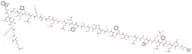
CAS:<p>Please enquire for more information about GLP-1 (1-36) amide (human, bovine, guinea pig, mouse, rat) trifluoroacetate salt including the price, delivery time and more detailed product information at the technical inquiry form on this page</p>Formula:C184H273N51O57Purity:Min. 95%Molecular weight:4,111.45 g/mol(Pro3)-Dynorphin A (1-11) amide trifluoroacetate salt
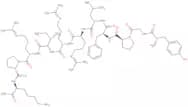
CAS:<p>Please enquire for more information about (Pro3)-Dynorphin A (1-11) amide trifluoroacetate salt including the price, delivery time and more detailed product information at the technical inquiry form on this page</p>Formula:C66H108N22O12Purity:Min. 95%Molecular weight:1,401.7 g/mol(2R)-2-Aminopropanamide
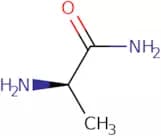
CAS:<p>(2R)-2-Aminopropanamide is a chemical compound that is classified as an amide. It has been shown to inhibit bacterial growth and induce apoptosis in mammalian cells, but not in bacteria. This drug has a number of hydrogen bonding interactions with the carbonyl group and amide functional groups and can bind to affinity ligands with hydrogen bonding interactions. (2R)-2-Aminopropanamide inhibits the activity of enzymes that are involved in the synthesis of d-alanine, which is a precursor for protein synthesis. It also inhibits the enzyme glutamine synthase, which plays a key role in building up nitrogen reserves in bacteria. The drug binds to DNA by forming hydrogen bonds with the phosphate backbone and intercalates into double-stranded DNA by forming van der Waals interactions with base pairs.</p>Formula:C3H8N2OPurity:Min. 95%Molecular weight:88.11 g/molGastric Inhibitory Polypeptide (6-30) amide (human) trifluoroacetate salt
CAS:<p>Please enquire for more information about Gastric Inhibitory Polypeptide (6-30) amide (human) trifluoroacetate salt including the price, delivery time and more detailed product information at the technical inquiry form on this page</p>Formula:C139H209N35O38SPurity:Min. 95%Molecular weight:3,010.43 g/molAbz-Ala-Gly-Leu-Ala-p-nitrobenzylamide
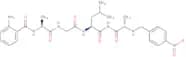
CAS:<p>Benzamidine is a benzamidase inhibitor that competitively binds to bacterial enzymes such as metalloendopeptidases and matrix metalloproteinases. It inhibits the degradation of collagen, resulting in a higher concentration of soluble extract. This drug also has an effect on spermatozoa, which may be due to its ability to inhibit bacterial enzymes that are involved with uptake and preload. Benzamidine has been shown to have a pH optimum of 8-9 and is most active at this pH range.</p>Formula:C28H37N7O7Purity:Min. 95%Molecular weight:583.64 g/molL-Prolinamide
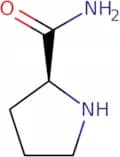
CAS:<p>Intermediate in the synthesis of vildagliptin</p>Formula:C5H10N2OPurity:Min. 95%Color and Shape:PowderMolecular weight:114.15 g/molN-Methyl-2-fluoro-4-aminobenzamide
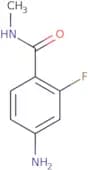
CAS:<p>N-Methyl-2-fluoro-4-aminobenzamide is a toxic compound that is commonly used as a reagent in chemical synthesis and research. It has been studied for its potential use in medicine, particularly in the treatment of castration-resistant prostate cancer. N-Methyl-2-fluoro-4-aminobenzamide acts as a nucleophilic agent, participating in reactions that involve the addition of an acyl group to a target molecule. Its stable formyl group allows for efficient reaction yields and reliable results. However, due to its toxic nature, caution must be exercised when handling this compound.</p>Formula:C8H9FN2OPurity:Min. 95%Molecular weight:168.17 g/mol2-Chloroacetamide
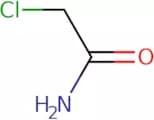
CAS:<p>2-Chloroacetamide is a quaternary ammonium compound that is used as an intermediate in the synthesis of other organic compounds. It has been reported to have anticancer activity and has been studied for use as a herbicide in agriculture. The vibrational, turbidimetric method, amide, and sample preparation are all instrumental in determining the reaction mechanism of 2-chloroacetamide. This molecule has also been studied using FT-IR spectroscopy and molecular modelling techniques. The hydrogen bond is integral to its optical properties and can be determined by nmr spectra.</p>Formula:C2H4ClNOPurity:Min. 98%Color and Shape:White PowderMolecular weight:93.51 g/molN-(3-Dimethylaminopropyl)acrylamide, stabilized with MEHQ
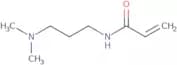
CAS:<p>N-(3-Dimethylaminopropyl)acrylamide is a polymerization initiator that is used in the synthesis of polymers. It is also a model protein, which can be used to study bacterial growth rates and tissue metabolism. N-(3-Dimethylaminopropyl)acrylamide has been shown to have biological properties similar to human serum, as well as to serve as a model for primary cells. The FT-IR spectroscopy of N-(3-Dimethylaminopropyl)acrylamide reveals the presence of chloride ions in its molecular structure. The reaction mechanism for this compound has been determined by deionized water and ionic reactions with chloride ions.</p>Formula:C8H16N2OPurity:Min. 95%Molecular weight:156.23 g/molBig Endothelin-3 (22-41) amide (human) trifluoroacetate salt
CAS:<p>Please enquire for more information about Big Endothelin-3 (22-41) amide (human) trifluoroacetate salt including the price, delivery time and more detailed product information at the technical inquiry form on this page</p>Formula:C102H156N30O31Purity:Min. 95%Molecular weight:2,298.51 g/mol5-Fmoc-amino-10,11-dihydro-5H-dibenzo[a,d]-cycloheptenyl-2-oxyacetyl-DL-Nle-4- methyl-benzhydrylamide resin
<p>Please enquire for more information about 5-Fmoc-amino-10,11-dihydro-5H-dibenzo[a,d]-cycloheptenyl-2-oxyacetyl-DL-Nle-4- methyl-benzhydrylamide resin including the price, delivery time and more detailed product information at the technical inquiry form on this page</p>Purity:Min. 95%Met-Enkephalin-Arg-Phe amide
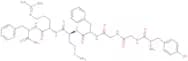
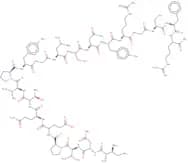
CAS:<p>Met-Enkephalin-Arg-Phe amide H-Tyr-Gly-Gly-Phe-Met-Arg-Phe is a subunit of the endogenous opioid peptide Met-enkephalin. It is a proteolytic cleavage product of proenkephalin A and is also known as Tyr2, Phe2, or Arg6. Met-enkephalin has been shown to participate in signal transduction pathways that regulate blood pressure and exocrine secretion. Metenkephalin is an amide containing two cysteine residues with a hydrophobic side chain, which can bind metal ions such as calcium ions. Metenkephalin binds to the membrane of cells, altering membrane potential and naloxone binding sites.<br>Met enkephalin has been shown to be involved in serotonin release from platelets and inhibition of serotonin uptake by platelets.</p>Formula:C42H57N11O8SPurity:Min. 95%Molecular weight:876.04 g/molNazumamide A
CAS:<p>Nazumamide A is a cyclic peptide with inhibitory activity against serine proteases. It binds to the active site of thrombin and inhibits its action, thereby inhibiting the fibrinogen degradation in blood. Nazumamide A is also found to have neuroprotective properties, which may be due to its ability to inhibit nitric oxide production by binding to the enzyme nitric oxide synthase. It has been shown to have anti-inflammatory activities and can be used for the treatment of inflammation-associated diseases such as asthma and arthritis. Nazumamide A is a nonribosomal peptide that does not require any cofactors for synthesis.</p>Formula:C28H43N7O8Purity:Min. 95%Molecular weight:605.68 g/molTRAP-5 amide trifluoroacetate salt
CAS:<p>Please enquire for more information about TRAP-5 amide trifluoroacetate salt including the price, delivery time and more detailed product information at the technical inquiry form on this page</p>Formula:C30H51N9O6Purity:Min. 95%Molecular weight:633.78 g/molGlibenclamide
CAS:<p>ATP-sensitive K+ channel blocker</p>Formula:C23H28ClN3O5SPurity:Min. 98 Area-%Color and Shape:White PowderMolecular weight:494 g/molGalanin (1-13)-Neuropeptide Y (25-36) amide
CAS:<p>Please enquire for more information about Galanin (1-13)-Neuropeptide Y (25-36) amide including the price, delivery time and more detailed product information at the technical inquiry form on this page</p>Formula:C136H209N41O34Purity:Min. 95%Molecular weight:2,962.37 g/molPAR-2 (1-6) amide (human) (scrambled) trifluoroacetate salt
CAS:<p>Please enquire for more information about PAR-2 (1-6) amide (human) (scrambled) trifluoroacetate salt including the price, delivery time and more detailed product information at the technical inquiry form on this page</p>Formula:C28H54N8O7Purity:Min. 95%Molecular weight:614.78 g/mol2-Amino-5-chloro-N,3-dimethylbenzamide
CAS:<p>2-Amino-5-chloro-N,3-dimethylbenzamide is a synthetic compound. It has been shown to induce necrotic cell death in mammalian cells. This compound was synthesized by the reaction of 2-aminoquinoline with a Grignard reagent, followed by nitration of the resultant amine. The synthesis of this compound was thermodynamically favorable and exhibited good solubility in water. The chlorantraniliprole and anthranilic acid moieties are activated with an acylation reaction, which allows them to bind to the ryanodine receptor and inhibit calcium release from the sarcoplasmic reticulum (SR) with ammonolysis. This inhibition leads to ferroptosis, a type of programmed necrosis.</p>Formula:C9H11ClN2OPurity:Min. 95%Color and Shape:PowderMolecular weight:198.65 g/molLeptin (116-130) amide (mouse) trifluoroacetate salt
CAS:<p>Amide; Trifluoroacetate salt</p>Formula:C64H109N19O24SPurity:Min. 95%Molecular weight:1,560.73 g/mol
![2-Chloro-N-[2-(diethylamino)ethyl]-4-quinolinecarboxamide](/_next/image/?url=https%3A%2Fstatic.cymitquimica.com%2Fproducts%2F3D%2Fthumb-webp%2FFC20289.webp&w=3840&q=75)

![5-Fmoc-amino-10,11-dihydro-5H-dibenzo[a,d]-cycloheptenyl-2-oxyacetyl-DL-Nle-4- methyl-benzhydrylam…](/_next/image/?url=https%3A%2Fstatic.cymitquimica.com%2Fproducts%2F3D%2Fthumb-webp%2FFT111711.webp&w=3840&q=75)