Carboxylic Acids
Carboxylic acids are organic molecules characterized by having a carboxyl-type functional group (-COOH). These acids are fundamental in various chemical reactions, including esterification, amidation, and decarboxylation. Carboxylic acids are widely used in the production of pharmaceuticals, polymers, and agrochemicals. In this section, you can find a large number of carboxylic acids ready to be used. At CymitQuimica, we provide a broad range of high-quality carboxylic acids to support your research and industrial applications.
Found 12453 products of "Carboxylic Acids"
Sort by
Purity (%)
0
100
|
0
|
50
|
90
|
95
|
100
4-Methoxy retinoic acid
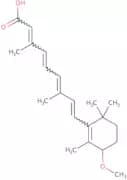
CAS:<p>Please enquire for more information about 4-Methoxy retinoic acid including the price, delivery time and more detailed product information at the technical inquiry form on this page</p>Formula:C21H30O3Purity:Min. 95%Molecular weight:330.46 g/mol(S)-1,2,3,4,5,6,7,8-Octahydro-1-[(4-methoxyphenyl)methyl]isoquinoline (acetate salt )
CAS:<p>(S)-1,2,3,4,5,6,7,8-Octahydro-1-[(4-methoxyphenyl)methyl]isoquinoline (acetate salt ) is a diphosphine that can be used as a catalyst to produce formic acid from methanol and carbon monoxide. This product is an enantiomer of picric acid and has been shown to be an effective additive in the crystallization of picric acid. The acetate salt is also optically pure.</p>Purity:Min. 95%3-Aminopicolinic acid
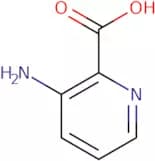
CAS:<p>3-Aminopicolinic acid is a carboxylate that can be found in the cytosol, mitochondria, and nucleus of cells. It is an efficient method for the synthesis of picolinic acid from 3-aminopyridine-2-carboxylic acid. The synthesis of picolinic acid has been shown to have structural analogs to molecules involved in nucleotide metabolism such as single-stranded DNA, mitochondrial DNA, and mitochondrial RNA. 3-Aminopicolinic acid has been shown to increase renal blood flow by stabilizing complexes with chloride and phosphoenolpyruvate. This compound also enhances the renal excretion of picolinic acid. 3-Desacetylcefotaxime potassium Tilmicosin Gatifloxacin 3-Aminopicolinic acid</p>Formula:C6H6N2O2Purity:Min. 95 Area-%Color and Shape:Yellow PowderMolecular weight:138.12 g/molBromosuccinic acid
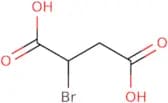
CAS:<p>Bromosuccinic acid is a type of organic compound with the chemical formula HOCCH=CHOH. It is an ester that contains a hydroxyl group, a carboxylic acid group, and a bromine atom. Bromosuccinic acid has been shown to have biocompatible properties and can be used as a polymer for biomedical applications. It also has the ability to form covalent bonds with basic proteins due to its hydroxyl group, which is important for protein stability. Bromosuccinic acid has been shown to inhibit trypsin activity in soybean trypsin, which may be due to its disulfide bond or low energy content. This substance also reacts with malonic acid and carbonic acid, producing galacturonic acid and fatty acids respectively. Bromosuccinic acid is produced by bacteria of the genus Enterobacteriaceae and belongs to the family of short-chain fatty acids.</p>Purity:Min. 95%Tauroursodeoxycholic acid, sodium salt
CAS:<p>Tauroursodeoxycholic acid, sodium salt is a taurine-conjugated bile acid derivative, which is synthesized in the liver from ursodeoxycholic acid. It functions through its role in stabilizing the mitochondria and inhibiting apoptosis by modulating the unfolded protein response. This molecular action involves reducing endoplasmic reticulum stress, thereby providing cytoprotective effects in various cellular environments.</p>Formula:C26H44NNaO6SPurity:Min. 95%Molecular weight:521.69 g/mol4-Amino-2-methylphenylboronic acid, pinacol ester
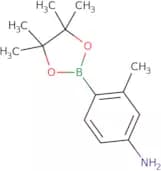
CAS:<p>Please enquire for more information about 4-Amino-2-methylphenylboronic acid, pinacol ester including the price, delivery time and more detailed product information at the technical inquiry form on this page</p>Formula:C13H20BNO2Purity:Min. 95%Molecular weight:233.11 g/moltert-Butyl 4-(2-methoxy-2-oxoethyl)piperazine-1-carboxylate
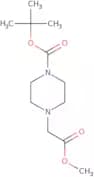
CAS:<p>Please enquire for more information about tert-Butyl 4-(2-methoxy-2-oxoethyl)piperazine-1-carboxylate including the price, delivery time and more detailed product information at the technical inquiry form on this page</p>Formula:C12H22N2O4Purity:Min. 95%Molecular weight:258.31 g/mol3-Sulfoglycolithocholic acid disodium
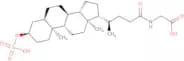
CAS:<p>3-Sulfoglycolithocholic acid disodium is a potential biomarker for inflammatory bowel disease. It is also used as an analytical method to measure bile acids in the blood. 3-Sulfoglycolithocholic acid disodium has been shown to be a strong indicator of liver inflammation and hepatitis. This compound can also be used as a diagnostic tool for infectious diseases, such as HIV and hepatitis C, by measuring serum bile acids levels. The level of this molecule can be measured in the blood and urine of patients with bowel disease, such as ulcerative colitis or Crohn's disease. 3-Sulfoglycolithocholic acid disodium can also be used to diagnose atrial fibrillation.</p>Formula:C26H43NO7S•Na2Purity:Min. 95%Molecular weight:559.67 g/mol5β-Cholanic acid
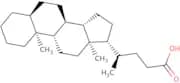
CAS:Controlled Product<p>5beta-Cholanic acid is a fatty acid that is the product of cholesterol metabolism. It has been shown to inhibit tumor growth by binding to ATP-binding cassette transporter and blocking the transport of tumor cells. 5beta-Cholanic acid also inhibits HIV infection by interfering with the virus's ability to bind and enter host cells. 5beta-Cholanic acid may also be used as a treatment for autoimmune diseases such as multiple sclerosis, rheumatoid arthritis, ulcerative colitis and Crohn's disease. This compound has been shown to inhibit mitochondrial membrane potential and induce apoptosis in prostate cancer cells in vitro. The mechanism of action for this compound is not well understood but it may be due to its ability to decrease ATP levels in mitochondria or interfere with the production of bile acids from cholesterol by inhibiting hydroxylation reactions.</p>Formula:C24H40O2Purity:Min. 95%Color and Shape:PowderMolecular weight:360.57 g/molEthyl bromoacetate
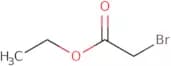
CAS:<p>Ethyl bromoacetate is an ethyl ester of bromoacetic acid. It is a precursor to a number of pharmaceuticals, including the anti-inflammatory drug bromoacetate and the radioprotective agent dibromopropane. Ethyl bromoacetate is used in analytical chemistry as a reagent for the detection and identification of coumarin derivatives, which have been detected in biological samples such as wastewater. The compound has also been shown to be effective against certain strains of bacteria and fungi that are responsible for bowel diseases. Ethyl bromoacetate can act as an antimicrobial agent by disrupting bacterial cell membranes and inhibiting their metabolic pathways.</p>Formula:C4H7BrO2Purity:Min. 95%Molecular weight:167 g/mol2-[4-(tert-Butyldimethylsilyloxymethyl)-2-nitrophenoxy]acetic Acid
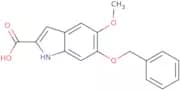
CAS:<p>Please enquire for more information about 2-[4-(tert-Butyldimethylsilyloxymethyl)-2-nitrophenoxy]acetic Acid including the price, delivery time and more detailed product information at the technical inquiry form on this page</p>Formula:C15H23NO6SiPurity:Min. 95%Molecular weight:341.43 g/mol6-Benzyloxy-5-methoxyindole-2-carboxylic acid
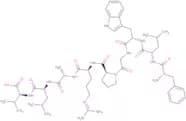
CAS:<p>Please enquire for more information about 6-Benzyloxy-5-methoxyindole-2-carboxylic acid including the price, delivery time and more detailed product information at the technical inquiry form on this page</p>Formula:C17H15NO4Purity:Min. 95%Molecular weight:297.31 g/molMAGE-3 Antigen (271-279) (human) trifluoroacetate salt
CAS:<p>ALPHA FACTOR SIGNALING PEPTIDE</p>Formula:C53H79N13O10Purity:Min. 95%Molecular weight:1,058.28 g/mol3-Oxopentanoic acid
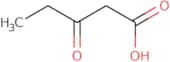
CAS:<p>3-Oxopentanoic acid is a fatty acid that is produced by the subunits of the liver. It is metabolized to propionyl CoA and then converted to 3-hydroxybutyrate or acetoacetate in the mitochondria. The conversion of propionyl CoA to 3-oxopentanoic acid is catalyzed by an amide synthetase, while the conversion of 3-oxopentanoic acid to acetoacetate is catalyzed by a β-ketothiolase. This fatty acid has been shown to be useful for the treatment of diabetes because it suppresses insulin secretion from pancreatic β cells and improves glucose uptake in muscle cells. It has also been speculated that this compound may have anti-inflammatory properties due to its inhibition of prostaglandin synthesis.</p>Formula:C5H8O3Purity:Min. 95%Color and Shape:PowderMolecular weight:116.12 g/mol1,5-Diphenyl-1H-pyrazole-3-carboxylic acid
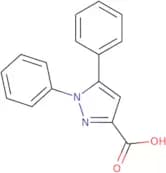
CAS:Controlled Product<p>1,5-Diphenyl-1H-pyrazole-3-carboxylic acid is a herbicide that belongs to the family of alkyloxycarbonyl amides. It is used in weed control and has shown good activity against many broadleaf weeds. 1,5-Diphenyl-1H-pyrazole-3-carboxylic acid inhibits the growth of plants by interfering with photosynthesis and the production of chlorophyll. The compound binds to the thylakoid membrane in chloroplasts, preventing electron transport and blocking the synthesis of carbohydrates from carbon dioxide and water. This leads to cell death as a result of oxygen depletion. 1,5-Diphenyl-1H-pyrazole-3-carboxylic acid also inhibits acetolactate synthase in plants, which produces amides that are important for protein synthesis.</p>Formula:C16H12N2O2Purity:Min. 95%Molecular weight:264.28 g/mol6-Methylnicotinic acid
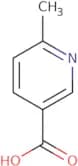
CAS:<p>6-Methylnicotinic acid is the major metabolite of nicotine, which is a natural alkaloid. The formation of 6-methylnicotinic acid from nicotine in the body is induced by carbon sources such as glucose and sucrose. This compound has been shown to inhibit herpes simplex virus type 1 replication in tissue culture and animal experiments. 6-Methylnicotinic acid also has an effect on the reaction rate of 2-chloro-6-methylnicotinic acid with hydrogen gas, forming methyl nicotinate, which is an organic acid found in tobacco leaves. 6-Methylnicotinic acid is hydrophilic and can be separated from other compounds using hydrophilic interaction chromatography (HIC).</p>Formula:C7H7NO2Purity:Min. 95%Color and Shape:PowderMolecular weight:137.14 g/mol(5R)-6-Cyano-5-hydroxy-3-oxo-hexanoic acid tert-butyl ester
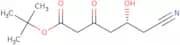
CAS:<p>Please enquire for more information about (5R)-6-Cyano-5-hydroxy-3-oxo-hexanoic acid tert-butyl ester including the price, delivery time and more detailed product information at the technical inquiry form on this page</p>Formula:C11H17NO4Purity:Min. 95%Molecular weight:227.26 g/molβ-CIT-FP
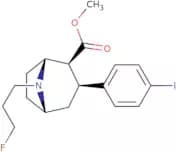
CAS:Controlled Product<p>Methyl (1R,2S,3S)-8-(3-Fluoropropyl)-3-(4-Iodophenyl)-8-Azabicyclo[3.2.1]Octane-2-Carboxylate is a potent dopamine receptor agonist with a high affinity for the D2 and D3 receptors in the brain. It has been shown to have antiparkinsonian effects in animal models of Parkinson's disease by increasing dopamine levels in the prefrontal cortex and striatum. This drug has also been shown to be effective in clinical studies for the diagnosis of Parkinson's disease. Methyl (1R,2S,3S)-8-(3-Fluoropropyl)-3-(4-Iodophenyl)-8-Azabicyclo[3.2.1]Octane-2-Carboxylate binds to both dopamine and serotonin receptors, which may account for its therapeutic effects on Parkinson</p>Formula:C18H23FINO2Purity:Min. 95%Molecular weight:431.28 g/mol1-(4-Fluorophenyl)pyrazole-4-boronic acid
CAS:<p>Please enquire for more information about 1-(4-Fluorophenyl)pyrazole-4-boronic acid including the price, delivery time and more detailed product information at the technical inquiry form on this page</p>Formula:C9H8BFN2O2Purity:Min. 95%Molecular weight:205.98 g/mol2-(2-Aminothiazol-4-yl)acetic acid HCl
CAS:<p>2-(2-Aminothiazol-4-yl)acetic acid HCl is a white to off-white crystalline solid that is soluble in organic solvents. It is an intermediate used in the synthesis of thiourea derivatives, which are used as pharmaceuticals and agrochemicals. 2-(2-Aminothiazol-4-yl)acetic acid HCl is synthesized by the reaction of 2-aminothiazole with acetic anhydride. The purity can be determined using GC or NMR spectroscopy. Impurities may be removed by recrystallization with a solvent such as chloroform or dichloromethane. The melting point of 2-(2-aminothiazol-4-yl)acetic acid HCl is 147°C (298K). 2-(2-Aminothiazol-4-yl)acetic acid HCl can be purified by distillation at</p>Formula:C5H7ClN2O2SPurity:Min. 95%Molecular weight:194.64 g/mol

![(S)-1,2,3,4,5,6,7,8-Octahydro-1-[(4-methoxyphenyl)methyl]isoquinoline (acetate salt )](/_next/image/?url=https%3A%2Fstatic.cymitquimica.com%2Fproducts%2F3D%2Fthumb-webp%2FFO29465.webp&w=3840&q=75)

![2-[4-(tert-Butyldimethylsilyloxymethyl)-2-nitrophenoxy]acetic Acid](/_next/image/?url=https%3A%2Fstatic.cymitquimica.com%2Fproducts%2F3D%2Fthumb-webp%2FFB60313.webp&w=3840&q=75)