Carboxylic Acids
Carboxylic acids are organic molecules characterized by having a carboxyl-type functional group (-COOH). These acids are fundamental in various chemical reactions, including esterification, amidation, and decarboxylation. Carboxylic acids are widely used in the production of pharmaceuticals, polymers, and agrochemicals. In this section, you can find a large number of carboxylic acids ready to be used. At CymitQuimica, we provide a broad range of high-quality carboxylic acids to support your research and industrial applications.
Found 12453 products of "Carboxylic Acids"
Sort by
Purity (%)
0
100
|
0
|
50
|
90
|
95
|
100
N-(3-Phenylpropionyl)glycine
CAS:<p>N-(3-Phenylpropionyl)glycine, an acyl glycine, indicates medium-chain acyl-CoA dehydrogenase deficiency when detected in urine.</p>Formula:C11H13NO3Purity:97.25%Color and Shape:SolidMolecular weight:207.23N-Carbamoyl-DL-aspartic acid
CAS:<p>N-Carbamoyl-DL-aspartic acid (Ureidosuccinic acid) is an intermediary product in pyrimidine biosynthesis.</p>Formula:C5H8N2O5Purity:99.95%Color and Shape:SolidMolecular weight:176.1310-Hydroxydecanoic Acid
CAS:<p>10-Hydroxydecanoic Acid (NSC 15139) has antibacterial, anti - cancer and anti - radiation activity.</p>Formula:C10H20O3Purity:98.51% - 99.57%Color and Shape:CrystallineMolecular weight:188.26D-Isoleucine
CAS:<p>D-Isoleucine ((2R,3R)-2-Amino-3-methylpentanoic acid) is a selective activator of Asc-1 antiporter, which enhances long-term potentiation at the hippocampal CA1</p>Formula:C6H13NO2Purity:99.16%Color and Shape:White To Light Yellow PowderMolecular weight:131.173,4-(Methylenedioxy)cinnamic acid
CAS:<p>3,4-(Methylenedioxy)cinnamic acid (3-(Benzo[d][1,3]dioxol-5-yl)acrylic acid) is a plant-derived compound first extracted from roots of Asparagus officinalis and</p>Formula:C10H8O4Purity:98.95%Color and Shape:SolidMolecular weight:192.17N-Acetyl-DL-methionine
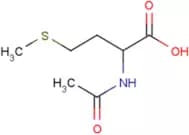
CAS:<p>N-acetyl-L-methionine equals L-methionine in diet & metabolism, essential for growth and methyl group transfers.</p>Formula:C7H13NO3SPurity:98.94%Color and Shape:White Crystalline PowderMolecular weight:191.25DL-5-Hydroxylysine hydrochloride
CAS:<p>DL-5-Hydroxylysine hydrochloride is a racemic mix of 5-hydroxylysine enantiomers, used as markers for protein oxidation.</p>Formula:C6H15ClN2O3Purity:99.62% - 99.67%Color and Shape:White Crystalline PowderMolecular weight:198.65L-Pipecolic acid
CAS:<p>L-Pipecolic acid, a lysine metabolite, builds up in infants with peroxisomal genetic disorders like Zellweger syndrome.</p>Formula:C6H11NO2Purity:99.75%Color and Shape:SolidMolecular weight:129.16L-Dihydroorotic acid
CAS:<p>L-Dihydroorotic acid, found in eukaryotes, is involved in pyrimidine metabolism and several disorders including orotic aciduria.</p>Formula:C5H6N2O4Purity:99.88% - 99.93%Color and Shape:White To Off-White Crystalline PowderMolecular weight:158.11L-Cysteic acid monohydrate
CAS:<p>L-Cysteic acid monohydrate inhibits bacterial AspT, used in surfactants, brain studies, and as an mGluRs agonist.</p>Formula:C3H9NO6SPurity:99.82%Color and Shape:White PowderMolecular weight:187.17Oxaloacetic acid
CAS:<p>Oxaloacetic acid: a four-carbon dicarboxylic acid, an intermediate in the citric acid cycle, forms aspartic acid.</p>Formula:C4H4O5Purity:98.27% - 99.93%Color and Shape:SolidMolecular weight:132.07N-Acetyl-L-glutamic acid
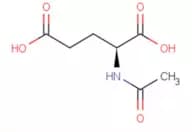
CAS:<p>NAcGlu, made from glutamic acid & acetyl-CoA by NAGS, activates urea cycle enzyme. NAGS deficiency causes Type I hyperammonemia.</p>Formula:C7H11NO5Purity:99.64% - 99.95%Color and Shape:SolidMolecular weight:189.17DL-O-Tyrosine
CAS:<p>DL-o-Tyrosine: metabolite of Phenylalanine, precursor to catecholamines, marker of protein damage in β-thalassemia.</p>Formula:C9H11NO3Purity:97.11% - 99.86%Color and Shape:SolidMolecular weight:181.19N-Acetylglycine
CAS:<p>N-Acetylglycine, non-toxic, found in foods, used in peptidomimetic research.</p>Formula:C4H7NO3Purity:99.82%Color and Shape:SolidMolecular weight:117.1D(-)-2-Aminobutyric acid
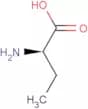
CAS:<p>D(-)-2-Aminobutyric acid is the substrate of D-amino acid oxidase.</p>Formula:C4H9NO2Purity:99.89%Color and Shape:SolidMolecular weight:103.12Glycylglycine
CAS:<p>Glycylglycine (Diglycine) is a dipeptide used in biochemical research. It is the simplest and is used as a starting template for more complex peptides.</p>Formula:C4H8N2O3Purity:≥95%Color and Shape:SolidMolecular weight:132.12rosmarinate acid
CAS:<p>Rosmarinate acid(Rosemary acid) inhibits MAO-A, MAO-B and COMT enzymes with IC50s of 50.1, 184.6 and 26.7 μM, respectively</p>Formula:C18H16O8Purity:99.69%Color and Shape:SolidMolecular weight:360.31Creatine
CAS:<p>Creatine, an amino acid in vertebrates, forms phosphocreatine in muscle, aids energy transfer, is made in the liver, and mainly stored in muscles.</p>Formula:C4H9N3O2Purity:99.63% - 99.83%Color and Shape:Colourless To Light Yellow SolidMolecular weight:131.1312-Hydroxydodecanoic acid
CAS:<p>12-Hydroxydodecanoic acid (12-hydroxylauric acid) is the substrate of the human glutathione-dependent formaldehyde dehydrogenase.</p>Formula:C12H24O3Purity:99.30%Color and Shape:SolidMolecular weight:216.32D-Leucine
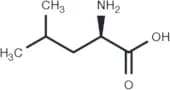
CAS:<p>D-Leucine stops seizures post-onset and lessens long-term potentiation without affecting basal synaptic transmission.</p>Formula:C6H13NO2Purity:99.67%Color and Shape:SolidMolecular weight:131.17N-Acetyl-L-leucine
CAS:<p>N-Acetylleucine, a water-soluble, weakly acidic derivative of leucine, is found in biofluids like feces and saliva.</p>Formula:C8H15NO3Purity:99.89%Color and Shape:SolidMolecular weight:173.212-(2-Phenylacetamido)acetic acid
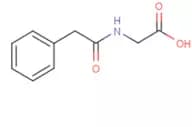
CAS:<p>2-(2-Phenylacetamido)acetic acid (Phenyl-ac-Gly-OH) is an acyl glycine. Acyl glycines are normally minor metabolites of fatty acids.</p>Formula:C10H11NO3Purity:99.43%Color and Shape:SolidMolecular weight:193.2N-(5-Aminopentyl)acetamide
CAS:<p>N-Acetylcadaverine, acetylated cadaverine, toxic in large doses, potential cancer/pathophysiology marker.</p>Formula:C7H16N2OPurity:99.87%Color and Shape:SolidMolecular weight:144.213-Hydroxybutyric acid
CAS:<p>Butanoic acid is an endogenous histone deacetylase (HDAC) inhibitor,IC50 for HDAC3, HDAC4, and HDAC1 is 2.4 mM, 4.5 mM, and 5.3 mM. High-Quality, Low-Cost!</p>Formula:C4H8O3Purity:97.31% - 99.77%Color and Shape:SolidMolecular weight:104.1trans-Aconitic acid
CAS:<p>Trans-Aconitic acid: found in urine, links to Reye's syndrome, organic aciduria, EC 2.1.1.144 substrate, soy biomarker, inhibits Leishmania transformation.</p>Formula:C6H6O6Purity:98.7%Color and Shape:Leaflets & Plates From Water SolidMolecular weight:174.11L-Methionine
CAS:<p>L-Methionine (L-Methionin) is the L-isomer of Methionine. Methionine is an essential amino acid for human development and acts as a hepatoprotectant.</p>Formula:C5H11NO2SPurity:99.58% - 99.84%Color and Shape:Colourless Solid CrystallineMolecular weight:149.21D-Alanine
CAS:<p>Alanine, a nonessential amino acid, is formed from pyruvate or DNA/dipeptides breakdown. D-Alanine stimulates GlyR with an EC50 of 9 mM.</p>Formula:C3H7NO2Purity:99.81%Color and Shape:Orthorhombic Crystals From Water SolidMolecular weight:89.09L-Methionine sulfoxide
CAS:<p>L-Methionine sulfoxide (H-Met(O)-OH) is a methionine metabolite affecting oxidative stress, purinergic signaling, and M1 macrophage polarization.</p>Formula:C5H11NO3SPurity:99.47% - 99.60%Color and Shape:SolidMolecular weight:165.21(R)-3-Hydroxybutanoic acid
CAS:<p>Beta-hydroxybutyrate aids in ketone body metabolism and is elevated in ketosis; it's a byproduct of valine from muscles.</p>Formula:C4H8O3Purity:98% - ≥95%Color and Shape:SolidMolecular weight:104.1Dihydroxyfumaric acid hydrate
CAS:<p>Dihydroxyfumaric acid produces superoxide anions, hydroxyl radicals, can inhibit insulin, and converts to hydroxypyruvate or oxaloglycolate.</p>Formula:C4H6O7Purity:98% - 99.09%Color and Shape:SolidMolecular weight:166.09Glutaric acid
CAS:<p>Glutaric acid: five-carbon dicarboxylic acid, byproduct of lysine and tryptophan metabolism.</p>Formula:C5H8O4Purity:98.83%Color and Shape:White Solid Solid CrystallineMolecular weight:132.11Oxalic acid dihydrate
CAS:<p>Oxalic acid dihydrate is a plant-derived strong dicarboxylic acid, excreted in urine, used as a reagent and reducing agent.</p>Formula:C2H6O6Purity:98.04% - 99.39%Color and Shape:White Solid CrystallineMolecular weight:126.07(-)-Aspartic acid
CAS:<p>L-Homoproline, an endogenous amino acid in animals, regulates testosterone and activates NMDA receptors.</p>Formula:C4H7NO4Purity:99.89%Color and Shape:White Crystalline Solid SolidMolecular weight:133.1Nicotinuric acid
CAS:<p>Nicotinuric acid: a minor acyl glycine metabolite of fatty acids, synthesized by glycine N-acyltransferase.</p>Formula:C8H8N2O3Purity:99.58%Color and Shape:SolidMolecular weight:180.16Ammonium formate
CAS:<p>Ammonium formate disrupts metabolism, causes acidosis, inhibits electron transport and ATP production, leading to cell death and increased ROS.</p>Formula:CH5NO2Purity:≥95%Color and Shape:White Monoclinic Crystals Water (Uscg 1999)Molecular weight:63.06N-Acetyl-L-tryptophan
CAS:<p>N-Acetyl-L-tryptophan (N-acetyltryptophan) is an inhibitor of neurokinin 1 receptor (NK1-receptor, NK1R).</p>Formula:C13H14N2O3Purity:99.93%Color and Shape:SolidMolecular weight:246.26N-Acetyl-L-tyrosine
CAS:<p>N-Acetyl-L-tyrosine (Ac-Tyr-OH) evolves into tyrosine, aiding in catecholamine-based neurotransmitter therapy.</p>Formula:C11H13NO4Purity:99.4%Color and Shape:SolidMolecular weight:223.23L-Homoserine
CAS:<p>L-Homoserine is a reactive serine variant with an extra CH2, forms a 5-membered ring, not in proteins, and is made after cyanogen bromide cleavage.</p>Formula:C4H9NO3Purity:99.77%Color and Shape:SolidMolecular weight:119.12D-Galacturonic acid hydrate
CAS:<p>D-Galacturonic acid hydrate is used in the synthesis of N-(D-galacturonoyl) amino acids and dipeptides.</p>Formula:C6H12O8Purity:97% - 99.97%Color and Shape:White To Light Beige Fine PowderMolecular weight:212.15N-Isovaleroylglycine
CAS:<p>N-Isovaleroylglycine, a leucine catabolism byproduct, is an acyl glycine elevated in some metabolic disorders and indicates IVA when accumulated.</p>Formula:C7H13NO3Purity:99.95%Color and Shape:SolidMolecular weight:159.18Aminoadipic acid
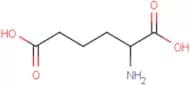
CAS:<p>Aminoadipic acid, a lysine metabolism intermediate, inhibits kynurenic acid production and antagonizes NMDA receptor activity.</p>Formula:C6H11NO4Purity:99.7% - 99.84%Color and Shape:SolidMolecular weight:161.163,5-Diiodo-L-thyronine
CAS:<p>NSC 90469 (Diiodothyronine) is an iodinated thyronine hormone that regulates gene activity affecting processes such as homeostasis and insulin resistance.</p>Formula:C15H13I2NO4Purity:99.64%Color and Shape:Off-White SolidMolecular weight:525.082-Ketoglutaric acid Sodium
CAS:<p>2-Ketoglutaric acid Sodium (AKG) is a key molecule in the TCA cycle.</p>Formula:C5H5NaO5Purity:97.77%Color and Shape:SolidMolecular weight:168.08Oxoadipic acid
CAS:<p>Oxoadipic acid: metabolite from tryptophan and lysine, links TCA cycle to lysine synthesis, studied for mitochondrial transport.</p>Formula:C6H8O5Purity:96.61% - >99.99%Color and Shape:SolidMolecular weight:160.12D-(-)-Lactic acid sodium
CAS:<p>Sodium D-lactate is a chiral organic acid, more common as L-isomer in organisms, and a microbial metabolite.</p>Formula:C3H5NaO3Purity:≥95%Color and Shape:SolidMolecular weight:112.06L-Norvaline
CAS:<p>L-Norvaline: arginase inhibitor, non-protein amino acid, in Bacillus peptide, used in E. coli proteins.</p>Formula:C5H11NO2Purity:99.84%Color and Shape:SolidMolecular weight:117.15L-Alloisoleucine
CAS:<p>L-Alloisoleucine (L-allo-Isoleucine) is a branched chain amino acid and a stereoisomer of L-isoleucine, is produced as a byproduct of isoleucine transamination.</p>Formula:C6H13NO2Purity:99.88% - ≥95%Color and Shape:SolidMolecular weight:131.17α,α-Dimethylglycine
CAS:<p>NSC-16590 (2-Aminoisobutyric acid) is a nonprotein amino acid (is an end product of pyrimidine Metabolism) excreted in the urine of about 5% of healthy</p>Formula:C4H9NO2Purity:99.65%Color and Shape:SolidMolecular weight:103.12(S)-Malic acid
CAS:<p>(S)-Malic acid ((S)-2-Hydroxysuccinic acid) is a naturally occurring dicarboxylic acid that is the source of the sweet and sour flavour of fruits.</p>Formula:C4H6O5Purity:99.41% - 99.72%Color and Shape:SolidMolecular weight:134.09Acetoacetic acid lithium salt
CAS:<p>Lithium acetoacetate is a weak organic acid from the liver during fatty acid breakdown in conditions like diabetic ketoacidosis.</p>Formula:C4H5LiO3Purity:99.83%Color and Shape:SolidMolecular weight:108.02