Carboxylic Acids
Carboxylic acids are organic molecules characterized by having a carboxyl-type functional group (-COOH). These acids are fundamental in various chemical reactions, including esterification, amidation, and decarboxylation. Carboxylic acids are widely used in the production of pharmaceuticals, polymers, and agrochemicals. In this section, you can find a large number of carboxylic acids ready to be used. At CymitQuimica, we provide a broad range of high-quality carboxylic acids to support your research and industrial applications.
Found 12453 products of "Carboxylic Acids"
Sort by
Purity (%)
0
100
|
0
|
50
|
90
|
95
|
100
(4S,6S)-6-(Cyanomethyl)-2,2-dimethyl-1,3-dioxane-4-acetic acid tert-butyl ester
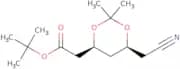
CAS:<p>Please enquire for more information about (4S,6S)-6-(Cyanomethyl)-2,2-dimethyl-1,3-dioxane-4-acetic acid tert-butyl ester including the price, delivery time and more detailed product information at the technical inquiry form on this page</p>Formula:C14H23NO4Purity:Min. 95%Molecular weight:269.34 g/moltert-Butyl 4-{[(methylsulfonyl)oxy]methyl}piperidine-1-carboxylate
CAS:<p>Please enquire for more information about tert-Butyl 4-{[(methylsulfonyl)oxy]methyl}piperidine-1-carboxylate including the price, delivery time and more detailed product information at the technical inquiry form on this page</p>Formula:C12H23NO5SPurity:Min. 95%Molecular weight:293.38 g/molN-Succinimdyl-N-methylcarbamate
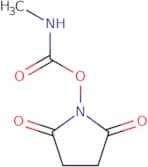
CAS:<p>N-Succinimdyl-N-methylcarbamate is a reactive, antimicrobial agent that inhibits the activity of an enzyme in the cycle of cellular respiration. It binds to the active site of the enzyme, preventing it from functioning. N-Succinimdyl-N-methylcarbamate has been shown to inhibit hepatitis by inducing apoptosis. The drug has a phase transition temperature of approximately -6°C and is stable at higher temperatures. N-Succinimdyl-N-methylcarbamate has been shown to have an inhibitory effect on cyclic peptides, including those found in bacteria such as Helicobacter pylori and Chlamydia trachomatis.</p>Formula:C6H8N2O4Purity:Min. 95%Molecular weight:172.14 g/molEthyl 3-{[(1E)-(dimethylamino)methylene]amino}-5-methoxy-1-methyl-1H-indole-2-carboxylate
CAS:Controlled Product<p>Please enquire for more information about Ethyl 3-{[(1E)-(dimethylamino)methylene]amino}-5-methoxy-1-methyl-1H-indole-2-carboxylate including the price, delivery time and more detailed product information at the technical inquiry form on this page</p>Formula:C16H21N3O3Purity:Min. 95%Molecular weight:303.36 g/mol15b-Hydroxy cyproterone acetate
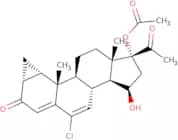
CAS:Controlled Product<p>15b-Hydroxy cyproterone acetate is a metabolite of cyproterone and cyproterone acetate, which are synthetic anti-androgens that inhibit the production of testosterone. This metabolite can be detected in urine as an inactive form or as an active form that binds to the androgen receptor. 15b-Hydroxy cyproterone acetate has been shown to cause tumours in monkeys.</p>Formula:C24H29ClO5Purity:Min. 95%Molecular weight:432.94 g/molMAGE-3 Antigen (271-279) (human) trifluoroacetate salt
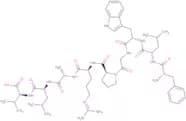
CAS:<p>ALPHA FACTOR SIGNALING PEPTIDE</p>Formula:C53H79N13O10Purity:Min. 95%Molecular weight:1,058.28 g/mol3-Cyanopropionic acid methyl ester
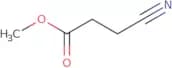
CAS:<p>3-Cyanopropionic acid methyl ester is a compound that belongs to the class of aliphatic carboxylic acids. It is an intermediate in the production of adiponitrile and acrylonitrile. This compound is used as a feedstock for the manufacture of vinylene, which can be used to produce c1-6 alkyl. 3-Cyanopropionic acid methyl ester can be produced from propylene and hydrogen cyanide in a high salt, activated reaction system. It has been shown that this compound may have metabolic disorders due to its ability to inhibit fatty acid oxidation and increase viscosity. 3-Cyanopropionic acid methyl ester is a colorless liquid at room temperature with a boiling point of 154°C and a molecular weight of 98.14 g/mol.</p>Formula:C5H7NO2Purity:Min. 95%Color and Shape:Clear LiquidMolecular weight:113.11 g/moltert-Butyl 4-azidopiperidine-1-carboxylate
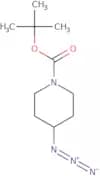
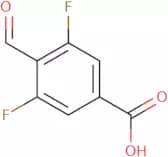
CAS:<p>Please enquire for more information about tert-Butyl 4-azidopiperidine-1-carboxylate including the price, delivery time and more detailed product information at the technical inquiry form on this page</p>Formula:C10H18N4O2Purity:Min. 95%Molecular weight:226.28 g/mol3,5-difluoro-4-formylbenzoic Acid
CAS:<p>3,5-Difluoro-4-formylbenzoic acid is a sulfamic acid derivative that is used as a catalyst in the synthesis of aldehydes. The catalytic activity of 3,5-difluoro-4-formylbenzoic acid is due to its ability to be oxidized by air and light to give an active form. It also has other uses in the synthesis of dihydropyrans and regioselectivity studies.</p>Formula:C8H4F2O3Purity:Min. 95%Molecular weight:186.11 g/molMethyl 5-bromo-1H-pyrazole-3-carboxylate
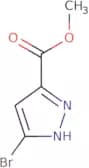
CAS:<p>Please enquire for more information about Methyl 5-bromo-1H-pyrazole-3-carboxylate including the price, delivery time and more detailed product information at the technical inquiry form on this page</p>Formula:C5H5BrN2O2Purity:Min. 95%Molecular weight:205.01 g/mol1-tert-Butyl 2-methyl 2-methylpyrrolidine-1,2-dicarboxylate
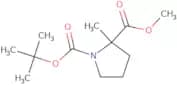
CAS:<p>Please enquire for more information about 1-tert-Butyl 2-methyl 2-methylpyrrolidine-1,2-dicarboxylate including the price, delivery time and more detailed product information at the technical inquiry form on this page</p>Formula:C12H21NO4Purity:Min. 95%Color and Shape:SolidMolecular weight:243.3 g/molMethyl 1H-pyrrolo[2,3-b]pyridine-2-carboxylate
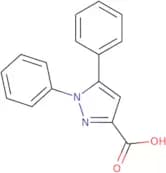
CAS:<p>Please enquire for more information about Methyl 1H-pyrrolo[2,3-b]pyridine-2-carboxylate including the price, delivery time and more detailed product information at the technical inquiry form on this page</p>Formula:C9H8N2O2Purity:Min. 95%Molecular weight:176.17 g/mol1,5-Diphenyl-1H-pyrazole-3-carboxylic acid
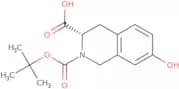
CAS:Controlled Product<p>1,5-Diphenyl-1H-pyrazole-3-carboxylic acid is a herbicide that belongs to the family of alkyloxycarbonyl amides. It is used in weed control and has shown good activity against many broadleaf weeds. 1,5-Diphenyl-1H-pyrazole-3-carboxylic acid inhibits the growth of plants by interfering with photosynthesis and the production of chlorophyll. The compound binds to the thylakoid membrane in chloroplasts, preventing electron transport and blocking the synthesis of carbohydrates from carbon dioxide and water. This leads to cell death as a result of oxygen depletion. 1,5-Diphenyl-1H-pyrazole-3-carboxylic acid also inhibits acetolactate synthase in plants, which produces amides that are important for protein synthesis.</p>Formula:C16H12N2O2Purity:Min. 95%Molecular weight:264.28 g/molBoc-(3S)-1,2,3,4-tetrahydroisoquinoline-7-hydroxy-3-carboxylic acid
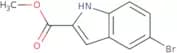
CAS:<p>Boc-(3S)-1,2,3,4-tetrahydroisoquinoline-7-hydroxy-3-carboxylic acid is a synthetic opioid that is chemically related to morphine. It binds to the δ opioid receptor and has a clinical development in the treatment of pain. The drug has been shown to inhibit the binding of gtpγs, which leads to the suppression of neuronal activity. Boc-(3S)-1,2,3,4-tetrahydroisoquinoline-7-hydroxy-3-carboxylic acid also has low molecular weight and low toxicity.</p>Formula:C15H19NO5Purity:Min. 95%Color and Shape:PowderMolecular weight:293.32 g/mol5-Bromo-1H-indole-2-carboxylic acid methyl ester
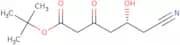
CAS:<p>5-Bromo-1H-indole-2-carboxylic acid methyl ester is a drug that belongs to the class of carboxylates. It has been shown to inhibit the growth of tumor cells in vitro and in vivo. The antitumor activity of this compound may be due to its ability to stabilize planar indole moieties, which are cytotoxic. 5-Bromo-1H-indole-2-carboxylic acid methyl ester interacts with other molecules through intermolecular interactions and can form an indole ring system that has a trifluoromethyl group and a carboxylate group in its structure.</p>Formula:C10H8BrNO2Purity:Min. 95%Molecular weight:254.08 g/mol(5R)-6-Cyano-5-hydroxy-3-oxo-hexanoic acid tert-butyl ester
CAS:<p>Please enquire for more information about (5R)-6-Cyano-5-hydroxy-3-oxo-hexanoic acid tert-butyl ester including the price, delivery time and more detailed product information at the technical inquiry form on this page</p>Formula:C11H17NO4Purity:Min. 95%Molecular weight:227.26 g/mol1-(4-Fluorophenyl)pyrazole-4-boronic acid
CAS:<p>Please enquire for more information about 1-(4-Fluorophenyl)pyrazole-4-boronic acid including the price, delivery time and more detailed product information at the technical inquiry form on this page</p>Formula:C9H8BFN2O2Purity:Min. 95%Molecular weight:205.98 g/mol2-(2-Aminothiazol-4-yl)acetic acid HCl
CAS:<p>2-(2-Aminothiazol-4-yl)acetic acid HCl is a white to off-white crystalline solid that is soluble in organic solvents. It is an intermediate used in the synthesis of thiourea derivatives, which are used as pharmaceuticals and agrochemicals. 2-(2-Aminothiazol-4-yl)acetic acid HCl is synthesized by the reaction of 2-aminothiazole with acetic anhydride. The purity can be determined using GC or NMR spectroscopy. Impurities may be removed by recrystallization with a solvent such as chloroform or dichloromethane. The melting point of 2-(2-aminothiazol-4-yl)acetic acid HCl is 147°C (298K). 2-(2-Aminothiazol-4-yl)acetic acid HCl can be purified by distillation at</p>Formula:C5H7ClN2O2SPurity:Min. 95%Molecular weight:194.64 g/mol3-Hydroxymandelic acid
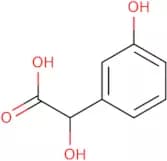
CAS:<p>3-Hydroxymandelic acid is a metabolite of mandelic acid and has been found to have cytostatic effects in human cells. The concentration–time curve for 3-hydroxymandelic acid displays a single-dose pharmacokinetics. It has been shown to inhibit the nuclear factor kappa-light-chain enhancer (NFκB) pathway, which is involved in the regulation of cell proliferation, differentiation, and apoptosis. 3-Hydroxymandelic acid also inhibits energy metabolism by reducing mitochondrial respiration. This compound binds to plasma proteins and is excreted through urine as well as being oxidized by hepatic cytochrome P450 enzymes.</p>Formula:C8H8O4Purity:Min. 95%Molecular weight:168.15 g/moltert-Butyl 3-(4,4,5,5-tetramethyl-1,3,2-dioxaborolan-2-yl)-5,6-dihydropyridine-1(2H)-carboxylate
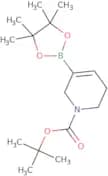
CAS:<p>tert-Butyl 3-(4,4,5,5-tetramethyl-1,3,2-dioxaborolan-2-yl)-5,6-dihydropyridine-1(2H)-carboxylate is a chemical compound that is used as a reagent in organic synthesis. It is also used as a building block for the preparation of other compounds. This compound can be used in the synthesis of complex molecules such as heterocycles and natural products.</p>Formula:C16H28BNO4Purity:Min. 95%Color and Shape:PowderMolecular weight:309.21 g/mol

![tert-Butyl 4-{[(methylsulfonyl)oxy]methyl}piperidine-1-carboxylate](/_next/image/?url=https%3A%2Fstatic.cymitquimica.com%2Fproducts%2F3D%2Fthumb-webp%2FFB122853.webp&w=3840&q=75)
![Ethyl 3-{[(1E)-(dimethylamino)methylene]amino}-5-methoxy-1-methyl-1H-indole-2-carboxylate](/_next/image/?url=https%3A%2Fstatic.cymitquimica.com%2Fproducts%2F3D%2Fthumb-webp%2FFE123273.webp&w=3840&q=75)
![Methyl 1H-pyrrolo[2,3-b]pyridine-2-carboxylate](/_next/image/?url=https%3A%2Fstatic.cymitquimica.com%2Fproducts%2F3D%2Fthumb-webp%2FFM142039.webp&w=3840&q=75)