Carboxylic Acids
Carboxylic acids are organic molecules characterized by having a carboxyl-type functional group (-COOH). These acids are fundamental in various chemical reactions, including esterification, amidation, and decarboxylation. Carboxylic acids are widely used in the production of pharmaceuticals, polymers, and agrochemicals. In this section, you can find a large number of carboxylic acids ready to be used. At CymitQuimica, we provide a broad range of high-quality carboxylic acids to support your research and industrial applications.
Found 12453 products of "Carboxylic Acids"
Sort by
Purity (%)
0
100
|
0
|
50
|
90
|
95
|
100
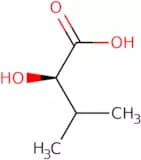
D-α-Hydroxyisovaleric acid
CAS:<p>D-alpha-Hydroxyisovaleric acid is a compound that is used to synthesize stereoisomers. It is also a component of supramolecular chemistry and has been used in the construction of supramolecular polymers. D-alpha-Hydroxyisovaleric acid can be found in some plants, such as valinomycin, isovaleric acid, and metarhizium. This stereoisomer can be synthetized from the hydroxy group and an amino acid or peptide. D-alpha-Hydroxyisovaleric acid has the ability to degrade nonribosomal peptides into smaller molecules through its hydrolytic properties. It also inhibits Verticillium dahliae, which causes wilt disease in plants, by inhibiting the synthesis of hydroxycarboxylates. D-alpha-Hydroxyisovaleric acid is biodegradable and can be used for industrial purposes as well as pharmaceuticals.</p>Formula:C5H10O3Purity:Min. 95%Color and Shape:White PowderMolecular weight:118.13 g/molH-Leu-Ser-Lys-Leu-NH2 trifluoroacetate salt
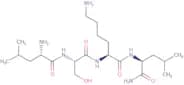
CAS:<p>L-Leu-Ser-Lys-Leu-NH2 is a cyclic peptide with the amino acid sequence H-Leu-Ser-Lys-Leu. It has been shown to have receptor activity and can be used as an experimental model of growth factors. L-Leu-Ser-Lys-Leu was found to stimulate collagen synthesis in a collagen gel, which may be due to its ability to inhibit the release of growth factor β1. L-Leu-Ser Lys Leu also has anti cancer effects by inhibiting the proliferation of malignant brain cells, as well as tubulointerstitial injury and renal cell carcinoma. This compound may also have some use in treating subarachnoid hemorrhage and fetal bovine serum (FBS) for tissue culture.</p>Formula:C21H42N6O5Purity:Min. 95%Molecular weight:458.6 g/molTRAP-5 amide trifluoroacetate salt
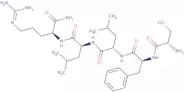
CAS:<p>Please enquire for more information about TRAP-5 amide trifluoroacetate salt including the price, delivery time and more detailed product information at the technical inquiry form on this page</p>Formula:C30H51N9O6Purity:Min. 95%Molecular weight:633.78 g/molBiotinyl-Amylin (mouse, rat) trifluoroacetate salt
CAS:<p>Please enquire for more information about Biotinyl-Amylin (mouse, rat) trifluoroacetate salt including the price, delivery time and more detailed product information at the technical inquiry form on this page</p>Formula:C177H286N54O55S3Purity:Min. 95%Molecular weight:4,146.69 g/molSilver(I) 2,2,2-trifluoroacetate
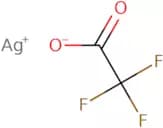
CAS:<p>Silver trifluoroacetate is a chemical compound that is a silver salt of trifluoroacetic acid. Silver trifluoroacetate is a white crystalline solid, soluble in water and alcohols, but insoluble in ethers. It has the chemical formula AgCF3CO2H. The crystal structure of silver trifluoroacetate has been determined by x-ray diffraction techniques and found to be orthorhombic with space group Pbam. The molecule consists of two 5-membered heteroaromatic rings, one containing carbon atoms and the other containing nitrogen atoms. The nitrogen atom is bonded to six hydrogen atoms and three fluorine atoms, while the carbon atom is bonded to four oxygen atoms and one fluorine atom. Synthesis methods for this compound include reacting silver nitrate with sodium carbonate in water vapor at 120°C.</p>Formula:C2AgF3O2Purity:Min. 95%Molecular weight:220.88 g/molNeuronostatin-13 (mouse, rat) trifluoroacetate salt
<p>Please enquire for more information about Neuronostatin-13 (mouse, rat) trifluoroacetate salt including the price, delivery time and more detailed product information at the technical inquiry form on this page</p>Formula:C65H112N20O17Purity:Min. 95%Molecular weight:1,445.71 g/molAmyloid β-Protein (1-40) (scrambled) trifluoroacetate salt
CAS:<p>Please enquire for more information about Amyloid beta-Protein (1-40) (scrambled) trifluoroacetate salt including the price, delivery time and more detailed product information at the technical inquiry form on this page</p>Formula:C194H295N53O58SPurity:Min. 95%Molecular weight:4,329.81 g/molVIP (4-28) (human, mouse, rat) trifluoroacetate salt
CAS:<p>Please enquire for more information about VIP (4-28) (human, mouse, rat) trifluoroacetate salt including the price, delivery time and more detailed product information at the technical inquiry form on this page</p>Formula:C134H221N39O36SPurity:Min. 95%Molecular weight:2,986.5 g/mol1-Butanesulfonic acid sodium
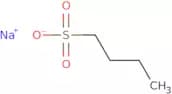
CAS:<p>1-Butanesulfonic acid sodium salt is a perfluorinated compound that inhibits the activity of various enzymes in the body, such as kinases and phosphatases. It has been used to study the effects of these enzymes on chemical reactions. 1-Butanesulfonic acid sodium salt is also used to detect the presence of selenium compounds in urine samples. The inhibition of an enzyme by this compound results in a decreased rate of reaction and a change in kinetic behavior. This can be observed by measuring the time it takes for the reaction to reach half its maximum value. Sodium taurocholate, chloride, and trifluoroacetic acid are all reagents that are commonly used with this compound when performing kinetic studies. 1-Butanesulfonic acid sodium salt has been shown to inhibit cholesterol synthesis in many animal models. In addition, this compound has been shown to bind to and inhibit plasma mass spectrometry by chromatography on silica gel from human plasma</p>Formula:C4H10O3S•NaPurity:Min. 95%Color and Shape:PowderMolecular weight:161.18 g/mol1-Pyreneboronic Acid (contains varying amounts of Anhydride)
CAS:<p>1-Pyreneboronic acid is a fluorescent derivative of boronic acid. It has been shown to have synergistic effects with other compounds, such as glucose monitoring. 1-Pyreneboronic acid is used in the preparation of a fluorescent probe for use in dna duplex assays. The fluorescence properties of this compound are affected by the presence of hydroxy groups and benzyl groups, making it useful for protein detection and identification. This compound can be prepared using the suzuki coupling reaction and it has been shown that it has an effect on cell line raw264.7 cells.</p>Formula:C16H11BO2Purity:Min. 95%Molecular weight:246.07 g/molH-Arg-Arg-Arg-Arg-OH trifluoroacetate salt
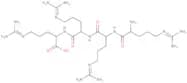
CAS:<p>Trifluoroacetate salt</p>Formula:C24H50N16O5Purity:Min. 95%Molecular weight:642.76 g/molDABCYL-Glu-Arg-Nle-Phe-Leu-Ser-Phe-Pro-EDANS trifluoroacetate salt
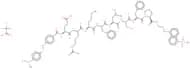
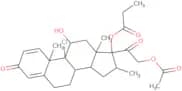
CAS:<p>Please enquire for more information about DABCYL-Glu-Arg-Nle-Phe-Leu-Ser-Phe-Pro-EDANS trifluoroacetate salt including the price, delivery time and more detailed product information at the technical inquiry form on this page</p>Formula:C76H98N16O15SPurity:Min. 95%Molecular weight:1,507.76 g/molBeclomethasone 21-acetate 17-propionate
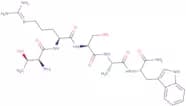
CAS:Controlled Product<p>Please enquire for more information about Beclomethasone 21-acetate 17-propionate including the price, delivery time and more detailed product information at the technical inquiry form on this page</p>Formula:C27H35ClO7Purity:Min. 95%Molecular weight:507.02 g/molOsteostatin (1-5) amide (human, bovine, dog, horse, mouse, rabbit, rat) trifluoroacetate salt
CAS:<p>Please enquire for more information about Osteostatin (1-5) amide (human, bovine, dog, horse, mouse, rabbit, rat) trifluoroacetate salt including the price, delivery time and more detailed product information at the technical inquiry form on this page</p>Formula:C27H42N10O7Purity:Min. 95%Molecular weight:618.69 g/molBiotinyl-(Leu8,D-Trp22,Tyr25)-Somatostatin-28 trifluoroacetate salt
CAS:<p>Please enquire for more information about Biotinyl-(Leu8,D-Trp22,Tyr25)-Somatostatin-28 trifluoroacetate salt including the price, delivery time and more detailed product information at the technical inquiry form on this page</p>Formula:C148H223N43O42S3Purity:Min. 95%Molecular weight:3,372.82 g/mol(Asp371)-Tyrosinase (369-377) (human) trifluoroacetate salt
CAS:<p>Trifluoroacetate salt</p>Formula:C42H66N10O16S2Purity:Min. 95%Molecular weight:1,031.16 g/molFibronectin CS-1 Fragment (1978-1985) trifluoroacetate salt
CAS:<p>Fibronectin CS-1 Fragment (1978-1985) trifluoroacetate salt H-Glu-Ile-Leu-Asp-Val-Pro-Ser-Thr-OH trifluoroacetate salt is a peptidomimetic with peroxidase activity. It has the ability to bind to red blood cells and monoclonal antibodies, which are used in spatially specific immunoassays. Fibronectin CS-1 Fragment (1978-1985) trifluoroacetate salt H-Glu-Ile-Leu-Asp-Val-Pro-Ser-Thr-OH trifluoroacetate salt also has an effect on hyperresponsiveness and can be used as a costimulatory antigen for cancer immunotherapy.</p>Formula:C38H64N8O15Purity:Min. 95%Molecular weight:872.96 g/mol2-Chlorooxazole-4-carboxylicacid
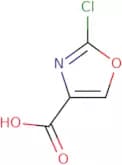
CAS:<p>2-Chlorooxazole-4-carboxylic acid is a synthetic compound belonging to the group of long-chain aliphatic carboxylic acids. It is an ester that can be synthesized by the reaction of toluene with 2,4-dichlorooxazole. The stereochemical configuration of this molecule is unknown. The synthesis of this compound has been reported in marine invertebrates and plants, including Mycalolide from the marine sponge Mycale sp.</p>Formula:C4H2ClNO3Purity:Min. 95%Molecular weight:147.52 g/molDibenzoyl-(-)-p-methoxy-L-tartaric acid
CAS:<p>Dibenzoyl-(-)-p-methoxy-L-tartaric acid is a chiral compound that has been extracted from plants and synthesized. It has a bitter taste and can be used as an enantiomer to treat schistosomiasis, a disease caused by parasitic flatworms. Dibenzoyl-(-)-p-methoxy-L-tartaric acid can be used as an enantiomer to treat schistosomiasis, which is caused by parasitic flatworms. The chemical is an anionic β-cyclodextrin derivative that binds to the parasites in the host's body and prevents them from releasing eggs into the water supply. This chemical also has pharmacological properties, such as antiinflammatory activities.</p>Formula:C20H18O10Purity:Min. 95%Color and Shape:White PowderMolecular weight:418.35 g/mol(R)-tert-Butyl 3-formylpyrrolidine-1-carboxylate
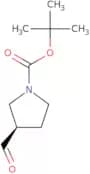
CAS:<p>Please enquire for more information about (R)-tert-Butyl 3-formylpyrrolidine-1-carboxylate including the price, delivery time and more detailed product information at the technical inquiry form on this page</p>Formula:C10H17NO3Purity:Min. 95%Color and Shape:Clear LiquidMolecular weight:199.25 g/mol