Aldehydes
Aldehydes are organic compounds containing a carbonyl group (C=O) bonded to at least one hydrogen atom. These versatile compounds are fundamental in various chemical reactions, including oxidation, reduction, and nucleophilic addition. Aldehydes are essential building blocks in the synthesis of pharmaceuticals, fragrances, and polymers. At CymitQuimica, we provide a diverse selection of high-quality aldehydes to support your research and industrial applications.
Found 8540 products of "Aldehydes"
Sort by
Purity (%)
0
100
|
0
|
50
|
90
|
95
|
100
4-Nitrobenzaldehyde
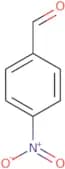
CAS:<p>4-Nitrobenzaldehyde is a reactive compound that has been shown to have antimicrobial activity. It is used in the synthesis of antibiotics and other pharmaceuticals. 4-Nitrobenzaldehyde binds to the mitochondrial membrane potential, which leads to the disruption of aerobic respiration. This compound has also been shown to bind to human serum proteins, such as albumin. The mechanism of this binding is through hydrogen bonding interactions with the amine groups on the protein surface. The reaction of 4-nitrobenzaldehyde with sodium carbonate results in an equilibrium between nitrobenzene and 4-nitrophenol. The equilibrium constant for this reaction can be determined experimentally by measuring the solubility of these compounds at different concentrations. <br>4-Nitrobenzaldehyde can be used as a model system for studying electron transfer reactions in electrochemistry through its interaction with methyl ethyl ketone (MEK) and pyridine (PYR). MEK</p>Formula:C7H5NO3Purity:Min. 92%Color and Shape:Slightly Yellow PowderMolecular weight:151.12 g/molZ-Leu-Leu-4,5-dehydro-Leu-aldehyde
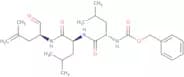
CAS:<p>Please enquire for more information about Z-Leu-Leu-4,5-dehydro-Leu-aldehyde including the price, delivery time and more detailed product information at the technical inquiry form on this page</p>Formula:C26H39N3O5Purity:Min. 95%Molecular weight:473.61 g/molAc-Tyr-Val-Lys-Asp-aldehyde (pseudo acid)
CAS:<p>Ac-Tyr-Val-Lys-Asp-aldehyde is a synthetic compound that can be used to study the apoptotic process. It is an aldehyde and has been found to activate caspases, aspartyl proteases, at high concentrations. This pseudo acid also has a significant activation of n-terminal protein kinase (SB203580) when irradiated with UV light. Ac-Tyr-Val-Lys-Asp-aldehyde can be used as a marker for the apoptotic process because it is synthesized by cells during this process. In addition, it has been shown to produce a red color during staining and can be detected using immunohistochemical techniques.</p>Formula:C26H39N5O8Purity:Min. 95%Molecular weight:549.62 g/mol1H-Indole-2-carbaldehyde
CAS:<p>1H-Indole-2-carbaldehyde is a solvent that has been used in the protein data and molecular modeling study. The 1H NMR spectrum of this compound showed an intense signal at δ 4.8 ppm, corresponding to the hydroxyl proton. This solvent also has fluorescence properties, as shown by its photophysical and structural analysis. The 1H-indole-2-carbaldehyde molecule has an active methylene group and an oxindole ring with amine substituents.</p>Formula:C9H7NOPurity:Min. 98%Color and Shape:PowderMolecular weight:145.16 g/mol4-Chloro-3-fluorobenzaldehyde
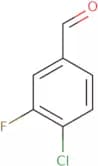
CAS:<p>4-Chloro-3-fluorobenzaldehyde is an atypical molecule that has a deuterium atom. It is classified as a group p2 functional theory reuptake inhibitor, which blocks the reuptake of noradrenaline at the synapse. The vibrational and spectroscopic properties of this molecule are similar to those of other molecules in its class. 4-Chloro-3-fluorobenzaldehyde was shown to inhibit the production of noradrenaline in rat brain tissue and is used as a model for studying genetic polymorphism. Techniques such as nuclear magnetic resonance spectroscopy, infrared spectroscopy, and X-ray crystallography have been used to investigate the structure and reactivity of 4-chloro-3-fluorobenzaldehyde.</p>Formula:C7H4ClFOPurity:Min. 95%Molecular weight:158.56 g/molZ-Leu-Leu-Tyr-a-keto aldehyde
CAS:<p>Please enquire for more information about Z-Leu-Leu-Tyr-a-keto aldehyde including the price, delivery time and more detailed product information at the technical inquiry form on this page</p>Formula:C30H39N3O7Purity:Min. 95%Molecular weight:553.65 g/mol3-Fluoro-2-nitrobenzaldehyde
CAS:<p>3-Fluoro-2-nitrobenzaldehyde is a pyridine derivative that has been used in the synthesis of a number of important heterocyclic compounds. This compound can be prepared by reacting 3,4-dichloroaniline with nitrous acid and then hydrolyzing the resulting 3-chloroquinoline with hydrochloric acid. The reaction yields anilines and quinolines in regiospecifically, as well as formylation, cyclisation, and condensation products. It is also capable of aromatisation reactions with benzene to produce benzofuran derivatives.</p>Formula:C7H4FNO3Purity:Min. 95%Color and Shape:Yellow PowderMolecular weight:169.11 g/molCell-permeable Caspase-3 Inhibitor I trifluoroacetate salt
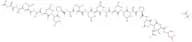
CAS:<p>Please enquire for more information about Cell-permeable Caspase-3 Inhibitor I trifluoroacetate salt including the price, delivery time and more detailed product information at the technical inquiry form on this page</p>Formula:C94H158N20O27Purity:Min. 95%Molecular weight:2,000.38 g/mol2,2-Dimethoxyacetaldehyde - About 60% water solution
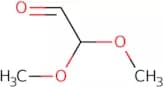
CAS:<p>2,2-Dimethoxyacetaldehyde is an inhibitor of the enzyme DNA polymerase. It has been shown to inhibit replication of the herpes simplex virus type 1 and 2 (HSV-1, HSV-2) in cell cultures. 2,2-Dimethoxyacetaldehyde has also been shown to inhibit the replication of HIV in cells and is a potential antiviral agent. This compound is also used as a building block for other drugs such as amide and ester hydrochloride. It is synthesized from 2,2-dimethoxypropane and formaldehyde with a two step process that starts with an asymmetric synthesis reaction between formaldehyde and methoxide ion followed by an ester hydrochloride formation reaction with methylamine. The product can be purified by recrystallization from water or acetone solution.</p>Formula:C4H8O3Purity:Min. 95%Molecular weight:104.1 g/mol3-(3-Chlorophenyl)propionaldehyde
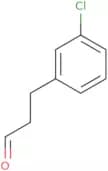
CAS:<p>Please enquire for more information about 3-(3-Chlorophenyl)propionaldehyde including the price, delivery time and more detailed product information at the technical inquiry form on this page</p>Formula:C9H9ClOPurity:Min. 95%Molecular weight:168.62 g/molBenzimidazole-5-aldehyde
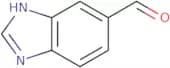
CAS:<p>Please enquire for more information about Benzimidazole-5-aldehyde including the price, delivery time and more detailed product information at the technical inquiry form on this page</p>Formula:C8H6N2OPurity:Min. 95%Color and Shape:PowderMolecular weight:146.15 g/molCell-permeable Caspase-1 Inhibitor I trifluoroacetate salt
CAS:<p>Please enquire for more information about Cell-permeable Caspase-1 Inhibitor I trifluoroacetate salt including the price, delivery time and more detailed product information at the technical inquiry form on this page</p>Formula:C97H160N20O24Purity:Min. 95%Molecular weight:1,990.43 g/molAc-Val-Asp-Val-Ala-Asp-aldehyde (pseudo acid)
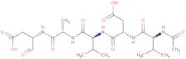
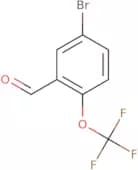
CAS:<p>Ac-Val-Asp-Val-Ala-Asp-aldehyde is a pseudo acid that is used in molecular modeling and kinetic studies. Ac-Val-Asp-Val-Ala-Asp-aldehyde has been shown to be a potent inhibitor of caspase activity and has been shown to inhibit the activity of various other enzymes as well, including cyclohexane ring hydroxylases and nitroreductases. Ac-Val-Asp-Val-Ala-Asp--aldehyde analogs are being studied for their ability to bind to specific proteins or inhibit enzyme activities. Ac-- Val-- Asp-- Val-- Ala-- Asp-- aldehyde binds to the active site of caspase 3 and prevents it from cleaving its target protein, which leads to cell death.</p>Formula:C23H37N5O10Purity:Min. 95%Molecular weight:543.57 g/mol5-Bromo-2-(trifluoromethoxy)benzaldehyde
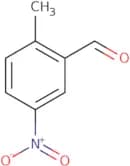
CAS:<p>5-Bromo-2-(trifluoromethoxy)benzaldehyde is a chemical that is used as a reactant in organic chemistry. It can be used as a building block for the synthesis of complex compounds, or as an intermediate in the preparation of fine chemicals. 5-Bromo-2-(trifluoromethoxy)benzaldehyde is also useful in research and development. It has been used to synthesize pharmaceuticals, pesticides, and other organic compounds.</p>Formula:C8H4BrF3O2Purity:Min. 95%Color and Shape:PowderMolecular weight:269.02 g/mol2-Methyl-5-nitrobenzaldehyde
CAS:<p>2-Methyl-5-nitrobenzaldehyde is a nitro compound that is used in the synthesis of dobutamine. It has been shown to undergo rearrangements, with the formation of 2-methyl-5-nitrophenol. Kinetic studies have shown that chlorine can be substituted for hydrogen at the 2 position, and this substitution leads to an increase in reactivity. 2-methyl-5-nitrobenzaldehyde also reacts with dopamine to form a ketone. The hydroxy group on this molecule is nucleophilic and can attack electrophiles, making it useful as an active site for synthetic reactions. This compound is also pyrophoric, which means it will spontaneously ignite in air and burn until all its fuel is consumed.</p>Formula:C8H7NO3Purity:Min. 95%Color and Shape:Off-White PowderMolecular weight:165.15 g/mol3-Bromo-5-chlorobenzaldehyde
CAS:<p>3-Bromo-5-chlorobenzaldehyde is a fine chemical that is used as a building block in the synthesis of other chemicals. It is also a reagent and speciality chemical with high quality and versatility. 3-Bromo-5-chlorobenzaldehyde has been shown to be useful in the preparation of complex compounds, such as heterocyclic aromatic compounds, which are versatile scaffolds for drug discovery. 3-Bromo-5-chlorobenzaldehyde has a CAS No. 188813-05-0.</p>Formula:C7H4BrClOPurity:Min. 95%Color and Shape:PowderMolecular weight:219.46 g/molAc-Tyr-Val-Ala-Asp-aldehyde (pseudo acid)
CAS:<p>Ac-Tyr-Val-Ala-Asp-aldehyde is a sesquiterpene lactone that has been shown to have anti-inflammatory properties. It inhibits the inflammatory response by inhibiting the production of pro-inflammatory cytokines and chemokines, such as IL1β, IL6, and TNFα. Ac-Tyr-Val-Ala-Asp-aldehyde also inhibits the activity of cyclooxygenase 2 (COX2) and lipoxygenase (LOX), which are enzymes that produce prostaglandins from arachidonic acid. Acetylsalicylic acid is an example of a drug with similar properties. Acetylsalicylic acid has been shown to inhibit the growth of cancer cells in tissue culture studies and in animal models. This compound may also be used to treat bowel disease, congestive heart failure, or other diseases that are characterized by increased apoptosis.</p>Formula:C23H32N4O8Purity:Min. 95%Molecular weight:492.52 g/mol4-Fluorobenzaldehyde oxime
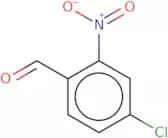
CAS:<p>4-Fluorobenzaldehyde oxime is a phenylhydrazine derivative that reacts with an aromatic amine to form a ternary complex. The reaction time for this process is short, and the yield of the product is high. 4-Fluorobenzaldehyde oxime also reacts with an aromatic amine to form an ion-pair. It can react with acidic hydrogen donors such as peracids and it also has high hydrogen bonding interactions. 4-Fluorobenzaldehyde oxime is used in pharmacological agents as well as other chemical reactions, including halogenation.</p>Formula:C7H6FNOPurity:Min. 95%Color and Shape:White PowderMolecular weight:139.13 g/mol4-Chloro-2-nitrobenzaldehyde
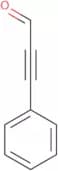
CAS:<p>4-Chloro-2-nitrobenzaldehyde is a reactive intermediate that has been used to investigate the reaction mechanism of protonation. It is an n-oxide and has been shown to react with calcium carbonate under acidic conditions, forming a stable product. 4-Chloro-2-nitrobenzaldehyde has also been used in the synthesis of amides and nitro compounds. This compound possesses two functional groups, which are a nitro group and a chloro group on the aromatic ring.</p>Formula:C7H4ClNO3Purity:Min. 95%Color and Shape:PowderMolecular weight:185.56 g/molPhenylpropargylaldehyde
CAS:<p>Phenylpropargylaldehyde is an organic compound that is a chiral molecule, which means it has two enantiomers. It was first synthesized in 1964 by R.B. Woodward and T.W. Rittenberg at the University of Chicago, and is used as a chemical intermediate in the synthesis of other compounds with biological activity such as matrix metalloproteinase inhibitors, for example marimastat. Phenylpropargylaldehyde can be prepared from malonic acid and phenylboronic acid in a reaction mechanism that involves nucleophilic substitutions, carbonyl group activation and hydrogen bonding to lysine residues on proteins. The asymmetric synthesis of this compound has been shown to suppress genes associated with metabolic disorders such as diabetes mellitus type 2, fatty acid metabolism disorders and endocrine disorders (e.g., thyroid). It also has adjuvant therapeutic properties in cancer treatment, especially when combined with synthetic fatty acids such as oleic acid or ar</p>Purity:Min. 95%